Under-the-Radar Round Up 2024, Part 3
 Original Reviews by Jonathan Broxton
I’m pleased to present the latest instalment in my on-going series of articles looking at the best under-the-radar scores from around the world.
This article, the third of 2024, covers seven scores from a wide array of genres and countries: a Chinese thriller about an autistic math genius, a French historical TV mini-series, a Spanish romantic thriller, a Japanese romantic survival horror movie based on a TV show, a French action comedy, a Japanese TV series about surrogate parenting, and a French swashbuckling TV series, all of which feature superb and memorable thematic writing!
DECODED – Lorne Balfe, Kevin Riepl
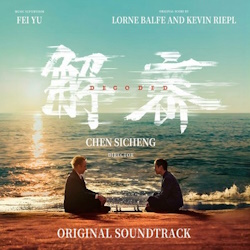 Decoded is a Chinese thriller film directed by Chen Sicheng, adapted from a novel by the Mao Dun Literature Prize-winning novelist Mai Jia. Set in the war-torn 1940s, the film follows an autistic math genius named Rong Jinzhen who is forced to abandon his academic pursuits to become a code-breaker for a secret spy agency. The film stars Liu Haoran as Jinzhen, with support from John Cusack, Chen Daoming and Daniel Wu, and plays out as sort of like a Chinese version of The Imitation Game, the Alan Turing story, in which an unassuming but brilliant young man unwittingly becomes a major player in global espionage.
The score for Decoded is by Lorne Balfe and Kevin Riepl, and is yet another instance in the growing trend of Los Angeles-based composers being asked to write music for major Chinese films. While the trajectory of Balfe’s career has skyrocketed in recent years, I’m especially pleased to see that Riepl is along for the ride on this too. For those who don’t know, Riepl was one of the rising stars in the game music world, most notably on the Gears of War series, until 2010 when his career was derailed by a serious illness which required him to have a heart transplant. While he has since made a good recovery, it has taken many years for him to get back to where he was a decade ago; his recent excellent work scoring a series of DC animated superhero films has helped put him back on the map, and hopefully Decoded will push his career forward even further, because the score is excellent.
The score is mostly orchestral, with some electronic sweetening and enhancements here and there, and is an interesting combination of elegant classical writing representing Jinzhen’s personality, and some more suspenseful and thrilling writing for the espionage element of the story. The more introspective side of the score is based around several recurring themes, one for Jinzhen, one which seems to represent Jinzhen’s family, and one which appears to speak to Jinzhen’s talent for codebreaking, which is presented in a sort of magical/mystical way. Cues like “Jinzhen’s Story ,” “Day 4396,” “Extraordinary Gift/Family Theme,” “Climbing,” “Mei,” and “Salute,” are built around lyrical themes for tender pianos, light strings, and pretty chimes, often with warm horn countermelodies; they are gorgeous, although sometimes the music is tempered by some more bittersweet moments of downbeat contemplation.
Elsewhere on the album cues like “Worlds First Computer,” the chorally-enhanced “Farewell,” “Jinzhen Returns Home,” “The Beach,” and the stunning conclusive “Home” rise to heights of really quite exquisite sweeping beauty, and for me these are the score highlights. Once or twice during these cues I was unexpectedly reminded of Maurice Jarre’s score for the 1999 film Sunshine, if that provides anyone with a frame of reference.
The action and suspense espionage music is not quite as thrilling or bombastic as one usually expects from Balfe’s work, and is instead a little more reserved, content to generally present slightly more forceful string rhythms and insistent percussion patterns rather than out-and-out action music. Nevertheless, cues like “Mathematics Is Art,” “Help Me Interpret,” “Unit 701,” the vibrant and dramatic “You’re On Your Own,” the tumultuous “Decoding & Interception,” the especially “Maze” are impressive. The writing here variously reminds me of Ludwig Goransson’s swirling music for Oppenheimer, the insistent rhythmic sound of James Horner’s A Beautiful Mind, and the familiar dancing woodwind textures from Alexandre Desplat’s work, as a sort of representation of science and genius.
“This Country Is Sick” and “Notebook” are a dark, brooding pieces for low strings and more prominent brass, the latter building up quite a head of steam. “Nanjing,” “Cipher,” “Purple Cipher,” “Lighthouse Dream,” and “Professor and the Ambush” have a bold, militaristic sound that stands out for its volume and scope, while “Dream,” “Dreams Inspire Him” and “The Pawn” work in an abstract electronic tone that can be a bit difficult, but fascinating, but these are outliers rather than primary examples of the score’s more intense sound.
The album is rounded out by two appealing versions of a song, “Code,” one performed in Chinese by Zhou Shen, and one performed in English by Moroccan-Canadian singer-songwriter Faouzia Ouihya. At 108 minutes the album is a little over-long to the point where it gets repetitive and drags in its second half, but that presentation problem doesn’t diminish the quality of the writing in any way.
It’s not clear from the album details which of the two composers wrote which cues – it may have been a split workload, or perhaps both composers worked on all cues – but whoever is responsible for the primary sound of Decoded, they deserve a great deal of praise for crafting an engaging, emotional, intellectually fascinating orchestral score. There is no physical CD available, but the score is available to stream and download from most of the usual online sources, on the Metrophonics Limited/Sony Music label.
Track Listing: 1. Code (Chinese Version) (performed by Zhou Shen) (4:19), 2. Code (English Version) (performed by Faouzia) (4:19), 3. Jinzhen’s Story (2:19), 4. Day 4396 (2:13), 5. Mathematics Is Art (0:44), 6. This Country Is Sick (1:57), 7. Extraordinary Gift/Family Theme (2:12), 8. Mentor (2:28), 9. Worlds First Computer (2:02), 10. Help Me Interpret (3:13), 11. Director Zheng (2:23), 12. Nanjing (1:41), 13. Farewell (2:19), 14. Dream (1:11), 15. Most Extraordinary Student (1:04), 16. Real Gold (2:03), 17. Unit 701 (2:20), 18. Cipher (2:48), 19. Professor’s Letter (2:46), 20. Purple Cipher (2:32), 21. Dreams Inspire Him (1:26), 22. Climbing (2:01), 23. Lighthouse Dream (2:38), 24. Mei (4:11), 25. You’re On Your Own (1:51), 26. Decoding & Interception (4:43), 27. Salute (2:05), 28. Another Match (1:47), 29. Married (2:33), 30. Professor and the Ambush (3:58), 31. Jinzhen Returns Home (2:56), 32. Maze (4:09), 33. Water Dream (1:37), 34. Is This a Dream (2:07), 35. Notebook (1:49), 36. Chess and the ENIAC (3:04), 37. The Pawn (1:55), 38. The Beach (2:43), 39. Mission Accomplished (3:21), 40. Home (3:35), 41. Is It (0:44). Metrophonics Limited/Sony Music, 102 minutes 06 seconds.
FORTUNE DE FRANCE/FORTUNES OF FRANCE – Arthur Simonini
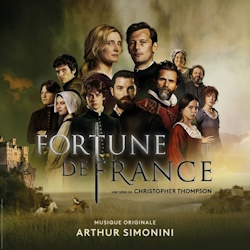 Fortune de France is a French TV mini-series based on the historical novels of French author Robert Merle, published between 1977 and 2003. The show is set in 1557 as the so-called Wars of Religion threaten France and follows the fortunes of the Siorac family who live in the imposing Mespech Castle and must fight for survival amid a dangerous, hostile and intolerant time. The show stars Nicolas Duvauchelle, Guillaume Gouix, and Grégory Fitoussi, and premiered on the French network France 2 in September 2024.
The score for Fortune de France is by composer Arthur Simonini, who impressed me enormously with his score for the documentary biography Bardot in 2023, and who also wrote a fun score for the comedy Pourquoi Tu Souris earlier this year. Fortune de France is a very different score from either of those works, though, as it showcases a much bigger and more orchestrally robust side to Simonini’s work that I really appreciate.
Right from the get-go, the opening cue “Fortune de France,” there’s a superb blend of both contemporary and period orchestrations and stylistics, a dance-like elegance that enhances the setting and sense of time and place. However, as the score progresses, Simonini blends this with more modernistic dramatic writing, and even a few forceful action and suspense sequences that are really striking.
I love the sweeping romance of “Mespech,” the beautiful choral liturgy of “Ave Maria,”the devastating and heartbreaking strings in “La Mort d’Isabelle,” the off-kilter pianos and nervous-sounding violin textures in “La Zingarelle,” the enveloping funeral darkness of “La Veillée,” the deathly insistence of “La Grande Peste,” the sense of loss and tragedy in both “Le Départ” and “Les Démons de Sauveterre”.
There’s a more brooding, sinister sound with tick-tock percussion, growling brass, and nervously vibrating string textures “Le Piège,” which emerges into something frantic and overwhelming in the subsequent “Alerte à Mespech”. “Le Pacte” has a calming, peaceful quality to the piano writing, while the similar sounding “Amours Adolescentes” has a touch of swooning romance. There are more anxious string figures in the action of “Persecutions,” nervously rattling bass flutes in “Le Duel,” and throbbing combination writing for strings and percussion in “Intolérance”.
There’s so much variety in Simonini’s score, so much fascinating and intricate interplay between the different sections of the orchestra, and it’s all done with a great deal of skill and sensitivity, balancing the emotional needs of the screenplay with tone of the period setting. Very impressive indeed. There is no physical CD available, but the score is available to stream and download from most of the usual online sources, on the Les Films du Cap label.
Track Listing: 1. Fortune de France (1:03), 2. Ave Maria (2:22), 3. Mespech (1:41), 4. La Mort d’Isabelle (2:07), 5. La Zingarelle (1:28), 6. La Veillée (2:21), 7. La Grande Peste (4:02), 8. Gamelin (1:05), 9. Le Départ (4:38), 10. Les Démons de Sauveterre (1:43), 11. Calais (2:30), 12. Le Piège (4:18), 13. Samson (1:34), 14. Alerte à Mespech (1:29), 15. Le Pacte (2:01), 16. Attaque Nocturne (2:27), 17. Amours Adolescentes (2:48), 18. Notre Père (1:58), 19. Persecutions (1:37), 20. Les Noces (1:04), 21. Le Départ à la Guerre (2:43), 22. Le Duel (3:32), 23. Le Camp des Caïmans (1:29), 24. La Comète (3:33), 25. La Blessure (1:23), 26. Intolérance (1:36), 27. Deux Frères (1:51), 28. L’Amulette (2:25), 29. Chez Jeanne (1:38). Les Films du Cap, 64 minutes 13 seconds.
ISLA PERDIDA/HAUNTED HEART – Zbigniew Preisner
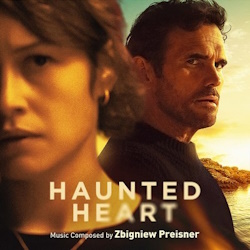 Haunted Heart, also known as Isla Perdida, is an English-language Spanish romantic thriller film directed by Fernando Trueba, starring Matt Dillon, Aida Folch, and Juan Pablo Urrego. Set in a remote Greek island, the plot involves a Spanish woman named Alex who goes to work at a restaurant taverna owned by an American named Max. While everybody warns her against him, Alex cannot resist his charisma and quickly falls in love; however, she discovers haunting secrets about her new partner that threaten to destroy their relationship – and her life.
The score for Haunted Heart is by Polish composer Zbigniew Preisner, who has scored several of director Trueba’s recent films, including La Reina de España in 2016 and El Olvido Que Seremos in 2020. Interestingly, Priesner himself now lives in the Greek island of Rhodes, and so was perhaps inspired by the beauty of his Mediterranean home to write one of his most conventionally attractive and appealing scores in many years.
The publicity material for the soundtrack album describes Preisner’s music as ‘a sultry and suspenseful score that captures the thrill of a blossoming relationship and the danger that Alex finds herself in.’ Preisner himself says: “I wrote the music from the perspective of mystery that is present all the time in Max and Alex’s relationship. Alex, a young, open woman full of emotions, is entangled in those secrets. I wanted to describe the mystery that entwines their relationship musically. For that purpose, I used an orchestra, solo woodwinds, and electronic instruments.”
Preisner’s slow-moving, thoughtful, often restrained style dominates the score, but even within this framework he is able to offer several moments of lyrical beauty. Highlights of the score for me include the elegant saxophone romance cues like of “First Dinner at Anna’s Restaurant” and “Second Dinner,” and the tender reprises of the love theme in cues like “Good Morning Alex,” “Flowers for Max,” and “Beautiful Morning”.
The thriller aspect of the score is more moody and unnervingly mysterious than it is out-and-out thrilling, but cues like “Mysterious Photo,” “Jealous Max,” and “Mysterious Dream of Max” offer an appropriate creepy atmosphere. Later, the agitated-sounding quartet comprising “Chico’s Death,” “Horror Call,” “Alex in a Panic” and “Searching for Revenge” raise the stakes as the closest things the score comes to having action cues. In these cues Preisner often uses Kilar-esque dark swirling cellos offset against stark strings to raise the hackles on the back of the neck, and it works to a tee, leaving a positively anxious impression.
There is also a new arrangement of Leonard Cohen’s 2001 song “Alexandra Leaving,” which is itself based on based on the poem “The God Abandons Antony” by Greek poet Constantine Cavafy, and here is performed guitarist Javier Mas and singer Sofia Cordoba which is quite lovely if a touch depressing. Overall, Haunted Heart allows listeners to explore a side to Zbigniew Preisner that he doesn’t often get a chance to show – that of a tender, warm-hearted romanticist – while also offering some low-key thrills and chills. The score is available on CD from Caldera Records, and is also available to stream and download from most of the usual online sources.
Track Listing: 1. Blue Waves (2:09), 2. First Dinner at Anna’s Restaurant (1:35), 3. Good Morning Alex (0:44), 4. Flowers for Max (0:46), 5. Second Dinner (1:36), 6. Secrets of Max (1:38), 7. Romantic Evening (1:02), 8. Alex and Max’s First Night Together (0:58), 9. Beautiful Morning (0:58), 10. Mysterious Photo (0:44), 11. Jealous Max (1:49), 12. Chico and the Mysterious Recordings (1:50), 13. Mysterious Dream of Max (1:19), 14. Message from Chico (1:18), 15. Chico’s Death (1:13), 16. Horror Call (3:14), 17. In a Drugged Sleep (1:10), 18. Alex in a Panic (1:58), 19. Escape of Alex (0:53), 20. Searching for Revenge (2:16), 21. Max Reveals Secrets (0:51), 22. Tragic Breakfast/Max’s Death (0:38), 23. Alexandra Leaving (written by Leonard Cohen, performed by Sofia Cordoba feat. Javier Mas) (5:01). Caldera Records C6057, 35 minutes 46 seconds.
LOVE YOU AS THE WORLD ENDS: THE MOVIE – Yoshihei Ueda, Shigekazu Aida, Ryo Noguchi
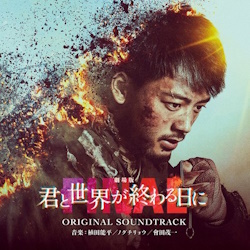 Love You As The World Ends: The Movie is a Japanese action/horror film directed by Shintarô Sugawara. It is a big-screen sequel to (and the conclusion of) the long-running Japanese TV series of the same name, about the survivors of a zombie apocalypse trying to stay alive under near-constant threat of attacks from undead monsters; think The Walking Dead, transposed to Tokyo. The film stars Ryoma Takeuchi, Fumiya Takahashi and Mayu Hotta was released in Japanese cinemas in January 2024.
The score for Love You As The World Ends: The Movie is by composers Yoshihei Ueda, Shigekazu Aida, and Ryo Noguchi, who split composing duties between them. Aida is a successful pop arranger, and Ryo Noguchi has written for a handful of Japanese TV series, including the most recent seasons of the Love You As The World Ends TV series, but for the most part this is the first music I have heard from any of these three men.
Quite a lot of the score is strongly dissonant, loud and abrasive, playing up the horror part of the story as one would expect, often featuring electronic distortions, bleak clusters of orchestral noise, and elements of sound design. However, also embedded within all this is a surprising amount of lyricism, occasional romance, and quite a bit of swaggering heroism and panache, capturing the human drama at the heart of the story. Quite a lot of the heroism of which comes from the judicious use of electric guitars alongside the orchestra, and this especially apparent from the bold, thrusting main theme in the opening “Gekijouban Title Back,” as well as later cues like the uber-cool “Two-Way Battle” the “Season 5 Main Title,” the grittier and grungier “Underground Side,” which adapts the main theme with a defiant, in-your-face attitude.
Some of the action is unexpectedly exciting, notably “Joshou,” “Three-Way Battle,” and “Fighters,” and then some of the more low-key thriller and suspense music has an unexpectedly pleasing Zimmer-esque quality, especially when the composers make use of cello ostinatos augmented by searching orchestral melodic textures.
Elsewhere, cues like “Memories of Flying Colors,” “Mirai,” “Ikiru,” and the gorgeous “Yureru Omoi” present a more romantic sound with lyrical writing for strings and piano (although, occasionally, the main love theme melody is distractingly reminiscent of the theme from the song “Flashdance… What a Feeling” from the movie Flashdance). There is pseudo-renaissance arrangement of the love theme in “Tower Side” which features a male voice, a harpsichord, a church organ, a solo violin that is just fascinating.
Finally, cues like “Kesshino Kakugo,” the “Season 5 Main Title,” and the ethereal “Cult” use various combinations of choirs, pianos, church organs, and searching, evocative, emotionally-charged orchestral passages to create an impressively epic sound. I can hear some influences from composers like Kenji Kawai and, latterly, Mike Oldfield, in this part of the score especially, which I really enjoy.
The score for Love You As The World Ends: The Movie is available as an import CD from retailers like YesAsia, and is also available to stream and download from most of the usual online sources, on the Nippon Television Music label.
Track Listing: 1. Gekijouban Title Back (1:39), 2. Joshou (2:25), 3. Kibouno Tou (3:15), 4. Sorezoreno Omowaku (2:20), 5. Two-Way Battle (1:40), 6. Wakare (1:52), 7. Three-Way Battle (2:37), 8. Kesshino Kakugo (2:51), 9. Memories of Flying Colors (2:39), 10. Mirai (1:17), 11. Ikiru (1:03), 12. Hoshiwo Aogu (Piano & Strings Ver.) (1:07), 13. Season 5 Main Title (6:51), 14. Underground Side (3:29), 15. Yureru Omoi (3:59), 16. Tower Side (5:22), 17. Cult (4:15), 18. Fighters (2:20), 19. Faith (2:47), 20. Asymmetric Valley (2:15), 21. Sonoran Desert (3:53), 22. White Colony (2:50), 23. Monocromo (3:49). Nippon Television Music, 66 minutes 27 seconds.
NICE GIRLS – Erwann Chandon
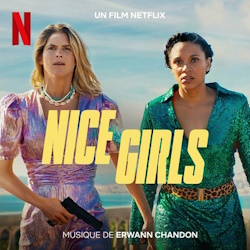 Nice Girls is a French action comedy co-written and directed by Noémie Saglio, starring stars Alice Taglioni, Stéfi Celma and Baptiste Lecaplain. The film follows a maverick cop and a meticulous detective who join forces with a charming ex-hacker to solve an officer’s disappearance and save the city of Nice from disaster. The film’s title is a clever play on words: Nice, as in the city in France, and nice, as in being nice to someone, and the film itself has been well received in the weeks since it premiered on Netflix.
The score fore Nice Girls is by French composer Erwann Chandon, who has written a few decent scores over the last few years, including Quand on Crie au Loup in 2019, La Dernière Vie de Simon in 2020, and La Sorcière au Cœur de Pierre in 2022. For this score, Chandon wrote a score which is fun and energetic, a nice balance of action music, solid and memorable thematic content, and French joie de vivre.
The main theme is heard prominently in several cues, notable the opening “Becoming Nice Girls,” and then later in cues “On Ferme Les Yeux” and “Le Message De Ludo,” among many others. It’s broad and heroic, if perhaps a tiny bit generic, but it does tie the score together nicely, and it allows the score to have a sense of itself. There is also a villain’s theme, heard most prominently in “Cassati” and then in later cues like “Hambourg” and “Tout Va Bien, y’a Une Bombe” which uses Morricone-style whistles as a calling card.
The action music, heard best in cues like “Tic-Tac, Tic Tac,” “Bat the Bat,” “Mareschi,” “Endoku Yaku” and “Lustre Fatal” is lively and fast-paced, with ebullient string rhythms, bright brass passages, and light rapped percussion dancing underneath prominent melodic content. There is a good-natured charm and sense of escapism running through all this music that is really engaging; it’s old-fashioned in the way it doesn’t rely on endless ostinatos and electronic pulses and instead offers invigorating orchestral passages, but its also contemporary enough to ensure it remains relevant to the needs of modern action scores.
I also really like the contemporary Afro-Caribbean influence in “Sima Scott” and “Dans Cette Boîte,” the use of fluttered jazzy bass flutes in “Flics en Terrain” and “Mode Furtif,” the calypso/samba touches to the aforementioned “Mareschi,” the eerie glassy sounds in “Tireuse d’Elite”. All these interesting touches in the orchestration keep the score unpredictable and surprising, in a good way. The big finale in “L’Assaut du Yacht” is just a ton of fun, energetic and effervescent, and it builds up a real head of steam as it builds towards its explosive conclusion. The final track is an instrumental version of the immensely popular 1984 French pop song “Les Sunlights Des Tropiques” by Gilbert Montagné, which is both nostalgically groovy and very charming.
At a smidgen over 30 minutes Nice Girls never outstays its welcome, instead coming across as a pleasant and undemanding musical amuse-bouche that offers some fun action material and some interesting and unexpected orchestration choices, and leaves a very positive impression overall. There is no physical CD available, but the score is available to stream and download from most of the usual online sources, on the Netflix Music label.
Track Listing: 1. Becoming Nice Girls (Main Theme) (1:39), 2. Tic-Tac, Tic Tac (1:06), 3. On Ferme Les Yeux (Main Theme Reprise) (0:55), 4. Sima Scott (1:49), 5. Flics En Terrain (1:49), 6. Le Message De Ludo (Main Theme Reprise) (1:04), 7. Bat The Bat (1:09), 8. Mareschi! (1:23), 9. Mode Furtif (1:30), 10. Dans Cette Boîte (0:53), 11. Cassati (Bad Guys’s Theme) (0:45), 12. En Planque (1:07), 13. Endoku Yaku (1:32), 14. Zako (1:16), 15. Ca Marche a Tous Les Coups (2:11), 16. Tireuse d’Elite (1:01), 17. C’est Un Indice… (0:57), 18. Lustre Fatal (2:02), 19. Hambourg (1:27), 20. Tout Va Bien, y’a Une Bombe (2:58), 21. Un Mec En Costume (1:04), 22. L’Assaut du Yacht (3:51), 23. Les Sunlights Des Tropiques (performed by Gilbert Montagné) (2:57). Netflix Music, 36 minutes 25 seconds.
THE SWALLOWS DON’T COME BACK – Evan Call
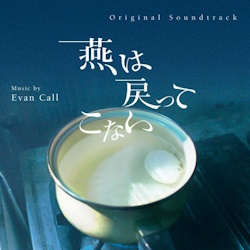 The Swallows Don’t Come Back is a Japanese drama TV series directed by Takashi Kitano with Kenji Tanaka and Yuki Yamato. It stars Shizuka Ishibashi as Riki, a temporary worker in modern Tokyo, who struggles to make ends meet despite her hard work. Things take a turn when married couple Kusaoke Motoi and Yuko offer her money to become their surrogate mother. The show premiered on the Japanese network NHK earlier in 2024, and has an original score by Tokyo-based American composer Evan Call.
Call first appeared on my radar in 2018 with his score for the animated film Violet Evergarden, and his work since then – including The 13 Lords of Shogun (2022), Gold Kingdom and Water Kingdom (2023), and Frieren: Beyond Journey’s End (2023) – has shown him to be a composer with a beautiful, lyrical approach, making use of delicate orchestrations, elegant thematic content, and undiminished emotion. The Swallows Don’t Come Back is another score like that.
Despite its contemporary setting and very modern themes about relationships and pregnancy, a lot of The Swallows Don’t Come Back actually plays like a fantasy score. Much of it is endowed with sweeping melodies performed by a large orchestra, chorales and wordless female vocals, and sparkling and beautiful solos for violins, flutes, and piano, but then there are some cues which use some more modern sound electronic percussion textures and thrumming bass guitars. The opening cue, “Tsubame,” is a blend of all this and is just wonderful, leaving an enormously positive impression, and then later tracks like “Ballet and Bloodline,” the dramatic “Through the Eyes of God,” “Pure White Nightmare,” and “The Dancer’s Last Stage” build beautifully on the highly classical approach.
Cues like “Human Nature,” “A Beautiful Life,” “Change My Life,” and the conclusive “Life and Consequence” feature the wordless vocals prominently, giving the score a clear and recognizable ‘feminine’ touch that speaks not only to Riki personally, but also to the concept of motherhood and surrogacy that informs the entire plot of the story. Elsewhere, cues like “For Whom Beats the Heart,” the stunning “Providence,” and “Parallel Lines May Stray” feature tender and sensitive piano lines, often accompanied by subtle bubbling electronics and a string wash; one variation on this is “Snow-Covered Solitude” which has an intentionally distorted lo-fi sound that is quite fascinating.
A guitar theme for “Riki” herself weaves through a lot of the score, sometimes accompanied by vaguely hip-hop-style electronic pulses and unusually-phrased vocal textures, and sometimes blending with one or more of the aforementioned styles to create an excellent hybrid sound – a theme for a modern woman in modern times facing terrible challenges. “Memories and Sōmen” is a gentle acoustic variation on this sound, while “Free From The Cage” is heavy and aggressive rock.
Evan Call is such a talented composer, who possesses such skill and sensitivity and emotional depth as a dramatist, and I’m actually quite surprised that Hollywood hasn’t yet come knocking on his door. One the one hand, I want this to happen, because his talent deserves to be heard on a global scale, but then again I don’t want his emotional depth to be diminished by the current American trends of minimalist scores that intentionally dial back emotion for fear of being ‘manipulative’. Thankfully, that doesn’t appear to be an issue in Japanese cinema, and as such The Swallows Don’t Come Back should be an immediate purchase for anyone who still gravitates to that sort of scoring. The score is available as an import CD from retailers like YesAsia, and is also available to stream and download from most of the usual online sources.
Track Listing: 1. Tsubame (3:27), 2. Human Nature (2:22), 3. For Whom Beats the Heart? (2:58), 4. Riki (2:56), 5. Ballet and Bloodline (2:23), 6. Through the Eyes of God (2:33), 7. Providence (3:10), 8. A Beautiful Life (3:20), 9. Pure White Nightmare (3:05), 10. Cross the Line (2:55), 11. Stuck in a Rut (2:05), 12. Biological Clock (3:14), 13. Snow-Covered Solitude (3:01), 14. Memories and Sōmen (2:31), 15. Free From The Cage (2:48), 16. Change My Life (3:03), 17. The Dancer’s Last Stage (2:14), 18. Absurdity (2:07), 19. Not All Bad Days (2:12), 20. Misfortune and Regret (2:40), 21. Eggs, Life, and Meaning (2:21), 22. Plante (3:10), 23. Parallel Lines May Stray (2:27), 24. The Swallow and The Unknown (2:28), 25. Bonds For The Lost And Alone (2:16), 26. Roll the Dice (2:19), 27. Life and Consequence (3:51). Rambling Records, 73 minutes 40 seconds.
ZORRO – Julie Roué
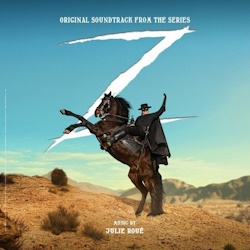 Zorro is a new French-language action-adventure TV series created by Benjamin Charbit and Noé Debré, based on the classic comic character created in 1919 by American pulp writer Johnston McCulley. The show is set in 1821 and sees Don Diego de la Vega/Zorro become mayor of Los Angeles to improve his beloved city. However, the city is facing financial trouble due to a local businessman and Diego soon discovers his powers as mayor are not enough to fight injustice. Having not used his Zorro identity for 20 years, he revives his alter-ego, but struggles to balance his dual identity, causing strain on his marriage with his wife unaware of his secret. The show stars Jean Dujardin as Zorro, with support from Audrey Dana, Salvatore Ficarra, and Eric Elmosnino, and has an original score by French composer and songwriter Julie Roué.
Although she has been around for quite some time (her first solo credit on a feature is from 2014, and her work as a sound editor goes back further), this is the first Julie Roué score I have heard, and I have to admit I’m impressed. I guess the best way to describe this score is to imagine James Horner’s score for The Mask of Zorro, but to take all the in-your-face thematic content out. It has all the same flavors – the flashing Spanish guitars, the soulful trumpets, the trilling orchestral textures, the elements of traditional folk music, the castanets and hand claps in the percussion, the overall sense of style and panache – but whereas Horner’s score was overflowing with memorable melody, Roué’s is not, and that’s really the only thing holding it back.
Despite this, there are still numerous standout moments. “Once Upon a Time in Los Angeles” is clearly inspired by the soulful brass-led Spaghetti western sounds of Ennio Morricone and others, and it a terrific homage to the style. Later cues like “The Last Justicer,” “Gazpacho,” “Zorro Always Wins,” “Three Smart Guys,” and “Adiós Gabriella” further play with the Morricone-style arrangements, using tinkling guitars, lonely solo trumpets, castanets, an Edda dell’Orso-style vocalist, and even an Alessandro Alessandrini-esque whistler, performed in a variety of ways. There is a romantic tone to cues like “Beneath a Thousand Stars” and “Hot Day in New Spain” cues which represent the love between Don Diego and his wife Gabriella, and which see Roué using soft strings, harp glissandi and lilting acoustic guitars.
It is in the action music that Roué raises her voice the most, and cues like “The Panache of the Fox,” “Zorro Mania,” “Danse Macabre,” and “Mujer de Fuego” are more fulsome, lively and energetic, and dramatic, again using sparkling brass, dashing strings and the rapped percussion to add a sexiness and a touch of the flamboyant to Zorro’s sword-fighting exploits. Other one-offs worth noting include the terrific piece for an extravagant and colorful acoustic guitar in “Danza de Espadas,” the Bolero-inspired rhythms of “Capital in the 19th Century,” and the funereal finale “Deguello”.
The album is also bookended by an original song, “Qui Est Zorro,” performed by Roué herself in her ‘Jo Vague’ alter ego. The song is fun and flamboyant but offers an unexpected geographical disconnect due to it overflowing with stereotypical Spanish orchestrations, but it is sung in French.
As I mentioned earlier, Zorro is the first Julie Roué score I have heard, but based on the evidence of her talent here, I’m going to make sure it is not the last. There is no physical CD available, but the score is available to stream and download from most of the usual online sources, on the Lakeshore Records label.
Track Listing: 1. Qui Est Zorro? (performed by Jo Vague) (2:52), 2. Once Upon a Time in Los Angeles (1:43), 3. The Panache of the Fox (2:06), 4. The Last Justicer (1:44), 5. Beneath a Thousand Stars (2:54), 6. Hot Day in New Spain (1:30), 7. Danza de Espadas (1:26), 8. Santa Lucia (1:45), 9. Gazpacho (0:50), 10. Zorro Mania (2:24), 11. Capital in the 19th Century (1:43), 12. Zorro Always Wins (1:23), 13. The Long-Awaited Son (1:44), 14. Three Smart Guys (1:07), 15. Zorro Requiem (2:21), 16. Lonesome Zorro (1:08), 17. Los de la Rivera (1:04), 18. Adiós Gabriella (1:04), 19. Juegos y Regocijos (performed by Isabelle Laudenbach) (1:35), 20. Danse Macabre (2:04), 21. The Night of the Wild Boar (2:16), 22. Two Lovers for One Heart (1:54), 23. Mujer de Fuego (1:47), 24. Deguello (1:56), 25. Qui Est Zorro? (Version Alternative) (performed by Jo Vague) (2:50). Lakeshore Records, 45 minutes 10 seconds.
-
February 7, 2025 at 7:02 amMovie Music UK Awards 2024 | MOVIE MUSIC UK

Shop at the Movie Music UK Store

Member of the

 MOVIE MUSIC UK