VALLEY OF THE KINGS – Miklós Rózsa
 GREATEST SCORES OF THE TWENTIETH CENTURY
Original Review by Craig Lysy
MGM Studios was keen to capitalize on the success of their exotic adventure film King Solomon’s Mines from 1950. Two years later they found what they were looking for when director Robert Pirosh came across the book “Gods, Graves and Scholars” by C. W. Ceram. Charles Schnee was assigned production with a budget of $2.1 million, which would include filming in Egypt. Pirosh would direct, and teamed with Karl Tunberg to write the screenplay. Casting proved challenging, but eventually they secured Robert Taylor as Mark Brandon, Eleanor Parker as Ann Barclay Mercedes, Carlos Thompson as Philip Mercedes, Kurt Kasznar as Hamed Backhour, and Samia Gamal as the dancer.
The film is set circa 1900 and unfolds in Egypt during a time when extensive archeological digs were taking place. Wealthy patron Ann Mercedes secures the services of archeologist Mark Brandon, who was a pupil of her father, to form an expedition to discover the tomb of Pharaoh Ra-Hotep. She believes in her father’s theory that it holds the link to the legendary tomb of the biblical Joseph, son of Jacob, who a Governor of Egypt granted sanctuary to during a terrible famine. The expedition is beset by intrigue, danger, betrayal and murder as Ann develops feelings for Mark, which leads to a fight with her husband atop the famous Abu Simbel temple, and his death. Eventually they find the tomb of Ra-Hotep, which contains evidence to support her father’s theory. The film was a commercial failure, losing $204,000. Critical reception was mixed, and the film failed to receive any Academy Award nominations.
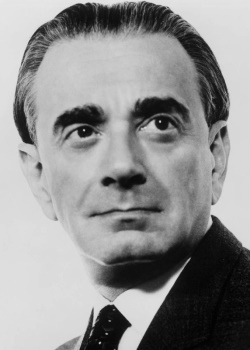 Miklós Rózsa was coming off a banner year in 1953 and his gift for capturing the exotic – as evidenced by previous scores like The Four Feathers, The Thief of Bagdad, and Jungle Book- made him a natural choice to score the film. I believe he understood that the Egyptian setting required that he imbue his music with the requisite Arabic cultural sensibilities and auras. I also believe he understood that the Main Theme needed to capture the mystery, wonder, and timelessness of the ever-shifting windswept sands of the desert, and that a Love Theme would be needed to support the romance of Mark and Ann.
To that end Rózsa composed five themes for his soundscape. The Arabic Main Theme permeates the film and supports its adventure. While it can resound with dramatic force, it also emotes with a wandering nature, meandering like a desert breeze. It is at once exotic, languorous, and intangible, draping us with Arabic auras. The Antiquities Theme is kindred to the Main Theme, draped in the same Arabic auras. It however, supports the search for, covetousness, and possession of Egyptian antiquities. It offers repeating phrases woven into a misterioso borne by exotic strings Arabo, and draped with exotic auras. The Love Theme speaks to the love, which slowly develops, and ultimately blossoms between Mark and Ann. Rózsa offers a yearning romanza borne by strings romantico, which achieves sublimity when taken up by solo violin d’amore. Its development mirrors our couple; nascent with its first appearance, slowly gaining emotive force as Ann’s heart abandon’s Philip for Mark, until finally blossoming with passion when she surrenders to him in track 11 – “Interlude”. The Valley of the Kings Theme offers a sweeping and grandiose declaration by horns, strings Arabo and percussion, which speak to the grandeur and magnificence of the legendary valley. Sadly, it is only offered once in the score during track 7. Hamed’s Theme supports our villain. It offers menace and malevolence with repeating descending phrases by strings sinistri. Rózsa also infused his soundscape with his waltz from Madame Bovary, and a number of source pieces, including; “Zohra” by Charles Wolcott, and “Dance of Gamal” by Atia Sharara. A number of folk songs sung in Arabic are used, including the use of polychoral antiphony (a solo voice answered by chorus) as workers sing in Arabic a song of work why excavating.
“Prelude” offers a score highlight where Rózsa masterfully establishes the film’s exotic setting, drawing us in to unravel its mysteries. It opens with the MGM logo being supported by a grand and sweeping statement of the Main Theme draped in exotic Egyptian auras. The film title displays and initiates the flow of the opening credits set against vistas of the Nile River. At 0:36 we shift to a spirited woodwind empowered danza Arabo replete with tambourine accents. At 1:15 script appears over ancient Egyptian monuments, informing us that our story begins in Cairo 1900. It speaks to humanity’s insatiable desire to discovery and acquire ancient pharaonic artifacts. Rózsa introduces his alluring and syncopated Antiquities Theme, a misterioso borne by exotic strings Arabo. At 1:37 film proper where Ann Barclay Mercedes arrives at the great Sphinx in a horse drawn carriage. Rózsa bathes us with an exotic musical narrative, a misterioso led by an array of woodwinds Arabo. In (*) “Memphis Dig Site” Ann arrives at a massive archeological dig of Egypt’s ancient capital of Memphis. Her passage is supported musically by polychoral antiphony (a solo voice answered by chorus) as workers sing in Arabic a folk song. She is escorted up some stairs to meet the archeologist in charge of the excavation.
“Statuette” reveals Ann Barclay Mercedes meeting American archeologist Mark Brandon who is overseeing an archeological excavation. When she reveals her Barclay surname, he becomes deferential as her father was a renowned archeologist. He escorts her out of the sun and to his cabin. She seeks to recruit him for an archeological quest and relates that her father believed that the biblical accounts of Joseph were historical truth. Music enters with the allure of the mysterious Antiquities Theme when she presents him with a solid gold statuette of the 18th dynasty, which she asserts came from the tomb of Pharoah Ra-Hotep who ruled during the time of Joseph in Egypt. She argues that the statuette offers evidence that Ra-Hotep’s tomb exists. At 0:57 the theme darkens as Mark counters with the current historical understanding that Ra-Hotep ruled centuries after Joseph’s arrival. He adds that on over a century of digs not once has any evidence been discovered to validate the biblical story. He is unreceptive, yet she persists, asserting that they can find its location by back tracing its plundered treasure. To do this they must visit the antiquity shops of Cairo posing as antiquarians. He remains dubious, but at 1:51 a nascent Love Theme borne by yearning strings romantico enters as she makes a personal appeal, and we see attraction germinate between the two of them.
In (*) “I Am Married” Mark agrees and she exits to wait in her carriage as he changes clothes, supported by a reprise of the polychoral antiphony motif. She is pleasantly surprised when he joins her dressed dapperly in an elegant white suit. He makes a romantic overture to join him for dinner afterwards, but she shoots him down with the revelation that her husband will be joining them. He says that she could have mentioned her husband earlier, becoming chagrined when she answers that she could have, but that she had knowledge of his reputation, and used it. “Souk #3” offers a source cue composed by Charles Wolcott for Rózsa’s score to the movie “The Light Touch” (1952). He interpolates this exotic, percussion rich music to provide Arabic urban ambiance as Mark and Ann travel the bustling streets of Cairo, and she begins visiting antiquities shops.
“Hamed” reveals Ann visiting antiquities dealer Valentin Arko seeking his support for her quest. She wins it, appealing to his greed and leaves her hotel address. Music enters with the arrival of Hamed, a nefarious and as yet unknown competitor, who also visits the shop. Malevolent strings sinistri voice his menace as he threatens the dealer to not cooperate with Mrs. Mercedes as it might disrupt his smuggling of antiquities and expose them to legal peril. At 0:38 the Antiquities Theme joins to support as Ann is alerted by another dealer that there are others who also seek the tomb of Ra-Hotep. At 0:51 a crescendo of urgency rises as he points to a man waiting in a carriage on the street. Ann rushes to her carriage and orders her driver to pursue. At 1:02 we segue into “Carriage Race” as Mark and Ann pursue the other carriage with a dramatic chase through the streets of Cairo. Rózsa supports the exciting scene with a propulsive, Arabic infused scherzo energico. We close on a diminuendo of disappointment as their pursuit is halted when a Nile River drawbridge lifts to block their progress.
“Madame Bovary Waltz” reveals Ann and Mark crossing paths with her husband Philip at Mena House, an elegant European hotel. Philip greets Ann affectionately with a kiss of her hand. They sit, order drinks, and Philip admits to their surprise that he was in the carriage they were pursuing, believing they were antiquity pirates. Ann departs to freshen up in their room, which allows Philip and Mark to acquaint themselves. Rózsa creates a wonderful hotel ambiance by infusing the scene with an elegant offering of his famous waltz from the film “Madame Bovary” (1949). “Pyramids” reveals Ann, Philip and Mark’s arrival at the great pyramids of Giza, where they intend to rendezvous with Father Anthimos from St. Catherine’s Monastery in Sinai. Rózsa supports with the Main Theme rendered as a misterioso by a meandering solo flute Arabo with soft percussion. Ann leaves the two men and after a brief pause, the theme resumes at 0:58 as Father Anthimos arrives. Philip and Mark join and father invites them to join him at St. Catherine’s as this was the route planned by her father. They agree and depart to make preparations. (*) “Steamship” reveals the expedition traveling by steamship to the Sinai, where Sir Barclay reckoned lay clues to the site of the tomb of Ra-Hotep. Rózsa supports by infusing two festive Arabic folk songs sung by the Egyptian natives traveling with them.
In “Caravan” Mark and Ann walk on steamship deck and we sense an increasingly noticeable chemistry between them as they converse. Rózsa supports the intimate moment with the Love Theme, which now gains its voice, borne by solo oboe, draped with strings romantico with harp adornment. At 0:57 we shift to the Main Theme rendered as a languorous travel motif as they begin a desert trek atop camels, passing across desert vistas. They arrive at a verdant oasis and setup camp for the night. “Scorpion” reveals that Ann, Philip and Mark have bedded down in adjacent open-air tents. It is night and we open with abyssal bassoon voicing the Main Theme. At 0:15 a harp glissando usher in a lush Love Theme, which supports Mark’s covetous gaze at a sleeping Ann. At 0:33 Rózsa uses texturalism to sow tension as a scorpion enters the tent and crawls past Ann’s arm. At 1:18 a crescendo terrore swells as it crawls under Philip’s blanket, cresting at 1:29 when it stings Philip in the leg. As Mark ministers to Philip’s wound, the musical narrative shifts from the pain of treatment to mistrust as Mark confirms Philip’s suspicions that he does not like him. At 2:32 we segue into “Camel Ride” carried by a meandering Main Theme borne flute Arabo and kindred woodwinds esotica with soft percussion. At 3:01 we are draped in religious auras as Philip, Ann, and Mark stand on a cliff overlooking the St. Catherine’s Monastery. Father Anthimos speaks of the holiness of this site, built where Christians believe was the location of the burning bush of Mount Sinai where God bestowed Moses with the ten commandments.
(*) “The Prior” reveals the monastery’s prior serving the party the monastery’s renown date wine. He relates that Sir Barclay never mentioned to him anything about Ra-Hotep, but adds that he was fascinated by the monastery’s crypt, which houses the remains of all monks who have died through the centuries at the monastery. This intrigues Mark, and Ann who accept the Prior’s invitation to visit. The descend into the bowels of the monastery and enter the crypt where hundreds of skulls line the walls. The prior hands Mark a broken piece of a tablet, which reveals a fragment of a letter written to Pharaoh Ra-Hotep by an unnamed king. He reads a second fragment that is dated during the time of the 18th dynasty, which Mark declares means the tomb must lie in the legendary Valley of the Kings. The extended scene is supported by the solemn, a capella chanting of the monastery’s monks.
“Valley” offers a grandiose score highlight. The scene opens with a panorama of the valley, and then descends to its floor where we see an expedition of Mark, Ann and Philip traversing the valley on donkeys in search for clues of the tomb’s location. Rózsa supports with a sweeping and grandiose rendering of the Valley of the Kings Theme. At 0:21 a diminuendo supports the three exploring on foot. After Mark and Ann separate from Philip a brooding rendering of the Love Theme joins, playing under their dialogue. Later, after a jealous argument with Philip, we see that Ann’s affections are clearly shifting from Philip to Mark and at 1:13 the Love Theme blossoms as Mark discloses that patience is not a virtue for which he is known. We close at 2:14 with the Antiquities Theme rendered as a misterioso when they return to a hotel in Luxor. Ann receives an Egyptian messenger with an invitation to come alone to meet with an undisclosed gentleman. He entices her with an offer to acquire something of value, for which she seeks. She with reluctance accepts and they travel through the local ruins.
In (*) “Cabaret Nile” they arrive at the riverside cabaret where Samia Gamal, the famous Egyptian belly dancer, performs supported by a small native ensemble playing the exotic and rhythmic “Dance of Gamal” by Atia Sharara. Ann is taken to a curtain draped booth, where she is greeted by Arko. He offers her information that will lead her to the tomb of Ra-Hotep with a check from her bank for £500, which she must sign. As he looks out through the curtain, she signs the check. He then advises that he has discovered a guide, Akmed Salah who accompanied the now British archeologist Canposs, who discovered the tomb. He says to take a caravan to the town of El Tabour southwest of the city, where she may meet him. She notices that he is very nervous and she presses him to identify who the police were protecting her from. After pressuring him, he relents and discloses that her competitor is Hamed Backhour, who is staying at her hotel. “Camel Compound” reveals Mark and Ann seeking to hire a camel caravan that will depart in the morning for El Tabour – a hub for antiquities smugglers. They are forced to double the fee as the owner is reluctant to pass through lands ruled by the ferocious Tuareg tribe. Rózsa drapes us in auras of the dessert in an exotic musical narrative led by a meandering solo flute Arabo. At 0:46 the music shifts to a nocturne led by a solo oboe as Ann wakes to find a note from Philip that informs her that he could not sleep and has gone into town for a nightcap. As she returns to bed the musical narrative darkens and becomes foreboding.
In an intervening unscored scene, Arko is walking through the Luxor ruins, hears footsteps, panics, and begins running. A man calls out his name, causing him to stop, turn, and we behold Hamed approaching. Hamed accuses Arko of betraying him to the foreign lady, and then thrusts a dagger into his heart. As he pulls the £500 check from Arko’s coat, we are stunned to see him joined by his collaborator – Philip. Hamed reaffirms their deal to illegally smuggle artifacts from Ra-Hotep’s tomb to England with Philip getting 10% profit from the proceeds. Yet there is no honor among thieves as Hamed at gunpoint surrenders his dagger and agrees to Philip’s new demand that he get 50% of all artifacts taken from the tomb. As Hamed departs we see vengeance in his eyes. (*) “Nightfall” reveals a small native ensemble led by flute Arabo with soft percussion supporting a romantic rendezvous when Mark joins Ann, which again suggests his amorous intentions. The music becomes festive as a native starts dancing. Yet the merriment is short-lived as Hamed, who is impersonating a guide, follows Philip’s order by shootings two rifle shots to raise the alarm. Philip’s ruse is to dissuade the expedition from proceeding by Hamed feigning that he saw Tuareg fighters in the distance. Philip says they must return; however, Mark and Ann are resolute and say they will continue. We return to “Desert” in track 8 at 1:22 with harsh tension as Mark takes a rifle and makes preparation to depart in the morning. The next day a marcia decisa empowers their trek. It concludes on a foreboding diminuendo as the natives dismount, face east and recite noon prayers to Allah.
“Survival” offers a wonderful score highlight. The camels become agitated as winds suddenly rise and a sandstorm is seen rapidly approaching. They are lashed by the fierce winds as they flee to ruins nearby in hope of riding out the storm. Several natives are killed as they are thrown into rocks, Rózsa scores the aftermath with a most unusual and beautiful impressionistic musical narrative led by a solo flute, a retinue of woodwinds, pizzicato strings and twinkling metallica draped with desert auras. From this at 0:41 arises on solo violin d’amore an exquisite blossoming of Mark and Ann’s Love Theme. Yet the musical narrative descends into trepidation as Ann frets that Philip is missing and may be hurt. She is however dissuaded by Mark for searching as it is too dangerous to search at night. The next day they begin the search and at 1:10 we segue into “Sand”, atop a crescendo orribile, which swells when they make a grim discovery of a hand sticking out of the sand. A gruesome climax supports the discovery that it belongs to one of the guides. As they resume their trek in search of Philip an extended exposition of the Main Theme enriched with counterpoint carries their progress against vast desert vistas. At 2:33 weariness begins to creep into the melody as we see Ann struggling in the heat. At 2:55 descending phrases of exhaustion led Mark to dismount and run to Ann who collapses in his arms. Mark, empowered by the Love Theme tends to her, but his canteen is empty. The strings become pleading as he desperately tries to rouse her, appealing to her pride. The Love Theme warms and swells with thankfulness as she at last awakens, stands with his assistance and is embraced in his loving arms. At 3:56 we segue into “Tuaregs” as Mark and Ann are set upon and taken prisoner by the Tuaregs. Rózsa supports the scene with a dire musical narrative. At 4:20 a marcia minacciosa unfolds as the war party transports them to their camp.
“Sword Dance” reveals the Tuareg Warlord introducing fellow tribesman Ahmed Salah, and the facial disfigurement he suffered at the hands of the archeologist Canposs who tried to silence him after discovering Ra-Hotep’s tomb. Mark and Ann ask the warlord for his assistance as they seek biblical truth, also shared in the Koran. Ahmed counters that they only seek gold. The warlord declares trial by combat, with a traditional sword fight. The victor is deemed by Allah to be honorable and truthful. The subsequent scene is divided into two parts; tribesmen engaged in sword play, which is intended to showcase their prowess with the blade, and the tribe’s strength, and the actual sword fight. Rózsa only supports the first part with a dazzling musical narrative, interpolating ethnically rich and energetic Arabic source music by a small ensemble. In a brutal fight, Mark manages to win after he reveals Ahmed’s disfigurement, which causes him to recoil in shame. He exploits this opportunity to strike and secure victory, crowned with magnanimity as he spares Ahmed’s life.
“Interlude” offers a supremely romantic score highlight. It reveals Mark who was celebrating his victory and bestowed honor by the tribe, returning to their tent. He tries to engage Ann in conversation but finds her asleep. A yearning Love Theme speaks of his feelings as he covers her and then kisses her good night on the cheek. As he walks away, she begins to sob and turns to him with longing desire in her expression. All pretenses are dropped as he runs to her and takes her into his arms for a passionate kiss. Rózsa supports the blossoming of their love with a molto romantico rendering of the Love Theme. At 1:36 we segue into “Temple” where Ahmed guides Mark and Ann to the tomb discovered by Canposs. He advises that he has no knowledge of the interior as only Canposs went in. He then departs, advising them of where they can catch a Nile ferry to return to Cairo. Rózsa supports with extended interplay of the Main and Antiquities Themes draped in auras of mystery and suspense. After an extensive search they exit the tomb resigned to the fact that they have reached a dead end. Yet at 2:28 the music intensifies atop the Antiquities Theme as Mark uses binoculars to discover a hole in the exterior wall suggesting a secret chamber above the main chamber in the tomb. At 3:14 a trumpet propelled crescendo of urgency carries their stepped ascent to a outcrop above the tomb. At 3:27 a diminuendo of the Antiquities Theme rendered as a misterioso supports the discovery of a rope. The music becomes foreboding as he uses the rope to repel down to a platform. At 4:48 we segue into “Surprise”, which I believe to be the score’s most dramatic composition. The Main Theme expressed as a crescendo dramatico carries Mark to the secret entry. Hamed’s villainous theme supports Mark’s discovery of his dead body with the musical narrative crowned with a dramatic flourish as he lays a plank and then crosses over into the secret annex only to find Philip greeting him with a drawn pistol. Philip flees followed by Mark who surmises his pistol is empty because he did not kill him on the spot.
In “Nile” a brutal fight ensues with Mark overcoming Philip. Music enters atop the Antiquities Theme rendered as a descent motif to support Philip falling to his doom. At 0:09 we shift to Mark and Ann sailing on the Nile River carried by a somber Main Theme. Slowly strings gain intensity and at 0:50 an intensification of the Main Theme supports Mark alerting Ann to the Temple of Pe-lei that is partially submerged in the river. At 1:09 he discovers a clue on an artifact they took from the tomb, which says that Ra-Hotep’s tomb lay beneath the shadow of the great king Amun-Hotep. Mark exudes renewed energy and advises Ann of setting up a new expedition. Yet at 1:38 a despondent Love Theme joins as she relates that she is weary, and unable to continue the expedition. Mark admonishes her for indulging in a pity party and losing faith. He adds that he intends to continue never the less, and that she is going with him. At 3:45 she relents, the Love Theme blossoming anew as she is strengthened by his resolve.
(*) “The Search For The Tomb of Ra-Hotep” we see active excavation overseen by Mark. It opens with polychoral antiphony as a man’s solo voice is answered by chorus as workers sing in Arabic a folk song. They discover a hidden stairway, which Mark orders cleared and the hieroglyphs on the entry confirm it is the tomb of Ra-Hotep. Mark and Ann enter with gas lanterns and discover tools of grave robbers, but they are not modern, but instead from the 18th dynasty period: 1539 – 1292 BCE. They enter an annex to the burial chamber and discover receptacles for the golden statuette and decorative box Mark deciphered. They proceed to the burial chamber and discover that its sealed entry wall had been breached. They enter and Mark reads hieroglyphs; “Ra-Hotep, ruler of upper and lower Egypt, and all the earth until the sands meet the skies”. Ann then points to reliefs of the sun god, the jackal god, the snake god, and the ram god, which she asserts means Ra-Hotep did not believe in a single god. On a far wall Mark finds a skeleton, killed by a large chunk of rock from the secret door he was trying to open. They open the door, enter and discover a pristine second solid stone door.
In “Finale” Mark finds the door’s pivot point and opens the door supported by strings of alarm. An extended misterioso unfolds as they enter and explore Ra-Hotep’s pristine tomb. At 0:41 the Antiquities Theme joins as they discover that the wall reliefs contain no images of the gods portrayed in the outer chamber, which suggest that Ra-Hotep believed in only one God. At 1:25 Mark finds a jade statue and reads its inscription; “He who came from the east as a slave, stood by the right hand of the pharaoh, and saved Egypt during the seven years that the corn did not grow”. This confirms the biblical passages that speak of the seven years of famine, and Joseph sent to Egypt by God where he rose to stand at the right hand of Pharaoh. Rózsa dazzles us with superb thematic interplay of the Main, Antiquities and Love Themes, crowned at 2:35 with a celebratory paean as Mark and Ann begin their new life together sailing on the Nile River to a bright future.
I would like to commend Lukas Kendall for this premiere release of Miklós Rózsa’s magnificent score to “Valley of the Kings”. The technical team remixed the original 35mm magnetic film, and then remastered. The audio quality is good and provides an enjoyable listening experience. The film provided Rózsa with an amazing tapestry, which offered adventure, mystery, treachery, and romance set in the ever-shifting desert sands of Egypt. He anchored his soundscape with two ethnic Arabic draped primary themes, one of which spoke of adventure, the other to the allure of pharaonic antiquities. The only western identity was the Love Theme, a classic string borne romanza for which Rózsa is renowned. Its expression masterfully mirrors the development of their love for nascent germination, to unshackled blossoming. The use of nativist folk songs, dances, and polychoral antiphony all contributed the requisite cultural sensibilities of the story’s setting. Folks, you will not find this score on lists of Rózsa greatest scores, however it does affirm once again how a composer can use music to transport us to another time and place, and to enrich a film’s storytelling. This is an entertaining and enjoyable score and I highly recommend you purchase the album and take in the film.
For those of you unfamiliar with the score, I have embedded a YouTube link to the Main Title; https://www.youtube.com/watch?v=cPOWJyzh-kY&list=PLwOGN83JZWVWS5cVjxxLkwnAoXnmLe_yd&index=1
Buy the Valley of the Kings soundtrack from the Movie Music UK Store
Track Listing:
- Prelude (2:11)
- Statuette (2:19)
- Hamed/Carriage Race (2:46)
- Pyramids (1:22)
- Caravan (1:44)
- Scorpion/Camel Ride (3:14)
- Valley (2:34)
- Camel Compound/Desert (2:10)
- Survival/Sand/Tauregs (4:45)
- Sword Dance (1:14)
- Interlude/Temple/Surprise (7:45)
- Nile (3:00)
- Finale (2:57)
- Souk #3 (written by Charles Wolcott) (1:16)
- Madame Bovary Waltz (3:00)
Film Score Monthly FSMCD Vol. 7, No. 17 (1954/2005)
Running Time: 42 minutes 56 seconds
Music composed and conducted by Miklós Rózsa. Orchestrations by Eugene Zador. Featured musical soloist Jakob Gimpel. Recorded and mixed by XXXX. Score produced by Miklós Rózsa. Album produced by Lukas Kendall.

Shop at the Movie Music UK Store

Member of the

 MOVIE MUSIC UK