CALL ME MADAM – Irving Berlin, Alfred Newman
 GREATEST SCORES OF THE TWENTIETH CENTURY
Original Review by Craig Lysy
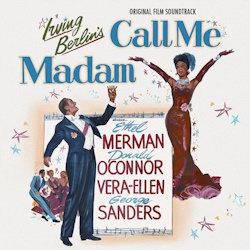
In 1951 20th Century Fox executives took notice of the success of the Broadway musical “Call Me Madam” which opened 12 October 1950, ran for 644 performances, and grossed in excess of $4 million. The film rights were purchased, Sol Siegel was assigned production with a $2.46 million budget, Walter Lang was tasked with directing, and Arthur Sheekman was hired to adapt the original story by Howard Lindsay and Russell Crouse. For the cast, Ethel Merman, who was intent on securing a dramatic role to expand her career, was coaxed into taking on the musical comedy, starring in the lead role as Sally Adams. Joining her would be Dennis O’Connor as Kenneth Gibson, Vera-Ellen as Princess Maria and George Sanders as General Cosmo Constantine.
The story offers a political satire, which spoofs America’s penchant for largesse in rebuilding Europe, which was devastated by WWII. Sally Adams, a wealthy Washington D.C., socialite, leverages political connections to secure her appointment as U.S. ambassador to the tiny Duchy of Lichtenburg. She is a political neophyte, in clearly over her head, and accepts an offer by a young journalist, Kenneth Gibson to join her staff as her press attaché. Upon arriving she makes a bad first impression with chargé d’affaires Pemberton Maxwell. Intrigue unfolds at court as Princess Maria’s arranged marriage to a neighboring land’s Prince Hugo, is in peril as her father Grand Duke Otto lacks a sufficient dowry to offer. Intrigue and comedy unfold when Sally is asked by foreign minister Constantine, for whom she has taken a liking, to secure a loan of $100 million from President Truman Kenneth pursues a scandalous romantic interest with a receptive Princess Maria. Both Sally and Kenneth manage to overcome all obstacles and a happy ending for all ensues. The film was a modest commercial success earning $2.85 million with reviews mostly favorable. It secured two Academy Award nominations for Best Costume Design, winning one for Best Scoring of a Musical Picture.
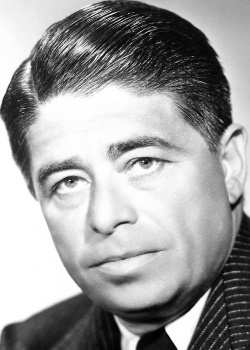
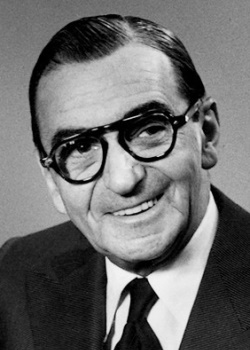 By 1953 Alfred Newman, the Director of Music at 20th Century Fox, was renowned for composing scores to support musicals, adding this fourth win to three prior Academy Awards triumphs for “Alexander’s Ragtime Band” (1938), “Mother Wore Tights” (1947), and “A Song In My Heart” (1952). As with “Alexander’s Ragtime Band, he was presented with a musical empowered by songs composed by Irving Berlin, a revered American icon. Newman would again use his well-known gift for drawing melodies from Berlin’s songs, and enriching them orchestrally to create a seamless score, which unifies the film’s musical narrative.
All the songs were written by Irving Berlin and Newman masterfully chose to use several as leitmotifs. Early in the film the melody from the song “The Hostess With The Mostes’ On The Ball” served as Sally’s identity. The song embodies Sally’s very essence, vibrant, self-assured, good-natured and buoyant. As the film’s narrative unfolds however, this theme is shed and replaced by a Newman created romanza from “The Best Thing For You”, which voices her love for Cosmo. The song “I Wonder Why?” serves as a shared theme for Sally and Ken. It offers a sad Love Theme, which voices his struggle with his fairytale romance with Maria, and Sally’s struggles in her romance with Cosmo. For the romance of Ken and Maria, the song “It’s A Lovely Day Today”, played when they meet for the first time serves as their Love Theme. It brims with sunny optimism and finds its highest expression when rendered as a danza felice. For General Cosmo Constantin the romantic ballad “Marrying For Love” serves not only as his theme, but also a testament of his romantic yearning for Sally. Lastly, interwoven within the score are many of Berlin’s song melodies rendered as dances and waltzes, all serving to create a free-flowing and unifying musical narrative.
0:00 “Main Title” opens with bravado as Ethel Merman emphatically declares the film title. The animated flow of the opening credits proceeds against sheet music supported by a choral declaration of the opening lines of the song “The Hostess With The Mostes’ On The Ball”, which then shifts to a festive orchestral rendering. At 0:37 strings romantico voice Cosmo’s Theme, the romantic ballad “Marrying For Love”. We then shift at 0:59 to a vibrant and sunny rendering of Ken and Maria’s Love Theme, the song melody for “It’s A Lovely Day Today”, closing at 1:23 on yearning strings romantico voicing the melody of “I Wonder Why”. At 1:44 script informs us of the film’s mythical setting with mixed chorus singing the song “Washington Square Dance”; At 1:58 we enter the film proper with Sally reciting her oath of office as she is sworn in as am American ambassador to the Grand Duchy of Lichtenburg.
4:04 “The Hostess With The Mostes’ On The Ball”, offers a musical highlight with showcases the power of Ethel Merman’s singular vocal. It reveals reporter Kenneth Gibson interviewing Sally, and asking how she came to get this job, which allows her to segue into her roots and upbringing with a playful and vibrant rendering of Berlin’s classic song. At 6:23 we segue into “Ken’s Proposition” atop Newman’s orchestral rendering of the “The Hostess With The Mostes’ On The Ball”, song melody as we see Sally hosting and dancing at her going away gala ball. She meets reporter Ken Gibson again and solicits him to dance at 6:49 carried by a spritely rendering of the song melody to “Washington Square Dance”. As they dance, he compliments her and makes an audacious offer to serve as her press attaché, which she politely declines. She excuses herself to take a call from President Truman and afterwards is cornered by the press to speak about Lichtenburg. She is rescued by Kenneth who hands her the notes ‘she dictated’ and with thanks announces that Mr. Gibson is her press attaché who will be joining her in her new assignment. Muted trumpets reale offer pomp and support her walk to the press room. As she reads Ken’s notes, followed by laudatory narration, we shift to “The Hostess With The Mostes’ On The Ball” melody, which Newman renders as a marcia maestoso. We close at 10:20 atop piano gentile, which supports the ball’s closing scene.
10:33 “Lichtenburg” opens with a panorama of the duchy supported by a refulgent musical narrative adorned with bells. As a montage of the people and culture of the duchy unfolds, mixed chorus sings with proud reverence the refrain of Berlin’s song “Lichtenburg’. “Sally Arrival” reveals Sally has gotten lost in Europe, which results in the prissy chargé d’affaires Pemberton Maxwell dressing down Ken and declaring that he will run the embassy with Mrs. Adams remaining discreetly out of sight. Shifting to the palace, the Duke and Duchess confront the reality that they cannot offer the required $2 million dowry for Princess Maria’s marriage to Prince Hugo. The privy council decides to solicit an American loan from to newly appointed ambassador. At 14:19 a theatrical rendering of the “The Hostess With The Mostes’ On The Ball” melody supports Sally’s festive arrival at the embassy. As she walks into the embassy the melody becomes spritely, yet dissipates as she meets the prissy and insufferable Maxwell. She is impervious to his pretentiousness and joins Ken for a meeting with the Prime Minister and Minister of Finance. To their shock and dismay, she shoots down their request for a loan in no uncertain terms and dismisses them. General Cosmo Constantine, the Foreign Minister then arrives and manages to charm Sally, who clearly struggles in maintaining her composure as she is smitten. She then asks him how much money does he desire, which elicits his confusion and we flow at 21:03 into a musical highlight, a big band rendering of the buoyant song “Can You Use Any Money Today?”, empowered by Ethel Merman’s animated and peerless vocal.
 Afterwards she begins to flirt and secures a dinner date next Tuesday at the embassy where she will serve roast turkey. The discussion shifts back to money with Constantine asserting that money cannot buy you everything, especially love. 26:10 “Marrying For Love”, begins with a prelude of the song’s melody borne by solo flute tenero, which elicits Cosmo to sing the romantic ballad. Empowered by Newman’s renown strings romantico, Cosmo’s performance sweeps Sally off her feet. He then departs leaving Sally in a trance supported by an orchestral refrain of the song melody. When Ken joins her, she snaps out of it and relates “Wow!” to have met General Constantin. 30:16 “It’s A Lovely Day Today” reveals Ken is buying a formal top hat for the palace ball. While waiting for it to be boxed, an orchestral rendering of the song melody wafts in from the music section of the store. Ken walks over to the phonograph and is approached by a beautiful woman, Princess Maria, who is unknown to him. She has mistaken him for an employee and asks if this tune is American. Ken answers yes and she asks if she could hear the lyrics. Well, Ken answers yes, and begins singing the sunny, and aspirational romantic song (their voices dubbed by Dick Haymes and Eileen Wilson).
At this point they begin to talk supported by an orchestral rendering of the song melody. He is surprised when an aide joins and addresses her as your highness, and she is surprised by his revelation that he is a patron, not an employee. We see that they are mutually attracted and at 33:51 she begins singing. He then takes up the song again at 34:30. After this, Maria departs with her security escort and Ken is given his boxed hat. He is happy, and as he departs, he sings the refrain, ending with “It’s a lovely day”.
35:30 “The Ball” opens with trumpeting fanfare reale as we shift to the palace and a display of the duchy’s gilded Coat of Arms. The dance floor is packed and Newman supports with eloquence, rendering the “It’s A Lovely Day Today” song melody as a valzer elegante. In an adjacent waiting room Sally waits for her formal introduction, rehearsing court etiquette with a flustered Maxwell. General Constantin arrives, much to her delight only to have trumpets reale declarations announce the arrival of the Grand Duke and Grand Duchess. A processione maestoso supports their entry and walk to their thrones. Additional fanfare reale supports the court herald announcing the ambassador of the United States of America. She approaches carried by a grand and sumptuous processione maestoso. Her curtsy misfires, lands her on her butt, and then she commits a faux pau believing that since this is a duchy, that they must be Dutch! Humor is used to diffuse the Grand Duke’s anger. As she departs her gown rips as Maxwell was standing on its train. At 42:32 the conductor resumes the valzer elegante, as the princess joins Ken on the dance floor. He drops all pretenses and says he believes that he is living in a fairy tale, that will not have a happy ending. When she asks why, he says because he has fallen in love with a princess. She is receptive and they dance away with the camera shifting to Cosmo and Sally. She alludes to being fond of him and suggests spending more time together. Yet the moment is lost when the Grand Duke cuts in to dance with her. When he asks if this ball is similar to those in America, she says, no, in America we have fun. He grants her request to show him and Sally asks the conductor for some ‘sizzling’ music. He returns with sheet music to Irving Berlin’s “The International Rag”, which she approves.
46:10 “The International Rag”, Sally takes the stage, says to the orchestra, “Hit it guys”, and launches into a wonderful musical highlight, with a vibrant and vivacious performance of the iconic song.
48:05 “Dance Medley” offers a wonderful score highlight where Newman’s graces us with a parade of beautiful waltzes. Her performance elicits spirited applause and cries of Bravo! She tells the band to hit it again as she rushes to the dance floor and into Cosmo’s arms. Newman supports the now festive dance floor with an orchestral parade of Berlin’s song melodies render as waltzes. At 48:42 a beautiful confluence of music and dance is achieved as Ken and the Princess dance out onto a garden terrace. Newman graces us with their Love Theme, “It’s A Lovely Day Today” rendered as a valzer romantico, shifting at 48:58 to the spirited lightness of a danza felice. At 49:56 a glorious crescendo romantico carries their dancing ascent up a flight of stairs, yet instead of a grand climax, it dissipates and the melody resumes their danza felice with a spirited performance, which ends in a flourish. Yet when he leans in to kiss her, their theme grows sad as she draws back and says they should get back to the ball. He never the less kisses her. She says that was impertinent, but then adds, no it was not, as she runs away carried by their tender theme. At 52:32 she rejoins the ball which Newman supports with an original valzer elegante. Prince Hugo sees her run by from the terrace and looks suspiciously at Ken who also comes in from the terrace. After Cosmo is summoned by the Duke, Maxwell sow seeds of mistrust with Sally, saying that she is being played by a duplicitous minister, and that he has no romantic interest in her.
55:20 “It’s A Lovely Day Reprise” reveals Ken, at Sally’s request, writing a press release about her night. His mind is elsewhere as he writes and begins softly singing the song’s lyrics, draped in otherworldly auras. A woman unseen begins to sing the song, which elicits him to go to the balcony. He returns and is joined by Sally who recognizes that something is bothering him as a ghostly quote of the song supports. 56: 40 “I Wonder Why/You’re Just In Love”, offers a wonderful musical highlight! It reveals Ken singing with romantic yearning. At 57:36 Sally begins singing with vibrant assurance, and then at 58:12 they begin a wonderful duet in which their songs entwine in a tête-à-tête, masterfully supported by Newman’s vibrant big band arrangement. She tells him to snap out of it! We then close with a reprise of the duet, which ends with Sally hugging Ken. 59:42 “Lichtenburg Fair” reveals a flag declaring this event fluttering in the wind supported by refulgent strings and fanfare. We shift to main street where a parade with a marching band plays the festive and celebratory melody of Berlin’s “Dance to the Ocarina” song. A sparkling crescendo usher in at 1:01:00 Maria singing and dancing happily to “Dance to The Music of the Ocarina” supported by a small ensemble and choir of four ocarinas.
A reprise of the song melody follows and supports Maria leading a dance troupe. At 1:02:39 an accelerando energizes the melody and Maria’s festive dancing, which ends with a flourish, much to the Duke and Duchess’ delight. A coda of the song melody supports Maria being carried away by the male dancers. 1:04:07 a soft strolling rendering of the song melody supports the Prime and Finance ministers preparing to greet Sally, who has just arrived. After a warm welcome, she accepts a limousine ride to the royal box. The Prime Minister shamelessly makes a pass at her, which arouses her indignation and causes her to bolt the car. 1:06:11 “Sally and Cosmo” reveals him joining her. She is standoffish and suspicious of his motives, poisoned by Maxwell’s ill-counsel, while he is enamored. Newman supports their stroll with a promenade gentile. At 1:07:55 we shift to Ken joining Maria on the fairgrounds softly supported by the Ocarina song melody. Prince Hugo sees them chatting, joins, and curtly dismisses Ken. Hugo then follows and threatens Ken, ordering him to leave Lichtenburg. Ken is polite, not intimidated and saved from Hugo’s anger by Maria, who takes Hugo by the arm and says they must return to the royal box.
1:11:23 “What Chance Have I With Love?” offers another score highlight where Newman’s musical arrangement enhances the scene. It is past midnight, and Ken is getting drunk in a saloon, as he is dejected by his fairytale love of a princess that will never be realized. He sings a song whose lyrics speak to a man’s frustrated desire for love, yet the music is animated with comedic accents. At 1:12 34 he begins dancing supported by a comedic orchestral rendering of the song’s melody. He then resumes his singing. At 1:13:13 the owner begs him to go home, but instead the music becomes spirited as Ken begins an animated and comedic dance. Drunken buffoonery unfolds with, a tambourine and a zany foot played xylophone as he begins smashing chairs, plates, and tables, which forces the owner to call the police. At 1:15:12 Newman unleashes a musical accelerando of destruction as Ken releases dozens of decorative balloons. Masterful is how Newman’s musically syncs with each of Ken’s rhythmic dancing foot strikes, each of which pops a balloon. The next day in an unscored scene, Ken is summoned by Sally. She is sympathetic to his romantic plight and decides against sending a disciplinary report to Washington D.C., which would result in his termination. She receives a call from the princess and sends Ken through the secret tunnel to the palace to retrieve a message for her. 1:19:53 “The Rendezvous” reveals Ken setting off in the secret passage. Newman drapes the “I Wonder Why” song melody in ethereal auras of mystery. He is surprised to meet the princess. She is worried about Hugo’s threats, and they hug, happy to be together. He asks her not to marry Hugo, and she discloses that she is happy that it will not happen because she has no dowry. She asks him to kiss her, which he does. She relates that she likes being in his arms, and was thankful he asked her to dance at the ball, which elicits him to offer another dance. 1:22:03 “Something to Dance About” offers a joyous danza felice as our two lovers sing a duet and dance in the wine cellar.
At 1:22:52 we shift to a spirited big band orchestral rendering of the dance joined by their virtuoso dancing. Later that evening Sally prepares to entertain Cosmo, she informs President Truman of her plan to put him in his place.1:27:36 “Sally and Cosmo” reveals his arrival, where he kisses her hand and she begins to swoon. A string borne romanza unfolds as she demands that they put their cards on the table, and that he be straight forward as to what he wants. He answers, well, of course and takes her into a passionate kissing embrace. 1:29:52 “The Best Thing For You” reveals Cosmo taking to the piano and playing a tender prelude, which draws her to sit next to him and begin singing the romantic ballad, draped with Newman’s renown lush strings romantico. As Cosmo speaks of his amazement of her, Newman shifts the song melody to a solo violin d’amore. Strings romantico join and the melody blossoms as Cosmo then reprises the song’s last words: “I ask myself what’s the best thing for you, and myself and i seem to agree, that the best thing for you would be me”.
The next day while talking to President Truman, Sally asks sheepishly, if he could spare $100 million. We shift to the exterior of the embassy where Maxwell greets the arrival of three senators. 1:35:53 “Embassy Party” reveals Sally’s lavish party for the three senators. Newman supports with the song melody of “Something to Dance About” rendered as a danza felice. In the study at 1:37:14 Cosmo and Sally’s intimate moment is interrupted by Lichtenburg ministers, who advise Cosmo that the government has fallen, and that he is now prime minister. Newman shifts to a valzer gentile as Cosmo contemplates what has transpired. He meets with the three senators and firmly declines all offers of a loan, saying acquiring more debt would undermine the reform effort he must take. They are impressed, huddle, return, and commend Cosmo’s statesmanship. They then declare that instead of a loan, they will lend Lichtenburg $200 million, which causes the cabinet to applaud joyously. Cosmo however will have none of it, resigns as prime minister and departs aggrieved. Sally runs after him, apologizes saying she was only trying to help, and that she loved Lichtenburg and him. Undeterred he departs saying Lichtenburg is not for sale. She is distraught an at 1:41:42 and as she goes to her room, Newman supports with the song melody for “The Best Thing For You” borne achingly by strings tristi.
1:42:22 “Ken Brings Sad News” reveals a shift to the wine cellar where Ken and the princess enjoy a second romantic rendezvous. He discloses the news of the loan, which will fund the dowry and allow her to marry Hugo. He pleads with her to give up the throne and return to America with him. After a kissing embrace, she departs, conflicted by love and duty. Ken then sadly returns to the embassy, which Newman supports with a tender musical narrative tinged by sadness using the song melody for “It’s A Lovely Day Today”. Ken joins Sally in her room, both saddened by impediments to love. 1:45:00 “I Wonder Why/You’re Just In Love Reprise” offers a reprise of the wonderful duet sung earlier in the film, however this time the singing roles are reversed, with Sally singing the woe’s me “I Wonder Why” and Ken singing the optimistic “You’re Just In Love”. The entwining of these two songs in a tête-à-tête, is once again masterfully supported by Newman’s vibrant big band arrangement. Yet we end sourly with Sally and Ken both reconciled to the reality that love will elude them. She then receives a call from President Truman who recalls her to Washington D.C. at the request of Prime Minister Sebastian for interfering in the royal wedding plans.
1:47:48 “Sally Supper and Dance” reveals an ocean liner taking Sally and Ken back to Washington D.C. supported by a spritely prelude using the “Mrs. Sally Adams” song melody, which then flows into a vocal version sung by a trio of women. The vibrant and buoyant performance begins with a solo voice, shifts to duet, and finally to a trio. 1:48:48 “It’s A Lovely Day Today Reprise” offers a spirited orchestral rendering of the song melody as we see a crowded dancefloor with Sally surrounded by the rich and powerful. Ken pulls Sally aside to offer good news – Cosmo has just arrived to assume his new post as Lichtenburg’s ambassador. He then adds that Cosmo traveled with a woman, and will attend the ball with her. Sally tries to maintain her composure and turns to the herald as he announces the arrival of the Ambassador of Lichtenburg. He greets her warmly, she however is cool and unreceptive, but all this changes when the herald announces the arrival of Cosmo’s traveling friend – Maria Hellmanschlafen. Sally is shocked that it is the princess and they reacquaint warmly. Sally then directs her outside where Ken waits as Cosmo takes Sally’s arm and makes an announcement – that she is awarded Lichtenburg’s highest honor, the medallion of the Order of Philip the First, which comes with the title Dame. She is happy and gracious, as the camera shifts to the balcony where Maria joins Ken. He is surprised, more so when she discloses that she has relinquished her title of princess, and has the Grand Duke’s blessing to marry him. They join in a kissing embrace, and we shift back to the dancefloor where Cosmo is warmly welcomed. 1:52:41 “I Wonder Why/You’re Just In Love Reprise” reveals Cosmo turning to Sally, taking her hand, as he sings the love song. As he sings, I wonder why, I wonder why?” Newman shifts from the love ballad to the vibrant big band rendering of “You’re Just In Love” sung by Sally as she dances. Soon the crowd chorus joins and then Sally, Cosmo, Ken and Maria join hand in hand as couples dance around them, and we conclude the film with a wonderful happy flourish.
Albums featuring music from Call Me Madam have been released multiple times, on both vinyl LP and CD, but Only Irving Berlin’s songs are available – none of Newman’s score. The track listing below is for the 2004 British CD release on the Hallmark Music & Entertainment label. As such I encourage the reader to view the songs and scores in film context on one of the many streaming services. It is easy to understand why this musical romantic comedy resonated with the public; it’s fun, never takes itself too seriously, has wonderful dance performances, features classic songs by Irving Berlin, offers Ethel Merman’s signature, powerful vocal, all joined in a seamless musical narrative masterfully scored by Alfred Newman, who secured a well-deserved Academy Award win. Newman wove together all the various song vignettes, dance performances and scenes without songs using the melodies of Berlin’s songs, which he richly orchestrated and enhanced. The adaptation of love songs into love themes, and energetic songs into fuel to empower the film’s pacing and forward momentum is a testament to Newman’s gift. At the end of his remarkable career, seven of Newman’s nine Academy Award wins would come from his scoring of musicals. This film in my judgement was enhanced in everyway by his adaptations and largely contributory to the film’s success. Folks, scoring a musical just does not get any better than this and I highly recommend you take in this Golden Age classic.
For those of you unfamiliar with the score, I have embedded a YouTube link to “Can You Use Any Money Today”; https://www.youtube.com/watch?v=D-10D3WLfWE&list=PLICjin9KfTGpTcP3Plf-9HsFMxxbXM-MK
Buy the Call Me Madam soundtrack from the Movie Music UK Store
Track Listing:
- Hostess With The Mostes’ On The Ball (written by Irving Berlin, performed by Ethel Merman) (X:XX)
- Can You Use Any Money Today (written by Irving Berlin, performed by Ethel Merman) (X:XX)
- Marrying for Love (written by Irving Berlin, performed by George Sanders) (X:XX)
- It’s a Lovely Day Today (written by Irving Berlin, performed by Donald O’Connor and Carole Richards) (X:XX)
- That International Rag (written by Irving Berlin, performed by Ethel Merman) (X:XX)
- I Wonder Why/You’re Just in Love (written by Irving Berlin, performed by Ethel Merman and Donald O’Connor) (X:XX)
- The Ocarina (written by Irving Berlin, performed by Carole Richards) (X:XX)
- What Chance Have I with Love? (written by Irving Berlin, performed by Donald O’Connor) (X:XX)
- Something to Dance About (written by Irving Berlin, performed by Donald O’Connor and Carole Richards) (X:XX)
- The Best Thing for You (Would Be Me) (written by Irving Berlin, performed by Ethel Merman and George Sanders) (X:XX)
- Call Me Madam Finale (written by Irving Berlin, performed by Ethel Merman and George Sanders) (X:XX)
Hallmark Music & Entertainment 705252 (1953/2004)
Running Time: XX minutes XX seconds
Music composed and conducted by Alfred Newman. Orchestrations by Herbert W. Spencer and Earle Hagen. Recorded and mixed by XXXX. Score produced by Alfred Newman. Album produced by XXXX.

Shop at the Movie Music UK Store

Member of the

 MOVIE MUSIC UK