TRUE LIES – Brad Fiedel
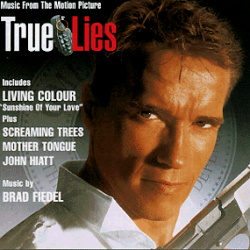 THROWBACK THIRTY
Original Review by Jonathan Broxton
One of the best and most enjoyable action-comedies of the 1990s was True Lies. A remake of the 1991 French film ‘La Totale’ by Claude Zidi, it was written and directed by James Cameron in what was his first theatrical movie since Terminator 2: Judgment Day in 1991. The movie stars Arnold Schwarzenegger as Harry Tasker, a seemingly ordinary computer salesman who is actually a secret agent working for a covert U.S. government organization called Omega Sector. His wife Helen (Jamie Lee Curtis) is unaware of his true occupation, but feels bored and unfulfilled in their marriage, longing for some excitement in her life. Harry’s double life starts to unravel when he begins to suspect that Helen might be having an affair with a used car salesman named Simon (Bill Paxton), who pretends to be a secret agent to seduce women. Harry’s jealousy leads him to use Omega Sector resources to investigate Helen, eventually pulling her into his world of espionage and action. The situation becomes even more complicated when a group of terrorists called the Crimson Jihad, led by the ruthless Salim Abu Aziz (Art Malik), threatens national security with a stolen nuclear warhead.
The film was a smashing success which combined family comedy with a thrilling James Bond-style action adventure as Harry and Helen work together as secret agents to foil the terrorist plot; this leads the two of them into a series of hair-raising adventures including (but not limited to) a hilarious and sexy seduction scene where Helen is supposed to pretend to be a high end prostitute, a high speed car chase down the famous Seven Mile Bridge in the Florida Keys, and a finale in which Harry uses a fighter jet equipped with cruise missiles to take down the terrorists in a Miami skyscraper. The film had a substantial budget of around $100 million, making it one of the most expensive films of all time at the time, but it grossed over $378 million worldwide, was nominated for an Oscar for its Visual Effects, and saw Jamie Lee Curtis winning the Golden Globe for Best Actress in a Motion Picture Musical or Comedy. Despite its success, Cameron’s plans for a sequel never materialized, partly due to the events of September 11, 2001, which made the film’s terrorism-related themes less palatable for audiences, although a very belated TV series based on the movie debuted on CBS in 2023, lasting for just one season.
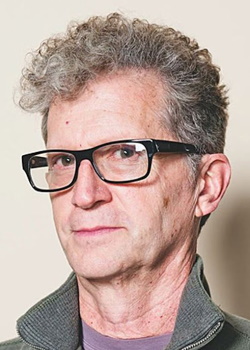 The score for True Lies was by Cameron’s frequent musical collaborator Brad Fiedel. They previously worked together on The Terminator in 1984 and Terminator 2: Judgment Day in 1991 when mostly electronic scores were required, but when more orchestral approaches were needed Cameron turned to James Horner for Aliens in 1986 and Alan Silvestri on The Abyss in 1989. Despite his significant experience writing music for a vast array of different films and TV movies in the 1980s, writing for a large orchestra was not something that Fiedel had a lot of experience with, and so to realize True Lies’s hybrid approache, he turned to veteran orchestrator/composer/conductor Shirley Walker for help. Walker had worked with Fiedel before, conducting his score for The Accused in 1988, and had provided similar services for both Hans Zimmer and Danny Elfman in the early parts of their careers as they transitioned from an electronic sound to something more orchestrally robust, and so she was a perfect choice to help Fiedel again here. Walker is credited as both conductor and orchestrator on True Lies, and her influence on the score is significant enough that there are occasional fleeting tonal similarities between it and scores like Batman, Black Rain, Dick Tracy, Darkman, and even her own score for Memoirs of an Invisible Man.
The score is dominated by a main theme, introduced in the “Main Title,” and includes a half dozen lengthy action sequences which underscore each of the film’s main set pieces. The main theme is a fun, bombastic march-like theme which bounces a series of staccato phrases around the orchestra. The rhythmic part of the theme is unique, if not downright bizarre, a 5-note motif that has an almost indescribable internal time signature, and is very similar in fact to the odd metric device that defined the main theme for The Terminator. Spiky strings and percussive brasses dominate the theme’s sound, but it is all underpinned with a relentlessly energetic pulse, and finishes with a sort-of brass fanfare that will later come to establish itself as a motif for Harry in his most heroic moments. The second half of the opening cue, “Harry Makes His Entrance,” then contains a jazzy, slick rhythmic idea for plucked basses, finger snaps, and cool electronics that over time also comes to establish itself as a motif for Harry’s espionage moments.
“Escape from the Chateau” is the first of the score’s main action sequences, underscoring the scene where Harry has to make a quick getaway from a billionaire art dealer’s party in Switzerland, while being pursued on skis and snowmobiles by a platoon of henchmen. This cue establishes the score’s primary action music identity; layers of rhythmic instrumental textures passing various intricate percussive patterns around different sections of the orchestra, interspersed with occasional flashes of either the main theme, the Heroic Harry fanfare, and the Harry Espionage motif. The sound of these action sequences is definitely unique and unlike any other action music that was being written in the 1990s, but I wonder how much of this is down to the fact that this music was clearly written initially by Fiedel on synthesizers, and then ‘beefed up’ by Walker for the full orchestra.
I don’t mean this uncharitably, but you can really tell that this was the case – Fiedel’s writing is so clearly based on keyboard layers rather than fully orchestrated live instruments, that Walker’s attempts to transform those different layers into strings, brass, and woodwinds feel off-kilter, a little unnatural, sometimes jumbled and chaotic. However, ironically, this is also what gives True Lies such a unique sound. This is something that is so clearly different from everything else that was being written at the time, with its peculiar time signatures and frantic clutter of sounds, that the end result feels like a sort of fascinating experiment that almost goes right, but is actually just ‘wrong’ enough that it ends up being really enjoyable. I don’t know if any of that makes sense, but that’s how it makes me feel.
This approach continues all through most of the rest of the action sequences. In “Harry Rides Again,” which underscores the scene where Harry and his partner Gib (Tom Arnold) pursue the terrorist Abu Aziz through a suburban shopping mall and hotel, including at one point while on horseback, Fiedel sometimes injects a sort of light western vibe into the mix through the use of more prominent acoustic guitars. In “Island Suite,” which underscores the scene where Harry and Helen fight their way out of a terrorist compound and Helen amusingly observes that she ‘married Rambo,’ Fiedel begins with some abstract and sinister textures that actually remind me a little of Alan Silvestri’s score for Predator, before launching into an extended sequence of intense and sometimes quite brutal percussive action in the cue’s second half. Then in “Causeway/Helicopter Rescue,” which underscores the breathless chase along the Seven Mile Bridge in the Florida Keys, Fiedel makes excellent use of the main theme, both in its full form and in various deconstructed snippets, along with some complicated throbbing percussion patterns. The huge flourish of the main theme that erupts as Harry (in a helicopter) successfully plucks Helen from the sunroof of a speeding and out-of-control limousine just as it plunges into the Gulf of Mexico, is outstanding.
Interestingly, “Harry Rides Again” also introduces a little motif for vaguely Middle Eastern-sounding woodwinds which may be a musical marker for Abu Aziz. You can hear it again briefly in a couple of other cues, but it’s never clearly defined or properly developed, which is disappointing. In fact, the lack of any significant thematic material relating to Abu Aziz, the terrorists, or their femme fatale collaborator Juno, is one of the score’s main letdowns.
Away from the action music, the shorter cues on the album tend to relate to Harry’s domestic life and his romantic relationship with Helen. “Harry’s Sweet Home” has a lightly comedic sound that wouldn’t sound out of place in a 1980s sitcom. “Caught in the Act” is a brief, quirky, almost circus-like scherzo that accompanies the scene where Harry and his Omega Sector buddies catch Helen and Simon in flagrante and chaos ensues. “Shadow Lover” is a saxophone-and-keyboard love theme for Harry and Helen that is actually quite lovely, but sounds impossibly dated to contemporary ears; the same melody is adapted later into the expansive sweep of the “Nuclear Kiss,” one of the score’s prominent hero moments.
“Harry Saves the Day” is the score’s explosive finale, which sees Harry commandeering a US Navy fighter jet and taking it to buzz a downtown Miami skyscraper, where Abu Aziz and the terrorists have taken Harry’s teenage daughter Dana (a young Eliza Dushku) hostage. He eventually manages to attach Abu Aziz to one of the jet’s onboard missiles, which he then uses to blow up the Crimson Jihad terrorists, quipping ‘you’re fired’ as he does so. Fiedel’s music takes on a stylish, almost modernistic edge here, with smooth electronic textures actually taking precedence over the orchestra for large parts of it, before the whole thing concludes with a superb, heroic, celebratory flourish.
In addition to the score, the Epic Soundtrax album also features several songs, including two different covers of the 1967 Eric Clapton/Cream classic “Sunshine Of Your Love” by funk metal band Living Colour, and a cover of The Youngblood’s “Darkness, Darkness” by grunge band Screaming Trees. Disappointingly not included, however, is the Sade song “I Never Thought I’d See the Day,” which Jamie Lee Curtis dances to in the infamous hotel striptease sequence; and nor is the famous tango “Por Una Cabeza” by Carlos Gardel, to which Harry and Helen dance on several occasions.
I can see how some listeners might experience this score and come to the conclusion that it’s not very good. The peculiarity of Brad Fiedel’s compositional style, and the unique and unusual way Shirley Walker shifts it from its original synth arrangement to the full orchestra, takes some getting used to, and depending on what frame of mind you are in you could end up thinking that is sounds irredeemably amateurish and unsophisticated. Personally, however, I have always found this score to have a certain knockabout charm, and the slightly unpolished way that Fiedel’s music is rendered only adds to that. The main theme is fun and memorable, and the action music is wholly unique.
I always thought it was a shame that Fiedel never really followed up True Lies with another box office hit; in the decade that followed he only scored one or two more major projects – Johnny Mnemonic in 1995, and the acclaimed TV movie Rasputin in 1996 – before essentially retiring from film at the turn of the millennium. He now splits his time between Santa Barbara and Mexico, and focuses primarily on writing original musicals. I always thought that the orchestral palette he used on True Lies could have been developed into some pretty decent stuff, given time but, unfortunately, we’ll never know what could have been, and instead we are left this enjoyable, but bizarrely idiosyncratic orchestral experiment.
Buy the True Lies soundtrack from the Movie Music UK Store
Track Listing:
- Sunshine of Your Love (written by Jack Bruce and Eric Clapton, performed by Living Colour) (5:17)
- Darkness, Darkness (written by Jesse Colin Young, performed by Screaming Trees) (4:08)
- Alone in the Dark (written by John Hiatt, performed by John Hiatt) (4:46)
- Entity (written by Christian Leibfried, Geoff Haba, Bryan Tulao, and David Robert Gould, performed by Mother Tongue) (4:21)
- Sunshine of Your Love – The Adrian Sherwood & Skip McDonald Remix (written by Jack Bruce and Eric Clapton, performed by Living Colour) (5:49)
- Main Title/Harry Makes His Entrance (2:40)
- Escape from the Chateau (2:41)
- Harry’s Sweet Home (1:06)
- Harry Rides Again (7:05)
- Spying on Helen (4:16)
- Juno’s Place (1:29)
- Caught in the Act (1:29)
- Shadow Lover (1:20)
- Island Suite (6:55)
- Causeway/Helicopter Rescue (7:56)
- Nuclear Kiss (0:51)
- Harry Saves the Day (8:26)
Epic Soundtrax EK-64437 (1994)
Running Time: 70 minutes 35 seconds
Music composed by Brad Fiedel. Conducted by Shirley Walker. Orchestrations by Brad Fiedel, Shirley Walker and Richard Bronskill. Recorded and mixed by Tim Boyle. Edited by Allan Rossen. Album produced by Brad Fiedel.

Shop at the Movie Music UK Store

Member of the

 MOVIE MUSIC UK