THE RED DANUBE – Miklós Rózsa
 GREATEST SCORES OF THE TWENTIETH CENTURY
Original Review by Craig Lysy
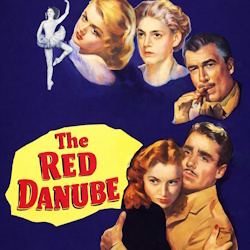
MGM Studios took an interest in the 1947 novel “Vespers in Vienna” by Bruce Marshall, believing that it would be well received by the post WWII American public beset by the rising tide of fear related to Communism. Carey Wilson was assigned production with a $1.96 million budget, George Sidney was tasked with directing, and Gina Kaus and Arthur Wimperis were hired to write the screenplay. An excellent cast was assembled, including Walter Pidgeon as Colonel Michael “Hooky” Nicobar, Ethel Barrymore as Mother Superior, Peter Lawford as Major John “Twingo” McPhimister, Angela Lansbury as Audrey Quail, and Janet Leigh as Maria Buhlen.
The film was one of several anti-Communist films made in Hollywood in the early days of the Cold War. The story is set in post WWII Austria and follows righteous but agnostic British Col. Nicobar who has been assigned to Vienna. The city, like Berlin, is divided into four sectors: American, British, French and Russian. Nicobar and his junior officers are tasked with assisting the Soviet authorities in locating and repatriating Soviet citizens. Over time, Nicobar comes to realize the immorality of sending people seeking freedom back to a brutal totalitarian state. Tragedy unfolds when subordinate, Maj. John “Twingo” McPhimister falls in love with Maria, a beautiful ballerina who has sought sanctuary in the convent. Mother Auxilia protects Maria and lectures Nicobar on the nature of Christianity, which precipitates his rediscover of his faith. He successfully lobbies against forcible repatriation, but his actions are too late to save Maria, who kills herself instead of returning to Russia. The film was a commercial disaster, losing $905,000. Critical reception was also unfavorable, and the film received only one Academy Award nomination for Best Art Direction.
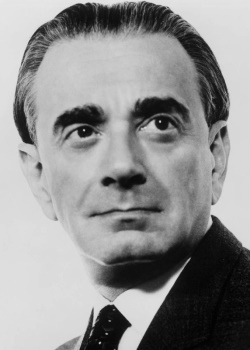 Director George Sidney selected Miklós Rózsa’s for the assignment given his European Hungarian heritage. Upon viewing the film Rózsa immediately perceived that the Soviets draped the story with a dark and grim pall, which elicited fear. Their presence is pervasive even when their officials are not on screen as it is their agenda, which is driving Nichols’ efforts. Yet juxtaposed to this darkness is the light born of the romance between Twingo and Maria. Rózsa correctly conceived that his musical narrative would contrast the totalitarian darkness with the romance of two lovers caught in a divided world, buttressed by the redemptive and healing power of Christian love.
For his soundscape, Rózsa composed two primary themes; The Soviet Theme offers a grim, menacing and oppressive narrative empowered by horns brutale. Rózsa imbues the theme with menace, brutality and inhumanity, especially when the theme transforms into a marcia terrore. Juxtaposed is the sumptuous, string borne romanticism of Twingo and Maria’s Love Theme. This melody is dichotomous in that on the personal level it speaks to our lover’s love for each other, while on the transpersonal level it speaks as a condemnation of the totalitarian Soviet state. Rózsa masterfully sow tension by contesting these two themes to propel the film’s dark narrative. The British Theme, empowered by French horns nobile, offers a forthright, determined, and righteous statement, which ascends and descends, evoking the noble ideals of Colonel Nicobar and his subordinates. The song traditional song Row, Row, Row Your Boat”, which serves as a leitmotif used to evoke good spirits, comradery, as well as a happy-go-lucky traveling motif.
Lastly, to provide the requisite contemporaneous cultural sensibilities, Rózsa infused his soundscape with popular music of the time, including; “On the Atchison, Topeka and the Santa Fe” by Harry Warren, the traditional roundel “Row, Row, Row Your Boat”, “An Der Schönen, Blauen Donau, Op. 314 (On the Beautiful Blue Danube)” by Johann Strauss, “Rondo Brillante in D Flat Major, Opus 65” by Igor Kamenz, “You’ve Got to See Mamma Ev’ry Night (or You Can’t See Mamma at All)” by Con Conrad and Billy Rose, and “Onward, Christian Soldiers” by Arthur Sullivan and Sabine Baring-Gould
Cues coded (*) contain music not found on the album. “Main Title” offers a score highlight where Rózsa introduces his three primary themes and establishes the tone of the film. It opens atop horns dramatico declaring the Soviet Theme, which replaces the usual MGM logo anthem. As the credits unfold, the oppressive Soviet Theme establishes a grim musical narrative. At 0:38 we segue atop strings appassionato into the Love Theme, which supports the display of the film’s Title. The credits continue against a backdrop of deportation trucks repatriating captured Soviet citizens. At 1:00 dire Soviet Theme resurges as we witness an unending caravan of trucks overloaded with human cargo. At 1:29 we enter the film proper against the backdrop of the Vatican atop warm French horns nobile, which introduce the British Theme as we read “Rome – After World War II”. Sergeant David Moonlight arrives at British 84th Army Group headquarters.
(*) “Audrey and Twingo Say Goodbye” reveals Audrey Quail being informed by her commander, Colonel Nicobar that they have been reassigned to Vienna. She joins Major John McPhimister AKA Twingo, an unrequited love interest, at a tavern to say her goodbyes. A spritely instrumental rendering of the Harry Warren song melody for “On the Atchison, Topeka and the Santa Fe” supports the tavern ambiance. Back a HQ, Twingo surprises Nicobar when he requests joining him in Vienna. (*) “Departure From Rome” reveals Sergeant Moonlight driving Nicobar, Twingo and Audrey through the countryside outside Rome to the airport. They all break into a singing rendition of the classic tune “Row, Row, Row Your Boat”, which serves as a happy-go-lucky traveling motif. The song melody is sustained in a scene change, which displays “Vienna – After World War II as we see the Austrian capital city, which has been divided like Berlin, into four allied controlled quadrants. Rózsa interpolates “An Der Schönen, Blauen Donau” (On the Beautiful Blue Danube) by Johann Strauss into the musical narrative to establish the Viennese ambiance. The “Row, Row, Row Your Boat” song melody carries us to British Headquarters of the 52nd Army Group. Inside Brigadier General Catlock ribs Colonel Michael “Hooky” Nicobar, who is well known of his aversion to religion, that he will be billeting at a convent.
“Hooky’s Billet” reveals Nicobar, Twingo and Audrey traveling to the convent carried by the “Row, Row, Row Your Boat” traveling motif. At 0:04 the melody fades, replaced by auras of religious solemnity as Mother Auxilia greets them and escorts them into the convent. Inside, women’s chorus sings a religious hymn in Latin. The singing continues as Nicobar is shown his room, and Twingo accepts an invitation to join the nuns in the chapel. After sitting, he becomes captivated by a beautiful yet mysterious woman, Maria Buhlen, who, unknown to him, is really Olga Alexandrova, a famous Russian ballerina. Afterwards, Mother Auxilia refuses his request to divulge her identity. Later, Audrey is able to obtain the identity of the woman, and gifts it to Twingo, who races off to find her. (*) “Twingo Meets Maria” reveals him entering a building, where he discovers a stage and ballerinas dancing to a graceful piano rendering of Rondo Brillante in D Flat Major by Igor Kamenz, arranged by C. Tausig. He is again captivated by her beauty and grace. He discovers a sergeant watching and when he inquires, he is told that the Vienna Opera House was bombed out and that its ballet troupe practices here. After rehearsal, Maria leaves the stage and her and Twingo’s eyes lock as she drinks some water, yet she refuses to meet him, and as she returns to rehearsal, he departs, saying he will return tomorrow night.
In an unscored scene the love struck Twingo complains to Nicobar, only to see Mother Auxilia escorting Maria down the stairs. She introduces Maria Buhlen to them, and much to Twingo’s delight she accepts his dinner invitation. (*) “Dinner” reveals Twingo and Maria enjoying the moment, and bonding with Rózsa softly supporting in the background with a danza romantico. Later he escorts her to her apartment and she invites him in. A nascent emergence of the Love Theme, a romance for strings, informs us of their shared affection. He accepts her proposal that they begin slowly as friends, and offers to take her to her rehearsals. As he departs, she smiles with delight as the theme shifts beautifully to woodwinds tenero. After she closes the door, a menacing quote of the Soviet Theme swells as we see a man in the shadows move to the apartment registry, and light a match that reveals Maria Buhlen.
(*) “Olga Alexandrova” reveals that the next day General Catlock informs Nicobar that the Soviets are pressuring them to locate a person of high interest, Olga Alexandrova. Nicobar rages to Audrey that he needs Twingo to stop his nightly dates with Maria and assist him locate and acquire her. As he says her name a dire quote of the Soviet Theme sounds, and then surges on a crescendo dramatico as Twingo races up the stairs to Maria’s apartment. The music crests tragically as he sees the door busted in, and the apartment, ransacked. A lurking and menacing statement of the Soviet Theme closes the scene as he departs. In an unscored scene Twingo returns to the convent and is advised by Mother Auxilia that Maria has sought sanctuary. Twingo is relieved and learns the truth as Maria reveals that she is a Russian citizen, her family members of the Volga Germans who settled in Russia many years ago. She says that she was the Prima Ballerina of the Bolshoi when war broke out. She becomes distraught as she fears she will be deported and die in Siberia like her parents.
“The Colonel’s Decision” reveals the arrival of Russian soldiers at the convent. Russian Colonel Piniev demands they hand over Maria, a Russian citizen, so she may be repatriated. Mother Auxilia agrees to allow a search of the convent to confirm that Maria is not here. Rózsa sow tension with a sinister Soviet Theme as they search the convent. Colonel Piniev then personally searches the chapel looking at each praying nun closely, but misses Maria who is embedded, dress like a nun with them. He then apologizes to Mother Auxilia and Colonel Nicobar, advises that Maria is wanted as she is a great ballerina, adding that she would be treated very well. The cue opens tentatively, yet with warmth atop the British Theme as Twingo, Maria and Mother Auxilia express relief. However, the musical narrative becomes aggrieved when Colonel Nicobar announces his intention to turn Maria over to the Soviets the next morning. The music at 1:10 becomes pleading as he states that, Colonel Piniev has convinced him that the Soviets only wish to honor Maria. She vehemently contests this, buttressed at 1:27 by horns sinistri as she declares otherwise. Rózsa sow grim finality when Nicobar orders Major McPhimister to have Maria in his office at 0900 as she is to be remanded to the Soviets. Mother Auxilia locks the convent door, but then gives Twingo the key, informing us that he should use it to help her escape. A molto tragico rendering of the British Theme supports him going to Maria and offering her the key. The theme becomes aching at 2:19 as she pleads that he not place himself and his career at risk. At 2:41 we shift to an aching solo violin romantico when he gives her the key, asks that she contact him once she is safe, and then walks away. We close, full of foreboding as Twingo sees the return of Colonel Piniev and his men.
(*) “Olga Alexandrova Surrenders” Colonel Nicobar chastises Twingo, and orders Audrey to hide Maria in her quarters. Colonel Piniev arrives and states that he counted twenty-five nuns, which is one more that what is registered. Colonel Nicobar concedes and asks that Maria be brought down, however she comes down defiantly supported by a dire rendering of the British Theme. Piniev welcome here back, and assures her that the state will rejoice with the return of their prima ballerina. We close with the theme becoming aggrieved as she is taken into custody. After their departure, Nicobar and Twingo lock eyes and reveal a rift, with Twingo angry, and Nicobar unsettled and questioning. The aftermath is unscored as Mother Auxilia excoriates Nicobar for placing duty over humanity and justice. He becomes enraged at her very personal attack of his scruples and departs in a huff. Days later we are informed that Mother Auxilia has been secluded and praying for Maria. He then asks Twingo to join him in visiting renowned Russian professor Serge Bruloff.
“Bruloff’s Suicide” reveals their arrival at his apartment, where they inform him that he is to be repatriated to Moscow. Bruloff is devastated and requests that Nicobar find his wife, who is staying in Vienna under the name Helena Nagard, and inform her of his repatriation. Nicobar agrees and Bruloff excuses himself to pack and the cue opens with a horrific surge of violence as they hear a gunshot, and discover that Bruloff had shot himself in the head. Russian auras drape a low register string borne threnody, which unfolds while his body is carried out. The musical narrative darkens, as a now concerned Twingo wonders aloud what fate awaits Maria. We end with surges by repeating dire proclamations of the British Theme as Nicobar informs Twingo that their next person of interest will be Bruloff’s wife. The music is dialed out from 0:52 – 2:34, as the scene shifts back to the convent, where Nicobar informs a very guarded Helena of the tragic news of her husband’s death. Music re-enters at 2:35 as she breaks down and collapses with unbearable grief, which has a profound effect on Nicobar, who finally begins to realize the effects of his complicity with the Soviets. Rózsa provides perhaps his finest composition of the score, which offers impassioned melodrama, with repeating surges of anguish, which crest in agony, and dissipate with devastation. I believe the music empowered her acting and felt the scene’s pathos was more persuasive with the music.
At 2:54 we segue into “D.P. Camp” a powerful score highlight, which offers impassioned interplay of the Soviet and Love Themes. It reveals Helena being taken to a Displaced Persons (D.P.) Camp. A truly dominating and powerful iteration of the Soviet Theme rendered as a marcia opprimente imposes itself on the scene. Nicobar and Twingo effort to explain Bruloff’s death to Lieutenant Omansky elicits no reaction as Helena is ushered onto a deportation truck and driven out of the camp. At 3:52 a desperate and impassioned Love Theme joins as we see Maria on one of the trucks. She calls out in desperation to Twingo, who makes a futile run towards her, as we see her disappear down the road. We close with a camera shot of Nicobar, who experiences an epiphany, at last realizing his complicity in this inhumanity. In an unscored scene back at his office, Nicobar dictates a letter to Audrey, which decries British complicity with murder by supporting the brutal and inhumane Soviet repatriation program. She tries to temper his harsh rhetoric, but he cannot contain his righteous anger and rages on.
(*) “Christmas Eve” reveals the nuns singing a tradition Latin hymn as they decorate the convent’s Christmas tree. In Colonel Nicobar’s office, Audrey assists him unwrap a Christmas gift from his daughter Sarah. He then turns down her invitation to join her at a Christmas party in town. Twingo joins, and we see his stewing anger towards Nicobar for giving up Maria. In unscored scenes, Mother Auxilia then joins Nicobar in his office, they both apologize, and resume their friendship. He answers her query about his son saying that he wrote that he had found God the night before he died on a bombing mission over Germany. He then receives a call from General Catlock to go to the Aspang Train Station in the British Zone and oversee the transfer of repatriated Soviet citizens on a Russia bound train. He then grudgingly grants Mother Auxilia’s request to accompany him. At the depot Nicobar dresses down Lieutenant Omansky for this unauthorized transfer in the British Zone. He and Mother Auxilia then board the train and find deplorable conditions. She discovers Maria, as the midnight church bell heralds Christmas, and the people beginning singing wearily, “Silent Night”. Outside he again informs Omansky that he is assuming control of the people he is dumping here, as they are too old, and too weak to use as Soviet slave laborers. Omansky thanks him, and departs with his troops. Back in the car, she convinces Nicobar to take Maria to a convent in Durmstadt in the south Austrian British Zone.
(*) “Maria and Twingo Reunited” reveals Twingo returning late from the party, and being ordered by Nicobar to wait in his office. He opens the door to find Maria being dressed by Audrey and Mother Auxilia. A prelude by the British Theme usher in a yearning Love Theme, which blossoms as he rushes and takes her into a kissing embrace. Nicobar, and the two women give our two lovers a private moment, and a sad rendering of the Love Theme supports Nicobar escorting Audrey out, the pain of her unrequited love fully exposed. On the street Nicobar gifts a destitute little girl a Christmas gift, his daughter’s handmade scarf. Rózsa offers a tender and child-like musical narrative to support her joy and thankfulness. After he lights a cigarette, she then asks for five cigarettes so she can but old shoes with new bottoms. Both he and Audrey each gift her a pack, much to her delight. We close with playful woodwinds animato joyously carrying her happy flight down the street.
“The Trip to Durnstadt” reveals Twingo leading our travelers in a rendition of “Row, Row, Row Your Boat” as we see them driving the snow-covered roads. In the film each of the six sing the song sequentially, becoming a chorus. The album omits the chorus and offers the instrumental rendering, which supports their arrival. In an unscored scene Nicobar and Mother Auxilia return to the convent to find Colonel Piniev waiting and desiring an urgent meeting. Mother Auxilia joins, and all pretenses are dropped as both men expose their mutual contempt and duplicity. After some pointed repartee, Piniev departs acknowledging full awareness that Nicobar and Mother Auxilia have once again hidden Maria. In an unscored scene Colonel Nicobar meets with General Catlock, and the British Supreme Commander to discuss the repatriation controversy ignited by Nicobar’s letter. He is ordered to Rome to speak about Austrian issues with Colonel Omicron assuming temporary command in his absence. As Nicobar packs, he sings the reproachful song “You’ve Got to See Mamma Ev’ry Night”. When Mother Auxilia enters, he segues quickly into the Christian traditional hymn, “Onward Christian Soldiers”. She informs her, that she is compelled by her faith to accompany him to Rome so she may speak to the Pope.
“Nicobar’s Problem” reveals Mother Auxilia speaking to Colonel Nicobar with St. Peter’s Basilica in the background. She advises him of her intention to beseech God in assisting her rekindle his faith. The album cue offers a somber musical narrative borne by the British Theme. However, director George Sidney directed Rózsa to instead interpolate his cue “Holy Unction” from his “Madame Bovary” score as he desired greater religiosity for the scene. Ethereal solemnity borne by strings brillante replete with church bells amply provide the religious auras sought by the director. Later she offers a parable of the ladder saying that the ladder, paint and ceiling cannot be blamed if the painter refuses to climb. In an unscored scene Nicobar returns to meet with General Catlock only to find Colonel Piniev waiting. Piniev is very direct, saying that they either turn over Maria Buhlen to him immediately, or understand that there will be no more cooperation or collaboration between Great Britain and the Soviet Union. He departs in a huff and Catlock angrily orders Nicobar to turn over the woman immediately. He refuses, tries to persuade Catlock with moral arguments, and Christian virtue, but fails. Catlock removes him from command for insubordination and the two friends’ part bitterly.
(*) “Maria and Twingo” reveal them out walking in the snowcapped hills where she relates her happiness and joy of living now that she has found freedom and love. Rózsa opens with an idyllic musical narrative, from which arises the Love Theme as Twingo takes her into his arms. He promises to smuggle her into Italy, where she will be safe, and then arrange transport to his home in Scotland. Later, as they kiss at sundown, the Love Theme, usher in by woodwinds, blossoms. Back at her home, a noble British Theme supports his promise to return. (*) “Maria Arrested” reveals Twingo’s departure, followed by the arrival of Colonel Omicron who orders her arrest. Piercing dire trumpets of doom and growling horns resound as she is taken by soldiers. Back at headquarters Omicron advises Audrey to hold her and that Colonel Piniev will soon arrive to take her.
“Suicide” offers a powerful and poignant score highlight. It reveals a distraught Maria begging Audrey to find Twingo. After she leaves, Maria hears sirens, goes to the window, and sees the arrival of Colonel Piniev and soldiers. A string agitato, surges into a crescendo of desperation, as we see her consumed with terror. A dire and oppressive Soviet Theme swells at 0:08 entwining with the agitato as we see in her a rising panic. A crescendo terrore surges as she spots a large window, and runs towards it, cresting tragically at 0:59 as she casts herself through the glass to fall to her doom. (*) “Maria Says Goodbye” reveals her on her death bed with Twingo and Mother Auxilia at bedside, Nicobar and Audrey standing by the door, as Colonel Piniev paces outside. She confesses her sins, asks for forgiveness, and with her final breaths asks Twingo not to weep for her. Rózsa supports with an anguished rendering of the Love Theme. As Nicobar and Audrey depart past Piniev, the Soviet Theme grimly supports as a dirge,
(*) “Reassignment” opens with a dire quote of the Soviet Theme as a communique discloses that Nicobar is to report to General Catlock at 1100 hours for disposition of his case. He reports to the Supreme Commander who informs him and General Catlock that the brief he wrote resulted in the United Nations voting to end of forced repatriation. He then declares that British High Command has decided to reform and humanize the army, and that he has been placed in charge. He is promoted to Brigadier General, his request for Major McPhimister to join him as his adjutant is granted, but his request for Audrey Quail to also join is denied. As Nicobar and Twingo prepare to depart, Nicobar counsels him that with any great loss, such as the loss of his arm, you learn to live with it, and so he too would learn to live with the death of Maria. Later, Audrey deliberately flirts with Colonel Omicron in front of his possessive and untrusting wife to secure reassignment. “End Title” reveals Audrey joining Nicobar, Twingo and Moonlight at the tarmac just as the plane is preparing to leave. She presents her reassignment orders, they all board and as Mother Auxilia watches the plane fly off, all join in singing as joyous rendering of “Row, Row, Row Your Boat” (not on the album). The cue opens with the song’s transition to mixed chorus, which offers a paean of celebration. We segue at 0:11 atop celebratory trumpets into “Cast Credits” for a grandiose choral empowered reprise of the song, which ends in a flourish.
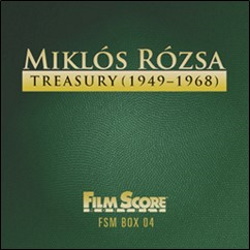 The surviving tracks of Rózsa’s score were mastered from ¼″ tapes of what were originally 35mm optical film recordings. During the recording sessions, Rózsa employed dual microphone angles, allowing them to be mixed into stereo. The score is incomplete, and a light stereo reverb was added to the monaural cues so that a stereophonic sound could be approximated. I appreciate the efforts of the technical team, and even though 21st century audio qualitative standards were not achieved, I believe the recording provides an acceptable listening experience. Rózsa was tasked with scoring a morality play, with the forces of good and evil clearly defined, and a narrative, which revolved around a man’s spiritual journey of rediscovering his faith. Woven into this narrative is a two love stories, one unrequited, and one denied. The Soviet Theme, which offers an oppressive, and sinister marcia brutale, established the malevolence and menace of Colonel Piniev and his soldier’s inhumane repatriation program. Juxtaposed is the Love Theme, a yearning romance for strings and woodwinds, which speaks of the love of two women for Twingo. For Maria the music is full of longing, hopeful and blossoms when the two have rapturous respites from the harsh world around them. For Audrey however, the theme is minor modal and plaintive, with undercurrents of futility as her love is unrequited, and in many ways tragic in that she facilitates and supports Twingo’s love for Maria. Sadly, the cue supporting Helena being informed of her husband’s suicide, which I believe is the score’s most powerful, poignant, and heart wrenching was largely dialed out of the film. Folks, Rózsa offers a well-conceived and executed suspense and drama score, which fits the film like a glove. Regretfully the Film Score Monthly Box Set ‘Miklós Rózsa Treasury (1949 – 1968)’ is only found at secondary markets and is prohibitively expensive, as such I recommend taking in the film on one of the streaming services to experience Rózsa’s handiwork.
For those of you unfamiliar with the score, I have embedded a YouTube link to an 8-minute suite: https://www.youtube.com/watch?v=oFovRuC8GFQ
Buy the Red Danube soundtrack from the Movie Music UK Store
Track Listing:
- Main Title (1:52)
- Hooky’s Billet (0:18)
- The Colonel’s Decision (3:18)
- Bruloff’s Suicide/D.P. Camp (5:19)
- Row, Row, Row to Rome (0:14)
- Nicobar’s Problem (0:54)
- Suicide (1:07)
- End Title (0:38)
Running Time: 13 minutes 54 seconds
Film Score Monthly Box Set 04 [Miklós Rózsa Treasury 1949-1968] (1949/2009)
Music composed and conducted by Miklós Rózsa. Orchestrations by Eugene Zador. Recorded and mixed by XXXX. Score produced by Miklós Rózsa. Album produced by Lukas Kendall.

Shop at the Movie Music UK Store

Member of the

 MOVIE MUSIC UK