MOTHER WORE TIGHTS – Alfred Newman
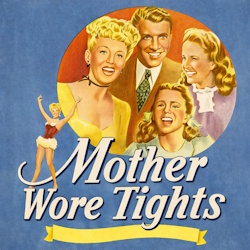 GREATEST SCORES OF THE TWENTIETH CENTURY
Original Review by Craig Lysy
In 1946 20th Century Fox was on the hunt for a new musical to showcase their star, Betty Grable. They found their vehicle with the novel “Mother Wore Tights” (1944) by Miriam Young. The film rights were purchased, Lamar Trotti was assigned production, would also write the screenplay, and Walter Lang was tasked with directing. For the cast, Betty Grable would star as Myrtle McKinley Burt. Joining her would be Don Dailey, a gifted former MGM musical film star who following military discharge signed with 20th Century Fox. He would play Frank Burt, joined with Mona Freedman as Iris Burt, and Robert Arthur as Bob Clarkman.
Set in Oakland California circa 1900, the film follows the fortunes of vaudeville performers Myrtle McKinley and Frank Burt. Following high school graduation Myrtle decides to give up on college and instead opts to join a traveling vaudeville show. She meets and falls in love with singer-dancer Frank Burt and they form a very successful show together. Following marriage and the birth of two daughters, Myrtle retires and Frank continues performing with a new partner. After several years Frank coaxes Myrtle to resume her career and they again go on tour leaving the girls with their grandmother. When the girls reach boarding school age, they join their parents in Boston but are embarrassed by their profession, which they keep hidden from their schoolmates. Yet when Frank and Myrtle invite the entire school for a performance they are loved by their classmates and after graduation Iris decides to join the show. The film was a huge commercial success, earning $5 million. Critical reception was favorable, and the film received three Academy Award nominations for Best Cinematography, and Best Original Song, winning one for Best Scoring of a Musical Picture.
As Director of Music at 20th Century Fox, Alfred Newman assigned himself the project and the song writing team of Josef Myrow and lyricist Mack Gordon were hired. In his career Newman earned nine Academy Award wins, the most of any composer. Seven of the nine were for musical adaptations, a genre in which he was peerless. He just had the native gift and capacity to masterfully weave together a musical’s tapestry, which generally consisted of several song and/or dance vignettes. He would often use one of more song melodies, joined with some original writing and personal flourishes to create a cohesive, unified and seamless musical narrative.
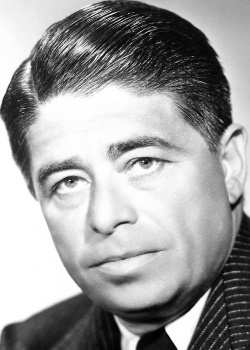 Newman provided two original themes, the Children’s Theme, which supports Iris and Mickie. First introduced with their births as a tender lullaby, the melody over time evolved and matured to reflect their maturity. It never lost its sweetness and tenderness and served to endear the girls to us. The Stage Theme offers a vibrant and rousing melody full of excitement, which is used to launch their performances. As for a Love Theme, the song “You Do”, offers one of the finest romantic ballads in cinema and perfectly captures Frank and Myrtle’s love. In terms of original songs and interpolating classical pieces and folk songs, we are provided a rich tapestry, including; “Let Me Call You Sweet Heart” (1948) by Beth Slater Whitson, Harold Shaper and Leo Friedman, “Ta-ra-ra Boom-de-ay” (1891) by Henry J. Sayers, “M-O-T-H-E-R (A Word That Means the World to Me) by Theodore Morse and Howard Johnson, “Daddy, You’ve Been a Mother to Me” by Fred Fisher, “Burlington Bertie from Bow” by William Hargreaves, “Silent Night, Holy Night” by Franz Xaver Gruber, “Tra-La-La-La” by Harry Warren and Mack Gordon, “Lily of the Valley” by Anatol Friedland, “Swinging Down the Lane” by Isham Jones and Gus Kahn, “Stumbling” by Zez Confrey, “At a Georgia Camp Meeting” by Kerry Mills, “Put Your Arms Around Me, Honey (I Never Knew Any Girl Like You) (1910) by Albert von Tilzer, Felix Mendelssohn’s “Wedding March” in C major, (1842), and “Goo’n Gum” by Mann Curtis and Vic Mizzy. There were also seven songs, music by Josef Myrow and lyrics by Mack Gordon, including; “You Do”, “This Is My Favorite City”, “We’re a Couple of Broadway Brothers”, “Kokomo, Indiana, “There’s Nothing Like a Song”, “Rolling Down Bowling Green On a Little Two-Seat Tandem”, “Fare-Thee-Well, Dear Alma Mater”.
The commercial album lacks most of the score and some songs, as such I will use film time indices and scene descriptors for reference. 00:00 “Logo” is empowered by Alfred Newman’s iconic fanfare for 20th Century Fox Studios. 00:13 “Overture Musical Montage” offers a festive score highlight, which features a classic instrumental medley of song melodies that begins with “Ta-ra-ra Boom-de-ay” performed by Dan Dailey. At 0:53 a frenetic rendering of the song melody “Burlington Bertie from Bow” is unleashed until 01:10, when we conclude on a reprise of “Ta-ra-ra Boom-de-ay”. At 01:27 in “Mother” we enter the film proper where we see an aged Myrtle McKinley Burt knitting on her home porch supported by the opening lines of the folksy, sentimental song M-O-T-H-E-R (A Word That Means the World to Me) sung by woman’s chorus. At 1:57 narration supports a flashback to Myrtle’s burlesque stage performing days where she dances flirtatiously to a festive song melody. At 02:12 in “Daddy” we return to the porch where her husband Frank Burt is seen dozing as the woman’s chorus sings tenderly the song “Daddy, You’ve Been a Mother to Me”. Narration returns at 2:40 and supports a flashback to his stage performing days where he performs his signature song “Burlington Bertie from Bow”, which is full of stuffy, pretentious comedy;
03:23 “How it all Began” offers narration by Anne Baxter as she explains to us why her mother wore tights in the first place. We flashback to June 1900, the night her mother graduated from high school and then performed as the leading lady in the school’s annual extravaganza. Several couples perform a dance routine empowered by a festive and vibrant instrumental rendering of the song melody for “At a Georgia Camp Meeting”. The next day Myrtle is steaming across the bay to San Francisco with friends Bessie and Alice. Bessie says she will try to entice her brother’s friend Bubba to get them in free to see a performance at Schneider’s Opera House. They are caught by the owner Mr. Schneider, yet saved when Bubba states they were here to audition for the chorus. 08:47 “You Do” reveals Mr. Schneider hiring Myrtle for the chorus line and as he escorts her to the fitting room. Later we see her on stage dancing in the chorus as Frank performs the song playfully, and with exaggerated silliness and comedy. At 09:42 we shift to an instrumental rendering of the melody as Frank dances on stage. At 10:20 Burt resumes singing. He leaves the stage, and Myrtle frets when she sees her Grandparents enter, as she has told them she was going to business school. They see her as the chorus girls take up the song.
Sailors make a pass as she dances bye, which outrages grandma. The chorus returns to the stage and Frank resumes his performance at 11:40 on an elevated stage behind where he slides down a ramp and is carried off by the girls. After the show Frank makes a pass at Myrtle and offers her a part in his “Paris Blackout” show next week. As they depart for dinner he forces a kiss, which offends her. He apologizes but she walks off in a huff, which elicits a wry smile. 15:40 “Happy Birthday to Frank” reveals a birthday party for Frank two months later, which is supported under the dialogue by the melody to “Happy Birthday”.
16:25 “Burlington Bertie from Bow” reveals Myrtle offering a drag mimic performance of Frank’s number. We shift to an instrumental rendering of the song as she begins dancing, as a startled Frank arrives. Myrtle then closes the performance with a sassy. Afterwards in an unscored scene, Frank compliments Myrtle on her talent and proposes she join him as his partner. They go out to dinner, which erupts into a fight over her career aspirations. She storms away, joins Roy at another table, and commits to his offer to star in his new musical. 26:10 “Frank Goes On” has narration, which relates that Frank went on alone with his old and familiar show as we see him on stage singing his signature song. Afterward he finds Myrtle in his dressing room. She said that Roy has proposed, but then adds that she was not happy performing for Roy. Frank proposes but then angers her with a flip remark regarding taking her back. They quarrel, but resolve their differences as she melts in his arms as he kisses her. We shift to a chapel where we see the two married, with music entering at 30:30 atop Felix Mendelssohn’s “Wedding March” in C major”.
30:39 “This Is My Favorite City 1” reveals Frank and Myrtle performing an extended song and dance number with a happy homage to their favorite cities. 31:11 “This Is My Favorite City 2” reveals Frank and Myrtle on tour in St. Louis, hamming up their happy song and dance number to reflect the current city. 31:52 “This Is My Favorite City 3” reveals Frank and Myrtle on tour in Boston, adding banjos to their happy song and dance number to reflect the current city. 32:10 “This Is My Favorite City 4” reveals Frank and Myrtle on tour in Philadelphia, adding comedy to their happy song and dance number to reflect the current city. After the show Myrtle informs Frank that she is pregnant and he is ecstatic. But then she says that she is retiring as she wants to bring up their child in a home, not a touring stage troupe. Frank frets that he could never replace her, but relents. 34:10 “Please Let Me Just Be The Mama” reveals Myrtle winning Frank over and Newman supports with sentimental strings tenero full of warmth and affection, which usher in the Children’s Lullaby as a montage follows of Iris’s birth, and then three years later, Mickie, a compromise name for their second daughter as Frank again really wanted a Frank Jr. In an unscored scene Myrtle receives a frantic telegram from Frank saying he needs her to join him in New York as he was unable to replace Dolly. Myrtle frets about leaving the children, but Grandma says she has to obey her husband. Frank greets her at the station, they hug, kiss and then he drops the bombshell – their first performance is tonight!
38:38 “You Do” offers a romantic score highlight. It reveals Myrtle performing in a stunning champagne colored gown supported by a men’s quartet chorus. She sings the classic romantic ballad, embellished by the renown ‘Newman strings’. 41:17 “Mother’s Farewell Tour” reveals a montage with narration of Myrtle caught up in show business again as one by one the seasons pass, supported by Newman with a spritely musical narrative. At 41:44 “We’re a Couple of Broadway Brothers” opens with fanfare as Frank and Myrtle take the stage with a vibrant song and dance performance. At 42:48 the music now becomes playful as the act shifts gears and begins singing the song “Kokomo, Indiana”. At 44:07 the orchestra takes up the melody as Frank and Myrtle dance, with singing resuming at 44:22. Some virtuoso dancing follows empowered by a big band, which usher in the song’s finale.
45:39 “The Girls Growing Up” offers narration of Iris and Mickie growing up without their parents, who only come home for special occasions and holidays. Newman offers a wistful rendering of the Children’s Theme with strings full of longing as we see their sadness, as they will be spending for the first time, Christmas apart. They break down and cry despite Grandma’s best efforts to comfort them. We switch to a hotel room where Frank and Myrtle open gifts from the girls and Grandma. Myrtle is saddened when reading the card from Mickie. When Frank answers a knock on the door they are filled with joy as the girls rush in for a happy reunion. 51:30 Frank Becomes Santa Claus” reveals Frank departing at midnight to buys gifts, as he wants the girls to receive their love and the joy of Christmas. He departs supported by the melody of “Jingle Bells” replete with resplendent bells. He cannot find a store that is open, but pulls out his pocket knife to saw off a small Christmas tree from the garden of a private residence. A cop arrives and Frank flees with the tree at 51:47 propelled by a frenetic “Jingle Bells” accelerando, which includes slapstick comedic accents supporting his numerous falls. At 52:33 a spritely vaudeville melody supports the family and friends being entertained in their hotel suite. At 53:18 Señor Wences performs a puppet ventriloquist show, which Newman supports with a gentle, albeit playful piano tune. He then sings and hums, the song “The Mountain”. At 57:08 Myrtle plays the family’s favorite carol, “Silent Night”, which is sung warmly by Iris.
59:15 “Change of Scenery” reveals narration informing us of Myrtle’s decision to take the family on vacation. As she looks through a travel brochure featuring the Berkshire Highlands, a gentile rendering of the song melody of “Let Me Call You Sweet Heart” accompanies. The sedate hotel lacks energy and Frank complains it feels like a morgue. As they go to their rooms, Iris meets a young man (Robert) and we see the two are smitten. That evening Frank coaxes Myrtle into infusing some life into the dull surroundings. Myrtle takes to the piano as Frank and the girls perform the happy-go-lucky “Tra-La-La”. Frank tries to coax the guests to join in a sing along, but the guest remained wooden, and the song loses vitality as they realize they have a dead house. The next day the garden is as dead and boring as the hotel lounge. The girls head off to explore the grounds, with Iris sitting to chat with the Robert, who turns out to be a Wall Street scion. Mickie meets an old German couple and decides to entertain them, singing the playful ditty “Choo’n Gum”.
The song ends abruptly when she falls and is knocked unconscious. Myrtle has had enough of this boring “stick in the mud” hotel and declares they are leaving, with Iris saying a sad goodbye to Robert. However, later in their room, the German couple and another guest convince them to remain and perform. 1:13:20 “Lily of the Valley” reveals Myrtle leading the family in singing the happy go and buoyant song. Later the melody propels couples dancing as the camera takes us out to the terrace where Robert and Iris are sharing an intimate moment. Later, in an unscored scene, Iris pines to Myrtle that she may never see Robert again. After Iris turns in, Myrtle convinces Frank to send the girls to boarding school near Harvard where Robert is enrolled. 1:18:45 “Boarding School” reveals the family arriving at the exclusive Miss Ridgeway Boarding School for Young Ladies supported by an idyllic pastorale. As they walk the path to the school a playful and vibrant musical narrative carries their progress. Their meeting with Miss Ridgeway is polite and formal, and they are assured that the girls will receive a quality education. After they say goodbyes at 1:21:11, the girls return as requested to Miss Ridgeway’s office carried by a bittersweet musical narrative as Myrtle tears up.
1:22:36 “Easter Break” reveals Iris, Robert and his friends riding on a train. Newman propels the train with a locomotive energy that draws from the song “Swinging Down the Lane”. This motif usher in them singing the festive, yet yearning romantic ballad. Robert’s parents enjoyed their singing and asks Iris to choose another song and Iris suggests, “Stumbling”, a playful and happy-go-lucky tune, joined by a vaudeville couple that were in the rail car. The couple is funny, full of life, and kid with the group before departing. Her affluent friends ridicule them afterwards, and we can see Iris afraid that she will be shamed if they discover her parents are also stage performers. 1:25:46 “A Letter From Mother” reveals narration of how they love and loathe Ridgeway, Mickie happily opens a letter from mother. Mickey runs upstairs to share with Iris, and Newman supports with a sentimental and gentile rendering of their theme. Iris is appalled when Mickie reads that they have booked a show in the town of their school. As Iris frets, Mickie admonishes her for being ashamed of mother and father. Three weeks later Myrtle and Frank arrive, and Mickie remains with Frank as Myrtle goes to Iris’ room. Iris feigns being sick, but Myrtle discloses that Mickie informed her of why she was upset, which causes her to turn away in shame. Myrtle gets her to open up, and Iris expresses her fears to a very understanding Myrtle. She comforts her and says she and Frank will find a solution.
In an unscored scene in Miss Ridgeway’s office, Myrtle convinces her to have the entire class attend their performance in town. Iris joins them, and upon learning of the excursion, is devastated. We shift to the theater at 1:31:50 “There’s Nothing Like a Song/Rolling Down Bowling Green On a Little Two-Seat Tandem” with rousing introductory overture as “Stella Irish: Stories Old & New” by “Burt and McKinley” displays. They launch into the two playful and inspirational conversational songs with Myrtle at the piano, joined by Frank. At 1:34 26 the song melody shifts to a big band instrumental as the two begin tap dancing on stage. They conclude singing, the curtain opens, and Frank escorts Myrtle to a chair under a tree. We resume with the song and as they tap dance again, they sing. At 1:37:02 the melody shifts to a valzer elegante as they dance across the stage. At 1:37:48 we shit to a playful danza felice as they resume tap dancing. She sits down under the tree, and at 1:38:14 singing resumes. As they end the song with a kiss the curtain closes, the crowd applauds, and the orchestra supports with an exuberant rendering of the song’s melody as Myrtle and Frank return to the stage for several encore bows and curtsies. Iris is nervous, despite Miss Ridgeways and her classmates congratulating her on their performance. Yet despite the adulation, Iris runs out of the theater sobbing, causing distress to Frank and Myrtle. 1:39:42 “Graduation” reveals Iris’ classmates as a woman’s chorus singing the solemn, and heartfelt “Fare-Thee-Well Dear Alama Mater” supported by a small ensemble of Violins, Violi and cello.
1:45:25 “You Do” reveals Valedictorian Iris giving a short speech and then saying she wishes to honor her parents by singing a song that they introduced to Vaudeville many years ago. A sumptuous string prelude usher in her heartfelt, and loving rendering of the song, supported by angelic woman’s chorus. 1:45:45 “Finale” reveals an aged Myrtle and Frank sitting on their porch supported by a sentimental reprise of the tender and sentimental song “M-O-T-H-E-R (A Word That Means The World To Me)” sung by woman’s chorus. As they go inside, Frank offers a loving kiss and we conclude with a rousing Stage Theme, which concludes with a flourish!
 The digital download from Amazon proved inadequate for writing the review, however it does offer up the film’s finest moments. I can appreciate why “Mother Wore Tights” resonated with the public and won the Academy Award for Best Scoring of a Musical Picture. Bombshell Betty Grable, America’s Pin-up girl who helped our troops win WWII, brought this film to life in the first of three musicals, which would propel her to worldwide stardom. The team of composer Josef Myrow and lyricist Mack Gordon created some fun and entertaining songs, which fit Grable and Daily like a glove, and Alfred Newman masterfully wove together the song and dance vignettes into a cohesive and enjoyable musical narrative. The confluence of music, dance, singing and stage performance was just outstanding and offers a testament to the glory of the Hollywood Musical Golden Age. Folks, for musicals to succeed, their songs and singing performances have to inspire and move the audience, and the score needs to ensure the film’s narrative flow and storytelling is coherent and provides the necessary forward momentum. I believe Newman once again demonstrated mastery of his craft, with his original compositions providing the necessary synergy that allowed Grable and Dailey’s performances to shine. I highly recommend you take in the film to fully appreciate the music and performances.
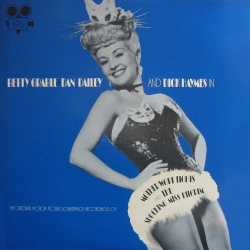
Editor’s Note: The Amazon digital download described in the review appears to be an LP-to-digital transfer of an album released on vinyl by Classic International Film which combined songs and score from Mother Wore Tights with excerpts from the 1946 movie The Shocking Miss Pilgrim, also scored by Newman. Neither score has been released on CD.
Buy the Mother Wore Tights soundtrack from the Movie Music UK Store
Track Listing:
- Overture Musical Montage (written by Joseph Mydor and Mack Gordon, performed by Dan Dailey) (4:33)
- You Do (written by Joseph Mydor and Mack Gordon, performed by Dan Dailey & Chorus) (3:41)
- Berlington Bertie from Bow (written by Joseph Mydor and Mack Gordon, performed by Betty Grable (2:27)
- This Is My Favorite City (written by Joseph Mydor and Mack Gordon, performed by Dan Dailey & Betty Grable) (1:54)
- You Do (written by Joseph Mydor and Mack Gordon, performed by Betty Grable & Chorus) (2:35)
- Kokomo, Indiana (written by Joseph Mydor and Mack Gordon, performed by Betty Grable & Dan Dailey) (3:52)
- Tra-La-La (written by Joseph Mydor and Mack Gordon, performed by Betty Grable, Dan Dailey & Mona Freeman) (1:42)
- Swinging Down the Lane / Stumbling (written by Joseph Mydor and Mack Gordon, performed by Mona Freeman, Lee Patrick, and Chick Chandler) (1:48)
- There’s Nothing Like a Song (written by Joseph Mydor and Mack Gordon, performed by Betty Grable & Dan Dailey) (7:31)
- Fare-Thee-Well Dear Alma Mater (written by Joseph Mydor and Mack Gordon, performed by Chorus) (1:43)
- You Do (written by Joseph Mydor and Mack Gordon, performed by Mona Freeman & Chorus) (3:10)
- Finale – Instrumental (0:55)
Running Time: 35 minutes 31 seconds
Classic International Film 3008 (1947/XXXX)
Music composed and conducted by Alfred Newman. Orchestrations by Gene Rose. Recorded and mixed by XXXX. Score produced by Alfred Newman.

Shop at the Movie Music UK Store

Member of the

 MOVIE MUSIC UK