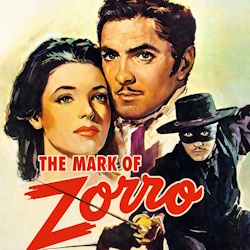
THE MARK OF ZORRO – Alfred Newman
 GREATEST SCORES OF THE TWENTIETH CENTURY
Original Review by Craig Lysy
Darryl F. Zanuck, vice-president of production at 20th Century Fox, decided to remake the popular 1920 silent film “The Mark of Zorro”, which starred Douglas Fairbanks. The story was first published in 1919 as a five-part magazine serialized novel called “The Curse of Capistrano” by Johnston McCulley, which after the film’s success was republished as a novel titled The Mark of Zorro. Zanuck would oversee production with a $1 million budget, Rouben Mamoulian was tasked with directing, and John Tainto Foote would write the screenplay. The studio’s star Tyrone Power would head the cast as Don Diego Vega AKA Zorro, joined by Linda Darnell as Lolita Quintero, Basil Rathbone as Captain Esteban Pasquale, Montagu Love as Don Alejandro Vega, J. Edward Bromberg as Don Luis Quintero, and Gale Sondergaard as Inez Quintero.
The movie is set Alta California circa 1795 and follows the fortunes of Don Diego Vega who is summoned home by his father, an esteemed and recently retired alcalde. Upon arriving home Diego is appalled at the mistreatment of the people by the new and tyrannical alcalde Don Luis Quintero. Well, Diego decides to become a defender of, and champion of, the oppressed and assumes the black dressed and masked guise of “Zorro” (fox in Spanish). Zorro also goes after Luis personally, by forging a romance with his niece Lolita, and flirtation with his wife Inez. After numerous escapades fighting and evading Don Luis’ men, Zorro is force to confront Luis’ master swordsman Captain in an epic sword fight. He defeats him, Don Luis is overthrown by a popular uprising he and Lolita live happily ever after. The film was a commercial success, earning a profit of $1 million. Critical reception was favorable, and the film received one Academy Award nomination for Best Original Score.
Alfred Newman, as Director of Music at 20th Century Fox, generally assigned himself to score his boss Darryl F. Zanuck’s passion projects. I believe that he understood the film’s essential needs, which would require the necessary infusion of Old California Spanish cultural auras and sensibilities, including a number of folk songs and dances. He would also need to provide a dynamic and exciting swashbuckling musical narrative, propelled by a heroic musical identity for Don Diego AKA Zorro. Juxtaposed would be themes for our two villains the hapless Don Luis and evil Captain Esteban Pasquale. The story would also need to speak to the romance between Zorro/Diego and Lolita, as well as Diego’s faux flirtation with Inez.
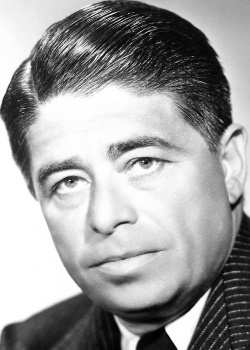 For his soundscape, Newman and co-composers Hugo Friedhofer, David Buttolph, and Cyril Mockridge composed five primary themes. Friedhofer wrote Diego’s/Zorro’s Theme, which offers a fast paced, rousing marcia orgogliosa abounding with confidence and heroism. The theme permeates the film often emoted simply as its opening fanfare declaration, or as an anthem when in battle. I believe Friedhofer perfectly captured Tyrone Power’s bravado, heroism and charisma with a theme for the ages. Juxtaposed is or villain’s theme for Pasquale. It offers dire horns and strings sinistri, which speak to his malevolence, treachery and insatiable greed. Quintero’s Theme supports his cowardice and haplessness as a pawn of the malevolent Captain Esteban Pasquale. Woodwinds comici offer a sardonic musical narrative, which perfect capture his persona. There are two love themes, with the shameless, fawning and lustful Inez’s being unrequited. Newman weaves a soft tapestry for strings romantico, but the music lacks passion and ardency, emanating solely from Inez’s perspective. The string borne theme for Lolita offers feminine grace, delicacy and beauty. As her feelings for Diego/Zorro take root, a romance for strings borne by violins d’Amore blossom.
There is no commercial release of the score, so as such I will use film scene descriptors and film time indices for my review. 00:00 “Logo” offers Newman’s iconic horn declared anthem for 20th Century Fox. 00:12 “Main Title” opens with fanfare dramatico declarations, which launch the page turning opening credits. At 00:20 a rousing rendering of the Zorro March is unleashed, which sustains the opening credits. At 00:57 we flow into narrative script, supported by rich Castilian auras, which states Madrid, takes pride in the dominion of the vast Spanish Empire, and the boldness of young swordsmen, trained in the fashionable art of killing. At 01:10 “Dueling Practice” takes us into the film proper where we see young swordsmen training on an open field, then later on horseback, and finally on horseback jumping hurdles, which senior officers’ grade. Newman propels the training with a spirited Castilian rendering of the Main Theme. At 2:00 trumpets audaci resound as the cadets place wagers on the cocky Californian Don Diego Vega. His theme abounding with confidence carries him successfully over the hurdle course and earns him praise from his comrades.
02:31 “Diego Prepares For a Date” reveals Diego dressing in an ornate uniform in preparation for ‘an affair of the heart’. His friend reminds him that he has a duel at three o’clock with Lieutenant Cortez, which frustrates him as he bemoans having to duel with every swordsman in Madrid. He gains a reprieve when a soldier joins and relays an order to report immediately to the comandante. Newman supports the scene with a spirited danza castigliana. In 03:30 “Diego’s Announcement” the dance music becomes more festive as we see him buying a round for his comrades at the saloon, and announcing that his father has ordered him to return to California. They ask him, with no one to fight, what will come of his training? At 04:19 trumpets resound as he draws his saber and throws it upward into the ceiling. Sentimental strings join as he says to leave it there and to remember him. As he offers a toast, to his new life supported by warm rendering of his theme.
04:59 “The Voyage” reveals the galleon sailing at sunset carried by a nautical theme bore by languorous strings with harp adornment. At 0:510 a flute pastorale supports the galleon anchored off the California coast. Music is dialed out as he is rowed to shore. The rower relates the people’s hatred of the alcalde, and Diego is stunned, as is the rower when he states that the alcalde is his father. 05:56 “Diego Spurned” reveals a man playing a guitar and singing a traditional song in Spanish as Diego enters the saloon and orders a glass of wine. When he relates that he is the son of the alcalde, the music stops and all the men in the saloon depart. Diego is perplexed and orders a carriage to take him to Los Angeles. Outside distressed horns support a terrified driver when he learns that Diego is the son of the alcalde. A tortured musical narrative unfolds as the saloon keeper relates that the driver cannot speak as the alcalde had his tongue cut out for complaining against the high taxes.
08:04 “The Journey” reveals Diego’s carriage passing through the bustling town. Newman offers a forlorn musical narrative borne by woodwinds and strings tristi as we see people toiling without joy. He arrives at his house, the official estate of the alcalde, and is surprised to hear from Captain Esteban Pasquale that his father had resigned due to age, and that new alcalde has ordered the military to setup barracks on the estate to better control the peons. At 10:23 menacing horns of Pasquale’s Theme sound when Diego desire to depart, is not granted by Pasquale who insists that he be introduced to the new alcalde. The music offers sad strings of deception as Pasquale boasts of his swordsmanship, and Diego discloses his distaste for such violent business. 10:51 “The Alcalde” reveals a peon offering his prized fighting cock to the alcalde for 40 pesos, which elicits his anger and threat to impose higher taxes. The man is terrified and offers the cock for free, much to the alcalde’s delight. Newman supports with Quintero’s Theme in which he weaves together dark comedy and menace. At 11:45 as he is introduced, a sprightly Diego’s Theme joins as Quintero marvels at his ornate clothing from Madrid. He is then introduced to Mrs. Inez Quintero who fawns over this new handsome caballero. Newman introduces her theme, borne romantically by strings gentile. From this point in the film, Diego adopts a foppish, and effeminate demeanor to deceive all around him as he prepares to assume the role of defender and champion of the people.
13:04 “Lolita” violins delicato voicing love support him looking out the window to see the beautiful Lolita Quintero in the garden. Yet the persistent Inez draws him back into conversation, again shamelessly fawning over him as she asks that he join her shopping. As Diego speaks of clothes, colors, and fragrances, a flowery feminine musical narrative unfolds as both Pasquale and Quintero are repelled by Diego’s unmanly behavior. Bubbling woodwinds gentile support Inez escorting him out. We close darkly as on grim horns of Pasquale’s Theme as he relates his distaste for the fanciful Diego. A comedic Quintero theme joins as Pasquale uses his saber to toy with him, revealing to us that he is the true power, not the alcalde. 14:44 “Diego Departs” reveals Inez waving goodbye as Diego departs carried by his theme. Lolita joins her and they quarrel when she expresses interest in Diego. Newman supports the scene with a violin d’Amore with a retinue of kindred string voicing Lolita’s beautiful theme.
15:46 “Diego Returns Home” reveals a cavalry brigade escorting Diego to his father’s hacienda outside town, supported by a brief quote of a martial rendering of his theme. The sergeant reveals his whip, which he says he uses to collect taxes from stubborn peons. They part ways as Diego’s carriage turns onto the hacienda’s entry road. At 16:31 warm strings brimming with maternal love greet Diego’s arrival and his kissing embrace of his mother. Inside he is warmly greeted by his father Don Alejandro, friar Felipe and Dons Miguel and Jose. Immediately the conversation turns to the evil alcalde Quintero and his reign of terror. Alejandro discloses that he was forced out of office, but will not lead a rebellion against the King he served for 30 years. The friar rebukes both Vega’s for their timidity and acceptance of injustice and storms out. 21:13 “Zorro!” reveals strings tranquilli with Castilian auras supporting a siesta in town as we see the villagers asleep. At 21:50 martial field drums propel a marcia minacciosa as two soldiers enter the square and shatter the serenity. A sergeant posts a new taxation decree demanding one of every five bottles of wine be paid. At 22:47 trumpets eroico declare and propel a rousing Zorro’s Theme as a masked man dress in black rides into town. He disarms the soldiers, tears down the tax decree and orders them to post a new decree as he carves a “Z” on the tunic of one of the soldiers. Zorro then saber whips them out of town, and departs. Dramatic horns Castigliana resound and provide a solemn musical narrative as the people assemble and read the poster, which declares Luis Quintero a thief and enemy of the people who will not escape my vengeance, signed Zorro.
24:19 “Zorro Robs Quintero” reveals the Luis and Inez traveling by carriage on a country road, which Newman supports with a musical narrative of unease. Inside the carriage woodwinds comici emote Luis’ Theme as his wife nags him, until he discloses a bag of gold he is sending to Madrid, a fortune on which they will retire. He deferred an escort to not arose Pasquale’s suspicions. Zorro’s trumpeting fanfare supports his arrival. Newman sow tension as he robs Luis of his gold, Inez of her diamond necklace, and carves a “Z” on the carriage. Zorro departs, propelled by his fanfare, issue a threat to take the alcalde’s life if they ever meet again. 26:02 “Reward Announced” opens with dire horns and a grim musical narrative as we see the posting of a reward of 5,000 pesos for information leading to the capture of Zorro. Luis is working in his study and at 26:37 a dark chord supports Zorro’s sword extinguishing one of the candle flames. Horns of unease support Luis’ discomfort join by muted trumpets of Zorro’s Theme as he peers around a wall. He makes a stealth approach, and muted trumpets support him tapping Luis on the shoulder with his saber. Newman sow palpable tension as Zorro give Luis a choice, resign, depart for Madrid, and appoint Don Alejandro Vega as his successor, or die. Trumpets support his carving of a “Z” on the wall and tension resumes as he blindfolds Luis, props a saber against his throat, and then stealthily departs.
30:13 “Pasquale Is Alerted” reveals Pasquale disbelieving Luis’ tale until he shows him a “Z” carved on the wall. Strings of fear usher in a tense and aggressive musical narrative empowered by Pasquale’s Theme as he sounds the alarm and orders pursuit of Zorro. Inside Newman weaves together comedy and menace as Luis frets and an angry Pasquale vow to protect him to ensure their profiteering continue. 31:43 “Lolita and Zorro” reveals her praying to the virgin Mary in the chapel. She asks for a strong, and handsome man to take her away from this dreary place. Newman drapes the scene in a soft religioso solemnity to support. Diego enters disguised as a friar and they converse about what role best suits her. Newman supports with a nascent and as yet not fully coalesced Love Theme. She asks for his counsel and agrees to sit with her. As they discuss her romantic longings, he drops his guard an offers compliments to her beauty, supported by a now more tangible Love Theme. Yet the moment if broken at 35:55 when she is alarmed by the sight of his saber protruding from his robe. Inez arrives, orders Lolita to leave as Zorro is around. As she turns to follow Inez, Diego kisses her hand, much to her delight. A gentle passage born by strings romantico carry her departure.
36:52 “Diego Escapes” offers a rousing score highlight. It offers tension as Diego departs the chapel. A guard notices that he dropped a black mask, and a duel is unleashed. Diego kills the guard, but other guards arrive and pursue. Aggressive pursuit music propels the chase with Diego eluding capture by hiding in a large bush. At 37:38 his theme empowers him exiting, now dressed as Zorro. The pursuit begins anew as he escapes over the wall, mounts his horse, and rides off propelled by his theme borne by strings spiritoso. A rousing extended exposition of his theme propels the chase, with him barely escaping as he forces. Cornered on a bridge, he forces his horse to make an audacious jump off it into the river below, leaving the calvary stranded on the bridge as he escapes under gun fire. 39:25 “20,000 Peso Reward” reveals a new offer for Zorro, dead or alive. A dire musical narrative drawn from Pasquale’s Theme supports the poster, which is shattered by Zorro’s fanfare as he cuts down the poster and carves a “Z” onto the wood.
40:53 “Zorro Robs Pasquale” reveals Pasquale and his men collecting tax money from the peons, which leaves them destitute and unable to feed their families. They turn to leave and face Zorro pointing a gun at Pasquale. Newman supports with a sardonic musical narrative as Zorro takes the money and departs. Pasquale orders a pursuit and at 41:11 once again calvary pursue the fleeing Zorro, who is propelled by a rousing extended rendering of his theme. He loses them in a forest, reaches a chapel, and a diminuendo unfolds as he removes his Zorro clothes, and enters formally dressed as Don Diego. He enters the chapel where friar Felipe in conducting prayer, and slips through a side door unnoticed. At 43:30 they begin singing a hymn supported by a hand pump organ. The friar departs and finds Diego in his study waiting to play chess. The sergeant enters, alerts them that they are searching for Zorro and depart after Diego feigns knowledge and the friar protest. Afterwards Diego discloses that he is Zorro, hands over the gold, pesos and Inez’s jewelry to the friar for safe keeping. He asks that they be given back to the peon, which elicits the Friar’s praise and admiration.
47:37 “A Defiant Zorro” opens with harsh, strident horns as we again see the poster offering 20,000 pesos for Zorro, alive or dead. A dagger with a note strikes the poster supported by Zorro’s fanfare, which launches his proud theme. A peon reveals his message for the people to not lose hope, promising that Quintero will soon leave or die from his sword. In an unscored scene Diego arrives for a morning ride with Inez, much to Pasquale’s displeasure. While waiting, he continues to plant seeds of fear in Luis’ psyche, again suggesting that perhaps he would be safe if he were to return to Madrid rather than die by Zorro’s sword. Diego departs with Inez, and Pasquale enters and offers a plan. He believes that Zorro is an agent of Don Alejandro Vega and the other Dons. He suggests that he gain Vega’s allegiance by joining the Quintero and Vega Houses by marrying Lolita to Diego, to which Luis agrees.
51:31 “Diego and Inez” reveals the two sitting by a pond discussing the future, with Diego appealing to her vanity and planting the seed that a woman of her beauty and status is wasted here and she should consider the royal court in Madrid. We open with harps and a flute led pastorale, which slowly transforms into Inez’s Love Theme as she succumbs to his charm, flattery and kiss of her hand. In an unscored scene Luis proposes to Alejandro a marriage of Lolilta and Diego with a dowry of 25,000 pesos. Alejandro is offended and rejects the offer, but when Diego arrives, he says he is open to such a marriage but would first like to meet Lolita. He accepts Luis’ dinner invitation tonight at 8 pm, angering both his mother and father.
55:21 “Dinner” reveals Luis, Inez, Lolita, Maria, and Pasquale awaiting the arrival of Diego. Newman supports with a valzer castigliana. Diego arrives fashionably late and charms both Inez and Lolita, but his effeminate mannerism offends Pasquale and Lolita. They prepare to dine and we see a small ensemble of guitars, violins and dulcimer sustaining the waltz melody. Diego’s unmanly behavior and apparent cowardice offends Lolita who says she like men of courage, like Zorro. After offending Pasquale with his humor, Diego offers Lolita a dance. Diego requests the band play “El Sombrero Blanco”. The music offers a festive danza felice with Diego revealing his dancing skills including Flamenco embellishment as Inez stews, and Pasquale simmers. Lolita however is charmed, and warms to Diego, complimenting him after the dance. Yet when he answers he found the whole thing fatiguing, she is furious and runs away perplexing Luis, but pleasing Inez. Diego then pleads with Luis for his blessing to marry Lolita, to which he happily agrees.
1:02:42 “Lolita and Zorro” reveals Lolita in her bedroom combing her hair before bed. Her theme flows with tender feminine beauty like a fragrant night breeze, but it is tinged with sadness. A tossing motif supports a rose being tossed in through the open window, which startles Lolita. At 1:03:25 tension builds as she walks to the balcony and Zorro appears. She tells him to leave only to have her father burst in advising that she is to marry Diego. The music shifts from anger to embarrassed comedy as Luis discovers someone on the balcony, and apologizes for being an old fool. When Diego enters Newman again channels her anger as she throws his rose to the floor, but is dissipates and her gentle theme emerges as he relates their conversation in the chapel, which convinces her that he is indeed Zorro. Their Love Theme finds voice and blossoms as he apologizes for the necessity of his deception, and confesses his love. Yet the moment is lost when Inez begins banging on the door, forcing him to leave after a passionate kissing embrace.
1:05:54 “Inez and Lolita” reveals Inez voicing her opposition to the marriage and offering her aid to challenge her uncle. Inez’s impure and self-serving motives contrast with Lolita who feigns grievance. Newman supports with a beautiful extended tête-à-tête of their two themes. After Inez departs, we close at 1:07:02 with an aching quote of Lolita’s Theme as she picks up the damaged rose, she threw on the floor. In an unscored scene, Alejandro frets to Senora about their son, who finally arrives home. He relates to him that he will soon be a grandfather, and Alejandro storms out enraged. Senora senses that Diego is hiding something and asks that he inform her when he is ready as he escorts her to bed. 1:08:54 “Zorro Strikes Again” reveals a protest at the gates of the alcalde compound by aggrieved peons, angry at the taxation and beating of friar Felipe. Newman unleashes a strident musical narrative empowered by the horns bellicoso of Pasquale’s Theme, which surges as saber wielding cavalry forcible disperse the crowd. At 1:09:31 the music shifts to horns of alarm and dissonant strings as Luis sees the half-naked body of sergeant Gonzales rolled over the wall. Gonzalez is wounded and has a “Z” carved on his chest. Luis is frightened, calls out Zorro, and retreats into his chambers carried by a musical narrative of fear.
1:10:03 “Jose’s Gift” reveals the peon Jose bring a peso donation to friar Felipe in his office. Friar returns it saying that he should buy milk instead for his baby, but Jose is adamant, returns it, and then runs off. A woodwinds delicato offers a musical narrative of gentleness to support the scene. Strings religioso carry the friar to the money box. As he unlocks it at 1:10:52, Pasquale bursts in unannounced empowered by the dire horns and string sinistri of his malevolent theme. Pasquale demands the chest, the friar refuses, pushes him away and grabs a saber. Newman supports with an aggressive, but short-lived musical narrative as Pasquale disarms the friar quickly, seizes the chest. When he opens it he is stunned to discover the lost gold, and tax money, which Newman supports with a woodwind castigliana misterioso. Zorro’s fanfare joins as he discovers Inez’s necklace. A dire musical narrative of doom supports him forcing the friar out at saber point saying he will be hanged. 1:12:16 “Diego Introduces Lolita” reveals Alejandro firmly opposed by the marriage, with Senora siding with her son. With that, Lolita arrives and Alejandro performs the required etiquette in greeting her. His query as to whether she wants to marry his son is answered yes, because I love him, which results in a curt but flustered departure by Alejandro. Newman supports the scene with Castilian gentility until 1:13:29 when the music darkens as she confides to Diego that friar Felipe is to be hung for aiding Zorro. He advises her that he may have to shed Luis’ blood and asks if this will make a difference to her. She answers him at 1:14:06 with a kissing embrace empowered by her Love Theme.
In an unscored scene, Luis enters office and see smoke puffs rising from a chair with its back to him. Luis orders his guards to arrest he man and is shocked to discover Diego. He releases him and then frets that friar Felipe was in collusion with Zorro and that sergeant Gonzalez was almost killed by Zorro. Zorro suggest Luis take brandy, and when he summons a bottle from a servant, the servant returns in a panic, stating that something terrible has happened in the cellar. 1:17:02 “Sabotage” reveals that all the massive barrels of wine and brandy have been damaged and are bleeding their contents on the floor. A string tremolo supports joined by menacing horns as Luis spots a “Z” carved on one of the barrels. Newman sow first tension and then panic as Luis flees the cellar in terror. In his study a frantic musical narrative supports Luis finally losing his nerve and writing out his resignation letter.
Pasquale enters, grabs the letter, tears it up and threatens to kill Luis if he attempts to flee with his money. 1:19:32 “Duel” reveals that Diego is also threatened, takes exception, and offers to duel with Pasquale, who contemptuously offers him a saber. A soft statement of Diego’s Theme supports and gains rhythmic energy as the two shed their overcoats. A fierce and well-choreographed saber fight, one of the best in cinematic history unfolds unscored. Pasquale draws first blood with a shoulder cut, which serves to make Diego more aggressive. IN a relentless series of strikes he thrusts his blade into Pasquale’s heart, who as he falls, reveals the “Z” carved in the wall. Music rejoins at 1:23:01 as guards open a secret door saying that a secret staircase ascends from the cellar. Newman sow a misterioso as Luis has an epiphany and orders Diego arrested telling him you are Zorro because you have mud on your boots from the cellar, you used to live here and know of the secret staircase, and that you handle the sword like the Devil. At 1:23:53 a dire musical narrative unfolds as Diego is taken to a prison cell, and Luis orders that all the peons and caballeros come here and assemble.
1:24:34 “Inez and Lolita Fret” reveal them incredulous as to why Luis would order Diego arrested. Newman sow a musical narrative of concern borne by beleaguered strings as a sergeant arrives and says Luis has ordered the two to remain in your rooms tonight. 1:24:57 “Execution” reveals troops assembling in the court yard empowered by martial field drums. In unscored scenes, inside the estate the caballeros are seen conversing about tonight’s events. Luis arrives and declares he will execute the caballero selected by all of you to kill me – Zorro. In the prison cell Diego performs a few magic tricks for the hapless guard. He then tricks the guard, grabs his gun and forces him to open the door. At 1:27:35 martial field drums resume as he orders the guard under the cot. Diego decides against escape as Luis arrives with soldiers. Diego hands the friar a gun, and then nonchalantly sits on the cot. Luis reveals to the caballeros that Diego is Zorro, earning disbelief from Alejandro who says Zorro was a man, not this worthless trick-playing offspring. Diego then offers a new trick and at 1:28:26 flings open the unlocked door, throws Luis in and begins a sword fight with the guards. The caballeros then join the fight against the remaining guards. Newman unleashes a tempest punctuated with Diego’s Fanfare to propel the battle. Diego manages to kill the gate guard, and opens it allowing the peons to rush in and join the battle. Gradually Diego’s Theme becomes ascendent atop strings furioso as the tide of battle turns to the rebels. We see the friar escorting Luis as Diego fights shoulder to shoulder with Alejandro. At 1:30:51 a paean of celebration unfolds as the rebels declare victory!
Overlooking the courtyard, the defeated Luis is flanked by the friar and Diego. Diego thanks him for inviting everyone here tonight. At saber point Diego directs him to make the announcement, which he does declaring his resignation, decision to return to Spain, and the appointment of Don Alejandro Vega to succeed him. The crowd erupts in jubilation and friar takes Luis aside saying he will personally escort him to the docks at San Pedro. 1:32:33 “Happy Ever After” reveals Inez very pleased that they are all going back to Spain together. But when Diego says that he and Lolita plan to remain in California, have children, and tend to their vineyards, she storms off in a huff. Their Love Theme supports until 1:32:56 when Diego throws his saber into the ceiling supported by his fanfare, which launches a celebratory rendering of his theme, culminating in a horn declared flourish. 1:33:11 “Cast Credits” is supported by a rousing rendering of Diego’s Anthem.
My research discovered that composer Hugo Friedhofer, David Buttolph, and Cyril Mockridge also contributed to this score, but are not credited in the opening credits. In his liner notes for the Silva Screen Records release Man of Galilee – The Essential Alfred Newman Film Music Collection, the late David Wishart credits Friedhofer as the composer of the Diego/Zorro Theme. Newman was tasked with supporting a swashbuckling adventure, for a Spanish retelling of the Robinhood tale. Tyrone Power was the leading Hollywood star of the time and he masterfully captured his charisma and heroism with a rousing horn propelled theme for the ages. In scene after scene our hero, empowered by this theme overcomes all obstacles as a champion of the people. Juxtaposed were well-conceived themes for our villains, which perfectly embodied Pasquale’s malevolence, and Luis’ hapless ineptitude. Two love themes, one unrequited for the older Inez, and the other a beautiful and delicate romance for strings graced with the sweet fragrance of the night breeze. The infusion of Spanish guitar, folk songs, dances and Castilian auras found perfect confluence with the Spanish Californian culture of the time. Folks, it is a sad testament that this score has been lost. I sincerely hope that someday someone will reconstruct it and offer a modern re-recording as I believe it is a treasured gem of the Golden Age. Until that time, I recommend streaming the film to appreciate glorious handiwork.
Editor’s note: Although the complete score for The Mark of Zorro has never been released, music from the film has been released on numerous compilation albums over the years. The best of these are “Mark of Zorro: Swordsmen of the Silver Screen” released by Silva Screen in 1997 and “Man of Galilee – The Essential Alfred Newman Film Music Collection” released by Silva Screen in 2001.
For those of you unfamiliar with the score, I have embedded a YouTube link to a magnificent seven-minute suite; https://www.youtube.com/watch?v=gnbefsbgIl8
Track Listing:
- NOT AVAILABLE
Music composed and conducted by Alfred Newman. Orchestrations by Hugo Friedhofer, Edward Powell, Conrad Salinger and Walter Scharf. Additional music by Hugo Friedhofer, David Buttolph and Cyril Mockridge. Recorded and mixed by XXXX. Score produced by Alfred Newman.

Shop at the Movie Music UK Store

Member of the

 MOVIE MUSIC UK