THE RAINS CAME – Alfred Newman
 GREATEST SCORES OF THE TWENTIETH CENTURY
Original Review by Craig Lysy
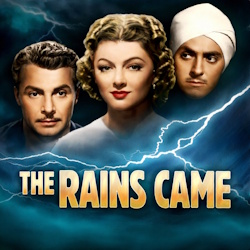
Darryl F. Zanuck 20th Century Fox Studios vice-president of production came upon the 1937 novel The Rains Came by Louis Bromfield and decided its story of redemption set in India would translate well to the big screen. He purchased the film rights, assumed oversight of production with a budget of $2.5 million, tasked Clarence Brown with directing, and hired Philip Dunne and Julien Josephson to write the screenplay. For his cast, Myrna Loy would star as Lady Edwina Esketh, with Tyronne Power as Major Rama Safti, George Brent as Tom Ransome, Brenda Joyce as Fern Simon, Nigel Bruce as Lord Albert Esketh and Maria Ouspenskaya as Maharani.
The story offers a tale of redemption involving Lady Edwina Esketh who lingers in an unfulfilling marriage. She travels to Ranchipur India with her husband Lord Albert Esketh where she reacquaints with former lover Tom Ransome, and meets the dashing Major Rama Safti. She rebuffs Tom, who shifts his affection to Fern Simon, the daughter of a missionary. Edwina’s efforts to seduce Rama transform into genuine love, which never comes to fruition as Ranchipur is devastated by and earthquake, flood and cholera epidemic. Her husband dies from cholera, and as she nurses Rama back to health, she accidentally drinks an unboiled glass of water, catches cholera, and dies. The movie ends with Tom and Fern surviving and falling in love, and Rama recovering to become the local ruler. The film was a commercial success and critical reception was favorable, earning five Academy Award nominations, including; Best Art Direction, Best Film Editing, Best Sound Recording, Best Original Score, and winning one for Best Special Effects.
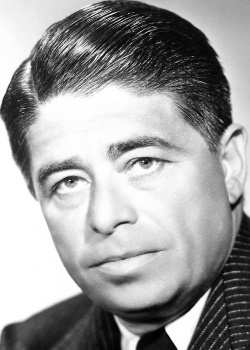 Darryl F. Zanuck had long admired Alfred Newman, entrusting him to write the now iconic 20th Century logo fanfare, which was retained when the company merged with Fox Studios. Upon viewing the film, I believe Newman understood that Edwina lay at the film’s core and that his music would have to speak to her discontent, unfulfillment, and tragic love affair with Rama. A secondary Love Theme would be needed for the Tom and Fern romance. Given the film’s setting in India, native cultural auras and sensibilities would need to be infused for authenticity. Foremost, were the challenges of supporting the aftermath of the dramatic destruction of Ranchipur by the earthquake and flood. Lastly, Newman also infused his soundscape with a number of folk songs, anthems and classical pieces, including “The Rains Came” by Mack Gordon, “Hindoo Song of Love” by Lal Chand Mehra, “God Save the King,” and the Piano Sonata No. 14 in C Sharp Minor, Op. 27 No. 2 by Ludwig van Beethoven, better known as the “Moonlight Sonata”.
For his soundscape, Newman composed four themes, beginning with the Fate Theme. It took me most of the film to come up with this name. I chose ‘Fate’ as it seems to speak to herald the horrific tragedy the befalls the people of Ranchipur, as well as the demise of a number of key characters; Edwina, Lord Esketh, and the Maharaja. It offers a powerful staggered and portentous eleven-note declaration by dire horns dramatico. Newman uses it as a herald of doom, and a dark pall death. Edwina’s Theme supports her personal identity, but also functions as a Love Motif for former lover Tom, and her desired lover, Rama. It offers classic Newman romanticism with a florid romance for strings, which achieves sublimity when taken up by solo violin d’amore. Fern and Tom have secondary Love Theme, which is also string borne, but lacks the ardor and passion of Edwina’s given that for most of the film it is unrequited as Tom believes he would be bad for Fern. The Indian Theme functions on two levels, a transpersonal expression of Indian culture, and a personal expression as a theme for Rama. Newman bathes us in Indian auras with the music led by either flute, oboe, or piccolo, joined y kindred woodwinds, strings with gentle drum rhythms. It is not aggressive or pronounced, but rather flows like a fragrant jungle breeze. The Indian music is pervasive in the film offering a constant reminder of setting and culture.
00:00 “Main Title” offers a powerful score highlight where Newman sets the tone of the film. It opens with his iconic 20th Century Fox fanfare, which supports the studio logo. At 00:14 ominous horns orientali declarations of the Fate Theme resound powerfully to support the display of the film title. At 00:25 the roll of the opening credits unfolds supported by the Edwina’s Theme with interplay of the Indian Theme. 01:22 “India 1938” reveals a map of India 1938 empowered by powerful and portentous fanfare declarations of the Fate Theme. We flow into the film proper atop the Indian Theme led by a flute Indiano and drums as a small ensemble plays under a tree. The music wafts into a house where Tom sits on the porch and offers a subtle musical narrative that drapes us in Indian auras. Contrapuntal woodwinds join the musical narrative as he readies a sling shot and shoots a chattering monkey. He then gets up to greet Rama and Mrs. MacDaid who arrive by car. Rama decides to visit, while MacDaid drives to work at hospital. They share a drink in the 109-degree heat and banter about life.
03:56 “Praying For The Rains” reveals Tom saying he is willing to join the natives and pray if it would bring the cooling rains. The musical narrative shifts here and becomes foreboding, losing the drum cadence, with strings joining. At 04:17 a solemn “God Save The King” enters as they gaze at a statue of Queen Victoria, with the music becoming wistful as Tom speaks of the good ole days. At 0:4:59 the drum and flute carried Indian Theme resumes draping us in Indian auras as Tom offers a pessimistic view of the world, which is countered by a more hopeful Rama. American missionaries Mrs. Simon and her daughter Fern arrive, corner Tom, and ensnare him into joining them and their guests at a garden party at 5 pm. We end with a comic coda as Rama savors Tom’s ensnarement. 06:33 “Garden Party” reveals guest arriving at the American Mission for the party. Newman supports in the background a spritely western tune, which plays under the dialogue. Tom arrives and pays a social call on the neighbor Mrs. Phoebe Smiley and her husband the Reverend Homer Smiley. He then joins the party where Mrs. Simon purposely introduces him to her daughter. They go inside where she offers him a brandy and pressures him to help her escape this boring missionary life so she can pursue a career on the stage. They are interrupted as a courier brings him a dinner invitation at the palace for tonight with Lord and Lady Esketh. He is relieved as it gives him an excuse to depart.
15:21 “The Palace” opens with a grand and opulent rendering of the Fate Theme as the camera takes us into the ornate and gilded palace. A meandering flute indiano supports Tom being greeted by the Maharaja and his wife, the Maharani. They take Tom and introduce him to their guests. When Edwina turns to greet him, the music darkens for a fleeting moment, but then is joined by muted violins romantico as they reacquaint. When dinner is announced, the flute Indiano led musical narrative supports their walk to the dinning room. There is tension as Lord Esketh is critical of a man like Tom, one of those radicals, while Edwina is defensive. 17:24 “Dinner” reveals everyone seated at an ornate long table. Newman supports with a soft dance-like ambiance led by flute Indiano. At 17:36 when we shift to Edwina, who is seated next to Tom, their string borne Love Theme of the past joins, but it is shorn of its ardor. At 17:59 a danza esotica supports a female dancer on stage as we see the guests’ playing cards.
20:17 “Tom and Edwina” offers a score highlight where Newman masterfully supports a scene of complex shifting emotions. It reveals Tom giving her a tour of the palace. Sour, and dissonant woodwinds carry their progress until they reach an open window overlooking the garden. At 20:57 Tom says it looks like the rains may soon come and a string borne romantic narrative unfolds. Yet as she voices her unfulfillment with him, and dissatisfaction with her current life, the music sours until 21:51 when the music warms atop strings d’Amore as he admits that he had considered proposing to her. She is touched, but the musical romance is fleeting as he relates how life here in India is very different than England. At 22:19 the music darkens on the Fate Theme as he relates the fragility of life here. At 22:42 Edwina yawns and the woodwind motif resumes as she says he has changed. When he responds that she has not changed and remains a lovely creature, their Love Theme returns. She sits on a sofa and assumes an inviting and seductive affect, but he does not respond amorously and the music saddens as she realizes it is over and asks for a cigarette. The music lightens for a wistful narrative as he offers her one, but is reminded of how he used to do it, and so he lights it in his mouth and then places it in hers. The moment is shattered when we see lightning and a deafening thunder clap. As a downpour commences and the lights go out, strings d’Amore return as Tom sits down next to her and she moves her face next to his and blows out his cigarette. We close with an ominous Fate Theme as a montage of the monsoon sweeps across the land.
25:05 “Edwina’s Lust” reveals an agitated Lord Esketh asking the Maharaja if he knows where Edwina and Tom had gone in the palace. The Maharaja says he is unsure as the palace is very large. A meandering flute Indiano supports as the electricity returns and Tom and Edwina rejoin the guests. At 25:52 a flute seducente arises as Tom gets a drink from the bar, and Edwina notices Rama. She is very open and direct in expressing her attraction to him, which startles Tom. He counsels that she not waste her time as he is a physician scientist and not a romantic. Her husband joins, and demands to go home as he is ill. Edwina sees opportunity, and suggest she call a renowned doctor in the morning to treat him, to which he is thankful. Their departure is carried by flute seducente, and we see Tom offer a wry smile. In an unscored scene, Tom returns home and finds Fern inside waiting for him. She says she has run away, is never going back, and that she needs his help. He refuses and she threatens to make a scene, and cause a scandal. He relents, gives her dry clothes to change into and leaves the guest bedroom. She comes out and we now see that he is sexually attracted to her. She takes the cue, and moves in to kiss him, and he takes her into a kissing embrace. But she pulls back saying someone is watching from the patio. Tom runs out and discovers it is his servant, John. He orders him to remain silent and drive Miss Simon home. As she departs, she admits that she would like to visit again as she has fallen in love with him. As she departs, he looks on with bemusement.
The next day Rama finishes treating Lord Esketh and Edwina corners him into staying for tea. She manipulates him into escorting her on a tour of Ranchipur. While on tour a downpour forces them into the Maharaji Music School where Mr. Das, the school master, agrees to give them a tour. 35:17 Maharaji Music School” offers a dancing piccolo Indiano supported by nativist drums and children’s voices as we see musicians and students performing. At 36:09 they come to a room where a young boy plays Beethoven’s Moonlight Sonata No. 14 in C sharp minor. At 36:30 they enter a room where a small ensemble of piccolo, sitar and drums support tenor Lal Chand Mehra singing the romantic ballad “Hindoo Song of Love”. She asks Rama to recite the lyrics in English, which he does;
“My lyre of purist jade,
With strings of fine-spun gold,
And I might sing with merit,
Of you beauty.
Your hands all my life,
My being drop it and I perish,
But in your heart
My love has found a home,
And it can never die”.
Rama’s Theme carried by a tender flute Indiano follows and carries their departure as we see that she is very moved by the song. Later, in an unscored scene, Tom shows up in formal wear to escort Edwina to dinner. He is drunk and combative, calling her out for her philandering, while she replies with some potent rejoinders of her own. He confides that Rama is his friend and does not want him hurt, and she replies that he is not to worry as she has failed to make an impression on him. 44:41 “Party” reveals their arrival at the party. Newman imbues the scene with Indian auras led by a meandering flute tenero. She spots Rama and asks to talk to him. They walk out onto the veranda and at 46:16 a flute triste and retinue of strings support her efforts to elicit a romantic response from him. The moment is shattered at 47:17 in “Earthquake” with dire horn declarations of the Fate Theme as a violent earthquake rocks the house. Everyone is terrified until the shaking stops. An eerie string tremolo follows as people regain their composer, only to again be shattered at 47:42 by a more severe earthquake, which causes extensive damage to the house. Outside thunder claps resound as people fleeing in the streets are crushed to death by collapsing buildings. The phones are dead and Rama departs for hospital. We shift to the damn, which collapses unleashing a massive flood that kills thousands. Rama and Mrs. MacDaid reach high ground and barely escape; however, Lord Esketh dies as the flood collapses his house.
In the morning, Tom and Edwina stand on a damaged veranda as the waters continue to rise. 51:38 “Lamentation” reveals Bannerjee man chanting a lament for the dead. They turn and see Fern paddling towards them in a boat. She joins theme and expresses relief that Tom is alive and well. She says that it is safer at the mission, and Tom takes her to the bedroom to rest. He says he will take Edwina first and then return for her. Outside they trade barbs as Edwina insists on going to the hospital and chastises Tom for leading Fern on. They arrive at the mission and Phoebe takes Edwina in while Tom returns for Fern. 57:57 “Tom Capsizes” offers a dire violin tremolo and drums of doom as Tom struggles in a rainstorm and currents. His boat capsizes and he struggles swimming against the current. At 58:34 a dirge-like rendering of the “God Save The King” anthem supports his reaching Queen Victoria’s statute and removing debris from it. Forlorn strings of woe voice the musical narrative, which takes him to the veranda. A diminuendo of exhaustion takes him into the bedroom. 59:58 “Fern Wakes” reveals Tom waking Fern, who is happy he has returned for her. He says he lost her boat and she pulls him into her arms to rest supported by their Love Theme expressed as a romance for strings.
1:00:21 “Aftermath” offers a powerful and poignant score highlight. It reveals a panorama from a hill of a devastated Ranchipur empowered by a fortissimo declaration by dire horns of the Fate Theme. In the palace, Rama tends to the Maharaja who is dying. An Indian monk chants as the Maharaja tasks Rama with serving the Maharani and rebuilding Ranchipur. At 1:01:22 he expires and solemn Fate Theme joins and ushers in a string borne lamentation as the Maharani and Rama depart. She gives a speech to her ministers, military commanders, and the police exhorting them to dedicate themselves to rebuilding Ranchipur. At 1:03:13 elegiac trumpets sound as she declares a state of emergency as a courier delivers a communique to Rama. She asks Rama to relate the news, and the music darkens as he says cases of plague have started and that Ranchipur’s water supply is polluted. At 1:03:57 she dispatches Rama to combat the plague with all means necessary, dismisses her ministers and commanders, and orders Tom to stay. She is weary, sits, and asks Tom for a cigarette. The music, led by a forlorn flute Indiano, reflects her weariness and burden. She tells Tom that she needs him, trusts him, and makes him her Aide de Camp. He accepts with reverence, and departs carried by a grim and heavy statement of the Fate Theme.
1:05:10 “Edwina and Fern” reveals Edwina being surly with Fern. Newman supports by evoking a subtle tension led by a violin tremolo and beleaguered woodwinds. Edwina apologizes for her bad mood and Fern opens up about her feelings for Tom, supported by the tenderness of her yearning Love Theme. The women bond supported by a romance for strings as Edwina counsels her on what a relationship with Tom means. The intimate moment ends as the Reverend Homer arrives on a caravan of elephants with a dozen orphans. He delivers a letter to Fern from Tom, which states that he is officially working and asks if she will join him. The Love Theme borne by strings felice support her joy and propel her rush to join him. As she departs, wistful violins romantico linger as we see a contemplative Edwina thinking of opportunities lost. In an unscored scene Edwina reports to hospital to volunteer, but because of her lack of skills she is told to step aside and wait. Rama and her paths cross and he is surprised to see her assigned janitorial duties. He orders Mrs. MacDaid to train her for Ward duties as she is highly intelligent.
1:11:23 “Plague Fire” opens atop a dire Fate Theme, which resounds as we see the slums aflame due to the military’s attempts to burn out the plague infestation. The theme persists like a dark pall of doom as we see Edwina working, and pausing to look out he window at the conflagration. At 1:11:55 a solo flute tenero emotes Rama’s Theme, which supports his arrival and offer of assistance pouring a large keg of water. The flute led contrapuntal musical narrative joined by strings and muted foreboding drums becomes plaintive as they begin their medical rounds. At 1:13:03 a grim Fate Theme sounds as Rama finds a patient has died and calls for a porter. 1:13:22 “Edwina and Rama” offers a poignant score highlight. Newman sow a subtle tension later in the wash area. As Rama rejoins her, Edwina relates her struggle to adapt to the suffering. Slowly the music softens, as he commends her and then asks why did she stay? The music shifts with tender romanticism as their eyes lock, and we see in her eyes, the unspoken answer – him. He walks to her, and at 1:14:34 removes her face mask supported by a romantic blossoming, which is stillborn. He tells her you do not need to answer, instructs her to be careful and hand wash often as she is too valuable, and then departs, evoking disappointment and heartache.
In an unscored scene the British military officers arrive, express their condolences to the Maharani and offer their assistance. Later, the Maharani informs Tom that the Maharaja designated Rama as his successor and that she will not tolerate Edwina’s intrusion into his life. She orders Tom to ensure she departs on the British plane in the morning. Afterwards Tom departs and visits Edwina in her quarters. He breaks the bad news that the Maharani has ordered her to leave. Edwina refuses, saying this time she is sure she is in love. He counters saying the Maharani is giving Rama one choice – Ranchipur, or you, and that he cannot have both. She will not relent and they agree to disagree.
1:23:41 “The Accident” opens with a violin tremolo under which celli and bass tristi descend grimly to support Edwina, who is working the night shift. She sits forlorn at a desk and records the increasing number of patients that are critical vs dying. At 1:24:22 a forlorn flute Indiano joins the musical narrative as a woman cries out and Edwina gives her a drink of water. Tension builds and crests darkly on the Fate Theme at 1:25:12 as the man working the ceiling fan collapses. After porters remove him, Edwina washes her hands and takes off her mask. Newman sow an eerie soundscape as she takes up the ceiling fan. At 1:26:09 the music swells on a crescendo of tension empowered by a violin tremolo, which crests darkly on the Fate Theme as she pours water into the glass used by the collapsed man and drinks from it. A diminuendo interlude follows. She then looks across the room at the clean water container, and then at the container the man was using. A crescendo di orrore swells and crests with terror as she realizes that she just drank from an infected glass.
1:27:30 “Rama Reveals His Heart” offers a beautiful romantic score highlight. Rama arrives in the morning carried by his flute borne theme, rendered as a soft danza Indiano. He reveals to Edwina that Tom told him that she was leaving today. She confirms this and he says he is relieved, as he has been tortured, and worries constantly about the danger, she is in working here. At 1:28:58 strings romantico, full of longing support her effort to reveal her feelings. She says she is so happy that words such as these have at last come from his lips. He then opens up his heart and expresses at last his feelings for her, which Newman supports eloquently with a heartfelt romance for strings. At 1:31:10 a solo violin d’Amore support his admission and allowing himself to be vulnerable. He says for her to depart, and that he will follow, abandoning Ranchipur to set up a new practice elsewhere where they can begin their life together. A crescendo romantico brings him to her, but it dissipates as she turns down his kiss, instead asking for an embrace. As he does, he detects a fever and says she does not look well. The musical narrative descends into sadness as she denies she is ill, saying she is just tired. At 1:32:34 she faints as the Fate Theme resounds darkly. Rama carries her away, and orders Mrs. MacDaid to take over the ward. A passage of despair concludes the scene as she sits at the desk, adds a figure to the number dying column, and then weeps.
Tom and Fern pay a visit to check on Edwina. Fern goes into the room as Tom stays outside with Rama. Tom consoles Rama, who is distraught, saying she that will not fight and has lost her will to live. 1:34:57 “Rama’s Pain” the flute Indiano emotes his theme as Rama admits that the two are very different, that he is an Indian and cannot stay calm and be unemotional. He collapses in despair saying he has failed and cannot save her. Tom comes to him at 1:35:15 carried by warm and comforting strings. The music swells with hope as Tom exhorts him to stay strong, saying that he must do his duty for her sake and Ranchipur’s, as he is the new India. Rama regains his composure; thanks Tom and we close on a diminuendo of thankfulness. 1:36:03 “Edwina Repents” offers a Pathetique as Fern comforts Edwina, who gifts her, her jewelry and wishes her a happy life with Tom. She gains solace by giving away her worldly possessions and repenting her indiscretions. At 1:37:07 Tom enters carried by their Love Theme. She asks Fern to leave, and aching strings tristi support her giving him, her sapphire ring for Fern, on condition he marry her. He says he is not good for her, but she counters that she thinks he is a god, something he has always wanted from a woman. He takes the ring and wistful woodwinds speaks of their love, which could not be. She asks him to have Rama come to her as the strings shift sadly to a narrative of regret. At 1:39:15 Rama enters carried by sad rendering of his theme, which shifts to strings romantico as he speaks of the happy life they will soon share together. Hope struggles to break through, but at 1:40:24 aching strings full of heartache reveal she has passed and we close with finality upon a dire statement of the Fate Theme.
1:41:01 “Rama As Maharaja” reveals the Maharani showing Rama, who is dressed in kingly attire, a rebuilt Ranchipur that he, his sons, and grandsons shall rule. At 1:41:02 his guards arrive to escort him to greet his people, yet a blank affect appears on his face as he hears a woman singing the wistful song “The Rains Came”. He departs carried not by stings of joy, but instead by feelings of loss. The Maharani gazes at the portrait of her dead husband, veils herself, and then departs through a back door carried by strings tristi with an oboe Indiano coda of the Indian Theme. At 1:42:08 the Fate Theme rendered as a regal processione grandioso supports the ceremonial procession of Rama and his ministers as he walks to fulfill his destiny. We conclude with the film with a grand flourish. 1:43:01 “Cast Credits” offers a resplendent reprise of the Tom and Edwina Love Theme, which concludes with a romantic flourish.
1939 was quite a year for Alfred Newman with two Academy Award nominations for “Wuthering Heights” and “The Rains Came”. Newman understood that the film, at its core, was a tale of redemption for Edwina, who for her entire life sought, but failed to find fulfilment in love. He was already renowned for his signature “Newman Strings”, and once again his two love themes for Fern and Tom, and Edwina and Tom/Rama brought both the romanticism and pathos required by the film’s narrative. Several scenes offered complex human interactions where overt and covert feelings of love, regret, and anger intersected. This would task any composer, and I believe Newman navigated these challenging scenes and elevated the acting performances with an insightful, nuanced, and synergistic musical narrative. Throughout the film Newman never lets us forget the cultural setting, draping the film with pervasive Indian auras and sensibilities, which waft life a fragrant jungle breeze. Lastly, this was a film of a natural disaster and death. His powerful, ominous, and dire Fate Theme served as a harbinger of death and destruction, empowering these events with a powerful and implacable musical force. Masterful is how in the finale, the theme is transformed into a major modal, regal processione grandioso as Rama secures his destiny as the new Maharaja of Ranchipur. Folks, this is an early career Neman gem that demands a re-recording! Until such time this occurs, I recommend you take in the film to appreciate the brilliance and beauty of Newman’s handiwork.
For those of you unfamiliar with the score, I have embedded a YouTube link to the movie trailer; https://www.youtube.com/watch?v=DD-jxCyrobk
Track Listing:
- NOT AVAILABLE
Music composed and conducted by Alfred Newman. Orchestrations by Edward B. Powell. Recorded and mixed by XXXX. Score produced by Alfred Newman.

Shop at the Movie Music UK Store

Member of the

 MOVIE MUSIC UK