STAGECOACH – Richard Hageman
 GREATEST SCORES OF THE TWENTIETH CENTURY
Original Review by Craig Lysy
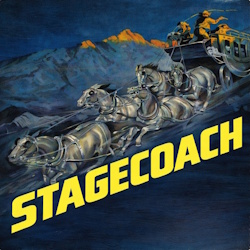
Director John Ford came upon a short story, “The Stage to Lordsburg” by Dudley Nichols, which inspired him for his next film project, and whose film rights he purchased for $2,500. Yet he had difficulty securing financial backing as the studios believed “A” western pictures were out of vogue, and they had no confidence that John Wayne could carry the film. Ford was insistent on retaining Wayne and eventually hammered out a deal with independent producer Walter Wanger who would manage production with a $531,374 budget. Ford would direct and Dudley Nichols was hired to write the screenplay. A fine cast was assembled, including Claire Trevor as Dallas, John Wayne as Ringo Kid, Andy Devine as Buck, John Carridine as Hatfield, Thomas Mitchell as Doc Boone, Louise Platt as Lucy Mallory, George Bancroft as Marshall Curley Wilcox, Donald Meek as Samuel Peacock, Berton Churchill as Henry Gatewood, and Time Holt as Lieutenant Blanchard.
The film is set in the Arizona Territory 1880 and tells the story of a group of strangers who board a stagecoach in Tonto Arizona, which will take them to Lordsbury in the New Mexico Territory. The passengers include a banker escaping with embezzled bank funds, a prostitute driven out of town for indecency, an alcoholic doctor, a whiskey salesman, a pregnant military wife, and Ringo Kid, a fugitive from the law. On the way they come under Apache attack with a harrowing pursuit, that appears to be ending in disaster as their ammunition will soon run out. But at the last minute the U.S. cavalry comes to the rescue to save the day. Marshall Curley is grateful to Ringo’s help in the crisis and agrees to ‘allow him to escape’ with Dallas to his ranch across the border. The film was a commercial success, earning a profit of $297, 690. Critics praised the film’s storytelling, direction and heralded John Wayne as an emerging super star. The film earned seven Academy Award nominations, including; Best Picture, Best Director, Best Cinematography, Best Art Direction, Best Film Editing, and winning two for Best Supporting Actor and Best Music, Scoring.
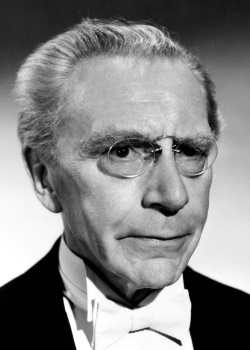 Paramount Pictures Director of Music Boris Morros assigned Dutch composer Richard Hageman to score the film, assisted by a team of assistants comprising W. Franke Harling, John Leipold, and Leo Shuken. Director John Ford insisted that the score be grounded with tradition American folk songs. As such the composer team interpolated several folk songs into their soundscape, including; the traditional ballad “Trail to Mexico” (Bury Me Not on the Lone Prairie), “Ten Thousand Cattle” by Owen Wister, “Jeanie with the Light Brown Hair” by Stephen Foster, “Gentle Annie” by , “My Lulu” by Wilf Carter, the African-American spiritual “Careless Love”, various traditional folk tunes (“Lily Dale”, “Rosa Lee”, “Joe Bowers”, “Joe the Wrangler’, “She’s More to Be Pitied than Censured”, “She May Have Seen Better Days”), “Shall We Gather at the River?” by Robert Lowry, and “En Mi Soledad” sung by Elvira Ríos
For the film’s soundscape, three primary themes were provided and two recurring motifs. The Main Theme, written by Hageman, is iconic and takes its place in the Pantheon of great musical themes. It would be used for the Hopalong Cassidy film series as well as the Gunsmoke TV series. It offers a repeating pattern of five-note phrasing by trumpets bravura, repeated by trombones. It emotes forthrightly with strength, determination and Americana power. The “Careless Love” song melody offers a forerunner to the Ringo and Dallas Love Theme earl in the film when we see the first stirrings of love in Ringo. This gives way to the actual Love Theme, which offers a classic romance for strings. We see it slowly develop in the film, evolving from a nascent, understated melody by strings romantico at Apache Wells, to a glorious blossoming when Dallas rushes to Ringo’s arms, happy and thankful that he survived the Lordsburg shootout. The Apache Theme supports their tribal identity and is empowered by horns bellicoso and rhythmic drums of war. Its expression as a war anthem in the “Apache Attack” scene offers one of the score’s most powerful moments. The song melody for “Bury Me Not on the Lone Prairie” was used as a supplemental travel motif while the wistful “Jeanie with the Light Brown Hair” served as a motif for Hatfield’s unrequited love relationship with Lucy.
00:00 “Logo” reveals the Masterpiece Productions logo propelled by a churning celli ostinato from which refulgent violins soar. At 00:11 we flow into “Main Title”, a score highlight where the composer team sets the tone of the film. The film name displays and the opening credits commence against the backdrop of a stagecoach traveling through mountainous desert vistas accompanied by a U.S. Calvary unit. The composer team supports forthrightly with classic Americana offering the horn propelled strength, determination and masculine power of the Main Theme. At 0:36 we flow atop wistful strings into a quote of the song melody from “Jeanie with the Light Brown Hair”. At 00:47 horns bellicoso empowered by drums of war usher in the Indian Theme as we see a contingent of warriors on horseback. We close atop ta coda of the Main Theme by trumpets bravura.
At 01:14 “Urgent News” we flow into the film proper atop a tranquil statement of the Main Theme as we see two men riding furiously over desert vistas. At 01:25 a bugle declared reveille supports the hoisting of the flag at an army encampment. The Main Theme joins as the two men ride into camp. 02:09 “Geronimo” reveals the two scouts advising the commander of Apache unrest. A telegraph signal comes in, but is cut off, with the corporal stating he received only the first word – Geronimo, which is supported by declaration of the Indian Theme by dire horns. 02:16 “Overland Stage Arrival” reveals a bustling Main Street and the arrival of the Overland Stagecoach supported by a vibrant instrumental rendering of “Bury Me Not On The Lone Prairie”.
05:32 “Leaving Town” reveals Dallas, a prostitute, being escorted to the stagecoach by the righteous women of the Law and Order League, The town drunk Doc Josiah Boone who is also been declared persona non grata joins the purge of undesirables. A solemn organ rendering of the hymn “Shall We Gather at the River?” supports their exodus. Dallas wants to stay, but Doc offers his arm saying it is best we go. A sardonic rendering of the “Shall We Gather at the River?” hymn supports their walk to the stagecoach. In an unscored scene, Doc stops off at the bar for old times sake, convincing Jerry to pour him one for the road. He meets whiskey salesman Mr. Peacock who will be joining him on the trip, and weasels a gulp from his bottle. Later, Dallas, Mrs. Lucy Mallory, Mr. Peacock and Doc board and depart for Dry Fork with a U.S. cavalry escort. Lieutenant Blanchard advises that the journey will be dangerous as Geronimo is on the warpath. Curley advises the passengers that he is going as planned and if anyone is too afraid, they should get off now. As they prepare to depart, card shark Mr. Hatfield joins, offering his gun to protect Mrs. Mallory.
13:56 “Departure” reveals the stagecoach departing to a rousing, trumpet led rendering of the Main heme. A diminuendo interlude supports banker Henry Gatewood, who is absconding with bank funds, flagging down the coach and joining the passengers. As the coach departs, the rousing Main Theme resumes. At 14:45 as the head out of town and across the vast plain, the theme transforms into a marcia maestoso. As the camera zooms in on Curley and Buck, the theme shifts to a gentle traveling motif. At 15:55 as we shift to conversations in the coach cabin, a soft rendering of the “Bury Me Not on the Lone Prairie” song melody supports. At 16:12 muted trumpets militare join as Henry praises their calvary escort, soon joined by a menacing Apache Theme as Doc brings up the danger they pose. At 17:12 an exterior shot of the coach and calvary is supported by a martial rendering of “Bury Me Not on the Lone Prairie”. At 17:49 a horn empowered variant of the Main Theme propels the coach traversing difficult terrain. After clearing a hill, the rousing Main Theme resumes to support the journey.
In an unscored scene a gunshot stops the coach as Curley and Buck greet their friend Ringo Kid, whose horse has gone lame. He has escaped prison to revenge the murder of his father and brother by Luke Plummer. Curley, who is Sherriff, follows the law and takes Ringo into custody, cramming him into the coach. At 19:39 “The Journey Resumes” reveals the coach proceeding anew propelled by a spirited Main Theme. At 20:13 the Apache Theme joins as Curley wonders about the burning ranch house seen by Ringo. Doc and Ringo reacquaint and he asks about Ringo’s brother, whose broken arm he set as a kid. Ringo at 21:12 discloses that he was murdered, supported by a grim lament. At 21:18 a churning “Bury Me Not on the Lone Prairie” melody again supports the coach navigating rough terrain. At 22:00 the melody of “Jeanie with the Light Brown Hair” as Hatfield orders Doc to put out his cigar, whose smoke is irritating the ladies. As we shift to an exterior view, a sweeping rendering of the “Bury Me Not on the Lone Prairie” melody resumes as the coach passes through the gorgeous Monument Valley sandstone towers. (Too bad the film was not shot in color). We close at 23:00 with a celebratory “Bury Me Not on the Lone Prairie” melody as the coach arrives at Dry Fork.
In an unscored scene they are advised that Lucy’s husband Captain Mallory was redeployed to Apache Wells, which leaves the coach with no military escort on the next leg of the journey. They agree to go inside and vote whether to proceed or return. Inside everyone votes to go forward except Mr. Peacock, and Buck and Curley go out to feed and water the horses. As dinner is served, Ringo seats Dallas at the table. Lucy and the others refuse to sit near them, which Ringo, who is unaware of Dallas’ past, interprets as a rejection of him as a criminal. He prepares to leave at 29:16 “Outcasts” with plaintive strings supporting Dallas’ disappointment as she begs Ringo to stay. Violins voice “Jeanie with the Light Brown Hair” as Lucy seems to be ill, but stiffens up saying she will be fine. She then reacquaints with Mr. Hatfield who discloses he knows her, having served in her father’s Virginia regiment during the war. At 30:18 Ringo and Dallas warm to each other supported by the traditional song melody “Careless Love”. The moment is lost when Buck returns and declares they are departing for Apache Wells.
31:33 “Back On The Road” reveals the coach traveling on the second leg of the journey empowered by the trumpet declared Main Theme. As the Lieutenant leads his men on the left fork in the road, the coach proceeds unescorted on the right fork caried by a sweeping string borne rendering of the Main Theme, set against the beautiful sandstone towers of Monument Valley and stunning cloud swept skies. At 35:07 the “Bury Me Not on the Lone Prairie” melody supports exterior shots of the coach traveling over desert vistas. At 35:38 the music sours as Lucy seems both ill and cold, as she rejects Dallas’ offer to change seats and rest her head on her shoulder. “Jeanie with the Light Brown Hair” joins as Hatfield asks Lucy how she feels. She asks for water, and Hatfield solicits a canteen from Buck with an interlude of churning strings dramatico joining as he passes down the canteen. The “Jeanie with the Light Brown Hair” melody resumes as Hatfield takes the canteen and pours her a glass. Ringo asks that Dallas also be served, and the “Careless Love” song melody reprises. At 38:00 a churning Main Theme propels the coach through a windy storm as we see the passengers shivering as Curley has selected a higher and colder route through the mountains to avoid Apache. An interlude by the trumpet declared “Careless Love Theme” at 38:35 supports Ringo looking at Dallas. The beleaguered Main Theme resumes as we see the passengers struggling.
39:41 “Apache Wells” reveals the coach arriving at the gated rest stop with Curley asking for fresh horses as he wants to push on quickly to Lee’s Ferry. A vibrant Mexican melody supports their arrival. Lucy is devastated when she is informed that the soldiers left to take her badly injured husband to Lordsburg. She coldly rebuffs Dallas’ effort to offer sympathy. At 41:24 a dramatic and beleaguered musical narrative supports Lucy fainting in the tavern. At 41:59 a plaintive “Gentle Annie” song melody joins as she is carried to a bedroom by Curle y. Dallas coaxes Doc to join her in attending to Lucy as an unsympathetic Gatewood frets. Dallas returns and asks Ringo to fetch a lot of hot water as Doc joins, sets down the whisky bottle and asks for lots of black coffee. When Chris the tavern owner’s wife joins them, Gatewood and Peacock offer bigoted insults as she is an Apache sqaw. 45:15 “The Birth” reveals Doc and Dallas ministering to Lucy who is in labor, supported by strings doloroso. Outside at 45:36 Chris’ wife, supported by guitar, sings the traditional melancholic Spanish song “En Mi Soledad”. The moment is lost when the local Mexicans ride off with the spare horses. The composer team sows unease as the passengers wait in the tavern, and then hear a baby’s cry. Yet at 48:00 the music brightens as Dallas emerges holding a newborn baby and the passengers gather round her in amazement. We see Ringo affixed on Dallas, revealing his clear romantic attraction. Doc joins, is congratulated, pours himself a shot, and sighs.
50:57 “Ringo Proposes” opens pensively as he follows her out behind the tavern. At 51:15 their Love Theme, a yearning romance for strings supports the two discussing their past, with both losing their families, and their uncertain futures. He opens his heart and proposes that when he is done in Lordsburg, that she joins him at his ranch in Mexico. Yet the romantic moment dissipates when she hesitates, as she is ashamed of her past, which he is unaware of. She becomes tearful, asks him to not talk like that, and runs off as Curley arrives and orders Ringo to stick close to the reservation. In an unscored scene Chris wakes up everyone saying his wife Yakima has fled with his horse and gun. Everyone is concerned the Apache may attack and they make preparations to depart as Doc examines Lucy to see if she can travel. Afterwards Dallas confides to Doc that Ringo proposed to her and asks if it is wrong for a girl like her to accept and find love. His counsel is crushing, as he tells her he will break her heart, that he is going to prison, and when you arrive in Lordsburg, he will learn all about you. She presses him, and he relents, wishing her good luck.
1:00:14 “Dallas Accepts” reveals Ringo accepting Doc’s urging to join Dallas in the kitchen. He presses her for an answer to his proposal, and she relates her fear that either he will die at Luke Plummer hands, or by his two avenging brothers should he kill him. He relates that a man has to do what a man has to do. She agrees to join him at his ranch after she reaches Lordsburg, gives him a rifle, and tells him to ride out on a horse as Curley cannot abandon the passengers to follow. The composer team supports with their Love Theme, which becomes impassioned when Dallas relents and agrees to join him at his ranch after Lordsburg. He departs while the other men are discussing whether to push on without army support, or turn back. 1:03:13 “Curly Searches For Ringo” reveals Curly realizing Ringo is missing, and frantically searching for him. Strings energico and trumpets propel his ride off, yet he abruptly stops at 1:03:26 as a menacing Apache Theme sounds. He dismounts and churning strings bellicoso propel Curley towards him with a pistol. He reaches him, cuffs him, but turns when Ringo points to the far hills. A menacing Apache Theme resumes as they see smoke signals saying that Geronimo is on the warpath.
1:04:15 “Onward to Lee’s Ferry” reveals everyone quickly boarding the coach as they try to escape before the Apache attack. A spritely travel motif propels their departure. As they reach the plains, a robust horn declared Main Theme supports. Inside the coach an agitato unsettles as the insufferable Gatewood disparages his fellow passages. At 1:05:52 Peacock calms the storm for the sake of the ladies supported by the melody of “Jeanie With The Light Brown Hair”. At 1:06:00 the horn propelled Main Theme resumes for an exterior view of the coach churning along. In 1:06:22 “Lee’s Ferry” the music darkens atop the Apache Theme as they approach their next stop, Lee’s Ferry, and discover not only is the outpost burnt to the ground, but also the ferry needed for them to cross the river. Curley orders Hatfield to take lookout with a rifle, uncuffs Ringo after he pledges not to try to escape, and has Buck move the coach to the river bank. The composer team sows tension, which is interrupted by an interlude of lament by weeping violins at 1:07:21 as Hatfield covers the dead body of a woman. At 1:07:32 a dire Apache Theme sounds as Hatfield sees a war party approaching. Tension with a mounting urgency unfolds as the tie large logs to the coach with the plan to try and float across the river. A churning string ostinato propels them successfully across the river.
1:08:38 “Onward to Lordsburg” reveals the coach again rolling across the desert propelled by a bold and confident Main Theme. A comedic interlude at 1:08:49 supports Buck jokingly asking Curley if they should charge a half fare for Lucy’s baby. A tranquil passage follows, that is shattered at 1:09:07 by a dire Apache Theme as the camera zooms in on a war party poised on an overlooking cliff. The tranquil travel motif resumes as the coach passes below, with a shift back to the Apache Theme as the war party rides off to prepare an ambush. At 1:09:30 a musical narrative of pleasantries unfolds as Gatewood apologizes to everyone for flying off the handle. The musical narrative is shattered at 1:10:10 as Doc proposes a toast when an arrow strikes Peacock in the chest, gravely wounding him. Gun fire raises the alarm as Doc pulls out the arrow and tends to his wound.
1:10:16 “Apache Attack” offers the score’s astounding action showpiece. It reveals the Apache ambushing the coach with Curley firing back and Burt fiercely driving of the coach. The Apache Theme is unleashed with all its ferocity as a war anthem, joined by strings furioso which propel the fleeing coach. Apache casualties are high, but they eventually begin to overtake the coach. Burt is wounded and loses the reins, which forces Ringo to leapfrog to the lead horse pair to regain control. Doc runs out of bullets and at 1:15:48 the “Jeanie With The Light Brown Hair” melody supports Hatfield seeing he is down to his last revolver bullet. The music becomes menacing as he points his pistol at Lucy’s head, as she prays unaware. At 1:16:13 we hear a gun shot, Hatfield’s hand goes limp, the revolver falls to the floor as Lucy declares she hears a bugle charge. The calvary bugling charge resounds as we see army calvary charging to the rescue, their battle anthem now ascendent. The outnumbered Apache flee and bugle calls of victory resound as Ringo goes to the coach and sees Hatfield die. We close at 1:17:28 with a triumphant marcia della vittoria as the calvary and coach proceed to Lordsburg.
1:17:40 “Lordsburg Arrival” reveals the calvary escorting the coach into town with festive piano music heard from a saloon in the background. Lucy thanks Dallas and offers any assistance should she need it. The piano music moves to the forefront as Luke’s men go into the saloon and alert him that the Ringo Kid just drove the stagecoach into town. He lays his poker hand down; two black aces and two black eights – known as the “Dead Man’s Hand”. He walks to the bar and takes a whiskey shot, his face clearly revealing fear. The composer team juxtaposes the tension with an animated piano tune as we see all the other patrons looking grimly at Luke. Outside the piano music wafts in from the saloon as Dallas bids Mr. Peacock goodbye. Ringo asks Curley to make sure Dallas gets to his farm, and he agrees, while Gatewood is arrested for embezzlement.
1:23:45 “Ringo and Dallas Walk” reveals Dallas joining him at the coach, the Love Theme attempts to gain voice, but is silence by a foreboding musical narrative of doom as Curley agrees to permit Ringo’s revenge, handing him a rifle on the promise that he will turn himself in afterwards. As they walk down the street together a plaintive rendering of the Love Theme supports, and becomes aching as she stops and says this is goodbye as she is done hoping for a dream that cannot come true. He will have none of it, takes her by the arm and they resume walking. In the saloon Luke’s brothers Hank and Ike join him, ready to kill Ringo. Doc joins them at the bar, has a shot of whiskey, and stares at the brothers contemptuously. Outside Dallas and Ringo continue their walk supported by the piano tune coming from the saloon.
1:28:10 “Dallas’ Past Revealed” reveals Ringo and Dallas passing outside the saloon, as he escorts her home supported by the sad song melody of “She Is More To Be Pitied, Than Censored”. They arrive, we see a bordello, and she tells him that she told him not to follow her. She departs quickly, but he calls to her at 1:28:51 and comes to her supported by their Love Theme. He pauses and says that he told her he was going to marry her, and nothing has changed. He then tells her to wait here and departs. In an unscored scene at the saloon, Burt advises the Plummer brothers that Ringo will arrive in seven minutes, and then runs away. Doc then orders Luke to lay down his shotgun or he’ll have him indicted for murder. Luke lays down the shotgun, pushes Doc aside and then departs. Outside Luke’s girl drops to him a rifle from the second story balcony.
1:31:26 “The Shootout” reveals the three brothers walking down a dark Main Street supported by a foreboding musical narrative of tension. At 1:31:43 a dire stepped crescendo slowly swells as they at last come upon Ringo. At 1:32:33 the crescendo surges with horrific dissonance as they walk towards each other and Ringo arms his rifle. The crescendo explodes at 1:32:39 as Ringo leaps to the ground and opens fire. Dallas hears the volley of gun shots, cries out Ringo, and grieves. Luke walks into the saloon alone, and then collapses. 1:33:13 Dallas hears footsteps approaching and the Love Theme blossoms as she runs to Ringo’s kissing embrace. Yet the moment is lost and sadness descends as Curley and Doc arrive with a carriage to take Ringo into custody. 1:34:05 “Ringo Says Goodbye” reveals Ringo handing over his rifle, thanking Curley, and telling Dallas that Curley will take her to his ranch. Curley asks if she would like to ride with him, and she gets in as Curley hands the reins to Ringo. Slowly a crescendo builds and explodes into a paean of jubilation at 1:34:41 as Curley throws a rock at the horse causing them to bolt away as Curley and Doc celebrate joyously. A diminuendo of satisfaction follows as Curley offers to buy Doc a drink and they depart. We close with a rousing and celebratory rendering of the Main Theme as Ringo and Dallas ride off to start a life together. 1:35:35 “Cast Credits” is supported by a sentimental rendering of the song melody of “Jeanie With The Light Brown Hair”, which closes with a flourish.
Director John Ford wanted his composer team to infuse his film with traditional Americana folk songs. Their song melodies were woven into the fabric of the score bringing a homey, comforting and warm familiarity to the audience. Hageman proud Main Theme born by confident horns bravura was one for the ages, channeling the indomitable spirit, which empowered the “Manifest Destiny” of America’s westward expansion. I believe it joins Dimitri Tiomkin’s “Red River” (1948), Jerome Moross’ for “The Big Country” (1958), Elmer Bernstein’s “The Magnificent Seven” (1960) and James Newton Howard’s “Wyatt Earp” (1994) as one of the iconic Main Themes of the Western genre. Juxtaposed against these traditional American folk songs was the menacing and ferocious Apache Theme, which was more primitive, aggressive and warlike. The Love Theme for Ringo and Dallas supported this sub-narrative, which gave the film the heart. Folks, I believe this is a classic Hollywood film, empowered by a traditional score. Given the amount of source music, I do not believe we will ever see a commercial release of the score. In my judgement it merited its Academy Award win, and highly recommend you take in the film, which launched John Wayne’s career.
Editor’s Note: The score for Stagecoach has never been released commercially on CD, although various vintage vinyl LP albums to exist, but are very rare. However, themes and suites from the score have been released on various western music compilations over the years, including the 1994 album True Grit: Music from the Classic Films of John Wayne released by Silva Screen., and the 2009 album Music from the Westerns of John Wayne and John Ford released by EL Records..
Track Listing:
- NOT AVAILABLE
Music composed and conducted by Richard Hageman. Additional music by W. Franke Harling, John Leipold and Leo Shuken. Orchestrations by XXXX. Recorded and mixed by XXXX. Score produced by Richard Hageman and Boris Morros.

Shop at the Movie Music UK Store

Member of the

 MOVIE MUSIC UK