IF I WERE KING – Richard Hageman
 GREATEST SCORES OF THE TWENTIETH CENTURY
Original Review by Craig Lysy
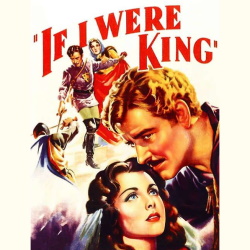
In 1937 Paramount Pictures studio executives were seeking a period piece as a vehicle to showcase studio star Ronald Coleman. They found their story with the 1901 biographical novel and play titled “If I Were King” by Justin Huntly McCarthy. Frank Lloyd was placed in charge of production with a $1 million budget, would also direct, and Preston Sturges was hired to write the screenplay. Ronald Coleman would star as Francois Villon, joined by Basil Rathborne as King Louis XI, Frances Dee as Katherine DeVaucelles, Ellen Drew as Huguette, Bruce Lester as Noel le Jolys, and C. V. France as Father Villon.
The film is set in France circa 1467 during the reign of King Louis XI. The Kingdom of Burgundy is waging a war of independence led by Duke Charles the Bold and laying siege to Paris. Father Villon, who took in the orphan Francois and raised him as a son is dismayed at his son’s repeated escapades. One night Francois meets the beautiful Katherine, a lady in waiting for the queen, and falls in love. She seems disinterested but vouches for him to prevent his arrest by the King’s soldiers. It comes to pass that Villon kills a spy in the king’s court and is rewarded by assuming the man’s title of Grand Constable. After much intrigue, deception, and heroism in which Francios saves Paris from the Burgundians, he is again begrudgingly rewarded by the king, who has tired of the drama he has brought to court. He is banished from Paris, only to have Katherine ride out in the countryside and join him. The film was a commercial success and critical reception was favorable. It received four Academy Award nominations, including Best Art Direction, Best Supporting Actor, Best Sound Recording and Best Original Score.
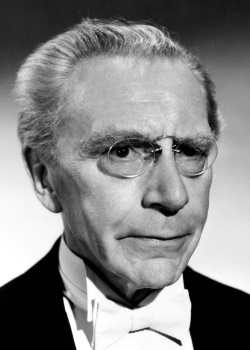
Paramount Pictures Director of Music Boris Morros assigned Dutch composer Richard Hageman to score the film. Hageman, who was a child prodigy pianist, had an extensive musical background composing chamber music, classical works, music for the stage, as well as being a conductor of the New York City Metropolitan Opera. Upon viewing the film, I believe he understood that the film succeeded because it did not take itself too seriously. As such he constructed a synergistic musical narrative, which like the film’s narrative, did not take itself too seriously.
 For his soundscape, three primary themes were composed. Hageman understood that this was Francois Villon’s tale, and so our hero is afforded both a theme, and a four-note fanfare derived from the theme’s opening. In its most heroic form, as heard in the Main Title and west Gate battle scene, it emotes as a rousing marcia trionfante. Francois, a self-described gutter poet and rogue is not your typical hero, but he has humor, charisma and determination, which endears him to us. For most of the film Hageman supports with the four-note Motif derived from the theme. Only in fighting and battle scenes does the theme find full expression. The other two themes are for Francois’s two lovers; Lady in Waiting Katherine, and fellow rogue Huguette. Worth noting is that both love themes emote from the woman’s perspective, as both are captivated by his charm, charisma, poetic verse and humor. Katherine’s Theme offers the more sumptuous and florid of the two themes as she is in the end the one that wins Francois’ heart. Hageman provides a classic Old Hollywood romance by strings d’Amore. For Huguette, strings romantico are also offered, but there is not the ardency found in Katherine’s version as Huguette has more of a love-hate relationship with Francois, who both captivates and angers her. The remaining part of the score reveals Hageman speaking to the emotional dynamic of the scene. Lastly, Hageman understood that he had to speak to royal setting, however his court music and fanfare are more reserved than most films of the genre, eschewing the pomp and grandiosity often provided by Erich Wolfgang Korngold.
00:00 “Logo/Main Title” offers a score highlight where Hageman masterfully sets the tone of the film, offering heroism and romanticism. It opens with repeating four-note horn declarations of the Main Theme fanfare to support the Paramount Pictures logo. A grand, stepped horn ascent leads to a segue into the opening credits at 00:09, empowered by Francois Theme rendered as a rousing marcia trionfante. At 01:37 we flow into Katherine’s yearning Love Theme, borne by strings romantico. We close the opening credits at 01:49 atop horn declarations by trumpets reale. 01:55 “Narrative Script” reveals Louis XI in Paris under siege by Burgundian forces, and faced with starvation, or slaughter. Hageman supports with a resolute marcia determinate.
02:12 “The Theft” offers nocturnal woodwinds as we flow into the film proper in which we see the night watch on the Paris city walls. At 2:20 a marcia militare supports French soldiers marching on street patrol. A spy informs them of a theft occurring in the King’s warehouse and the captain orders his troops to investigate. Hageman sow tension as we see men loading a boat at the warehouse’s Seine River docks. At 2:60 Francois’ fanfare joins as the camera focuses on him. The musical narrative becomes playful with comic gestures as he jests with the warehouse guard that is bound and manages his men during the theft. 04:03 “The Chase” opens with racing strings of urgency as the king’s guards arrive. Francois’ men successfully cast off, but he is trapped ashore. A dexterous escape leads to a chase propelled by kinetic chase music. At 4:42 a surging ascent motif supports Francois leaping up to a sign post. The captain below is flummoxed, divides his men who run off in different directions as Francois smiles above. Yet the post snaps with trumpet bursts, and his fall alerts the guards. The kinetic chase music resumes and grim four-note horn declarations carry his escape over a wall into the church enclosure, he enters his home where he finds his adopted father, Father Villon.
In an unscored scene, Francois is greeted with displeasure as Father offers a litany of disappointments with his incorrigible behavior, to which he responds to with levity. Guards arrive, Francois feigns escape from an upstairs window using a rope made of bed sheets, and the captain and his guards descend hot pursuit. A cocky and irreverent Francois exits the closet only to be corralled by Father and taken to church. 09:52 “Pray You Sinner!” reveals Father forcing Francois to his knees and ordering; “Pray you sinner!” Hagemen supports with hymnlike solemnity. As Father lowers his head and prays, Francois is aroused by the sight of a beautiful woman praying at a side altar. At 11:17 refulgent strings support her departure as she passes by Francois. Francois departs and shameless offers her effusive poetic compliments, regarding her beauty. She is taken aback by his appearance and manners, yet also captivated. Hageman supports with a nascent rendering of their Love Theme. Her coach arrives, he begs her to take his written poem with her, but she declines. The captain arrives to arrest him, but the warehouse guard denies that Francois was one of the thieves, and Lady Katherine DeVaucelles also vouges for him as she departs with a smile. Francois returns to the church at 14:56 and kneels again next to Father, supported by a reprise of the hymn like religiosity. Father stands up and commends Francois for taking solace in prayer.
15:35 “Katherine Returns” opens with fanfare reale, which supports a promenade maestoso as the carriage bearing Katherine and her servant arrive at the royal estate. The promenade is sustained inside, where her suitor, Noel greets her, followed by an impromptu visit by King Louis XI. In an unscored scene the king orders a man tortured to reveal the recipient of a Burgundian arrow, which was hollow and contained an encrypted message. The man confesses the recipient to the king’s ear, and the location – The Fircone Inn, a haven for wantons, cut-throats, beggars, thieves and prostitutes. 21:52 “The Fircone Inn” opens with a festive tune as we see merriment with the patrons. The music and merriment stop as two hooded figures enter the inn. The owner asks them to leave as all the tables are full, but relents when the king flashes sight of the Burgundian arrow. The festive musical narrative resumes as he seats them, asks for the note, and takes their order for two glasses of Burgundy wine. Huguette and another wench come over, sit on the King’s and Thibault’s laps. Huguette kisses the king and takes the money the inn owner brings. Francois and some men enter and bestow food and drink, which they have stolen from the king’s warehouse. Francois comes to the king’s table, and recites effusive poetry to Huguette saying her beauty would be better served by him, rather than “this juiceless mould”, which offends the king. Francois departs and asks that they come join him for a bottle of wine fit for a king.
In an unscored scene Francois offers serval damning toasts to the king’s incompetence and the corruption of his advisors, egged on by the king, who eventually asks for his advice. He advises the king to love his people, be generous, and foster their virtues. 28:02 “Francois and Huguette” reveals her asking what he would do for her if he were king? She is clearly attracted to him, and Hageman supports with their Love Theme borne by yearning strings tenero. Yet the music sours as he recites a generic poem while never looking at her. This angers her as it exposes in the end, that he is just a sweet lipped con man. Father arrives, advises Francois that the warehouse guard was tortured and confessed, and that the Grand Constable and his men will soon arrive to arrest him. At that moment Grand Constable Thibaut D’Aussigny and his men arrive and the king watches as the innkeeper gives the encrypted note to the constable.
30:10 “Francois Duels D’Aussigny” reveals Huguette raising the alarm and all Hell breaking loose as the inn’s patrons battle the guards. Hagemen propels the fight with a kinetic torrent. At 30:46 dire horns resound as twenty guards arrive with crossbows, and the captain orders everyone to drop their swords, just as Francois thrusts his dagger to kill D’Aussigny. The king takes the encrypted note form D’Aussigny, happy that this traitor was dead. The captain orders Francois to be hanged, only to have the king reveal himself and countermand the order. Everyone is stunned and music resumes as a processione maestoso as Francois is chagrined by his previous flippant and irreverent speech to the king. The king views Francois with grudging respect, and orders him taken to the palace dungeon. 32:41 “Prison” reveals Francois and most of the inn patrons imprisoned. Hagemen offers a forlorn musical narrative as Francois reads an epithet he just composed to Huguette and Colette. Minister Tristan l’Hermite and guards arrive and summon Francois who departs from a distraught Huguette, uttering a funny poem, which makes her laugh.
In an unscored scene, Tristan brings Francois to the king’s study and then departs. The king and Francois engage in an amusing repartee. The king is grateful that Francois exposed and killed the traitor D’Aussigny, an act which requires both reward, and punishment. He stuns Francois by appointing his new Grand Constable, Defender of the Crown, and Commander-in-Chief of the French Army. He asserts that nobles have failed in this position, so he will experiment by appointing a commoner. He orders Francois to kneel and dubs him Count de Montcorbier, hereditary knight of the Golden Buckle. He then orders him to depart and take a bath. Francois happily departs with a grateful bow, while the king laughs, amused by his scheme. 39:18 “Tristan Advises the Queen” reveals him traveling to the queen’s quarters carried by a promenade piacevole. He advises of D’Aussigny’s death at the hands of Francois Villon, which earns her rebuke, and a gasp from Katherine, who informs the queen that Francois was the man who accosted her at the cathedral. Tristan then advises of the king’s summons to attend the introduction of the new Grand Constable, the Count de Montcorbier.
In an unscored scene an attendant attends to Francois in his luxurious chambers and when asked, what are his duties, he answers, to govern France. When told he is also in charge of trying all prisoners, he orders their trial, intent on saving his friends from the inn. In the corridor, he dismisses Tristan’s demand to attend the king at court, saying that he must first attend to the prisoners. Tristan wades through the court and whispers to the king Francois’ defiance, which elicits the king’s angry departure. At court, the charges are read against the prisoners as Francois conceals his identity behind a partition. Francois toys with Turgis, the innkeeper as the king watches from the balcony. Francois dispenses mercy, fines Turgis 50 gold pieces, the fee paid to him by D’Aussigny, and frees him. As he departs Turgis repeatedly shouts “Long Live The King”, much to the king’s amusement. He then accepts the non-guilty plea of the remaining seven, and awards them damages for false imprisonment, 7 gold pieces each. They all shout “Long Live The King!”, much to the king’s satisfaction. 50:25 “Huguette’s Inquiry” reveals her remaining and asking if Villon is safe, supported by her Love Theme. He answers that he is safe, and she thanks the king. When Francois asks what her feelings are toward Villon, she admits that she loves him. Francois says that Villon had confided to him that he does not deserve her affections and to gift her a ring, which he hands her, still hidden from her view. As she departs, we end with her Love Theme transferred to an aching solo violin d’amore. At this point the king declares his presence and asks Tristan his thoughts about his new magnanimity. Tristan is disdainful, but the king is thankful and asks Francois to please come to court to be formally introduced, to which he bows with obedience.
52:35 “Francois’ Introduction” reveals the court herald announcing the arrival of the king, who enters with Francois supported by a promenade maestoso. The king introduces him to the queen, his ministers, and generals. Yet when Francois sees Katherine, he departs the king’s side to greet her personally. His repeated effusive praise upsets Noel, but Francois continues on. At 54:55 trumpets of alarm resound as a courier arrives and walks to the king carried by distressed strings. He announces that a Herald from the Duke of Burgundy has enter Paris under a flag of truce and demands an audience. The king orders that he be admitted, and is besieged by his generals who advise surrender if decent terms are offered. At 55:41 Trumpets reale resound to support the arrival of the herald, who marches in grimly with a contingent of men. He declares that the king surrender Paris unconditionally and surrender himself to the duke’s mercy. The king asks what if he refuses, and the herald declares; famine, fire, and sword for Paris, and no pardon for himself. He then asks terms if he surrenders the city, and the herald declares banishment for you and the court to the Duchy of Epignée, which elicits a contemptuous laugh from Francois. He personally rebukes the herald, and his Duke, and offers a defiant counter threat for the duke to disband his army or be destroyed. The herald is flummoxed and departs aggrieved by order of the king as the entire court laughs mockingly.
58:55 “Francois and Katherine” offers a romantic score highlight. It reveals the queen being entertained in her chamber by a young female dancer, supported by a small ensemble of lute, flute and harp playing a danza gentile. In a side room, Francois and Katherine converse about his plan to attack the Burgundians. At 59:49 a marcia maestoso plays under the dialogue as he considers his fate once the battle commences. She gifts him her kerchief to wear in the battle. At 1:00:12 the music becomes foreboding as Tristan arrives to inform Francois that his generals have assembled as requested in the council chambers. She is concerned that the battle is imminent and the entry of her string borne Love Theme informs us of her feelings as he kisses her hand and departs from her loving gaze. In an unscored scene, the war council results in General Dudon offering a scathing and disparaging diatribe against Francois’ ridiculous plan to attack. He refuses to follow his orders and storms out. 1:03:22 “Katherine Takes Supper” reveals her in her chambers, dismissing her servant who has brought her a late dinner. Hageman supports with a gentile rendering of her theme. We return to the war council room where generals Saliere and Barbezier also refuse Francois’ plan and depart with the king’s permission. The king then reminds Villon, that he was granted only a week reprieve from his crimes, and at the end of that time, he will be executed. Francois, understands his fate, and departs, determined now to take desperate action to save himself. After he departs, the king laughs giddily, assuring Tristan that he has already taken steps to prevent Villon from escaping.
1:06:54 “Francois’ Plan” reveals him returning to his chambers supported by a musical narrative of unease. He secures a dagger and spritely strings and woodwinds carry his departure. He is intercepted by guards and advised that he cannot leave the palace. As such, he states he will take in the night air on the battlements. Spritely, ascending strings carry him up the stairs. On the battlement Hageman sow tension as Tristan and guards pursue. Francois escapes into Katherine’s chamber at 1:09:20 where she greets him warmly. He looks out her window at patrolling guards, supported by muted trumpets militare. His beleaguered and muted fanfare support his pending ensnarement. She tells him to forget his duties and join her for supper. The Love Theme joins as he hides his dagger under a pillow. She fawns over him, and asks when we attack. He confides that the generals have all refused and that his week is almost up. A musical narrative striving to release hope is stillborn as he confides he is quite ready to give up his life for Paris, to make her proud of him. Their Love Theme resumes as she expresses her dreams of the war ending so they might again enjoy life. The music becomes wistful as he recites poetry bemoaning his fate. At 1:12:39 she speaks of the poor starving people as forlorn muted French horns sound. She then plants a seed, which sprouts in Francois’ mind, saying the generals would surely fight were they out of food as they are all fat pigs. A comic-playful musical narrative unfolds as Francois resolves on a plan – take away their food, and they will all fight! Happiness blossoms as he kisses her and declares that tomorrow he will empty the storehouses and feed the people! We close on a formal rendering of his theme as he takes her into his arms for a kissing embrace, crowned with their Love Theme.
In “Francois Feeds the People” the king is advised over breakfast that Francois departed the palace with the palace guards. The king races to get dressed and we switch to the city streets at 1:14:52 atop heraldic trumpeting fanfare as Francois announces to the crowd the king’s benevolence to his people by opening the royal warehouses to relieve their hunger. Jubilation follows as the people storm the warehouse and empty each of its contents. In an unscored scene the queen is outraged that she cannot have eggs for breakfast, having been informed that the king gave all the food away to the people. She dispatches Katherine to advise the king that she demands eggs for breakfast! She advises the king who is incredulous and dismisses her in a huff. 1:18:33 “Emptying the Warehouses” reveals Parisians emptying all the royal warehouses of food, which Hageman supports with a paean of jubilation. Back at the palace the king receives news of the empty warehouses and that the palace has a five-day supply of food left. Francois arrives, and praises the king for his benevolence, adding that the people adore him and declare “Long Live The King”. He then advises the king that plenty of food lies outside the city walls, and to avoid starvation, they need to fight their way through the Burgundian lines.
1:22:59 “Francois Despairs” reveals a contemplative Francois walking the palace battlements supported by a forlorn rendering of his theme. At 1:23:24 the music brightens as Katherine joins him in a kissing embrace. Yet the music again descends into despair as Francois advises that the generals would rather starve than fight, and that his one-week reprieve from the king ends tonight. Hageman shifts to a Pathetique as Francois discloses that he is not the Count de Montcorbier, but Francois Villon, gutter poet and rogue. Katherine is devastated at the deception, saying that she loved him. She asks him to go, and he bows his head in shame, and departs. In an unscored scene, generals Dudon, Saliere and Barbezier advise the king that the troops are demoralized and will not obey orders or take the posts. They advise the king to hang de Montcorbier, the man who gave away their food to pacify the soldier’s anger. Outside Father arrives to advise that a Burgundian attack is imminent and many townsmen are prepared to join them in sacking the city.
1:27:19 “Burgundians Attack/Francois Saves France” dire horns resound as a courier arrives with news that the Burgundians have attacked and breeched the western gate. Francois decides to throw caution to the wind, and he departs to rally the people. The king arrives, orders his arrest only to have Francois race away with guards in hot pursuit. Hageman propels the chase with a rousing torrent as Francois escapes with the courier’s horse. In the city square a Rene rouses the crowd to sack the city, only to have Francois arrive and steal his thunder. He takes command of the stage with inspired patriotic oratory and rouses the people to fight to protect themselves and their city from the Burgundians. Francois leads the people to retake the west gate and Hageman unleashes a maelstrom as the king’s soldiers and Burgundians battle. At 1:31:06 trumpets eroico resound unleashing Francois’ Theme as a war anthem as he leads the Parisians citizens into battle. The tide of battle turns against the Burgundians as the French generals watch de Montcorbier leading the charge. At 1:33:04 a diminuendo on grieving strings reveals Francois seeing Huguette fall wounded. His heroic fanfare supports him carrying her to safety at Father’s home. General Dudon then orders his men to arrest the traitor per the king’s command.
1:33:42 “Huguette Dies” reveals that she is mortally wounded, and asks that Francois not leave her. Hageman supports with an aching lamentation as she passes and the captain of the guards arrives to arrest Francois. 1:34:43 “Victory” reveals celebratory church bells ringing, joined by a paean of celebration as Parisians rejoice that Paris has been saved. In 1:35:03 “Francois Vindicated” fanfare reale resound as generals Dudon, Saliere and Barbezier arrive, declare the Burgundians routed, take credit for the victory, and announce that the traitorous grand constable is in custody. The king sentences de Montcorbier to death, only to have Katherine and Father arrive with the captain of the guard and declare that it was Francois Villon who saved the city, not the generals. Later, in an unscored scene, the king visits Francois in his prison cell. Commutes his death sentence for again saving France. He has had his fill of Francois, banishes him from Paris forever, and advises that it was through the intercession of Lady Katherine that his life is spared. He orders him to see and thank her, and then depart Paris tomorrow morning. Francois is gracious, thankful but asks the king to thank her, as he feels unworthy.
In 1:39:21 “Father and Katherine” Hageman offers religious solemnity as Father advises Katherine that Francois asked him to inform her that this is the end, as he departs to find a better way to live. She weasels the road he took from him, and runs away, intent on finding him. 1:40:04 “Finale” reveals Francois walking on a country road supported by a plodding rendering of his theme. A carriage bearing Katherine approaches from behind, supported by her Love Theme. The driver asks if they should over take, and she says, no. He is very obstinate, so we must be patient and wait for him to tire. We conclude atop the Love Theme, which culminates with a grand flourish. 1:40:22 “Cast Credits” offers a rousing reprise of the Main Theme, which culminates atop a horns trionfante flourish.
Period piece films were very popular in Hollywood during the 1930s. This film however offered a charismatic, sweet-lipped rogue as a hero, with storytelling, which was less formal and grandiose. Composer Richard Hageman understood Francois well, and conceived a malleable theme, which expressed his rogue nature, charisma, humor and heroism. His theme, like him, was not pretentious, but playful, comic and only overtly heroic when in battle. Two love themes are offered, both emanating for the woman’s perspective, yet it is the more florid Katherine’s version, which ultimately captures Francois’ heart. Hageman plays to the humor, and lightheartedness of the story’s narrative, finding synergy with a film, which succeeds because it does not take itself too seriously. Folks, this was Hageman’s first score, and I believe we discern his talent in understanding the nature of a film, and what is needed musically to help it succeed. There is no commercial release of the score and so to take in his handiwork you are going to have to hear it in film context, though I advise that the archival monaural sound detracts from the listening experience.
Track Listing:
- NOT AVAILABLE
Music composed and conducted by Richard Hageman. Orchestrations by Lucien Cailliet. Additional music by Milan Roder. Recorded and mixed by XXXX. Score produced by Richard Hageman and Boris Morros.

Shop at the Movie Music UK Store

Member of the

 MOVIE MUSIC UK