THE THREE MUSKETEERS – Michael Kamen
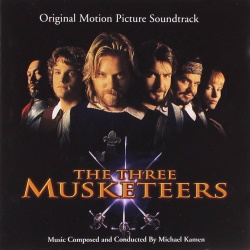 THROWBACK THIRTY
Original Review by Jonathan Broxton
There have been countless adaptations of Alexandre Dumas’ classic novel The Three Musketeers over the years – some good, some bad. Many people consider the 1948 version starring Gene Kelly and Lana Turner to be the gold standard in terms of English-language versions, although I have always had a soft spot for the 1970s British version starring Oliver Reed, Raquel Welch, Richard Chamberlain, and Michael York, which had a terrific score by Michel Legrand. This version from 1993 was directed by Stephen Herek, and was basically a ‘brat pack’ version of the story. Like the others, the action is set in 17th-century France and follows a young and ambitious swordsman named d’Artagnan (Chris O’Donnell). Eager to join the musketeers, King Louis XIII’s elite guard, d’Artagnan travels to Paris where he befriends three charismatic and skilled musketeers: Athos (Kiefer Sutherland), Porthos (Oliver Platt), and Aramis (Charlie Sheen), and together they embark on a series of adventures involving political intrigue, love, and swashbuckling duels, specifically a plot by the villainous Cardinal Richelieu (Tim Curry), who plans to undermine the king and seize power for himself.
There is a sort of expected musical approach to scoring ‘swashbuckler’ films. Erich Wolfgang Korngold invented it with his scores for those classic Errol Flynn films in the 1930s, and that style was picked up and carried by every other Golden Age practitioner, from Max Steiner to Alfred Newman, and beyond. The approach that Korngold took maintained consistent in the genre for more than 60 years, and when Michael Kamen was asked to score The Three Musketeers he chose not to rock the boat in the slightest, and scored it with the same dashing sense of panache and heroism as all the composers who came before him. However, what Kamen also did was delve into the history of French period music, and try to blend that with his large and bombastic orchestra.
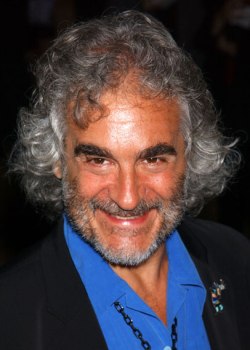 Kamen had long been an admirer of Baroque composer and organist François Couperin, and originally tried to base parts of his score on a large French dance suite that Couperin had written in 1717 (the subtitles of each cue are named after the movements of a dance), but when that proved to be unworkable, he instead adopted the ‘flavors’ of Couperin in terms of stylistics and orchestration, including the use of a recorder, a harpsichord, and a type of double reed woodwind called a crumhorn. The end result is essentially baroque pastiche – intentionally so – combined with a contemporary symphony orchestra, but Kamen does it with so much style and élan that it works almost in spite of itself.
The soundtrack album begins with a song, “All For Love,” which Kamen wrote with Bryan Adams and Robert John ‘Mutt’ Lange, and which is performed by Adams with fellow rockers Rod Stewart and Sting. The song is performed over the end credits and was clearly intended to re-capture the lightning in a bottle that had struck following the release of “Everything I Do I Do It for You” from the Robin Hood: Prince of Thieves soundtrack in 1991. While the song was a hit, reaching number 1 in North America and several other territories, it has not lingered in the public’s consciousness since then, despite it being a passable and enjoyable mid-1990s rock power ballad.
The score proper begins with a three-minute overture, “The Cavern of Cardinal Richelieu,” which is a superbly heroic and bombastic orchestral-and-choral tour-de-force that includes everything from angelic liturgical church music to dark symphonic textures, brooding action music string passages, resounding horns, and more. Listening to this music now, I’m struck by just how clearly identifiable Kamen’s sound was – the specific way he used his brass, certain specific chord progressions, certain instrumental combinations, it’s all unmistakably Kamen. There are elements of Robin Hood in here, the Die Hard scores, the Lethal Weapon scores, even going all the way back to things like The Dead Zone, while also foreshadowing things he would do in later scores as varied as Mr. Holland’s Opus, and even 101 Dalmatians. It’s so rare these days for a composer to have such a clear and particular personal style, and exploring Kamen’s work this way and realizing that he had this is such a treat.
“D’Artagnan” is a wonderfully bold and gallant introduction to the theme for that character, a flashy array of resounding trumpets and sweeping, elegant strings backed by period touches from tolling bells and a harpsichord. There are some almost subliminal hints of the song melody in D’Artagnan’s Theme, but mostly this is a celebration of youthful exuberance, a desire to head off and enjoy whirlwind romances and exciting adventures, to see where life takes you. It’s just superb. “Athos, Porthos and Aramis” is similarly engaging; it opens with a rich and fanciful depiction of life in 17th-century France, presents a clear and rousing statement of the melody from the song, and features a thrilling rendition of the main theme for strings and harpsichord, as well as some oblique references to La Marseillaise, before ending with some particularly complex action built around a superb rhythmic idea for flourishing trumpets and horns.
Within hours of arriving in Paris D’Artagnan has somehow managed to pick fights with, and be challenged to duels by, Athos, Porthos, and Aramis in turn, and the “Sword Fight” underscores their four-way encounter. Kamen’s action music is almost the dictionary definition of swashbuckling, a festive and energetic dance for the full orchestra. It’s playful without being childish, light and nimble, and is sensationally orchestrated, with each part having a moment to shine. This is perhaps no surprise as Kamen’s battalion of orchestrators includes several individuals who would go on to be terrific composers in their own right, notably Chris Boardman, Michael McCuistion, Lolita Ritmanis, and William Ross.
The opening sequence of “King Louis XIII, Queen Anna and Constance” drips with mystery and intrigue, giving musical voice to Cardinal Richelieu’s plot to usurp the king with heavy rumbling percussion, dark cello passages, and moody brass clusters, interspersed with darkly beautiful choral outbursts that speak to Richelieu’s supposed virtuousness as a man of the cloth, but which masks a more sinister core. This is contrasted by the gentle and innocent “Lady in Waiting,” a love theme of sorts for d’Artagnan and the lovely character played by Julie Delpy, for which Kamen writes some refined baroque-styled romance music for recorder and harpsichord.
“The Cardinal’s Coach” and “Cannonballs” are a pair of outstanding action sequences. The former is a wonderfully energetic galop featuring some outstanding interplay between strings and brass, rapid and complicated and underpinned with a superb rampaging percussion rhythm. The latter starts with a charming sense of mischievous laziness, but eventually sees Kamen blending his powerful orchestra with the specialist baroque orchestrations – there is some notably festive writing for harpsichord – while also bringing out several rousing statements of both d’Artagnan’s theme and the theme for the Musketeers. The fanfare that emerges at the 2:00 mark is just wonderful, even if the use of sleigh bells in the percussion section does give it an unexpectedly Christmassy feel.
The lament for Rebecca De Mornay’s character, the seductive but deadly “M’Lady DeWinter,” is more understated, but it does give the score a sense of just how cunning, manipulative, and cruel she can be; the strings and woodwinds intertwine and combine like a pair of serpents. However, the conclusive “The Fourth Musketeer” brings the score back to its swashbuckling best, a grand and inspiring restatement of the score’s two main themes performed with great gusto, and finishing with an appropriate flourish.
The score for The Three Musketeers was released on a standard CD at the time the film was released, 38 minutes of score plus the song, and it’s very enjoyable indeed, but it is also woefully incomplete – in fact most of the action music from the end of the film is missing entirely, and has never been released. Considering that 2023 marks not only the thirtieth anniversary of the film itself, but also the twentieth anniversary of Kamen’s untimely death, now would be a perfect time for one of the specialty labels to release an expanded album. The music is more than worth the investment.
The Three Musketeers is one of the most curiously overlooked scores of Michael Kamen’s career, which is a shame, because I think it’s one of his best. Yes, it’s probably just a notch below Robin Hood: Prince of Thieves, and it doesn’t quite have the same overwhelming emotional highs as several of his other works, but despite that there is still a lot to recommend, from the pair of rousing main themes to the dense and complicated action, the delicate love theme, and the outstanding orchestration textures that reference French baroque music. Fans of Kamen’s scores will find it to be steeped in his clear personal style, and anyone who enjoys a good old fashioned swashbuckler will get plenty out of it too. One for all and all for one!
Buy the Three Musketeers soundtrack from the Movie Music UK Store
Track Listing:
- All For Love (written by Bryan Adams, Robert John ‘Mutt’ Lange, and Michael Kamen, performed by Bryan Adams, Rod Stewart and Sting) (4:45)
- The Cavern of Cardinal Richelieu (Overture & Passacaille) (2:58)
- D’Artagnan (Galliard & Air) (3:19)
- Athos, Porthos and Aramis (Courante) (5:24)
- Sword Fight (Bransle) (3:20)
- King Louis XIII, Queen Anne and Constance/Lady In Waiting (Gavotte) (5:05)
- The Cardinal’s Coach (Estampie) (4:45)
- Cannonballs (Rigadoon) (3:29)
- M’Lady deWinter (Lament) (4:16)
- The Fourth Musketeer (Concert Royaux) (5:19)
Running Time: 42 minutes 48 seconds
Hollywood Records HR-61581-2 (1993)
Music composed and conducted by Michael Kamen. Orchestrations by Michael Kamen, Chris Boardman, Robert Elhai, Jack Hayes, Ira Hearshen, Randy Kerber, Michael McCuistion, Don Nemitz, Larry Rench, Lolita Ritmanis, William Ross and Brad Warnaar. Recorded and mixed by Steve McLaughlin. Edited by Christopher Brooks. Album produced by Michael Kamen.
Leave a comment

Shop at the Movie Music UK Store

Member of the

 MOVIE MUSIC UK
I remember that the most important missing cue from that incomplete album is D’Artagnian’s Horse Ride Sequence in the begining of the film after the Cavern of C. Richelieu , also music editor cut the 39 seconds/opening title music before the Cavern…I don’t remember so well now the final saving the king sequence music but i believe that isn’t so important as the Horse Ride music.
Generally it’s an excellent score, yes is incomplete on the album but nevertheless has excellent presentation(with 8 tracks over 3 minutes) & with masterpiece orchestrations/delicate & powerful ! Easily one of my top10 film scores from the Great 1993 !