BACK STREET – Frank Skinner
 GREATEST SCORES OF THE TWENTIETH CENTURY
Original Review by Craig Lysy
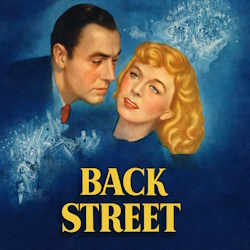
In 1932 Universal Pictures adapted the 1931 novel “Back Street” by Fannie Hurst. In 1940 the studio decided to remake the film as a way to showcase their star, Margaret Sullavan. Bruce Manning was assigned production with a budget of $675,000, Robert Stevenson was tasked with directing, and the team of Bruce Manning and Felix Jackson would write the screenplay drawing from the script of the 1932 film, and the original novel. Margaret Sullavan would star and play Ray Smith. She insisted that the studio hire Charles Boyer, whom she always wanted to work with, and managed to induce him to accept by agreeing to surrender her top billing to him. He would play Walter Louis Saxel, and joining them would be Richard Carlson as Curt Stanton, Frank McHugh as Ed Porter, and Samuel S. Hinds as Felix Darren.
The film is set in Cincinnati circa 1900. Ray Smith is a beautiful young woman with many suitors, yet she is dismissive of all of them until she meets the dashing Walter Saxel. They fall in love, but she is stunned when he admits that he is already engaged. Nevertheless, on impulse they decide to marry only to be stopped by external forces beyond their control. They lose touch but by chance reacquaint themselves five years later in New York City. Walter is now a banker, married with two children. His wife is the daughter of his boss at the bank, so he decides to keep up appearances. Ray refuses to give him up, and agrees to become his mistress. For years Walter leads a double life until his adult children discover his infidelity. Both he and Ray are scorned in social circles and eventually Walter’s heath fail and he suffers a stroke. He phones Ray from his death bed and expresses his final words to her and dies, which is then followed by Ray’s death. The film was a commercial and critical success, earning one Academy Award nomination for Best Film Score.
Frank Skinner, a contracted composer at Universal Pictures, was assigned the project by Director of Music Charles Previn. Upon viewing the film, he realized that this was an intimate, character driven drama about two people deeply in love, who are trapped by social convention and denied fulfillment by circumstances beyond their control. Ray, chooses to accept the role of mistress, rather live without Walter. Skinner understood that his music would have to speak to their forbidden love, the sadness of their circumstance, and the tension of living their lives discreetly in the shadows, always fearful of discovery.
 For his soundscape, Skinner provided one primary theme, two secondary themes, and a number of scene specific set pieces. Foremost and pervasive is the gorgeous Love Theme for Ray and Walter, which is effusive, and unabashedly romantic. Strings romantico voice repeating eleven and ten note phrases, passionate and full of yearning. Yet within the notes we discern a palpable sadness as well as a lack of culmination and resolution, which speaks to the tragedy of their romance. The Band Theme offers a festive and energetic piece played by the paddle wheeler steamer live band, which supports the festive party atmosphere of the second deck saloon. Mother Smith’s Theme supports the aggrieved, long-suffering mother of Ray, who is unable to restrain her care free, free-spirited daughter. Sour woodwinds comici speak of her frustration and exasperation. Lastly, Skinner also composed a number of waltzes to provide ambiance and interpolated the traditional Scottish song “Auld Lang Syne” with lyrics by Robert Burns.
There is no commercial release of the score, and so as such I will use film scene descriptors and time indices for the review. 00:00 “Main Title” offers a romantic score highlight where Skinner masterfully sets the tone of the film. It opens with the film title and supports the flow of the opening credits. Skinner provides a soaring, molto dramatico cadenza for piano, which ushers in at 00:16, an exquisite exposition of the Love Theme. 01:14 “Cincinnati at the Turn of the Century” reveals a parade empowered by a marching band propelled marcia festivamente. An automobile driven by Curt Stanton, with Ray alongside, is billed as “Cincinnati’s First Horseless Carriage”. It powers down Main Street and is the center of attraction for a promotion calling for people to invest in the future. The car backfires and stalls in front of the bank, and the dismissive bank president shakes his head and goes inside. Back at the shop Curt proposes, but Ray declines saying she has to fall in love completely for her to say yes. In an unscored scene, Ray meets Ed Porter at the hotel and joins in a card game. Several of the men make passes, but Ray dashes all their hopes, especially Ed who she has to slap some sense into. They are friends, so he gets over it. Later she sees Ed off at the train station, where he introduces her to his friend Walter Louis Saxel, a businessman from New Orleans of French descent. She is clearly attracted to him and his old world elegance and charisma causes her to succumb to his invitation to dine with him.
11:34 “Dinner” reveals the two becoming acquainted, with both telling tales of their youth. Skinner supports with a tender string borne exposition of the Love Theme, which provides the perfect ambiance. They talk the night away, ending up as the only guests left at the restaurant. When she asks what he desires from life he answers; money, position and power. When he asks her, she says she would like to travel and meet people of different cultures. 14:23 “Walter Departs” reveals Walter and Ray arriving at the port as he has to continue his travels aboard a river paddle wheel steamer. The steamer’s small band plays the festive Band Theme on the upper deck as they say their goodbyes. She says that she has never known as much about someone as him, and declares them ‘Old Friends’. He agrees, and surprises her with a kiss on the lips, which moves her. He delays, they raise the gang plank, which strands him. She is ecstatic that he has decided to stay the night and depart in the morning, and he responds with a passionate kissing embrace. In two unscored scenes, Walter informs the hotel clerk that he is extending his stay indefinitely, while Ray at the family store informs her mother and sisters that she is going on a picnic. Outside she sees Curt packing up his shop, and he informs her he is moving to Michigan to join Ford Motor Company. He confides that he is aware of her relationship, which surprises her. She asks if he will wish her luck, and he answers; “All the luck in the world”.
18:58 “Picnic” reveals cloud swept skies, which Skinner supports with strings idillaci. As the camera drifts downwards, we see our two lovers resting in a field among mounds of hay. Warm French horns usher in a pastorale as they take turns describing images they see with the clouds, which drift above. Slowly the Love Theme emerges on strings tenero as she describes that her ideal home would be a house on a mountain all to themselves, where once a year they would descend and journey to New York. Walter appears unsettled, and stands up, which elicits a query from Ray as to what is wrong. 21:03 “The Revelation” offers a sublime romantic score highlight where the Love Theme’s articulation shifts back and forth between Walter’s and Ray’s perspective. It reveals him informing her that he departs on a boat tomorrow at noon, his words are supported by a descent by strings tristi, followed by the Love Theme resuming on a French horn with a retinue of strings. She says she understands and that surely his job will not keep him away forever. Yet when he says it will, and that he will not be returning, she is devastated and at 21:36 the Love Theme becomes aching as it descends into disbelief. As he relates that his fiancé lives in Louisville the Love Theme shift back to French horn with strings. She tries to absorb what she has heard, and the Love Theme shifts back to solo oboe triste with aching strings full of regret. As she lays back and sees a cloud transform into a swan, she bids him to go, saying she does not wish to see his departure. As she declares the cloud has now transformed into a ship, the camera returns to the sky at 23:18 carried by the Love Theme, which soars upwards. We close with a final, aching statement of the Love Theme as the camera descends to reveal Ray sitting alone.
23:39 “Walter Calls Ray/Harry Hijacks Ray” reveals Walter at the port, which is again supported by the band playing the festive Band Theme on the upper deck. He calls the shop and asks Ray to please come to the port. As the camera shifts back and forth between the two, the Band Theme supports him, while an aching Love Theme supports her. She reluctantly agrees and rushes to dress. At the ticket booth Walter asks for two tickets and the nearest place one can get married. The clerk informs him that a reverend is aboard and available to perform the ceremony. At 25:06 strings animato propel Ray’s rush to leave the shop. She meets Harry who arrives for their date, but she is frantic, saying she has another engagement and so he agrees to take her to the port in his carriage supported by comedy borne by the sour, exasperated woodwinds of her Mother’s Theme who complains to her other daughter Freda that Ray once again gets out of work. We return to the port at 26:01 supported by the Band Theme. Walter calls Ray’s home and the put upon Mrs. Smith walks to the phone carried by her aggrieved theme. He asked when Ray left, and she replies she left on a date with a suitor named Harry. Questioning string support his disbelief as Mrs. Smith hangs up. We shift to the carriage to discover that Harry has deceived Ray and is heading off away from the port. Strings of desperation surge as she tries to grab the reins unsuccessfully, and a grieving Love Theme joins as she is spirited away. Seven-note phrases by horns of futility and beleaguered strings sound as Harry stops the carriage and says that she promised him a date, and if she wants to break it and go to the port instead, to get off and walk. 27:32 “Too Late” reveals Ray finally arriving at the port supported by the Band Theme. She moves through the crowd to the dock with urgency only to see that the paddle wheeler has left. A pall of sadness descends over her as she sees the love of her life sail away.
28:07 “New York Five Years Later/The Reacquaintance” offers a flash forward supported by a vibrant musical narrative. It is snowing and we see a building with a plaque; “Darren & Holmes Investment Banker”. Inside, Felix Darren, Walter’s boss the bank president, who is also his uncle-in-law, summons him to his office. As Walter is walking home, he has a chance encounter with Ray. They briefly catch up and he invites her to dinner, refusing to take no for an answer. At 31:00, we see the two dining at an exclusive restaurant. Skinner supports with an extended wistful rendering of the Love Theme, full of yearning, and regret. He asks her, why she did not come to the dock that day. She cannot seem to answer, and he relates that the reverend was very disappointed that there would be no wedding. He also said he was jealous when her mother advised that she had gone on a date with someone else. She is devastated and asks if they can go. Inside the cab she tells him why she was late and we now see regret swell in him as he says “If I had only known, everything would have been different”. She is clearly distraught, and asks that they not talk about it, adding that it was something that might have happened, but didn’t. 32:38 “Fateful Decision” offers an achingly beautiful romantic score highlight. It reveals the taxi arriving at Ray’s apartment. A vibrant, sparkling, Christmas-like musical narrative supports their arrival. On the curb the oboe triste rendering of the Love Theme supports her saying that they cannot see each other again. Walter however insists, with Ray countering that it has been five years, and they are different people. At 33:13 tense surging strings support a car passing by. Ray says that she is frightened and asks is he frightened. He answers yes and kisses her supported by a solo violin d’amore borne statement of the Love Theme. He says that they were meant to be together, and that is why they met again.
33:38 “A New Apartment” offers a spritely musical narrative voiced by strings felice and bubbling woodwinds of delight as Walter enters Ray’s apartment building with a bouquet of flowers. He arrives to see Ray’s landlady throwing her out with self-righteous indignation over her affair with ‘that man’. Walter is charming and astonishes the woman when he compliments her and gifts her the flowers he brought. As they leave the building his French horn version of the Love Theme supports, before shifting to her string borne version. They walk the streets searching for an apartment carried by a carefree promenade. They find a beautiful place overlooking he East River and well off the beaten track. The landlady takes Ray’s deposit and departs saying good night to Mr. and Mrs. Smith. At 36:39 a hopeful Love Theme joins as she teases his new membership in the Smith family. We close warmly with Walter saying it will be very nice to be Mr. Smith. In an unscored scene we see Walter and Ray spending an evening together at her apartment as any ‘married’ couple would. As they banter Ray asks how his uncle would respond if he knew that she was his inspiration for many of his bank policy suggestions, and he laughs and answers that he would probably be fired and Corrine would divorce him. As soon as the words leave his lips, an uncomfortable pall descends on both of them. He asks her if she wants him to get a divorce? She pauses and counsels that it would also be a divorce from his children, job, way of life and that he would come to resent her. He is moved by her insight, and they agree to move on as is.
In an unscored scene Ed makes an unannounced visit to Ray’s apartment, she is ecstatic to see him again, and they catch up. The landlord brings up her laundry and departs saying thank you Mrs. Smith, which brings an uncomfortable inquiry from Ed. She admits that he is married and then says divorce would not be good for anyone. He presses her that his is no way to live when she reveals she quit her job and has no friends. He is authentically concerned for her and they quarrel as she realizes he is right and that the street she is on has only a dead end. He apologizes and she declines his offer to set her up with a dress-making shop in Chicago. Ed says goodbye, adding that if she changes her mind to contact him. In “Alone on New Year’s Eve” it is New Year’s Eve and at the office Walter informs Felix that he will be staying in tonight. Back at the apartment Ray has prepared a lavished dinner for two, however Walter is intercepted at the office by his friends who coerce him into going with them for a night of merriment. Time ticks on as Ray waits with growing anxiety at the apartment. She steps outside on her balcony and observes party revelers below in the courtyard, joined at 46:40 with them singing the Scottish traditional song “Auld Lang Syne”. She returns inside, and sadly pours herself a glass of champagne as the clock tolls midnight. Across town, still supported by “Auld Lang Syne”, a sad Walter sings along. We flow into a valzer gentile afterwards as people go to the dance floor to take in the New Year. At a table, Felix rewards Walter for his hard work with a six-month working vacation to assess the bank’s European offices. Walter is pleased as he sees it as an opportunity to share extended time with Ray, however his hopes are dashed when Felix demands that Corrine accompany him. Felix believes that he and Corrine have been spending too much time apart and that this will be good for their marriage.
48:58 “Love Affirmed” offers an exquisite romantic highlight, with the Love Theme expressing a spectrum of emotions. It reveals we are back at the apartment as the clock tolls 2 am, supported by tremolo violins as we see Ray asleep in a chair. A tender descent by woodwinds delicato joins the violin tremolo as Walter wakes Ray and greets her with a kiss. Strings romantico voice the Love Theme as he pours champagne for them, and says he has wonderful news to share with her. He proposes a toast to the new partner at Darren & Holmes, explaining this was the reason he could not get away. She is happy, and drinks as he says he is now in charge of their European banks and he departs in one week for inspection. She is desperate to go with him as she cannot bear being apart for so long. The Love Theme reflects her heart’s desperate longing for him. At 50:38 strings full of heartache crest when he informs her that the reason, he cannot take her is that Corrine is accompanying him. The Love Theme voices both desperation and heartache, and Walter, seeing her heartbreak, adds; “Do you not know that this also makes him sad?” She counters that he told her once that all he wants is money and power and now you have them. They quarrel, she says she does not want him to go and leave her alone, and he says he must take this career advancement. He wins her back however when he declares; “Do you not know that I would rather be here with you than any place in the world!” The Love Theme warms and once again blossoms as she comes to him saying, that this is what she wanted to hear, and they join in a kissing embrace.
51:55 “Walter Travels to Europe” opens with a nautical motif empowered by French horns as we see an ocean liner traveling on open seas. The Love Theme joins warmly as we see Ray reading a montage of post cards from Walter. Yet the theme slowly loses vitality and descends into loneliness as each card offers less words and repeated news of a protracted stay. At 52:19 a whistle from the courtyard is joined by spritely strings felice and bubbling woodwinds of delight as the mailman arrives. Ray runs downstairs to get her mail only to receive the gas bill, supported at 52:38 by a chord of disappointment. The happiness motif attempts to resurge, but as her neighbors depart for a two-week vacation, a descent by forlorn strings support Ray’s onscreen depression. An aching Love Theme struggles for hope, and Ray makes a fateful decision to call Walter’s Office. She asks when they expect Walter Saxel to return from Europe, but hangs up when the bank asks for her identity, supported by a painful descent of a Love Theme full of disappointment.
“Curt Visits” The next day Ray is told by the mailman that there is no mail for her and as she departs, she is surprised by a visit from Curt. He surprises her with a new car that he designed, and she agrees to go for a ride. Music enters at 55:45 in the form of a valzer felice as Curt dances with her at a night club. He introducers her to his company’s chairman of the board and his wife Mr. and Mrs. Williams and then commits he and Ray joining them for dinner. The next day we see the “Vanderbilt Cup Race”, where the latest automobiles are racing. Curt’s car, called a Stanton wins the race and Ray is ecstatic. Their joy winning is supported by a festive band melody. They both kiss on the cheek, which causes his boss to raise his eyebrows. Later, he drives Ray back to her apartment and he informs her that instead of proposing face to face, he is instead going to write all the reasons in a letter. His charm and sincerity move her, they say good night, and she goes upstairs.
58:15 “Walter Returns” offers a poignant score highlight where Skinner shifts the articulation of the Love Theme back and forth between Ray and Walter, reflecting their very different perspectives of their relationship. It opens with a yearning Love Theme as she opens her mail box, only to again find it empty. The theme shifts to strings tristi, which carry her to her apartment where she is surprised to find Walter waiting for her. The Love Theme blossoms with joy as she runs to him and they share a kissing embrace. A musical narrative of happiness supports the joyous reunion as she asks him to tell her all about his journey. Yet the moment begins to sour when he discloses that he arrived five days ago, causing her to inquire why he did not visit, or at least call. He relates business reports, and a new christening of his new daughter who was born is Spain. We see in Ray’s eyes the realization of her place in his life as she tells him with palpable sadness, that she is not very important to him anymore. The Love Theme becomes forthright, expressed from his perspective as he declares her importance in his life, saying that she is the one person in his life he always wants to see, the only one who makes him believe that there is more in life than work and ambition. Yet she expresses doubt and uncertainty about their future. The theme shifts to an aching solo violin triste full voicing unfulfillment as she tells him that his trip revealed that what they have, is not enough. He tries to convince her otherwise with the Love Theme again expressed forthrightly from his perspective, yet it again becomes sad as she relates that she will always be outside his life, adding the things they once shared, are gone. He counsels that they not argue about such things, that she rests after a long day, and that he looks forward to his next visit. They say good night and he departs without his customary kiss.
“Ray Leaves New York” reveals a telegram man arriving. As he reads it to validate, he has it right. It is addressed to Curtis Stanton, asks him to write the letter he promised, and to mail it her home in Cincinnati. Music enters atop a dark chord at 1:02:45 as the man utters “Cincinnati”. In an unscored scene Ed is trying to sell his Irish linen to Mrs. Smith who relents agreeing to 20 cents a yard, only to be corrected by Ray who counters 16 cents a yard. Ed is happy to see her and is surprised when she advises that she is going to Detroit tonight to marry Curt. He inquiries about the man from New York, and she stiffens and admits she has not disclosed her plans with him. Ed escorts her in his carriage to the train station. 1:05:38 “Ray’s Fateful Encounter” opens with a dramatic chord as Ed greets Walter who exits a phone booth. Aching strings full of regret voice the Love Theme as their eyes lock while Ed babbles. Walter admits he came to see her and a molto tragico rendering of the Love Theme reveals his love, and that she is torn – unable to embrace him, and unable to leave him. Ed stuns Walter when he says Ray is going to Detroit to get married, and that he wants to make sure she gets on the train. Ray bids goodbye to Ed and Walter escorts her carried by a violin tenero led Love Theme, which becomes bittersweet. He is gracious, wishes her well, and expresses that he hopes her husband gives her everything she wants out of life. She says she is never going to be lonely again, and that she intends to fill his life. Walter says that he’ll adore you and you will make a wonderful home for him. Her train arrives, he wishes her well and escorts her to the platform.
1:08:08 “Ray’s Fateful Decision” offers a supremely moving score highlight where the score achieves its emotional apogee. The Love Theme swells with an aching pathos for an extended exposition as she says she does not know how to say goodbye, and that she has to mean it. She looks him in the eyes and says that this is the last time we are going to say anything to each other, and the last time we are going to think about each other. She says she cannot go back to a life of waiting for him, of not knowing if she is going to see him for days, weeks or months, closing with “Could I Walter?” “Could I Walter?” He says he cannot let her go and she falls into his arms saying I tried so hard as the train pulls away empowered by a crescendo dramatico. 1:09:27 “1928” two seven-note fanfare declarations by horns and then trumpets advance us into the future as we see the bustling New York City harbor. Walter introduces his wife and two children Elizabeth and Richard to Captain Anderson, who greets them on the boarding platform. On board two ladies gossip saying half of Walter Saxel’s life has boarded, now here comes the other half as we see Ray walking up the boarding platform alone. A disdainful Elizabeth tells Richard, “here she is again” as they see Ray board. Richard replies that he is finally going to do something about her. That night a formally dressed Ray walks the deck supported at 1:11:21 by a valzer elegante as Walter observes her from the deck above. He descends to join her, greeting her with “Hello Mrs. Smith”. He voices regret that he will not be able to spend much time with her the ship as everybody on board seems to know him, but will see her after they arrive in the usual place. Richard and Elizabeth arrive to see him say goodbye and gently tap her arm as he departs.
1:12:58 “Together” reveals Ray bringing Walter coffee in her hotel room. He informs her that he has to go to Geneva early to prepare for his speech. She declines his offer to join him saying that there will be too much scrutiny, and that she must protect him. They are affectionate and kiss, and he promises to spend an entire day together when he returns. She says not to worry as she will be very happy at the casino. They kiss tenderly and he departs. Skinner masterfully supports the scene, gracing us with gentility, warmth and happy contentment. In unscored scenes, the next day at the casino Ray is playing cards when she looks up to see Elizabeth and Richard glaring at her. She tries to return to the game, but is distracted by their disdainful glares. She bolts the table, leaving her winnings and returns to her room. A knock on the door follows, she says come in, and Richard enters. He confronts her with his knowledge of who she is, calling her a shadow on the family, to which his mother is unaware. She asks him to go, but he offers veiled threats to get out of his family’s lives. She asks him again to go again, but he is adamant that she promises to leave his family alone. He says all she wants is money, and as he offers to pay her off to leave his father alone, Walter enters.
Walter asks Richard to sit down, saying he wants to talk to him. 1:17:57 “The Story/Walter Confronts Richard/Walter loses His Job” reveals Walter explaining that he met Mrs. Smith many years ago, before you were born. A flashback to the port is supported by the Band Theme as we see and he and Ray kissing. He states that for twenty-five years we have loved each other. He makes it very clear that this is part of his life that he cannot enter, nor force him out. Richard is disdainful, asking should he forget about mother and cheer? Walter counters, no, you should understand if you are big enough. When Richard says what if I am not big enough? And Walter says forcefully, then you should mind your own business and get out! As Richard departs, he says to Walter that he is selfish, sacrificing the family for her, and that the two of you are contemptable and rotten. Music enters in the aftermath at 1:19:05 atop a descent by strings tristi from which is borne an aching Love Theme tinged with regret. Ray comforts him and brings him a glass of water. He states that the reason he came home early was that he was removed from the commission. The music sheds his burden when he says he does not mind losing the job, and that all he wants to do is rest, yet the music shifts as regret enters when Ray relates that he lost his son and job because of her. Undeterred, Walter asks her not to leave him, and the Love Theme regains its warmth and happiness as he relates that he will come over tomorrow for breakfast and that they will spend the day together. The reassuring warmth and tenderness of the theme supports his departure.
The next day Ray prepares breakfast as a hotelman delivers the newspaper. 1:21:25 “Walter Suffers a Stroke” opens with a shock chord and descent by strings dramatico into despair as she reads the headlines that Walter had suffered a paralytic stroke. In his room Walter lays in his bed as his family stands vigil. A dark pall carried by a grim bass sustain with a heartbeat like drum cadence supports as he tries to speak. The nurse advises Richard that he wants to speak to him, alone. He says “phone” and says to dial 2679, which Richard does. When Ray answers, Richard is stunned, hesitates, but finally places the phone by Walter. Skinner supports with a grieving, dirge-like rendering of the Love Theme as Walter forces out “Ray”. She says she is here, and listening, only to hear him utter Ray twice, and then expire. At 1:24:31 a dark chord sounds as Richard shouts dad, and then calls for the doctor as Ray calls out Walter repeatedly. Ray hears the doctor pronounce him dead as Ray pleads for him to not leave her. A grim, retributive musical passage, which culminates with a crescendo of agonistic pain supports Richard hanging up the phone.
The next day Richard knocks on Ray’s door and enters after she refuses to answer. He advises that he has purchased a steamship ticket to take her back to New York. She is registered under the name Reynolds to avoid detection by the press. He sees that she is ill, and goes to get a doctor. In 1:26:05 “I Wonder…”, as Ray stares at a photo of Walter, shimmering ethereal strings join and embellish a Love Theme tinged with regret as she relates to him that his son was here and treated her very nice, adding it might have been her son, our son. At 1:26:39 the Band Theme joins as she asks him, “I wonder what would have happened if I had met you that Sunday at the boat. We flashback to this different reality, which reveals her making it in time, carried to him by a refulgent Love Theme, which soars gloriously as we see them married and beginning a life together. But the Love Theme never culminates, instead we descend darkly upon drums of death as we return to the present to see Ray has died. 1:27:59 “The End” we close upon the Love Theme, which concludes grandly with a flourish. 1:28:09 “Cast Credits” is supported by a grand coda of the Lave Theme.
Frank Skinner realized immediately after viewing the film that it was at its core, a love story of two people, desperately in love, yet compelled by fate to love in the shadows. To that end, he composed a malleable love theme, which permeates the film’s tapestry. Its construction is masterful, because never in the film does the theme ever culminate and achieve resolution, thus reflecting their real-life circumstances where fate and social convention stand as insurmountable impediments to their relationship. Also brilliantly conceived is how the theme’s articulation is voiced from Walter’s and Ray’s perspective. He is confident, unwavering, ever optimistic, and the theme expresses this forthrightly, often empowered by warm French horns. Ray desperately loves him; however, she is insecure, feels isolated living in the shadows and cannot bear indefinite separations. The theme when expressed from her perspective is far more emotional, with a broader spectrum of feelings including; sadness, desperation, passion and regret. Interplay of these two articulations of the theme during times of discord and uncertainty served to enhance Sullavan and Boyer’s acting performances, thus revealing Skinner’s mastery of his craft. Folks, it is a sad testament that Skinner, who received four Academy Award nominations, lacks commercial releases of his scores. His compositional eloquence, gift for melody, insight, and acumen as a composer in understanding the film’s core narrative were exceptional. Until such time that a label takes up the task of rerecording his scores, we must content ourselves with hearing his handiwork while watching the film.
For those of you unfamiliar with the score, I have embedded a YouTube link to the official trailer: https://www.youtube.com/watch?v=n-MdElPAe4Q&t=11s
Track Listing:
- NOT AVAILABLE
Music composed and conducted by Frank Skinner. Orchestrations by XXXX. Recorded and mixed by XXXX. Score produced by Charles Previn and Frank Skinner.

Shop at the Movie Music UK Store

Member of the

 MOVIE MUSIC UK