DR. JEKYLL AND MR. HYDE – Franz Waxman
 GREATEST SCORES OF THE TWENTIETH CENTURY
Original Review by Craig Lysy
Director Victor Fleming wanted to retell the classic 1886 Robert Louis Stevenson tale The Strange Case of Dr. Jekyll and Mr. Hyde. He purchased the film rights from Paramount Pictures, which had made a 1931 film version starring Fredric March and sold his vision to MGM executives. Victor Saville was placed in charge of production with a $1.1 million budget, Fleming would direct, and John Lee Mahin would adapt the 1931 film screenplay by Percy Heath and Samuel Hoffenstein. A stellar cast was assembled, including Spencer Tracy as Dr. Henry Jekyll/Mr. Edward Hyde, Ingrid Bergman as Ivy Pearson, Lana Turner as Beatrix Emery and Donald Crisp as Sir Charles Emery.
The story is set in London circa 1887 and explores the laudable efforts by Dr. Henry Jekyll who seeks to develop a serum that will separate the good and evil aspects of human nature. Jekyll’s impatience elicits him to experiment on himself, which does not separate his good and evil personalities, but instead transforms him into a solely evil and malevolent incarnation of himself, Mr. Edward Hyde. His curiosity is piqued and he continues to repeat the experiment resulted in both Jekyll and Hyde living separate lives, each having a romantic interest. Over time the Hyde personal begins to dominate causing mayhem and murder. Jekyll’s desperate attempt to regain control of his psyche fails as the transformation into Hyde no longer requires taking the serum and cannot be stopped. Police eventually corner Hyde and kill him, the film ending with his demeanor and countenance returning to that of Henry Jekyll. The film was a commercial success, earning a $1.2 million profit. Critical reception was mixed, but a net favorable, and the film received three Academy Award nominations, including Best Cinematography, Best Film Editing, and Best Film Score.
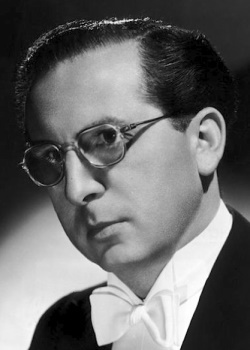 Director Victor Fleming selected Franz Waxman to score the film based on his prior success in the horror genre with The Bride of Frankenstein in 1935 and The Devil Doll in 1936. Upon viewing the film, Waxman conceived a score, where he would establish a Main Theme for Dr. Jekyll and Mr. Hyde, however its expression would be tailored to each with Jekyll’s being noble and kind, and Hyde’s being malevolent and violent. Over the course of the film, he would need to animate, contrast, and ultimately, contest these polarized identities as Jekyll and Hyde battle for supremacy. He also understood that given the film’s narrative of horror, that he needed to infuse his musical narrative with Gothic auras.
For his soundscape he supports with three primary themes; one original and two interpolated. The highly malleable original Main Theme supports the Jekyll-Hyde psychic duality. It offers a horn declared eight-note exposition in which is woven within the strings, a foreboding aura of tragedy. Its introduction in the Main Title offers grandeur, yet as the film progresses and the Hyde persona gains ascendency, it becomes more diabolical, and ultimately, tragic. Throughout the film Waxman uses the opening three-notes as a recurring motif for both Jekyll and Hyde. Both Jekyll and Hyde have love interests, which have their own musical identities. For Jekyll’s love interest Beatrix, her theme is adapted from the waltz melody from “Morganbläter” by Johan Strauss Jr. She adores Henry and her theme offers an elegant valzer felice, which exudes tenderness, and optimism. For Hyde’s love interest Ivy, her theme interpolates the British music hall melody from “See Me Dance the Polka” by George Grossmith. Ivy is vivacious and her theme offers a danza spiritoso, which reflects her good-natured sassiness. Instructive is how her theme loses its vitality and confidence as she becomes trapped in an abusive and destructive relationship with Hyde. The remainder of the score consists of set pieces in which Waxman speaks to tension and suspense.
Cues coded (*) offer music not found on the album. Also, my review follows the film chronology as the album does not present the cues in the correct sequence. “Main Title” opens grandly with five-note fanfare declarations by trumpets bravura, MGM’s logo music, which was written by Waxman in 1936. Thundering timpani and surging strings introduce the molto dramatico Main Theme, which supports the flow of the opening credits. The music offers old Hollywood grandeur, yet woven into its notes are auras of tragedy. At 0:45 the theme’s opening three-note horn declaration resound and usher in a mixed choral statement of Psalm 23 – The Lord is my shepherd, I shall not want. An organ solenne sustain ends the cue as the camera takes us into a church for a minister’s sermon. The sermon is interrupted by the ravings of Sam Higgins, whose mind seems to have been damaged by an explosion. Jekyll examines him as a policeman comes and escorts him out. (*) “Stand Up, Stand Up For Jesus” reveals Jekyll returning to his pew and joining the congregation is singing the traditional hymn.
Afterwards, Jekyll is overtly affectionate with Beatrix, his fiancée, much to the displeasure of her father Sir Charles Emery. They depart as Jekyll needs to see Sam at hospital. In (*) “Jekyll’s Anger”, following an evaluation, Jekyll gets into a heated argument with his boss Dr. Heath who refuses to allow him to experiment on human beings. Jekyll is incensed and storms out carried by strings irato. (*) “Jekyll Is Determined” reveals Jekyll returning home and descending into his laboratory carried by a grim descent motif. A dire musical narrative led by bassoons grave supports the sight of two cages, with one containing a dead rat, and the other, a dead rabbit. Jekyll is undeterred and the music surges with determination as he grabs a bottle of his latest formula and smashes it in the fireplace. He moves to his bench, turns on a burner and prepares to make a new formula. Waxman supports with foreboding tremolo violins, which usher in a grim woodwind statement of the Main Theme. In an unscored scene, Jekyll arrives late for his dinner party and diffuses Sir Emery’s displeasure with effusive compliments of his wife. Afterwards Jekyll leads a spirited conversation into the nature of good and evil in man, and how he seeks to liberate the good, by extracting the evil. The conversation descends into a heated argument with Bishop Manners, and other physicians due to Jekyll’s irreverent comments, and personal critique of the medical establishment, which elicits Lady Emery to solicit the other ladies to depart for a more gentile setting.
In (*) “Henry Confesses His Love”, later at the Emery estate, Beatrix, with Henry at her side, places a disc in a large music box, which plays as a celeste the waltz “Morganbläter” by Johan Strauss Jr., which serves as Henry and Beatrix’s Love Theme. Across the room her grim father looks at her portrait on the wall and we discern that Henry’s behavior has unsettled him. Henry requests they dance and Beatrix joins him as her father glares. He leads her into the garden where they join in a kissing embrace. Sir Emery joins them, asks Beatrix to place another disc in the music box, and then expresses his displeasure, rebuking the folly of Henry’s ridiculous experiments. However, Sir Emery then offers paternal tenderness, as he entreats Jekyll to abandon these experiments, and cultivate his practice, saying that he believes him to be the son he always wanted. In an unscored scene, Layton and Jekyll are walking to a pub and rescue Ivy Pearson, a bar maid who is being assaulted in an alley. John goes off to find a cab, and Jekyll attends to Ivy who is thankful and smitten. She fakes an ankle and side injury to elicit his sympathy, and he agrees to assist her to their cab and take her home.
They arrive at her apartment. And woodwinds comici and sliding strings support her feigning injury. “Ivy’s Room – Parts 1 & 2” reveals a chivalrous Jekyll carrying her up to her apartment with a flowery romantic musical narrative. She is now shamelessly flirtatious as he asks to examine her side. He does, and then examines her ankle, as she first offers him her garter, and then surprises him with a kissing embrace. Lanyon enters, and makes a discreet exit. She wants him to stay, and we hear her theme, the melody of the song “See Me Dance The Polka”, emoted as a tender romance full of longing. She is put off however, when he says she needs to be more careful of the company she keeps, and that he really does not want to be here. At 0:44 the Main Theme joins on strings tristi and aching woodwinds as we see her disappointment. He then departs with a polite goodbye, and she weeps behind the closed door. At 1:35 woodwinds tristi carry Jekyll’s lonely walk through the corridor. At 1:42 strings full of yearning surge as we see in her eyes, regret. At 1:49 as Jekyll and Layton travel home in the cab, Ivy’s Theme supports on playful strings as Jekyll smiles, enjoying Layton’s friendly jesting. We close on a foreboding string ostinato as Jekyll advises that from tomorrow on, he will be working in his laboratory until he finds what he is looking for.
“Work Montage” offers a montage of Jekyll working tirelessly in his lab to find an elixir. Waxman offers an animated impressionist musical narrative as we see him hard at work. The music slowly darkens, punctuated with three-note declaration of the Main Theme as we see dozens of failed bottles of elixir. Woodwinds gentle support him pipetting the elixir into rabbits and rats, with subsequent shots of them supported by harsh dissonant flutter-tongue horns as they become savagely aggressive. Yet joyous woodwinds support his satisfaction when one rat becomes docile. As he closes his elixir in a carrying case the Main Theme resounds on horns trionfonti. We flow seamlessly atop tremolo violins, which segue at 1:31 into “Albert Hall” for a piano concerto performance during which Beatrix frets to Layton and Sir Emery about Henry’s absence. At 1:55 we segue into “Mr. Higgins Died” reveals Jekyll arriving at hospital with his elixir to treat Sam Higgins. Dire strings support his arrival as we see an attendant escorting a weeping Mrs. Higgins downstairs. A molto tragico, dirge-like rendering of the Main Theme supports Jekyll escorting her to his carriage.
(*) “Jekyll and Weller” reveals Jekyll asking the hospital caretaker if the pilot of a balloon for a trip to Mars died, would he still take the trip with himself as pilot? Weller says yes if he could. Clearly Jekyll is contemplating self-experimentation as Sam, his intended recipient of his elixir died. In his laboratory he writes a note saying it is up to him to take the risk, even if should mean his death. Waxman supports with portentous strings emoting the Main Theme, which culminates in a crescendo dramatico as he writes “death”. The camera shifts to Beatrix’s bedroom with her waking up and saying “Oh no”. She dresses and we shift back to the lab with Jekyll sealing a letter titled “My Darling Beatrix” supported by foreboding tremolo strings. Dire horns dramatico resound as Jekyll pulls the curtains closed in his laboratory. Dark chords support Jekyll pouring each ingredient into a columnal measurement beaker. Slithering strings and grim bassoons support him lifting the beaker to drink.
“First Experiment/First Failure/In The Laboratory” offers a masterful score highlight where Waxman’s conceived music, and Joseph Ruttenberg’s cinematography, and Spencer Tracy’s acting could have achieve a powerful cinematic confluence. Regretfully, Waxman’s music from 1:59 on was dialed out of the film. Replaced by “Sex Montage” by Daniele Amfitheatrof. What follows is surreal visuals of water lilies rapidly growing to the surface of a pond, images of Beatrix, and then Ivy, a spinning kaleidoscope of circles, Jekyll maniacally smiling as he mercilessly whipping two horses pulling his carriage, which transform into Beatrix and Ivy. Amfitheatrof supports with a surreal impressionism joined with statements of the Main Theme, that surges at 0:30 on a dissonant crescendo orribile, which crests grotesquely. With Waxman’s album version, we open darkly atop the string borne Main Theme as Jekyll takes the elixir. A foreboding descent motif joins as Jekyll tries to record vital signs but is overwhelmed by the effects of the elixir, which cause him to writhe and fall to the ground. What follows is surreal visuals of water lilies rapidly growing to the surface of a pond, images of Beatrix, and then Ivy, a spinning kaleidoscope of circles, Jekyll maniacally smiling as he mercilessly whipping two horses pulling his carriage, which transform into Beatrix and Ivy. Waxman supports with a synergistic impressionistic musical narrative with fragments of the Main Theme, which is astounding. At 1:40 a decelerating, descending diminuendo brings us back real time to Jekyll who is on the floor and struggling to get up. At 1:59 surging string energico were intended to support Jekyll struggling to stand. At 2:14 a solo violin delicato emotes Beatrix’s Theme, which dissolves into a forlorn narrative by woodwinds. No visual reference to Beatrix is seen, so it must have been edited out of the film. At 2:42 discordant flutter-tongue horns resound and usher in agitation and uncertainty, from which arises a wandering solo flute, no doubt to support Jekyll gazing at his reflection in the mirror. At 3:10 we close with a pizzicato bass cadence and forlorn woodwinds as Jekyll contemplates his transformation into Mr. Hyde.
(*) “Poole’s Concern” reveals Jekyll’s butler concerned by the noise and maniacal laughing in the lab and so pounds on the door. When the door opens, Hyde has transformed back to Jekyll, and he assures Poole his visitor, a Mr. Hyde has departed. Poole advises that Beatrix has arrived and then departs. An agitato carries Jekyll’s descent into his lab. A plaintive reference to Beatrix’s Theme by strings tristi supports him tearing up his letter to her, and then rechecking his appearance in the mirror. A harp arpeggio supports his ascent up the lab’s stairs and departure. (*) “Henry and Beatrix” reveals him joining her in the parlor carried by a tender rendering of her theme. She is very concerned, saying she dreamed that he was going away without ever seeing her again. He assuages her fears saying that he loves her, would never leave her, and then takes her into his arms for a kissing embrace. In an unscored scene Sir Charles arrives and announces that he and Beatrix are going to the continent and that he believes that the engagement should be broken off due to Henry’s ridiculous ideas and aberrant behavior. Beatrix resists, but Henry counsels that she should obey her father, who thanks him and says he will reconsider the engagement when they return.
(*) “A Letter From Beatrix” reveals a contemplative Jekyll gazing out a window into a rain storm. A forlorn French horn give voice to the Main Theme as Poole arrives with a serving platter with sherry. He declines the sherry but welcomes a letter from Beatrix, which is supported by her loving theme. However, the music surges on a crescendo of disappointment as she writes that her father has extended their trip. A dejected Henry drops his glass of sherry, which shatters on the floor. An extended rendering of the Main Theme by forlorn woodwinds of despair support as a depressed Jekyll sits while Poole coaxes him to take in a comical musical at the Vanity Fair. Poole departs and Jekyll becomes agitated supported by the Main Theme. He spots the garter Ivy gave him and her playful theme supports but is severed by him glaring. A disquieting, string born rendering of the Main Theme supports him preparing another beaker of the elixir, and then staring at the final product. We do not see him drink it; however, the surreal visuals inform us he did. We see idealized images of Beatrix, Hyde’s glaring eyes, rippling water waves, Ivy inside a bottle whose cork he is pulling as a massive conflagration burns. A crescendo di terrore supports, exploding into silence as a maniacal Hyde looks in the mirror. He departs and goes to the theater. His manners are brutish and his menacing glare frightens offended men away.
In “See Me Dance The Polka” Waxman provides a festive rendering of the polka as Hyde enters. He is seated and leers at the women’s troupe singing and performing the stage number sung by Alice Mock in the “Palace of Frivolities” show. At 1:08 the song shifts to an instrumental version as we shift to the bar where we see Ivy preparing drinks. Hyde scans the room, sees her and we see lust in his expression as she begins singing the lyrics (not on the album). Hyde asks the owner to have Ivy serve him champagne and the polka carries her to him. As she is pouring, his leering unsettles her. He gives a huge tip and insists she stay and drink with him. She does so reluctantly as he offers one compliment after another. She tries to leave; he grabs her arm and she screams. When men come to the table Hyde instigates a fight and the entire room erupts into a massive brawl supported by the polka. In an unscored scene, Hyde pays off the owner to fire Ivy and waits in his carriage for her as she is thrown out. He greets her and elicits her to enter his carriage with a significant gift of money. Inside he dazzles her with poetic speech, she becomes frightened, and then he rapes her.
(*) “Beatrix and Sir Emery” reveals them dining in France when she receives a letter from John Layton. She becomes distraught because John states that her letters are being routed to him as Henry has not been seen in quite some time. She deflects her father’s inquiry about Henry and is happy to hear that his gout is much better. Waxman supports the restaurant ambiance with a danza gentile. “Ivy Alone” (by Daniele Amfitheatrof) reveals Ivy alone in her luxury apartment supported by a tremolo violins and forlorn woodwinds. Her friend Marcia pays a visit and invites her on a blind double date at the Empire Theater. She is ecstatic but never the less declines. Marcia persists and Ivy relents. As she goes to her bedroom to dress Marica notices bruises on her back and asks if he is abusing her. She denies it, but as Marcia lectures her, Hyde enters. In an unscored scene Hyde makes a pass at Marcia, who makes a hasty and frightened exit. He then proceeds to taunt Ivy that Marcia is more beautiful and that maybe he should turn his attentions to her. When she defers, he becomes angry, but she manages to diffuse it. She asks for a night out together, but he instead decides to stay home.
We segue into “Piano Improvisation” as he starts playing the piano. Waxman provides flowery, embellished pleasantries as Hyde voices activities they can do. We see Ivy sitting terrified as he taunts her. At 1:24 he says he knows what she likes and begins playing her Polka Theme. (*) “Sing For Me!” reveals him standing and commanding her to sing for him. She begs him not to have her sing as she knows it always serves a prelude to him raping her. Yet he forces the Polka’s song words from her mouth as she weeps. He shouts maniacally, “smile when you sing, be happy, be gay!” and she does her best to fake it. He throws grapes at her, and then proceeds to rape her supported by racing strings and orchestral crash. (*) “Hyde Returns to the Lab” reveals him walking the streets and returning to his lab with people he passes recoiling at his presence. An eerie and unsettling woodwind ostinato caries his progress. He unlocks the street entrance and enters the lab and we shift to his bedroom where Poole looks at Jekyll’s unslept bed supported by bleak woodwinds. A dark string ostinato supports Jekyll pacing in his lab as Poole brings him a cup of tea and a letter, which reveals Beatrix’s return today. Ominous strings emote the Main Theme, which transforms into a misterioso as Jekyll directs Poole to personally deliver a letter to the District Messenger Office. Jekyll locks the street door to the lab, and then melts the key in his smelter furnace to deny Hyde, street entry into the lab. We close atop a menacing ostinato, which supports a shot of the key melting.
In “The Museum” Marcia and her beau Freddy call on Ivy and she breaks down, weeping in Marcia’s arms. A letter is delivered which contains £50. Ivy voices that if she takes it and runs away, that he will just pursue her. She weeps on Marcia’s shoulder declaring she just wants this to end supported by a grim, foreboding strings borne statement of the Main Theme. At 0:20 we shift to Jekyll and Beatrix arm in arm in the museum. Waxman offers Beatrix’s Theme borne by celeste and strings romantico with harp adornment. Sir Emery joins them and insists that Henry take Beatrix off his hands and marry her. The cue beginning at 1:14 was dialed out of the film It offers a joyous rendering of her theme by strings felice and bubbling woodwinds of delight. At 1:49 a quote of Mendelssohn’s Wedding March in C Major (1842), which I believe was intended to support Jekyll informing Poole of his upcoming marriage.
In “Unexpected Visitor”, Poole advises Jekyll that there is a patient without an appointment, an Ivy Person, waiting to see him in the consulting room. Forlorn woodwinds emote her theme as Jekyll agrees to see her. Her theme becomes tentative as he slowly enters the room, and she walks to greet him. A piano delicato ascent brings her too him as she recognizes him as the famous Dr. Jekyll who saved her that night. He asks what brings her here, and she reveals the scars on her back. He is distressed and offers her lotion, but she pleads that she needs to be saved from Hyde, an inhuman beast who will not let her go. She sobs on his knee asking for poison if he cannot help her, as he is a Devil. He promises her that this man Hyde will never bother her again, but she does not believe him. He persists, saying I give you my word you will never see Hyde again. The cue after 0:52 is dialed out of the film, with the film carried solely by the poignant dialogue and Bergman’s peerless acting. On the album, at 0:53 a malevolent Main Theme churns with menace before descending atop a string borne descent into despair. A harp arpeggio ushers in at 1:27 yearning strings, which support her admission that she fell in love with him the moment she saw him, and that she deeply regreted his departure that night. We close with a twinkling xylophone of regret, which dissipates to support her departure.
“Walk Through The Park And A Letter To Miss B” offers a powerful and dramatic score highlight, most of which was dialed out of the film. The second part of the cue title “And a Letter to Miss B.” must have been attached to a scene cut from the film. This scene reveals Jekyll walking through the park and informing Mr. Weller of his upcoming marriage. As he disappears in the fog, we hear him whistling Ivy’s spirited Polka Theme. A confused Jekyll stops, and then resumes walking whistling Beatrix’s Theme, which transforms back to Ivy’s Theme. He stops again, is distressed and forces a whistling of Beatrix’s Theme, but instead, Ivy’s Theme resumes. He is sweating profusely, sits on a bench, and we see his face shifting back and forth between Jekyll and Hyde until Hyde prevails – a spontaneously transformation achieved without ingesting the elixir. Most of this cue was dialed out of the film. It opens with clock chimes, which usher in at 0:15 menacing strings followed by an eerie misterioso that support Jekyll sitting down on a bench. Waxman offers molto dramatico orchestral interplay of the Beatrix and Ivy Themes to support Jekyll’s ego and Hyde’s alter ego battle for dominance. A crescendo dramatico swells and culminates fortissimo at 1:26 as Hyde prevails. We close darkly, with menace as Hyde runs off to Ivy’s apartment. In my judgment, watching the film with Waxman’s dialed out music made this pivotable scene much more dramatic and compelling.
(*) “Ivy Celebrates/Hyde Murders Ivy” reveals her getting drunk on champagne as she celebrates the end of Mr. Hyde in her life. Descents by harp glissandi support her pouring the champagne and usher in a happy rendering of her theme. A comic-playful musical narrative follows to support her giddy drunkenness, which includes a toast to Hyde’s burning demise, and hope that Dr. Jekyll will come to like her. Hyde enters and she is stunned. He is angry, tosses her onto a couch and throws back at her Jekyll’s own words followed by him voicing a scathing diatribe against him. She is terrified, screams, and flees, but Hyde catches her and then strangles her to death. (*) “Hyde Flees” reveals that Ivy’s neighbors have gathered in the corridor and demand that Hyde open the door. He opens the door, uses his cane to bludgeon several men as he leaps twice down atop the stairwell’s landing, bolts out the door, and runs desperately down the street. Hyde seeks the sanctuary of Jekyll’s Lab, but as he reaches the street door of the lab, he discovers that they key Jekyll always kept in his pocket is gone. He is unaware Jekyll melted the key and becomes frantic when he cannot open the door. Waxman sow a rising tension woven with frantic statements of the Main Theme. Hyde runs to the main entrance and pounds furiously as the music crests hideously. He demands Poole admit him, yet Poole refuses, slams the door in his face and threatens to call the police. The music surges with alarm as Hyde turns and sees a policeman down the street. Woodwinds energico propel his flight, dissipating in a diminuendo misterioso as Hyde searches for refuge and hides from mounted police patrols. Woodwinds animato voice the Main Theme as he comes to a shop and a crescendo of violence erupts as he shatters the window, steals writing materials from the display and flees.
(*) “The Letter” reveals Sir Emery and Beatrix seeing their guests out, embarrassed that Henry did not attend Beatrix’s Engagement Dinner. She walks to John, but is too distraught to speak. Forlorn woodwinds carry John’s arrival at Jekyll’s residence where Poole hands him a letter from Henry. The letter directs him to retrieve several vials, bring them to his house, and wait alone for a man to pick up the vials at midnight. Bleak horns with tremolo strings sound the Main Theme woven into a misterioso. John retrieves the vials and departs for his house carried by a foreboding Main Theme. Upon arrival he is besieged by a frantic Mr. Hyde, who demands the vials. John is suspicious, and insists on accompanying him to see Henry. Hyde refuses, grabs the vials, but is forced to stop when John aims a revolver at him, and demands to see Jekyll. Hyde grudgingly agrees and proceeds to mix the elixir. He drinks it and slowly transforms into Jekyll before a stunned John. Jekyll tells John, that he warned him, even as Hyde he warned him. John is appalled, states that he must destroy the formula not only on paper, but also in his mind, but Jekyll advises that Hyde can now take control without using the elixir. Jekyll agrees to advise Beatrix of his circumstances and they depart.
“Grande Valse Brillante, Op. 34 No. 2 In A Minor” by Frédéric Chopin. We see Henry walking to the Emery mansion supported by the valzer triste played by Beatrix on piano. He calls to her from the window, signaling to come to him quietly, and the waltz ends abruptly. (*) “The Confession” begins with woodwinds tristi emoting her theme, which carries her to him, and then supports as he struggles to say what he must. She offers forgiveness and the Main Theme surges as he angrily demands that she must not forgive him anymore. She is not deterred and seeks to console him with her theme regaining prominence. He then decides to reveal the ugly truth to her. Henry discloses that he cannot marry her, yet she will not give him up and pleads for him to explain supported by a yearning molto romantico rendering of her theme. He recoils from her embrace, says he cannot explain, and she must take his word. When she concedes and says she understands that he does not love her anymore, he turns to her and embraces her. In “Farewell, Beatrice – Parts 1 & 2” he departs with Beatrix running after him pleading, supported by a crescendo romantico, which descends into despair as she collapses and sobs. Jekyll gets to the gate, pauses, and then returns to the sobbing Beatrix. She grabs his cloak and cries O darling; you did come back. She looks up and is horrified to see the maniacal leering of Mr. Hyde. He grabs her and tries to force a kiss, but she screams and faints.
Sir Emery runs to them and we segue into “Hyde’s Escape”, which opens with dire horns and a brutal orchestral strike as Hyde strikes Sir Emery to the ground with his cane. At 0:21 a now grotesque statement of the Main Theme descends as he bludgeons Sir Emery to death, the last blow snapping his cane. Servants arrive and Hyde frantically flees over the fence to the street carried by an eerie and desperate musical narrative as police pursue. Hyde seeks the sanctuary of Jekyll’s Lab, which culminates monstrously at 1:38 as he jumps through the glass front window, and then pummels unconscious, the outraged Poole. Distressed drums rumble as he reaches the lab and locks its outer and inner doors supported by horns brutale at 1:48 and 1:55. An unsettling musical narrative with dire statements of the Main Theme support his making the elixir antidote, which transforms him back into Jekyll. At 2:17 tension swells as the police ram open the lab’s outer door, which causes Jekyll to panic below. The Main Theme portends doom as the police break down the inner door and race to Jekyll with Poole. Jekyll states that he was attacked and that the man fled. The police race up the stairs, only to be stopped by John as we segue at 2:57 into “Trapped” atop foreboding tremolo strings. At 3:15 a dark and foreboding descending musical narrative unfolds as John demands that Jekyll tell them the truth. Yet as he continues to assert that he is Dr. Jekyll, he slowly transforms into Mr. Hyde, supported by plaintive fragments of the Main Theme joined with a lament of Ivy’s Theme. At 4:16 dire horns resound as they move to handcuff him and Waxman unleashes a maelstrom of violence as Hyde launches a savage attack on the police. He escapes them with a knife, races up the stairs where John waits with a pistol. Hyde moves towards him and at 4:50 horns of death resound three times as John fires three shots, which kill Hyde. A grim bass sustain supports bells religioso tolling as they witness to their astonishment, Hyde transforming into Dr. Jekyll. We segue seamlessly into “Finale” with Poole reciting Psalm 23 supported by mixed chorus, which culminate gloriously atop horns grandioso at 0:14 as “The End” displays. At 0:18 we flow seamlessly into “Cast Credits” atop horns and chorus grandioso declarations of the Main Theme, which culminate in a glorious flourish.
This score was released as part of “The Franz Waxman Collection” four CD Box Set. The sources were from the original 78-RPM monaural acetate discs, which were digitally remastered. The audio quality is archival, and offers a pleasant listing experience that allows Waxman’s handiwork to shine through. Dr. Henry Jekyll’s hubris in believing that he could purge the human psyche of its evil inclinations sowed the seeds of his destruction. Waxman understood this as the film’s core narrative and his score was masterfully conceived. His Main Theme for the Dr. Jekyll-Mr. Hyde psychic polarity offered different articulations for both, with the malevolent Hyde version slowly becoming dominant as Hyde gained psychic dominance. Supporting this Main Theme are dual love themes for Jekyll’s and Hyde’s love interests, with the refined Beatrix supported by an elegant waltz, and sassy Ivy supported with a vibrant polka. Brilliantly conceived is how Waxman expressed musically, Hyde’s psychic takeover, by offering a musical narrative of Beatrix’s and Ivy’s Themes contesting, with Ivy’s ultimately gaining supremacy. The film offered many night settings in fog, and multiple scenes filled with tension and suspense, which Waxman supported with aural cinematography. His impressionist writing for the surreal imagery of the elixir’s effect on the human mind revealed mastery of his craft. Folks, I believe Waxman truly understood the horror genre as evidenced by his paradigmal 1935 score to The Bride of Frankenstein, as well as the score to The Devil Doll in 1936. In scene after scene his music for this film was impactful in bringing all four principal characters to life, and supporting the horror, and tragedy of the story. I recommend this four CD compilation of eleven Franz Waxman scores, and counsel the reader to take in the actual film to truly appreciate Waxman’s handiwork.
For those of you unfamiliar with the score, I have embedded a YouTube link to a 10-minute suite; https://www.youtube.com/watch?v=3lk1GZoylZQ
Buy the Dr. Jekyll and Mr. Hyde soundtrack from the Movie Music UK Store
Track Listing:
- Main Title (1:18)
- First Experiment/First Failure/In the Laboratory (3:57)
- Ivy’s Room – Parts 1 & 2 (2:41)
- Work Montage/Albert Hall/Mr. Higgins Died (3:03)
- Walk Through The Park and A Letter To Miss B (1:49)
- Unexpected Visitor (1:56)
- Sex Montage (written by Daniele Amfitheatrof) (0:57)
- See Me Dance the Polka (written by George Grossmith) (0:30)
- Ivy Alone (written by Daniele Amfitheatrof) (0:32)
- Piano Improvisation (1:34)
- The Museum (2:11)
- Grande Valse Brillante, Op. 34 No. 2 In A Minor (written by Frédéric Chopin) (0:57)
- Farewell, Beatrice – Parts 1 & 2 (0:31)
- Hyde’s Escape/Trapped (5:36)
- Finale (0:46)
- Ivy’s Room – Parts 1 & 2 (Alternate) (2:40) BONUS
Running Time: 31 minutes 12 seconds
Intrada ISC-390 (1941/2017)
Music composed and conducted by Franz Waxman. Orchestrations by Paul Marquardt, Leonid Raab and Joseph Nussbaum. Additional music by Daniele Amfitheatrof. Recorded and mixed by XXXX. Score produced by Franx Waxman. Album produced by Douglass Fake.

Shop at the Movie Music UK Store

Member of the

 MOVIE MUSIC UK