THE HOUSE OF THE SEVEN GABLES – Frank Skinner
 GREATEST SCORES OF THE TWENTIETH CENTURY
Original Review by Craig Lysy
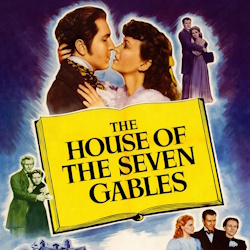
The 1851 novel The House of the Seven Gables by Nathaniel Hawthorne was first adapted to the screen in 1910 by Universal Studios. In 1939 studio executives decided to remake the film, believing a retelling of its gothic tale of a self-destructive family consumed by greed would be well-received by the public. It was conceived to be a B-film offering and so Universal assigned one of its B-film producers, Burt Kelly, to oversee production with a small budget of $178,000. Joe May was tasked with directing and Lester Cole was hired to write the screenplay. Despite its small budget, a fine cast was assembled, including; George Sanders as Jaffrey Pyncheon, Margaret Lindsay as Hepzibah Pyncheon, Vincent Price as Clifford Pyncheon, Nan Grey as Phoebe Pyncheon, Dick Foran as Matthew Holgrave, and Gilbert Emery as Gerald Pyncheon.
The story is set in Salem Massachusetts in the late 17th century. Colonel Jaffrey Pyncheon covets the land of a carpenter, Matthew Maule, and so falsely accuses him of witchcraft. Maule is convicted, executed and with his dying words levels a curse on the Pyncheon family. Jaffrey acquires the land and builds a magnificent mansion called “Seven Gables”, yet soon dies. Years later in 1828, the now bankrupt Pyncheon family fight over their ancestral mansion. To obtain the house, great-great grandson Jaffrey Pyncheon conspires and succeeds in framing his brother Clifford for murder. He is convicted and imprisoned with his fiancée Hepzibah patiently waiting twenty years for his release. Upon his release Clifford methodically seeks and succeeds in his revenge against Jaffrey who dies after the revelation that a Maule descendent aided Clifford in securing the mansion’s deed. The film was a commercial failure, losing $16,500. Critical reception was favorable, and the film received one Academy Award nomination for Best Film Score.
Frank Skinner was a contracted composer for Universal Pictures and director Joe May appreciated their collaboration on his previous film, The Invisible Man Returns, in 1940. As such he was hired for the project and after viewing the film appreciated the canvas he was afforded. The story offered a gothic drama with treasure trove of powerful emotions: covetousness, false witness, greed, betrayal, and murder. Woven within this sordid narrative is a love affair for the ages between Clifford and Hepzibah, which is forced to weather twenty years of Clifford’s imprisonment on false charges of patricide by his malevolent brother Jaffrey. He would also have to speak to a secondary romance between Matthew and Phoebe.
 For his Soundscape Skinner composed one primary theme, three secondary themes, and some motifs. The song “The Color of Your Eyes” serves as the Love Theme for Clifford and Hepzibah, and graces us with classic Old Hollywood romanticism. Its melody permeates the entire film, and serves as its primary theme. Indeed, we bear witness to a supreme testament of true love as our lovers endure twenty years of Clifford’s imprisonment. The secondary themes include Phoebe’s Theme, which supports Hepzibah’s cousin, who is in reality, the daughter for which she always dreamed. There is a purity and innocence to Phoebe’s string borne theme, which offers tenderness, happiness and youthful vitality. Later in the film as her love for Matthew come to life, her theme assumes a more romantic articulation. After Phoebe’s arrival, a new maternal Love Theme is born supported by warm French horns and strings tenero filled with familial love. The music masterfully informs us that Phoebe has brought the joy of living back to Hepzibah’s life, who at last gets the daughter she always wanted. Mr. Fuller’s Theme supports our gregarious postman and offers a vibrant and carefree expression borne by strings felice and bubbling woodwinds animato. Lastly, Skinner uses his music to set the mood and speak to the underlying emotional dynamics unfolding on the screen, an aural equivalent to a cinematographer’s use of light.
There is no bona fide commercial release of the film score, so as such, I will use film scene descriptors and time indices for my review. 00:38 “Universal Logo” reveals the refulgent Universal Studio logo supported by Jimmy McHugh’s fanfare grandioso. The following two cues are score highlights where Skinner masterfully sets the tone of the film with just exquisite writing. 00:53 “Main Title” reveals the flow of the opening credits against a writing table. We open boldly with a grand declaration of the Love Theme, which unleashing a breath-taking ascent by strings appassionato, which crest as the film title displays. We flow into a sumptuous full exposition of the Love Theme, which graces us with florid, classic Old Hollywood romanticism. A foreboding diminuendo by bass grave takes into 02:10 “Forward”, which reveals a book page informing us of Colonel Jaffrey Pyncheon, a powerful leader of the Colonial Government. It states that he coveted the land of a lowly carpenter Matthew Maule and so falsely accused him of witchcraft. Maule was convicted, executed, and with his dying words leveled a curse on House Pyncheon – “God hath given him blood to drink!” Jaffrey built a mansion of seven gables on the land, but on the day of its completion, he was found dead in the library with blood trickling from his mouth. Skinner supports with a pathos for strings, a grieving musical narrative aching with sadness.
03:06 “160 years later on September night in 1828. . .” reveals the Pyncheon mansion during a night time rain storm. The pathos for stings and oboe dissipates into nothingness. We see a sign; “This well is foul – Do not drink” as a carriage arrives. Jaffrey arrives and is greeted by his cousin Hepzibah. He is curious as to why his father summoned him home. 05:05 “Jaffrey and Clifford” reveals Jaffrey going upstairs to see his brother who his playing and wordless singing his new song on piano, supported by the melody of a romantic ballad, which becomes the Love Theme. Jaffrey is singularly unimpressed with Clifford’s news that his first song has been published. Jaffrey goes downstairs when Hepzibah informs them that their father has returned. She then joins Clifford in a kissing embrace as he confesses his love. In an unscored scene, Clifford joins his father Gerald and Jaffrey and delivers the news – that the family fortune has been squandered by Jaffrey’s investment schemes, they are bankrupt, and must sell the mansion. The brothers argue with Jaffrey voicing family tradition and Clifford disparaging the ignominy of each of their ancestors whose portraits hang on the walls. He storms out insisting the house will be sold tomorrow.
10:52 “Gerald Solicits Hepzibah” reveals Jaffrey departing, with Clifford playing an angry piece on the harpsichord. Gerald solicits Hepzibah to persuade Clifford to give up his plans to sell the family estate. She is non-committal but agrees to follow her conscience. In the parlor Clifford begins singing his latest song, the romantic ballad “The Color of Your Eyes”, which becomes their Love Theme as a loving Hepzibah looks on. She sits next to him on the bench and Skinner supports tenderly with the song’s melody rendered by a solo violin d’amore with kindred strings romantico. She advises that his father asked her to speak to him, and he takes offence, but she diffuses his anger with a confession of her undying love. He is ecstatic, saying the sale of the mansion will allow them to begin a new life in New York. 14:47 “Jaffrey’s Discovery” reveals a wall clock displaying 2 am with Jaffrey sneaking through the manor by candle light. A foreboding musical narrative borne by bass grave with pizzicato strings and harp adornment carry his ascent into the attic. A misterioso unfolds on woodwinds and strings as he retrieves a key to open a large chest. As he opens it and begins searching its contents, pizzicato strings and tremolo violins sow tension. At 16:05 an orchestral crash supports the chest lid crashing closed and awakening Clifford. Woodwinds and pizzicato strings sustain the tension as Jaffrey discovers a map. At 16:21 the music swells on a stepped ascent, crashing at 16:24 as Clifford startles Jaffrey. Jaffrey says that buried in the walls of the mansion is a land grant of one million acres from King Charles II, which if found, will make them millionaires. Clifford is dismissive and condescending, and departs leaving Jaffrey to stew.
17:57 “Hepzibah Announces the Move” reveals bubbling woodwinds of delight and strings felice supporting the arrival of Mr. Fuller’s postman’s carriage. Hepzibah informs him to please hold their mail starting tomorrow as they will be moving. A montage follows with each scene opening with a harp glissandi and foreboding tremolo strings as Mr. Fuller breaks the news to each family, he delivers the mail. The news is not received well as the Pyncheon family is not well liked. At 19:23 Mrs. Reynolds runs to Mr. Fuller’s carriage and informs him that the Seven Gables is up for sale. This time the harp glissandi ushers is woodwinds comici to support her gossip. 19:37 “Lunch” reveals Hepzibah joining Clifford in the garden to announce lunch. Harpsichord and strings romantico emote the Love Theme, which expands with woodwinds tenero into a romance for orchestra. He declines lunch and tries to cheer her up as she frets over Jaffrey’s obsession and the Maule curse. At 21:10 as he compliments her on her dress, the Love Theme shifts to solo violin d’amore with hap adornment. They embrace and kiss, yet at 21:35 the music sours as Jaffrey intrudes and summons Clifford to the library, where father awaits.
The following two cues offer powerful score highlights, where Skinner empowers the emotional collision of anger, familial discord, and tragedy. 22:06 “The Death of Gerald” reveals Clifford joining his father in the library. Strings grave set the tone for a father-son confrontation. An escalating musical narrative swells on a crescendo agitato of anger as Gerald announces his decision to support Jaffrey’s bond speculation to save the mansion, reneging on his promise to Clifford to sell the manor. Gerald loses his temper when Clifford suggests he is a liar. People gather outside on the street, able to hear the shouting through the open window. Gerald angrily disowns Clifford and orders him to leave. Clifford’s rejoinder that this is a convenient way to break a promise causes Gerald to grab a porcelain statue. The crescendo crests at 23:42 as he attempts to throw it, but collapses from a heart attack with his head striking a wooden table. A grim diminuendo follows as Clifford rushes to him and calls to Hepzibah and Jaffrey in the garden. A pall of death descends on bass grave as Clifford declares he fell, hit his head, and is dead. 24:20 “Murderer!” reveals Jaffrey calling Clifford, a murderer, which Skinner supports with a molto tragico musical narrative as Hepzipah and Clifford voice their astonishment. Clifford then realizes that this is a plot for Jaffrey, through maleficence, to claim sole inheritance of the mansion. At 25:06 Jaffrey coldly repeats “Murderer”, which causes Clifford to become enraged and begin strangling him empowered by a crescendo irato. But it dissipates on a string descent of despair as Mrs. Reynolds yells “Murderer” accusing Clifford to the street crowd. We close grimly with portentous bass grave.
In an unscored scene, Clifford is on trial for murder. The judge’s jury instructions are clearly prejudicial, which elicits the jury to find Clifford guilty without even deliberating. The judge sentences him to life imprisonment with a distraught Hepzibah promising to do everything she can to free him. Clifford is gracious, loving and accepting of his fate. Yet when the judge commends Jaffrey for his integrity and commitment to justice, Clifford explodes in fury, and unleashes a devastating rebuke to Jaffrey’s maleficence, congratulating him on joining the ignominy of their ancestors. He closes repeating Maule’s curse; “God hath given him blood to drink”, laughing manically as he is dragged away while Jaffrey clutches his throat.
31:52 “Hepzibah Departs” reveals her packing her suitcase to leave Pyncheon manor. Skinner supports with a pathos of sadness to support her devastation. Downstairs Jaffrey instructs a contractor on the systematic dismantling of the manor’s flooring and walls as he still believes the land deed and gold ae buried somewhere within the manor. In an unscored scene, Jaffrey refuses to allow Hepzibah to leave, however Mr. Barton, the estate lawyer arrives to read Gerald’s Last Will and Testament. They all go to the library where she is advised that she has been granted a stipend of $400 a year, while Jaffrey is advised that his father was heavily insured and the payoff is more than sufficient to pay for all outstanding debts. He then stuns Jaffrey by announcing that the entire estate has been left to one beneficiary – Hepzibah. Hepzibah erupts in a very satisfying mocking laugh as a furious Jaffrey storms out. He threatens to sue, only to be rebuked by the departing Barton that he has no viable legal recourse to challenge the Will. Hepzibah then offers a scathing rebuke of Jaffrey swearing that she will live here forever and never allow him to return as she slams the door in his face.
36:02 “Hepzibah’s Devastation” reveals an exhausted Hepzibah leaning against the door supported by a solo oboe affanato, kindred woodwinds and stings of despair. 36:25 “Hepzibah Shutters the Manor” opens with bubbling woodwinds felice as we see Mr. Fuller making his daily mail run. Strings voicing her Love Theme surge with passion to support Hepzibah methodically closing all the manor’s shutters one by one as though trying to shut out the world. A crowd gathers on the street outside with many expressing disbelief as to what is happening. At 37:21 the last shutter is closed and a pathos for strings unfolds as he opens her luggage and holds Clifford’s favorite dress. An aching solo violin d’amore voices the Love Theme, which transfers to solo flute as she lovingly stores the dress in her hope chest. 38:22 “The Flow of Time” opens with trilling woodwinds, which usher in a pastorale as the camera moves through the manor’s garden, which has gone to seed. At 38:35 a string borne musical narrative of sadness supports a montage of scenes showing the years passing as we see the cycle of seasons with the manor falling into disrepair, ravaged by time. Time stamped letters are delivered, which show the actual passage of time; 7 March 1831, 14 November 1841, and 16 March 1848.
39:20 “Mr. Fuller” reveals him much older as he makes another mail delivery to the Pyncheon manor supported by strings felice voicing his carefree theme. He pulls a letter from the mail box which is addressed to Clifford Pyncheon at the state penitentiary. At 39:55 strings speranzosi voice the Love Theme as we see the letter offers hope of commutation from the new governor. In an unscored scene the letter fades to show Clifford reading it in his prison cell. An angry raving man voicing his right to free speech is thrust into Clifford’s cell. He passionately voices his cause – the abolition of slavery with Clifford offering him water to shut him up. Clifford introduces himself as Clifford Pyncheon, which elicits a laugh. Clifford is not amused, but dumbfounded when the man introduces himself as Matthew Maule. Clifford laughs, joined by Matthew, and they shake hands and jointly declare they do not believe in their ancestors’ nonsense. In an unscored scene, Mr. Barton pays a call on Hepzibah who is cold and formal. She advises that a cousin has died and that his daughter is coming to live with her. She is strapped for cash and says she intends to open a cent shop with the girl working there to earn her keep. Barton advises that she advise her tenant Mr. Holgrave (Clifford’s cell mate Matthew Maule who has changed his name). Barton offers her an advance to forestall opening a business, but Hepzibah refuses. He departs and Hepzibah pays a visit to Mr. Holgrave informing him that she is opening up a shop. He says he will remain, and counsels her that opening a shop and reengaging with humanity will be helpful to her. Hepzibah departs when they hear a knock on the front door.
47:54 “Phoebe Arrives” offers a beautiful and exquisite score highlight, which reveals Phoebe’s arrival, which will transform Hepzibah’s life. She politely introduces herself, but Hepzibah is cold, formal, and the music dour. She offers her regrets for her father’s death, takes her luggage, and escorts her to her room. Skinner introduces Phoebe’s Theme, led by a sweet violin delicato, which is offered an exquisite extended rendering. Matthew stands in his room’s doorway, observes Phoebe’s arrival and smiles. She pauses, and then enters her bedroom. Phoebe is sweet, and brimming with life and her theme has interplay with tentative woodlands tristi supporting Hepzibah. She is thankful, and offers to relieve Hepzibah of all kitchen and cleaning duties. When advised that she is opening a cent shop, Phoebe is overjoyed and says she has experience and will be glad to work there. We see the dour Hepzibah warming to her youthful vitality, optimism and sweet nature. As she leaves Phoebe’s room, at 50:16 she is contemplative with aching strings reprising her Love Theme, an echo of a lover and life lost. We see heavy rain through the window, which are supported by woodwinds tristi. Later, the storm has cleared, and moonlight fills the sky, supported by warm French horns speranzosi, tremolo strings, and woodwinds gentile. A hesitant Hepzibah enters Phoebe’s room through their room’s adjoining door. She gently caresses her hair and pulls up the blanket and we clearly discern that she believes Phoebe to be the daughter she always wanted. Skinner introduces a new Love Theme supported by warm French horns and strings tenero filled with familial love. The music masterfully informs us that Phoebe has brought the joy of living back to Hepzibah’s life.
In an unscored scene Matthew and other abolitionists from the New England Anti-Slavery Society are printing pamphlets advocating equal rights for all citizens. 53:29 “Pyncheon Cent Shop” reveals new signage supported by strings felice and bubbling woodwinds. Inside Phoebe is joyous for her first sale, supported by her theme brimming with joie de vivre. Matthew congratulates her and Skinner supports their conversation with pleasantries. Matthew is flirting with her, but the arrival of a new customer allows her to deflect. The music sours at 54:52 as Jaffrey arrives while Hepzibah observes from the upstairs window. He insists on seeing Miss Pyncheon immediately as Matthew greets the judge. Jaffrey calls this a disgraceful enterprise. Matthew stops Phoebe and begins to introduce her, only to be interrupted at 57:18 by the stern arrival of Hepzibah supported by strings grave. He says he will get the court to shut down the shop, and Hepzibah orders him out. The music lightens at 55:57 in “Barton’s Wonderful News” as Mr. Barton arrives brimming with good news – that the governor has commuted Clifford’s sentence and he is a free man. Strings full of thankfulness adorned with harp and celeste with an undercurrent of sadness support her restrained reaction as she departs to prepare his room.
57:02 “Phoebe’s Diary” reveals her reading by her moonlit window at night a diary entry where she wrote of how Matthew affects her greatly – “but I am sure it is not love. Yet if it is not, what can it be?” An exquisite exposition of strings tenero attended by woodwinds delicately emotes her theme. At 58:13 racing strings and woodwinds energico carry her run and leap back into bed as she hears someone approaching the front door. 58:20 “Clifford Comes Home” offers the score’s emotional apogee. It reveals his tentative approach supported by the Love Theme shorn of its vitality, and full of sadness. He peers through the side window and then enters hesitantly. Inside the Love Theme warms with strings receding to support and woodwinds moving to the forefront. He goes upstairs, hesitates to enter Hepzibah’s room, and instead goes into a room across from Matthew. Phoebe alerts Hepzibah that someone is in the house. Hepzibah states that she left the door unlocked and that Clifford has come home. Clifford tries to find decent clean clothes to wear, but everything is moth ridden. The Love Theme saddens, atop aching strings of regret when he sees his reflection in the mirror – that of a greying, middle-aged man. At 1:00:46 the Love Theme becomes wistful as he turns away and we see Hepzibah tying her night gown in her room. He tenderly lifts the harpsichord keyboard cover as the theme’s yearning strings carry Hepzibah to his door. Yet she too is hesitant of due to her older appearance, and turns back as he sits down to play. At 1:01:22 he begins to play the Love Theme tentatively on the harpsichord as Hepzibah opens her hope chest to retrieve his favorite gown of hers. Sadly, it too is moth ridden. She closes the hope chest and pauses, and he pauses his playing with both contemplating the loss of their youth as aching wistful violins full of yearning take up the melody, recalling their brighter days of old.
The next day, in a poignant and unscored scene, Phoebe asks Hepzibah why she did not see Clifford last night? Hepzibah deflects as she prepares an elaborate breakfast for Clifford. She asks that he see Phoebe first as her beauty will please him. She answers no, adding that he will find you a lovely as ever just as Clifford enters. He walks to her, but she averts her eyes, offers a formal good morning and introduces cousin Phoebe. Phoebe is uncomfortable, and excuses herself. Hepzibah say she will start the eggs, but Clifford grabs her and asks to look at her. She says that there is little left to see, but he responds, “Let my eyes be your mirror. In them, your beauty will never fade”. He asks her to smile, as she lifts her eyes, but instead starts to weep as he embraces her and says it is not too late for them. In the garden Matthew does a count down for film exposure, having just taken a photo of Phoebe. When she asks why he wanted to photograph, he replies so he has proof that she is the most beautiful maiden in the universe. He then drops all pretenses, and confesses his love, but she is overwhelmed and uses the arrival of Hepzibah and Clifford to run away. She introduces Clifford and said he has been away in a distant land and will be staying with them. Matthew, is a gentleman, and plays along with the deception, extending a welcoming greeting. After they depart, Clifford informs her that he will make this garden beautiful again. She asks, are they not going to leave, and he answers, not right away. She sees he has vengeance in his heart towards Jaffrey, and he confirms this citing the harm he did to her.
1:07:38 “The Tribune” reveals Matthew talking to the newspaper’s editor supported by syncopated pizzicato strings and woodwinds. An ascent atop strings energico reveal a headline; “Rumors of Hidden Ancestral Fortune Revived”. The Love Theme soars as the paper relates that Clifford used his time in jail studying old documents, which prove a fortune lay hidden in the manor. In some unscored scenes, we shift to the local saloon, which reveals men asserting Clifford is crazy, but Mathew arrives, dispels the rumors, and suggests that the court convicted Clifford in error. Mr. Weed arrives and relates to Matthew that Judge Pyncheon asks him to meet with him immediately. Upon his arrival, Jaffrey relates that he wishes to have Clifford committed to a mental institution. After Matthew confirms that he is indeed searching the mansion for gold Jaffrey decides this offers a pretext to commit Clifford to an asylum and seize the manor. Jaffrey visits the manor and calls upon Hepzibah and Phoebe as Clifford hides in the garden. He accuses Clifford of insanity as he is tearing down the house looking for treasure. She denies it, only to hear load banging behind the wall. Jaffrey moves to investigate, but Hepzibah bars his way and so he departs saying he has already written the institute for the mentally insane and that they will know how to take care of Clifford. Outside Deacon Foster insists on speaking to him, and Jaffrey invites him into his carriage. Inside Hepzibah and Phoebe investigate the banging and discover the source is Matthew hammering in the cellar. She deduces that he is behind the newspaper article and has betrayed Clifford. She orders him to find new lodging over Phoebe’s protests. In the carriage the Deacon frets about the large sum of money he has invested, but Jaffrey assures him all is well.
1:15:39 “Mail Delivery” reveals Mr. Fuller napping as his carriage is pulled, supported by a sluggish and less vibrant rendering of his theme. His horse neighs to wake him up and he is greeted by Matthew who receives a letter. As Mr. Fuller departs Matthew reads the notice saying it is imperative that all monies collected be forwarded upon receipt of this letter, signed Garrison. Strains of the Love Theme enter as he reads it and then departs, joined by an extended sad rendering of a grieving Phoebe’s Theme as she watches from the shop window. She begins to weep and Hepzibah comes to comfort her. She informs her that Mr. Holgrave’s continued presence is intolerable and that she is evicting him immediately. 1:17:38 “Hepzibah Evicts Mr. Holgrave” reveals her packing his belongings in his room supported by a dark and foreboding musical narrative. She discovers a hair brush engraved with “M” “M”, and then some bound letters. A distraught Phoebe enters the room supported by her aggrieved theme at 1:18:11, begging her not to evict him as she loves him, and will have to leave with him. Hepzibah leaves and Phoebe notices the letters are addressed to Matthew Maule.
In two unscored scenes a distraught Hepzibah begs Clifford to leave this house at once and never return. He finally reveals what is happening, saying that since his sentence was commuted, his innocence remains to be proved, and until it is, he cannot legally marry her. He then admits knowing that Holgrave is really Matthew Maule, that they are friends, and then shares his plans for Jaffrey. Later, at Jaffrey’s home he reads a letter from the Supervisor of the State Asylum for the Insane saying Clifford must surrender himself for an immediate examination by our doctors. A distraught Deacon barges in demanding the money he invested, but is devastated when Jaffrey advises that his Abolitionist organization’s money was invested in illegal slave ships. Jaffrey reassures him that he has a scheme to acquire the money and sends the Deacon on his way. Later, angry investors arrive at the Deacon’s house while Jaffrey barges into the manor’s library to confront Clifford.
1:22:45 “The Confrontation” reveals Jaffrey now face to face with his brother and Hepzibah. Menacing tremolo strings sow tension as each brother glares at the other. Clifford offers him the house if he agrees to sign an affidavit, in which he declares that his assertion that Clifford was a murderer, was an error, a mistake, which he now wishes to rectify. Jaffrey refuses and says to Clifford, that he is mad. He demands he sign over the house and hands him the letter demanding he be evaluated. A frantic Deacon arrives propelled by strings of desperation demanding his money at once. A crescendo of terror swells as the Deacon pleads and points to the investors approaching. At 1:24:44 the music dissipates into a dark strings tremolo as the Deacon departs swearing to take down Jaffrey for what he has done. He slams the door, a crescendo dramatico surges and ceases following a gunshot. Jaffrey opens the door, sees the dead Deacon and then closes the door.
1:25:35 “Murderer!” Hepzibah calls out, murderer, supported by menacing tremolo strings. Jaffrey is aghast as she repeats the charge. He becomes frantic as the investors pound on the door as frenetic strings swell with a growing panic. He says they will kill him and to hide him in the secret staircase. Clifford then drops a bombshell, saying there is no hidden staircase, and the this was all a ruse by Mr. Holgrave, whose real name is Matthew Maule. Hepzibah tells Phoebe to let the investors in and strings of desperation carry Jaffrey to the desk where he signs the affidavit in hope of saving his life. He begins raving like a crazed madman as he hands him the affidavit and says they can keep the house and the money. At 1:26:36 a crescendo of terror swells as they refuse to answer as he backs up and yells no, no don’t let them in! The investors enter, and Jaffrey cries out in pain as he clutches his throat and dies, caried by a diminuendo of death. Forlorn woodwinds and strings support the sight of blood flowing from his mouth. A sad musical narrative supports as the camera move out into the garden.
At 1:27:18 “Marriage” reveals a double marriage of Clifford and Hepzibah, and Matthew and Phoebe in the manor garden supported by strings felice and bubbling woodwinds of delight. Skinner offers joie de vivre with Phoebe’s and the Love Theme entwining as the two happy couple board an open-air carriage. In 1:28:03 “Barton’s Blessing/The End”, as Mr. Barton offers his blessing, Clifford and Hepzibah’s thankful Love Theme supports warmly. He says he will always remember them as they were (they revert to their youthful appearances), and as they are now, (they return to their current age appearances). The Love Theme blossoms and crests in a glorious flourish as they depart, and we see a sign “For Sale” on the property. The End. 1:28:48 “Cast Credits” is supported by an embellished coda of the Love Theme.
Frank Skinner understood that the emotional core of the film was the love affair between Clifford and Hepzibah, a love for the ages, which overcomes all obstacles. His brother’s Jaffrey’s betraying maleficence lands Clifford in prison for twenty years on a patently false charge of patricide. His incarceration results in a painful separation from a devastated Hepzibah, as well as the loss of their youth. As such, the film opens with a grand declaration of the Love Theme, which sets the tone of the film. In the film proper, we first hear the Love Theme’s melody as the song “The Color of Your Eyes”, which Clifford composed and sung for Hepzibah. Thereafter Skinner utilizes the song’s melody as the Love Theme, which suffers, endures, yet ultimately triumphs, achieving joy when they at last marry. A secondary theme for cousin Phoebe served initially as her identity, but later it developed into a Love Theme as her love for Matthew blossomed. Both offer exquisite Golden Age romanticism and when Skinner lets these themes blossom, the music is rapturous. Skinner did not provide our villain Jaffrey with a theme, but instead created a malevolent aural presence around him. Indeed, throughout much of the film Skinner’s aural soundscape functions in a manner similar to how a cinematographer uses light to create mood. In the finale where Jaffrey is at last brought to Justice, Skinner masterfully creates a powerful cinematic confluence. Folks, Frank Skinner composed 271 scores over four decades, yet only a miniscule amount of his canon has been commercially released. This is a sad commentary, and for me, a tragedy. This score reveals his gift for melody, and his astuteness in speaking musically to the unfolding emotional dynamics of the film’s narrative. I highly recommend you watch the film, which is available on streaming services, to experience the music of a truly gifted composer.
Track Listing:
- NOT AVAILABLE
Music composed and conducted by Frank Skinner. Orchestrations by Hans J. Salter. Recorded and mixed by XXXX. Score produced by Charles Previn and Frank Skinner.

Shop at the Movie Music UK Store

Member of the

 MOVIE MUSIC UK