THE FOUR FEATHERS – Miklós Rózsa
 GREATEST SCORES OF THE TWENTIETH CENTURY
Original Review by Craig Lysy
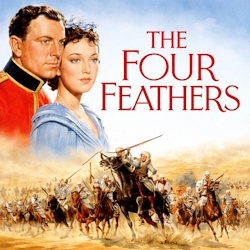
Renowned film maker brothers Zoltan and Alexander Korda decided that for their next film they wanted to go for a historical epic. They chose to adapt the 1902 novel “The Four Feathers” by A. E. Wilson, which tells the story of the Madhist Wars circa 1881. Alexander would oversee production with a budget of $1.0 million, Zoltan would direct, and R. C. Sherriff, Lajos Bíró and Arthur Wimperis were hired to write the screenplay. The cast would include John Clements as Harry Faversham, Ralph Richardson as Captain John Durrance, C. Aubrey Smith as General Burroughs, and Jack Allen as Lieutenant Thomas Willoughby.
The film is set in Sudan during the Victorian Era. In 1881 the Sudanese religious leader Muhammad Ahmad Abd Allah proclaimed himself to be the “Madhi” of Islam (The Guided One) or Final Leader who appears during the End Times to rid the world of evil and injustice. The British army mobilizes and recalls the Royal North Surrey Regiment to service. Lieutenant Harry Faversham resigns his commission on the eve of its departure fearful of fighting. His three friends and fellow officers, Captain John Durrance and Lieutenants Burroughs and Willoughby, show their contempt by each sending him a white feather attached to a calling card. Harry is shamed by this in front of his fiancé and departs for Sudan to regain his honor. In the end Harry saves the lives of his comrades with the cost of blindness. The film was a massive commercial success and one of the most popular British films of 1939. Critical reception was favorable; however, the film received no Academy Award nominations.
Producer Zoltan Korda was very happy with compatriot Miklós Rózsa’s music for his last film “The Drum” (1938), as well as his brother Alexander’s film “Knight Without Armour (1937). He and Rózsa were friends, and he made a promise that what his career needed was for him to score a big and important picture. Well, Rózsa was overjoyed when Zoltan offered him “The Four Feathers”, which would be adapted from a Victorian novel and shot in Technicolor on location. He did meticulous research into Arabic, Sudanese and indigenous music at the British Museum reading room to familiarize himself with the requisite cultural sensibilities. Korda met with Rózsa and informed him of what he wanted from his score, with emphasis on two crucial scenes; the Sudanese laborers pulling barges up the Nile River, and Harry leading the blind John through the desert and down the Nile River.
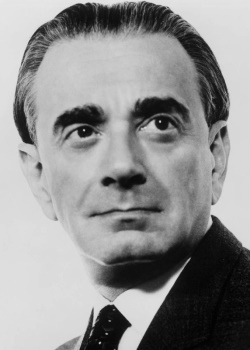 For his soundscape, Rózsa composed two primary themes; one for our hero Harry Faversham, and one for our villain, Abdullah al-Khalifa. Harry’s Theme offers an eleven-note construct by strings nobile and horns. Harry is a man tortured by his short-comings and gnawing inner conflict between duty and his aversion to war and violence. The narrative arc of his story of redemption proceeds from cowardice to heroism, and Rózsa’s supports this transformation musically as we see his theme evolve over the course of the film. The Khalifa Theme supports him as the Great Deliverer – the Mahdi. It also offers an eleven-note construct, however his theme emotes as a grim, menacing musical narrative empowered by dire horns. When used to support his troops during battle, it swells into a fierce anthem. Utilizing the fruits of his research, Rózsa infused his music with Arabic folk songs, male choir, and primitive Sudanese rhythms, which he juxtaposed with the requisite marches and bugling fanfares of British military traditions. Lastly, Rózsa interpolated a Scottish traditional song Auld Lang Syne by Robert Burns, a traditional British military march “The British Grenadiers”, and a classical piece, the March from the opera “Scipione” by George Frideric Handel.
The score has no full commercial release, so as such I will use film scene descriptors as titles along with film time indices for my review. 00:00 “Main Title” Rózsa offers a prelude which bathes us in exotic orientalism from which arises at 00:18 a noble statement of Harry’s Theme. At 00:44 an Arabic danza esotica brings us the wonder of the Sudan. At 01:12 an ascending accelerando dramatico ushers in a bold reprise of the Harry’s Theme. At 01:34 script informs us of a Sudanese rebellion in 1885 and General Gordon’s appeal for aide as the Khalifa’s Dervish army lays siege to Khartoum. At 01:53 we flow into the film proper “The Fall of Khartoum” with a montage of scenes showing the rebel Mahdi army sweeping across Sudan, overwhelming the British garrison at Khartoum, and the slaying of General Gordon. Rózsa unleashes an aggressive Arabic tempest atop Khalifa’s Theme, which propels the horsemen and charging foot soldiers on a crescendo of violence. Declaration of the Khalifa Anthem of victory by dire horns resound at 02:18 as we see the British flag pulled down, and the Khalifa’s black flag raised over Khartoum. A sobering diminuendo at 02:30 supports the London Star newspaper headline declaring the fall of Khartoum and the murder of General Gordon.
Harry’s father, General Faversham is unhappy with him as he is more inclined to read poetry than continue the family’s military tradition. He celebrates his 15th birthday dining with his father’s military comrades, who all make aspersions to cowards they have encountered in their life. 07:28 “The Ancestors/Dr. Sutton” reveals Harry departing to turn in for the night and lighting a candle in the main room where his ancestor portraits hang. Rózsa sow a misterioso of unease joined by echoes of the past with muted trumpets militare as he looks at his military clad ancestors. At 08:07 Dr. Sutton joins Harry and relates that he served with his father as his surgeon. Rózsa introduces his comforting, paternal theme on strings tenero, which shift warmly to woodwinds as he expresses his friendship. He gives him a card with an invitation to write to him whenever he wishes. Harry is polite and thankful and goes upstairs to his room with the misterioso and trumpet militare declared motif resuming as he passes more portraits of heroic ancestors.
In two unscored scenes we see Harry ten years later precision marching in the scarlet red British uniform. The commander says that they are being dispatched to join an Anglo-Egyptian army under the command of General Kitchener to reconquer the Sudan. All the men cheer except Harry, who seems unhappy with the news. In their quarters Peter Burroughs announces to his fellow officers Harry, John Durrance and Thomas Willoughby that they are all invited to his sister Ethne’s coming of age party, which will include the announcement of her engagement to Harry. John is visibly disappointed as he too had sought her hand. Later General Willoughby announces the engagement of his daughter to the son of his dearly departed friend, General Harry Faversham. They toast and the general orders dancing to commence. 13:10 “The Ball” reveals the dance floor full of couples dancing, which Rózsa supporting the extended scene with an elegant valzer spiritoso. In his study General Willoughby reprises the battle of Balaclava during the Crimean War when “War was war, and Men were Men”. Harry and Ethne leave the dance floor and kiss in the adjoining room. They stroll into the garden where he again takes her into a kissing embrace. John joins them and asks to speak to Ethne and Harry departs. A Polka supports as the two converse and she apologizes for choosing Harry over him. John is noble, accepts her choice and they join the dance floor carried by a festive polka.
Trumpets militare resound at 17:37 “Called To Duty”, which reveals a telegram ordering the 1st Battalion of the Royal North Surrey Regiment to report for active duty and deployment to the Sudan. In an unscored scene, Harry submits his resignation, saying he only accepted a commission to placate his father. Now that his father is dead, he will end his career. He is reproached, called a coward by the Regiment’s general, and dismissed with contempt. The general then announces Harry’s resignation to his comrades, with Mr. Parker designated as his replacement. 20:34 “Departure of The 1st Battalion” reveals crowds cheering a military parade empowered by a band playing the traditional British marcia militare, “The British Grenadiers”. 22:12 “Farewell” reveals the men saying goodbyes to loved ones as they board the military transport ship. Rózsa interpolates the Scottish traditional song Auld Lang Syne sung diegetically by the crowd to support.
23:51 “The Three Feathers” offers a poignant score highlight where Harry fully realizes the consequences of his abandonment of his friends and familial honor. It reveals Harry receiving a package and opening it. Portentous strings grave support him opening the package, and unleash a crescendo affanato when he sees that it contains three white feathers, symbolic of cowardice, from his comrades John, Peter and Thomas. At 24:44 dire, foreboding horns support the arrival of General Burroughs. He relates the patriotic send-off of her brother and his friends, and then coldly rebuffs Harry’s offer to speak to him. A bassoon triste ushers back Harry’s Theme rendered as an anguished musical narrative of cowardice as Ethne relates how cruel the package was. Harry sees in her eyes her disappointment in him and when he asked if she is ashamed of him, a poignant passage by strings appassionato surge to support her admonition that they are bound by their obedience of familial traditions. At 28:28 the music darkens as he says he understands and retrieves Ethne’s white feathered boa, saying there should be a fourth feather. A crescendo affanato arises as he plucks one, extends his hand to her, and says, give it to me. The music crests and dissipates into sadness as she turns away in shame, and he departs with a clear realization that the label of cowardice will forever follow him.
29:08 “Kitchener Reviews The Troops” opens with a bugle militare declaration of reveille as we see General Kitchener’s camp, and the Egyptian and British soldiers presenting arms. As General Kitchener reviews his troops, Rózsa interpolates the marcia grandioso from Handel’s opera “Scipione”. 30:57 “Kitchener Asks For More Men” a drum roll of field drums support headlines that read “Kitchener Asks For More Men – Bigger Army For Sudan”. A reprise of the “British Grenadiers” supports a new military parade to cheering crowds. Dr. Sutton greets Harry on the street and invites him for dinner so he may provide counsel. Harry agrees but asks that they return to his hotel room. The “British Grenadiers”, heard from the street below is sustained as Harry reveals the three feathers and admits that his father’s belief that he was a coward has come true. Dr. Sutton notices the pistol on the fireplace mantel and comforts Harry, advising that the fact that he can be so open, reveals that he is not a coward. He asks Harry if there is anything he can do?
34:15 “Harry’s Request” reveals him declaring his intention to leave England. He says that he will write him from time to time, but if he does not hear from him for a year, assume he is dead and inform Ethne that he tried to right the shame and humiliation he caused her. When asked where he is going, he answers – Egypt. Rózsa supports the scene with Harry’s aggrieved theme rendered as a Pathetique for strings, which achieves a very moving cinematic confluence. 34:52 “Egypt” reveals script stating “Suakim On The Red Sea” as we see the port city. Rózsa bathes us with orientalism borne by lush strings Arabi as the camera brings us into the bustling harbor. We flow into an Arabic danza esotica as Harry visits Dr. Harraz, informing him that he was referred by Dr. Sutton. Harraz welcomes him saying that he served with Dr. Sutton in India. He asks that he assist him travel to General Kitchener’s camp. Harraz agrees, which will require staining his skin brown and branding him so he can infiltrate as a member of the Sangali tribe who had their tongues cut out by the Khalifa. He will of course have to fake being a mute. Later he brands him on the forehead and commends him for his bravery.
37:52 “The Mission” reveals General Kitchener dispatching a company of men to create a diversion on the Mahdi’s armies desert flank in hopes of drawing him inland away from the Nile River so British supply ships can reach the camp. A bugle led reveille supports the men marching out of camp. As they traverse the desert, an ostinato of field drums supports their progress. 38:31 “Harry’s New Identity” reveals him successfully fooling a guest of Dr. Harraz with his new Sangali appearance. Rózsa supports with a danza Araba borne by a small ensemble. Harraz advises Harry to go inland to the Nile’s 5th cataract to join native laborers who will be hauling supply barges up river to Kitchener’s camp. 40:11 “Hauling Barges” reveals native laborers hauling barges up river against rapids using massive ropes. We see harsh taskmasters whipping the men, including Harry who struggles physically. Rózsa supports with a traditional boatman’s song using a drum empowered Sudanese men’s choral antiphony. The Sudanese verse supports the men’s plodding struggle, offering a toiling, song of woe. Later, Harry manages to slip away and begins his quest to rejoin British forces.
Dire horns sound at 44:43 in “Danger” as we see John scouting and seeing danger approaching on the horizon. A foreboding ascent atop a crescendo of tension propels him up a hill to obtain a better view. The musical narrative becomes dire as he spots a Sudanese calvary brigade rapidly approaching. At 45:41 a string descent motif supports the loss of his helmet, which cascades down the hill. Churning strings bellicoso and trilling woodwinds propel the Arab brigade, which spots the British camp’s several smoke plumes. They depart to inform their comrades and we see John becoming dizzy and swaying with blurred vision under the searing sun. He collapses supported by strings which weaken and descend. John rights himself and struggles with heat exhaustion to descend the hill carried by a tortured musical narrative, which evolves into a crescendo of agony. We close with him collapsing unconscious just feet from his helmet. Later, the sergeant goes to search for John, finds him, and summons help to carry him back to camp.
49:35 “Khalifa’s Army” offers a dynamic score action highlight. It reveals several vessels sailing on the Nile supported by a drum empowered men’s choir singing a nativist song. The Sudanese calvary brigade arrives and its commander informs the Khalifa that they have spotted Kitchener’s army. At 50:44 he orders his troops to assemble for an attack empowered by his theme buttressed by drums bellicoso and horns feroce. The Khalifa Theme swells into a grandiose battle anthem as they depart, shifting to a horn propelled strings furiososo storm with trilling woodwinds Arabi as his calvary charge across the desert. In an unscored scene back at the British outpost John wakes and discovers he is blind. He faces it with a British stiff upper lip and orders an immediate departure to rejoin the main force. 54:25 “Khalifa On The March” reveals Rózsa embracing orientalism as we see Khalifa’s army marching forward supported by his theme rendered as a grandiose horned empowered marcia militare. A camera closeup reveals Harry marching within their ranks. At 55:26 dire horns declarations of the Khalifa Theme resound as his massive army, which stretches to the horizon marches forward. In an unscored scene, John returns to camp, orders all fires put out and doubles the sentries. He then turns in, but Carpenter notices that he is blind.
57:31 “Khalifa’s Army Rests” reveals his camel calvary and foot soldiers coming to a halt and resting, including Harry who remains unnoticed. Nativist drum rhythms support the scene. At the British camp, sentries stand guard as several Sudanese scouts sneak towards the perimeter. Harry is also approaching, sees a sniper take aim, and yells “Alarm!” A Scout clubs him unconscious as a sentry is shot and the Sudanese attack. At 1:00:33 in “Attack” bugle sounds the alarm as the British return fire. The British are greatly outnumbered but mow down the Sudanese who are charging with swords and shields. The Sudanese counter by throwing flame spears which ignite the thorn bush wall, forcing the British to fall back supported by a bugle call. Sudanese riflemen join and British casualties begin to mount. 1:03:41 “Sudanese Charge” reveals a charge by Khalifa’s sword wielding men. Rózsa unleashes a maelstrom with a ferocious Khalifa’s Theme propelling the charge. They crash through the British line and hand to hand fighting unfolds. 1:04:36 “Harry Regains His Honor” reveals Harry waking and rushing to a comrade’s aide empowered by a noble rendering of his theme. The battle ends without informing us of the victor as we shift to the British fleet sailing up the Nile.
Word is received by the fleet commander that the Khalifa has abandoned the Nile, and the General orders the fleet to proceed at full speed to relieve General Kitchener. 1:05:13 “Full Speed Ahead!” reveals the churning paddlewheel of the flagship propelling the ship forward empowered by a confident Nautical Theme abounding with optimism. At 1:05:31 sumptuous lyrical strings offer a paean of thanks as the fleet sails through the now undefended narrow Nile River choke point. In an unscored scene, we Return to the battle site and see that the Sudanese have been victorious and surround the unarmed British survivors. They drag them off by rope behind their camels and the camera pans over the battlefield strewn with corpses as vultures descend to feed. Harry wakes, lifts John up and carries him into a tent. John wakes, and calls to Peter as Harry realizes that his friend is blind. Harry takes his hand, yet refuses to speak. When John feels his turban and beard, he realizes he has lost, and takes out his revolver to commit suicide. John disarms him and they begin a long trek to reunite with their comrades.
1:12:49 “The Long Trek” reveals the men struggling against the searing desert heat. Rózsa offers a bleak, toiling musical narrative, which flows into a Pathetique by strings tristi and horns of despair as the delirious John calls out to Ethne that he will always love her. At 1:13:55 dire, foreboding strings support the sight of vultures circling overhead. The music emotes struggle and futility as Harry searches a number of dry water holes and collapses in despair. Yet at 1:14:46 his theme swells with determination as vultures circle above. He finds new strength and resolve, stands upright, grabs John, and pushes onward. 1:15:12 “Ethne’s Regret” offers a supremely moving score highlight. It reveals Dr. Sutton visiting Ethne on her family estate’s terrace. He advises her that Harry left England a year ago for one purpose only – to regain his honor. Rózsa supports tenderly with Harry’s Theme, informing us that Ethne still loves him. When Dr. Sutton adds that if he did not write after a year, to assume he had failed in his mission and is dead. Yet the theme loses its vitality and descends into guilt and bitter sadness as she castigates herself for her brutal treatment of Harry. Dr. Sutton assuages her saying that Harry’s die was cast regardless of what she did.
1:17:22 “The Nile!” reveals Harry and John reaching verdant foliage along the Nile. Rózsa supports with a joyous ascent by strings of hope and thankful woodwinds as they plunge into the life restoring waters. Strings tranquilli offer a now redemptive Harry’s Theme as he paddles the down river. We flow into a woodwind borne nocturne joined by sumptuous strings sereni as the sun sets and the full moon lights the night sky. At 1:19:06 the dawn sky is afire and Rózsa offers twinkling effervescence and warm French horns full of hope to greet the new day. Strings languidi offer a soothing musical narrative as Harry continues paddling down river. At 1:19:39 a pole with a British flag is seen and a string borne paean of joy carries Harry paddling towards the shore. He drags John to shore and reaches into his tunic as British soldiers appear. They think an Arab is robbing an officer and racings strings energico carry their run to rescue him. Harry tries to flee to the raft, but is apprehended. In an unscored scene Harry is brought before the general, and interrogated by an Arab, as he continues the deception that he is a mute Sangali. Harry is remanded to work building roads with the other criminals. A physician then enters and updates the general that while Durrance will recover, he is permanently blinded by sunstroke.
1:21:36 “Ethne Moves On” reveals on screen script “Six Months Later” as we see Ethne and her father out for a ride on the verdant estate grounds. They greet Joe and John who are riding and we see they are all happy that he has reengaged life despite his blindness. John relates that he has adapted to his disability and credits his friend Joe for helping him. After they ride off, her father says “Brave Man”, and Ethne responds, I hope I can make him very happy. Rózsa supports the scene with a pastorale, which achieves a beautiful confluence. In an unscored scene, Ethne’s father tries to dissuade Ethne from committing herself to John out of pity for his disability. She will have none of it, and we shift to dinner where John and Dr. Sutton join them. John relates how an Arab, who never spoke a word, saved his life. He adds that after the rescue, he tried to rob him, but only got a letter. 1:24:32 “The Letter” offers a poignant score highlight. John hands the letter to Ethne and as she opens it one of the inserts from John Durrance with a white feather falls out supported by an anguished reprise of Harry’s Theme. John asks her to read the post script, but Dr. Sutton takes it and states “Take Care Not To Get Sunstroke”. Ethne realizes that John’s Arab savior was Harry. A grieving rendering of the Harry’s Theme joins as John relates that the Arab escaped a work detail for convicts and was never seen again. As John takes back the letter and departs, the theme shifts to aching strings and woodwinds tristi as Ethne tries to absorb this shattering revelation. At 1:26:28 the theme shifts again to a grieving solo violin as Ethne weeps when Dr. Sutton declares that Harry was alive when he paid that debt.
On screen script reads “In Omdurman” as we return to Sudan. We see two British men in cages being mocked by a crowd, with Harry actively participating. 1:27:29 “Harry’s Flute” reveals Harry playing a spritely melody on a flute Arabo. He moves in close, and the two men, his friends Tom and Peter see etched on the flute “Don’t Despair”. Later the two chained men are whipped, driven past abusive crowds through the streets, and locked in a stockade packed with so many men that they can only stand. 1:29:10 “Kitchener Advances On Omdurman” reveals his army on the march overland, and his fleet via the Nile supported by the “British Grenadiers” rendered as a marcia grandioso. In an extended unscored scene in Omdurman, a putrid stew is poured in horse troughs and the men eat like animals as they are whipped. They are then whipped as they are taken to the Nile River bank to quench their thirst. Harry joins Tom and Peter and secretly passes them a metal file and says tomorrow they are to swim to the island where a boat will be waiting. The prisoners are then whipped and taken back to the stockade. Guards noticed Harry’s fraternizing with Tom and Peter and drag him chained to the Khalifa. When he refuses to provide information, he is whipped without mercy. He is then taken to the stockade, where he is at last recognized by Tom and Peter. Harry offers an escape plan and recruits a former Arab governor to help organize the men.
1:35:18 “The Battle #1” reveals a field drum roll supporting the order for the British soldiers to fix bayonets. A four-note nativist drum ostinato supports the approach of Khalifa’s camel calvary as Kitchener readies his canons. At 1:36:20 Khalifa orders a charge supported by a fierce and menacing horn empowered rendering of his theme. At 1:36:46 Rózsa uses strings to sow a swelling tension, buttressed by dire horns as Kitchener orders his flanks to the ready. We see two lines of soldiers; the first kneeling, as they prepare for unleash a withering rifle volley. The Khalifa Anthem swells as his army charges headlong towards the British lines. At 1:38:06 the music erupts on a crescendo of violence as Kitchener orders his troops to fire! Withering rifle volleys and canons blasts decimate the Sudanese who retreat in disarray. In an unscored scene, the men’s chains have been filed open and they lure the guards into the stockade where they are ambushed. They use their guns to kill the remaining guards and flee to take the city’s arsenal fortress. A fire fight erupts on the street with Harry successfully taking control of the fortified arsenal.
1:40:35 “Battle #2” the Khalifa orders a second attack and strings furioso and dire horns empower his ferocious theme as his troops make a second charge. Once again withering rifle volleys and canon blasts decimate the Sudanese who again retreat in disarray. At 141:54 a bugle militare signals the order to advance and the British infantry lines begin marching forward. The fire fight erupts around the arsenal fortress. Kitchener orders his canons to strike the arsenal while his fleet bombards the city docks. Harry takes a battered British flag to the roof top, lowers the black Khalifa flag, and proudly hoists the Union Jack. Kitchener orders his canon fire elsewhere and the city is pummeled from both land and river. The British troops storm the city and street to street fighting erupts. 1:44:02 “Victory!” reveals a London Star headline “Kitchener Takes Khartoum” supported by a celebratory choir of church bells. In an unscored scene, John wanders around his room when he hears a knock on the door. Dr. Sutton enters and they discuss the sad news from two eye surgeons who believe John’s blindness is irreversible. They share whiskey and John reveals his mastery of braille reading. Dr. Sutton reads to him a newspaper account that Lieutenants Willoughby and Burroughs were heroes who took the city’s arsenal. John decides to share the great news with General Burroughs and he and Dr. Sutton depart. Dr. Sutton then finishes the article saying that a member of their own regiment dressed as an Arab was the real hero who engineered the stockade breakout and taking of the city arsenal.
1:49:58 “John’s Recognition” reveals him saying “Lieutenant Faversham”. Rózsa softly emotes a ghostly, haunting rendering of Harry’s Theme on strings as John asks “Why should he try to rob me?” He asks Dr. Sutton to write a letter for him to Ethne Burroughs. John lies, stating that doctors in Germany can restore his eyesight, and after a long stay there he intends to rejoin the army. He ends by thanking her for her efforts on his behalf. Rózsa supports with a sad musical narrative full of regrets as we realize Harry will soon be reunited with her. He adds a post script sharing the happy news of Peter, Tom and Harry, whom he believes she should give another chance. In an unscored scene, General Burroughs again lectures Peter, Tom, Harry and Ethne about how soft the army of today is compared to his time. He again subjects them to a revisitation of the battle of Balaclava. This time Harry intercedes, offers the correct version – that General Burrough’s horse Caesar bolted to initiate the charge of he 68th regimen, not because of his order. Burroughs grudgingly concedes and Harry turns to Ethne and offers her, her feather. 1:54:46 “The End” reveals Harry kissing Ethne to conclude the film empowered by a final reprise of his horn declared Redemption Theme, which ends in grand flourish.
Director Zoltan Korda gave Miklós Rózsa a huge career boost with an opportunity to score an epic film. So pleased was Korda with the result, that he took Rózsa with him to California the next year, and launched his Hollywood career with “The Thief of Bagdad”. For this film, Rózsa correctly surmised that despite the film’s grand canvass, this was really an intimate tale of a man seeking redemption. As such, woven within the nobility of his theme for Harry are undercurrents of sadness and shame. Masterful is how his theme mirrors his redemptive transformation from coward to hero. Rózsa also understood the “Clash of Civilizations” and created a ferocious anthem for the Khalifa and by extension, his fervent followers, as well as indigenous rhythms, melodies and songs for the Sudan. He juxtaposed these with the classic British marches and bugle militare calls. Also masterful is how Rózsa’s music for the toiling woe of the desert during the trek by Harry and John, and the serenity of their Nile River journey found perfect confluence with the Georges Perinal’s cinematography. Folks, it is a sad state of affairs that this early epic score by Rózsa has no commercial release. I sincerely hope that a film score label takes up the challenge to rerecord this early career gem for lovers of the art form. Until then, I counsel you take in the score from the film on streaming services, where it is offered with technicolor 1080 video and good audio quality.
Editor’s note: the only commercially available music from The Four Feathers can be found on various compilations, usually comprising the cues “Sunstroke” and “River Journey,” which between them last just under 8 minutes. Probably the best option to find it is the album ‘Spellbound: The Classic Film Scores of Miklós Rózsa,’ conducted by Charles Gerhardt, which was released on CD in 1991 in the RCA Victor label.
For those of you unfamiliar with the score, I have embedded a YouTube link to Gerhardt’s 8-minute suite: https://www.youtube.com/watch?v=oFovRuC8GFQ
Track Listing:
- NOT AVAILABLE
Music composed and conducted by Miklós Rózsa. Orchestrations by Miklós Rózsa. Recorded and mixed by XXXX. Score produced by Miklós Rózsa and Muir Mathieson.

Shop at the Movie Music UK Store

Member of the

 MOVIE MUSIC UK