WHEN WORLDS COLLIDE – Leith Stevens
 GREATEST SCORES OF THE TWENTIETH CENTURY
Original Review by Craig Lysy
In 1933 Paramount Pictures purchased the film rights of the novel “When Worlds Collide” by Philip Wylie and Edwin Balmer. Director Cecil B. DeMille intended to move the project into production after filming wrapped on “This Day and Age,”but lack of a script and funding caused the studio scrap the project. In 1949 producer George Pal envisioned the story as a big-budget science fiction movie. His proposal was initially turned down by studio executive Barney Balaban, but following the success of his film Destination Moon in 1951, Balaban had a change of heart and gave a green light to the project. Pal was assigned production with a budget of $936,000 – much less than he believed was necessary to implement his vision. Rudolph Maté was tasked with directing, and Sidney Boehm would write the screenplay. Given budgetary constraints, Pal opted to go with a cast of unknowns, including Richard Derr as Dave Randall, Barbara Rush as Joyce Hendron, Peter Hansen as Dr. Tony Drake, Larry Keating as Dr. Cole Hendron, and John Hoyt as Sydney Stanton.
A scientific team led by Dr. Cole Hendron and his daughter Joyce confirm photographs sent by astronomer Dr. Emery Bronson that rogue star Bellus and the earth-like planet Zyra were on a collision course with Earth. Efforts to convince the United Nations to build two arks is rejected, but the project goes on nevertheless due to funding by two observatory patrons and an imperious wealthy business magnate. What follows is intrigue as they work desperately to complete the ark and launch before Bellus destroys the Earth. Life and death decisions as to who gains seats on the ark versus those who are left behind creates drama that ultimately leads to violence. Nevertheless as Bellus destroys the Earth, the ark launches and makes a safe landing on Zyra, which proves to be habitable. The film was a modest commercial success and critical reception was mixed with criticism of the movie’s pacing and plot defects. The film however did receive two Academy Award nominations for Best Cinematography, winning one for Best Special Effects.
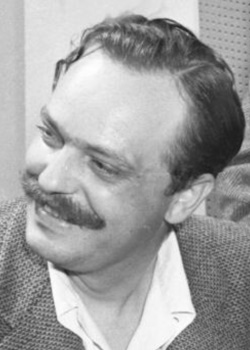 Producer-Director George Pal enjoyed his two previous collaborations with composer Leith Stevens on “The Great Rupert” (1950) and “Destination Moon” (1950), and hired him for this latest project. Stevens’ conception of the score was to compose a tone poem. He eschewed using electronica and non-traditional instruments such as the Theremin stating “You do not necessarily have to go outside the orchestra to make new sounds that the audience will identify with your particular dramatic problem”.
The songwriting team of Jay Livingston and Ray Evans were hired to compose a titular song, but it never came to fruition, although Stevens did interpolate the song’s melody as his Love Theme. Introduced at a nightclub in the cue “Café Fox Trot”, it directly supports the competitive love triangle that forms between Dave, Joyce and Tony, with Tony graciously acknowledging with a noble gesture, that Joyce loves Dave, not him. It also supports the romance of young lovers Eddie and Julie who are devastated when the lottery separates them.
For his soundscape, Stevens composed an idée fixe, the Bellus Theme, which permeates the entire film. This dominant theme of doom portends the star’s collision and annihilation of the Earth. It offers an oppressive four-note construct, a pall of doom, that is implacable, inescapable, and all destructive. How he modulates and alters the articulation of the theme to meet the demands of the film scene is brilliant. Juxtaposed are two secondary themes; the Determination Theme embodies humanity’s confidence and determination to overcome all obstacles. It emotes as a vigorous, repeating seven-note statement by strings energico brimming with confidence. The Hope Theme embodies religiosity, humanity’s faith in the Divine. It exudes hope, emotes as an angelic wordless choir, and is often attached to scenes where biblical passages are displayed.
“Main Title” offers a score highlight where Stevens masterfully sets the tone of the film. We open with a dire drum empowered stepped ascent as the Paramount Pictures logo displays and is engulfed in massive flames. Three dire horn declarations support the display of the film title; 0:09 “When”, 0:12 “Worlds” and 0:16 “Collide”. The flow of the opening credits unfolds against a backdrop of flames empowered by a drum propelled Bellus Theme, rendered as an oppressive, plodding, march of doom. At 0:54 declarations by horns bravura voice the determination of the Determination Theme, which closes the opening credits. At 1:14 we segue atop a haunting rendering of the Faith Theme borne by angelic women’s choir religioso into “Foreword” as the book “Holy Bible” displays and opens to display script from Genesis 6:12;
“And God looked upon the earth, and behold it was corrupt; for all flesh had corrupted his way upon the earth. And God said unto Noah, The end of all flesh is come before me; for the earth is filled with violence through them; and behold, I will destroy them with the earth…”
At 1:33 narration commences against a backdrop of interstellar space, supported by a bleak musical passage within which are woven foreboding, four-note statements of the Bellus Theme borne by woodwinds;
“Needles in a heavenly haystack. There are more stars in the heavens than human beings on earth. Through telescopes, men of science constantly search the infinitesimal corners of our solar system seeking new discoveries, hoping to better understand the laws of the universe. observatories dedicated to the study of astronomy often are set in high and remote places. But there is none more remote than Mount Kenna observatory in this part of south Africa”.
We end darkly when Dr. Emery Bronson makes a startling discovery. He orders his photographic plates and notes be given to pilot Dave Randall to deliver to Dr. Cole Hendron at the Cosmos Observatory in the United States. In “The Black Box” Dr. Bronson is very serious in insisting Dave only deliver the black box to a Dr. Hendron, whose photographs he provides. He hands Randall money for expenses and then makes the cryptic comment that the day may soon come when money is of no importance. Music enters as handcuffs are placed on Dave’s wrist. A dire statement is joined by a lurking Bellus Theme as Stanley give him the key. At 0:14 the Determination Theme borne trumpets fiduciose supports visuals of Dave’s plane flying to Lisbon. The theme is sustained as we see him seated on a transatlantic passenger plane reading a telegram from the New York Sentinel newspaper offering $5,000 for disclosure of the black box’s contents. At 0:58 a descending diminuendo of the theme brings us to the airport customs area.
“Uncertainty” reveals Chief Custom Inspector John Ridgely personally seeing Dave through customs and introducing him to Joyce Hendron, who will take him to the observatory to meet her father. As they depart, Donavan a reporter from the Sentinel offers him a check for $7,500, which he declines. As they depart, music enters energetically propelled by spritely strings. It supports their travel, but at 0:17 tension enters the musical narrative as Joyce, who assumes Randall knows the situation, makes cryptic comments saying she is frightened and hopes Bronson’s calculations are wrong. At 1:06 the music darkens atop dire horns, which voice the Bellus Theme as she says she hasn’t the courage to face the end of the world. We see that Dave is now clearly disturbed by her comments. At 1:12, a diminuendo usher in a shift to the observatory office where Dr. Tony Drake welcomes Joyce and Dave’s arrival.
“Bellus, Zyra and The D.A.” reveals Dr. Hendron sending the calculations to the Differential Analysis (D.A.) office for verification. An ominous Bellus Theme supports the moment. At 0:16 an intense mechanistic motif supports shots of a primitive D.A. computer churning as its data is transmitted to a graphing system where Joyce analyzes and performs calculations. Woven within the musical narrative are foreboding quotes of the Bellus Theme, which sow unease. At 0:40 a diminuendo embedded with repeating unsettling quotes of the Bellus Theme, supports Dr. Hendron revealing to the team Dr. Bronson’s discovery of a star christened Bellus, which is twelve times as large as our Sun. It has one orbiting planet christened Zyra, and is hurling towards our solar system at a speed of 1 million miles an hour. He says they are waiting for the D.A. to calculate an exact trajectory. At 1:47 we switch back to Joyce hovering over the D.A. graphing unit supported by the kinetic mechanistic motif. Switching back to Dr. Hendron, he advises that it looks like Zyra will miss the Earth, but cause massive tidal damage, which will destroy most of our civilization. Bellus follows nineteen days later, and will collide with, and destroy the Earth. At 1:58 we segue darkly with finality into “There Is No Error” as Dr. Hendron receives the D.A.’s calculations and declares; “There is no Error.” We close grimly on a diminuendo of uncertainty.
“Café Fox Trot” reveals Tony, Joyce and Dave at a restaurant night club. Tony and Joyce are slow dancing to “Café Fox Trot”, a melody which will serve as the score’s Love Theme. Dave astonishes the neighboring table when he lights his cigarette with a $20 bill. We see that as Tony babbles about work, an uninterested Joyce looks with keen interest at Dave. Tony then proposes they marriage right away, rather than wait, but she declines saying there is much work to be done. Tony leaves to take an urgent call from the hospital and Joyce and Dave converse supported by the gentle, unobtrusive dance music. She is clearly smitten and he asks is she is getting married, because if it is no, he does not want to remain just an interested bystander. She is clearly attracted to him and amused by his humor. “U.N. Headquarters” reveals an exterior view of the United Nations complex supported by foreboding quotes of the Bellus Theme. Inside, we see not only Dr. Hendron’s impassioned, but futile attempt to convince the delegates of the validity of their findings, but a scathing rebuke from fellow astronomers. At 0:17 a dramatic and aggrieved statement of the Determination Theme supports the aftermath of the disastrous meeting. At 0:31 we segue darkly into “Nasty Headlines” atop a now frenetic rendering of the Determination Theme with dark quotes of the Bellus Theme as we see newspaper headlines deriding “World’s End Prediction a Hoax” and “Scientist Laughed out of the United Nations”. At 0:57 a dire statement of the Determination and Bellus Themes support a view of the Capitol building where a dejected Dr. Hendron and his team exit the building as the senate subcommittee did not believe their findings. Yet hope remains as two observatory trustees Rudolph Marsden and Glen Spiro offer to assist funding the project.
“Project Recruiting” reveals the arrival of the imperious, and egotistical business magnate Sydney Stanton, who offers his immense fortune to fund the project on condition That he selects the passengers. Dr. Hendron counters, that he can buy a seat for himself, but is unqualified to select the passengers. Stanton concedes, orders them to build the ship, and exits in a fury supported by a dire statement of the Bellus Theme. At 0:10 we segue into “Project Indoctrination/Project Categories” with urgency, which supports a montage of scenes where key scientific and technical personnel are briefed on the plan. Stevens supports with an extended exposition of the Bellus Theme, which plays under the dialogue. At 1:50 dire trumpets declare the Bellus Theme, which unfolds as a marcia bellicoso as a bus arrives carrying essential workers. At 2:12 the theme gains urgency as the bus passes the glide ramp and see the rocketship under construction. They continue through a bustling construction area and at 2:52 the theme shifts to muted trumpets as the scientists and technicians disembark and walk into the facility. A diminuendo at 3:12 supports people receiving their identity cards at the main desk where we see Joyce lead a contingent of women to their quarters. At 3:23 the music softens and shifts to woodwinds as we see essential books being microfilm copied followed by a tour of the domesticated animals and birds they will be taking to Zyra. At 3:31 a transfer to strings ushers in the Love Theme at 3:40 as Joyce joins Tony in his medical clinic. But it sours as she turns away from his planned hug, and he perceives that her affections have shifted to Dave. The musical narrative channels the oppressive, ever present Bellus Theme as we see the men entering their communal quarters. At 4:00 muted, foreboding horns voice the Bellus Theme as we see a close-up exterior shot of the rocketship. The music becomes ominous as we shift to Stanton arriving at the construction office. The music is dialed out of the film after 4:24 as the director wanted the riveting dialogue to carry the scene. He warns Drs. Hendron and Frye that the government will announce the truth about Bellus and Zyra tomorrow. He says this will cause a panic and so has brought a massive arsenal of guns for they to use to defend the project. The Doctors do not believe that people will be so uncivilized. Stanton mocks both of them for their naivete in not understanding the savagery of the human animal and law of the jungle. He ends saying, you will either use the guns, or watch the masses come and destroy everything in a desperate attempt to live.
An unscored montage follows of Americans listening to the Secretary of Defense announcing that the planet Zyra will pass Earth on July 24, and that vast destruction will occur. He orders a mandatory evacuation of all coastal areas. In “Martial Law”, as Dave and Joyce are flying in a plane bringing in vital supplies, he admits that there will be no place for him on the rocketship as he does not as a plane pilot have essential sills. She is distraught, and tense strings surge as he tells her to strap in for landing. We flow into a dire statement of the Bellus Theme as we see signage; “You are under Martial Law. Evacuation passes must be countersigned”. At the airport the commanding general orders the evacuation to commence. At 0:26 we segue into “Evacuation Montage”, atop distressed strings, to support a montage of airplanes lifting off intermixed with a “Last Edition” New York Sentinel headline declaring “EVACUATE! The World Prays.” At 0:39 Stevens infuses religiosity with angelic, wordless choir voicing a solemn rendering of the Hope Theme, with interplay of the Bellus Theme. We shift to St. Peter’s Square where a mass of people prays as narration states that never before has humanity felt closer to God. A montage of newspaper headlines in foreign languages joins with scenes of people of various faiths praying. At 1:21 the musical narrative becomes bleak as visuals with narration declare New York City a ghost town.
“A Savage Outburst” reveals the narrator declaring 1:00 pm to be the hour of doom as Dr. Hendron and the team nervously watch the clock. The hour passes with no effect and Stanton turns and voices his disdain at Dr. Hendron supported by repeating, ominous three-note quotes of the Bellus Theme. He calls them crackpots, saying nothing is going to happen, when all of a sudden, the Earth begins to rumble and they are buffeted by a massive earthquake. The room suffers damage, while outside we see the rocketship shaking. A montage of destruction follows as we see a volcano erupt, bridges collapsing, forest fires, cities burning, glaciers collapsing into the sea, and massive tsunami’s flowing over islands and into Time Square.
In “Securing The Rocket” alarm klaxons sound when fire breaks out around the rocketship as speakers announce that the ship is breaking loose! As we see everyone running to secure the ship, Stevens propels the action with the Determination Theme empowered by strings energico and buttressed by horns potenti. “Save The Ship” offers one of the score’s most dynamic action pieces. It reveals Dave and the men desperately trying to shore up support for the rocketship. Frenetic strings sow tension joined by the Determination Theme as they insert, I-beams to shore up the platform. At 2:07 a crescendo orrible unfolds as Dave sees a massive crane begin to topple and yells out a warning. But it is too late as a descent motif at 2:30 carries its fall onto Dr. Bronson. A lament unfolds punctuated with dire statements of the Bellus Theme as they struggle to get to Dr. Bronson. When they finally reach him, he is found dead.
In an unscored scene, Dave and Tony answer a distress call and fly a helicopter to bring medical supplies to a small community trapped on a small island. Tony initiates a quarrel as the latent anger of the love triangle at last comes into the open. They agree to put this aside for the mission, but in the cockpit the air is tense. Below they see a large city flooded and underwater. They drop their supplies and begin the flight back only to discover a small boy stranded on a house roof. Dave rescues the boy only to see Tony take off and strand him. “A Revengeful Night” reveals a stunned Dave watching in disbelief, supported by a foreboding repeating three-note variant of the Bellus Theme rendered with strings tristi. Thankfully, Tony returns, picks up Dave, and they fly back to base. At 0:31 the Love Theme joins on strings, informing us that the two men continue to compete for Joyce’s affection. At 0:59 unease rises on the Bellis Theme as we see a calendar; “11 Days Until Bellus”. In “Doomsday Drawing” Dr. Hendron briefs the staff on the flight plan and selection process for those who will be making the trip which will be restricted to 7,000 pounds or 44 people. He states 900 pounds has already been spoken for; Drs. Frye and Drake, myself, my daughter, Mr. Stanton and Mr. Randall. Dave is stunned but calmed by Joyce. Dr. Hendron then announces a lottery, whose results will only be posted just prior to take-off so as to maintain a cohesive work force needed to finish preparations. Music enters at 1:10 as they begin drawing lottery chips. Stevens sow tension with a grim, dirge-like, two-note fragment of the Bellus Theme that is joined by a string surge at 1:56 after Dave is told he is not to draw by Dr. Hendron. He storms off as Joyce looks on, supported by a fleeting quote of the Love Theme. The grim narrative is sustained as Dr. Hendron approaches a brooding Dave outside. He fails to convince him to accept his seat for Joyce’s sake, as he feels unqualified to go.
“Calendar Montage” reveals “10 Days Until Bellus” supported by a dire declaration of its theme. We shift to work crews feverishly working to complete launch preparations empowered by interplay of an extended exposition the Determination Theme and the oppressive Bellus Theme, which grows more threatening as new calendar dates countdown for its arrival display on the screen. The musical narrative softens at 1:12 as we see Joyce dispensing dinner at the food line. The Love Theme joins at 1:25 as Dave passes. Joyce lovingly gazes at him as he departs, which does not go unnoticed by Tony, who is next in line. He tells her, graciously, that it will all work out alright and then departs. At 1:43 dire horns declare the Bellus Theme as we see “4 Days Until Bellus” display. Stevens keeps shifting the articulation of the oppressive Bellus Theme, which looms ever larger, just like it’s image in the sky. At 2:21 Dave, who is on the rocketship bridge, turns on an external camera and discovers Joyce. The Love Theme unfolds on strings romantico as he gazes at her. The music is severed by the arrival of Tony as Dave turns off the camera. In “Tony’s Generosity” he relates to Dave that given Dr. Frye’s heart condition, he may not come out of the launch blackout in a timely manner to effectively pilot the ship. Abyssal bass grave portend danger as he says we cannot allow him to handle this flight. At 0:31 Tony turns the camera back on to see Joyce and a sad Love Theme unfolds. A questioning, and burdened Determination Theme joins under the dialogue as Tony tries to coax Dave in accepting the fact, that as a pilot, he, not Frye should pilot the ship. At 1:36 the Love Theme resumes as he looks at Joyce and makes a fateful decision to pilot the ship, now accepting that there is a legitimate reason for him to make the journey. At 2:08 Dave leaves, carried by a crescendo romanico, which blossoms at 2:32 as he takes Joyce into a passionate kissing embrace. We close on a diminuendo of sad acceptance as a noble Tony departs the bridge.
“Ecstasy And Despair” reveals “1 Day Until Bellus” and the posting of the lottery winners. A grim rendering of the Bellus Theme supports angry losers storming away. At 0:21 a crescendo felice supports Eddie’s joy as he sees his name on the list. He runs to the women’s lottery board carried by a jubilant Love Theme, only to be crushed at 0:39 by an orchestral crash of devastation as we see Julie was not selected. The Love Theme shifts to weeping strings as she sobs while he hugs her. In an unscored scene Stanton demands that they lessen the number of people going to improve their chances. Dr. Hendron offers a furious, and very personal rebuke, condemning Stanton’s selfishness and inhumanity. Eddie enters, surrenders his token, and says he will be staying. After he departs Stanton is happy, as they have lightened their load by 180 pounds. But Ferris, his servant grabs the token, points a gun, and says he is now going, voicing his complete disdain and hatred of Stanton. Stanton settles things by firing a pistol hidden under his blanket and killing Ferris.
“Zero Hour” reveals Dave and Dr. Frye agreeing that more people will try to force entry on to the ship, so Dr. Hendron orders the women and animals loaded discreetly, and advises that Eddie and Julie will be allowed to join. Dire horns resound and empower a fierce passage as Dave and Dr. Frye depart. At 0:08 we see a now enormous Bellus looming above supported by its all-consuming theme. At 0:28 we shift to Dave and Joyce on the bridge viewing the exterior grounds sequentially with the camera. A portentous and eerie musical narrative unfolds. At 0:57 a camera shift reveals a now enormous Bellus on the screen supported by its grim theme. At 1:03 they join hands supported by the Love Theme as Joyce declares this is the Earth’s last dawn. At 1:14 the tense musical narrative returns empowered by a dissonant and oppressive Bellus Theme as we shift to the embarkation zone near the rocketship’s entry ramp. Dr. Hendron gives the order to board, adding that he will bring up Stanton.
“The Take Off” offers an astounding score action highlight. It reveals Mike, a very angry worker, inciting his fellow workers to violence, declaring the lottery a fraud. The mob arm themselves with Stanton’s rifles, and decide to take the ship by force. As they run angrily to the ship a crescendo di violenza swells upon repeated declarations of the Bellus Theme, propelled by a strings furioso storm, and declarations by dire horns bellicoso. Dr. Hendron pauses at the ramp, sees the angry mob charging, and admits to Stanton that he was right, and a better judge of people. Dr. Hendron then wheels Stanton to the docking release control, and releases the ship’s docking locks over Stanton’s angry objections. Bullets strike the ship as the hatch closes, and Dr. Hendron tells Stanton the loss of their weight will increase their chances of survival, adding that the new world isn’t for us, but the young. At 1:22 an accelerando dramatico commences as the rocketship begins its fateful journey using a rocket propelled sled, and then firing its jets to launch as Stanton stands and makes a futile effort to walk toward it.
In “The Flight” we open with a monstrous crescendo di distruzione as we see the Earth burst in flames as it is consumed by Bellus. At 0:13 swirling strings energico propel the rocketship as we see everyone has blacked out from the G forces experienced during lift-off. A diminuendo of uncertainty supports visuals of the unconscious passengers as Dr. Frye and Dave awaken. They confirm engine shutdown, a fuel reserve of 25%, and a proper flight trajectory towards Zyra. Stevens sow unease punctuated by references of the Bellus Theme as Dave realizes that Tony lied to him about Dr. Frye’s heart condition. Tony admits he did it for his sake and Joyce’s, which elicits a grateful smile from Dave. At 1:26 a rapid violin tremolo supports views of the rocketship soaring through space. The Determination Theme joins, but is severed at 1:46 by a resurgent and ominous Bellus Theme as we see the first visual of Zyra. The string tremolo resumes as they fire thrusters to reorient the ship for landing. They fire retro engines and begin their descent, but Dave declares fuel consumption is too great. The ship is then reoriented for a gliding trajectory to the surface and Dave fires the rockets to begin the descent. The camera reveals a mountainous snow-covered terrain. At 2:22 tension surges as the fuel runs out and Dave is forced to glide the ship in. They land luckily on an expansive, level, snow-covered valley and slide roughly to stop intact.
“The New World” opens with a view of the rocketship, which Stevens supports a paean of jubilation as everyone expresses joy that they have arrived safely. The passengers thank Dave as he hugs Joyce. A 0:45 a diminuendo of unease supports Drs. Frye and Drake cautioning Dave to not open the outer door until they test the air, to which he replies, it is unnecessary as they have nowhere to go. The music regains its optimism as the hatch opens and Dave declares the air, breathable. At 1:21 the camera slowly pans across a painted alien landscape with green fields, rivers, an inland sea, and pink leafed trees. Stevens with a woodwind borne misterioso of uncertainty embedded with repeating dissonant quotes of a Bellus Theme shorn of its oppressive might, as they contemplate their new home. Slowly the Bellus Theme gains consonance and transforms into a major modal rendering, which swells with grandeur. At 2:39 a playful, child-like interlude supports the discovery that little Mike’s dog has delivered puppies! At 2:59 they all decide to go out and observe their first sunrise. Stevens supports with warm strings full of wonder, joined at 3:08 by the wordless angelic choir voicing the Hope Theme. Horns felice join as we climax gloriously atop horns trionfanti with a choral flourish as Dave and Joyce descend hand in hand and script displays; “The first day on a new world had begun…”
I wish to commend Dan Goldwasser and Chris Malone for restoring and reissuing Leith Stevens long sought score “When World Collide”. Restoration utilized the composer’s’ personal 33.33 RPM monaural reference discs, which were mixed, and mastered by the technical team. While the audio quality does not achieve 21st century quality standards, the listening experience is good and does not diminish Stevens’ handiwork. This was an ambitious film, which was hampered by budgetary constraints. Fortunately, Leith Stevens was able with his exceptional score to mitigate many of the visual inadequacies. The star Bellus presents as the great destroyer that will consume the Earth. Stevens not only conceived of a dire musical identity, but executed it brilliantly, its presence permeating the entire film. Its four-notes were, heavy, oppressive and often expressed as an implacable, relentless, and inescapable march of doom. As it closed in on the Earth becoming larger and more threatening in the sky, so too did the magnitude and power of its musical presence. Masterful is how Stevens transmuted the theme into a major modal paean of hope in the final scene “The New World”, given that the star was no longer a harbinger of destruction, but instead a giver of life for the survivors on Zyra. I believe the action writing was outstanding and the score really sustained the film’s momentum and narrative pacing. Folks, I believe Leith Stevens flourished in the Science Fiction genre creating outstanding film scores for “Destination Moon”, “When Worlds Collide”, and “War of the Worlds”. Thanks to La La Land Records, two of his three Sci-Fi gems have been restored, and I am appreciative, and thankful. I highly recommend you purchase this fine album for your collection.
Buy the When Worlds Collide soundtrack from the Movie Music UK Store
Track Listing:
- Main Title / Foreword (2:32)
- The Black Box (1:14)
- Uncertainty (1:34)
- Bellus, Zyra And The D.A. / There Is No Error (2:14)
- U.N. Headquarters / Nasty Headlines (1:14)
- Project Recruiting / Project Indoctrination / Project Categories (6:34)
- Martial Law / Evacuation Montage (1:37)
- Securing The Rocket (0:53)
- A Savage Outburst / Save The Ship (3:08)
- A Revengeful Night / Bellus Approaches / Doomsday Drawing (2:38)
- Calendar Montage (2:53)
- Tony’s Generosity (2:58)
- Ecstasy And Despair (1:00)
- Zero Hour (1:40)
- The Take Off (1:54)
- The Flight (2:34)
- The New World (3:53)
- High On The List (written by James Van Heusen) (2:00) BONUS
- Café Fox Trot (written by Jay Livingston and Ray Evans, arr. Nelson Riddle) (1:17) BONUS
- The New World (Alternate) (2:47) BONUS
- Main Title (Rudimentary Stereo) (1:18) BONUS
Running Time: 40 minutes 48 seconds
La-La Land Records LLLCD-1630 (1951/2023)
Music composed and conducted by Leith Stevens . Orchestrations by George Parish, Sydney Cutler, Leon Shuken and Nelson Riddle. Recorded and mixed by Phil Wisdom. Score produced by Leith Stevens. Album produced by Dan Goldwasser and Chris Malone.

Shop at the Movie Music UK Store

Member of the

 MOVIE MUSIC UK