KNIGHT WITHOUT ARMOUR – Miklós Rózsa
 GREATEST SCORES OF THE TWENTIETH CENTURY
Original Review by Craig Lysy
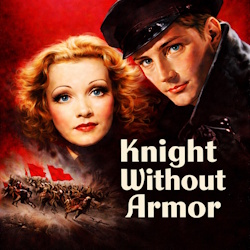
Director Alexander Korda saw opportunity with the 1933 novel “Knight Without Armour” by James Hilton. He believed its tale of romance, intrigue and espionage during the tumult of the Russian Revolution would translate well to the big screen. His London Film Productions company would finance the film and he would oversee production with a $350,000 budget. Jaques Feder was tasked with directing, and Lajos Bíró and Frances Marion were hired to write the screenplay. A fine cast was hired, including Marlene Dietrich as Alexandra Adraxine, Robert Donat as A. J. Fothergill/Peter Ouranov, Irene Vanbrugh as Duchess, Basil Gil as Axelstein, and John Clements as Poushkoff.
The film is set in Tsarist Russia circa 1913 preceding WWI and the tumult of the Russian Revolution of 1917. At the behest of the British government, agent A. J. Fothergill, who speaks Russian fluently, is sent to Russia for espionage, assuming the identity of Peter Ouranov so as to infiltrate a Bolshevik revolutionary cell led by Axelstein. A foiled assassination attempt of General Vladinov, Alexandra’s husband, falsely implicates Peter, who is sent with Axelstein to an internment camp in Siberia. The Bolsheviks seize power, from the interim Karensky government, the widowed Alexandra is arrested for being an aristocrat, and Peter and Axelstein are released to rejoin their revolutionary comrades. Peter is assigned to take Alexandra to trial, yet along the way the two fall in love. After several harrowing escapes, they manage to find safe passage out of Russia united in love. The film was praised for its lavish production and storytelling, but was nevertheless a commercial failure. It did not receive any Academy Award nominations.
Producer Korda, a Hungarian, selected a compatriot, 30-year old classical composer Miklós Rózsa, for the scoring assignment. Rózsa was mostly unfamiliar with film scoring at that point in his life – he had been introduced to film music in 1934 by his friend, the Swiss composer Arthur Honegger, but had no experience writing it until he moved to London in 1937. He was hired to score two films: Knight Without Armor, and another film, Thunder in the City, for another Hungarian filmmaker named Ákos Tolnay, and began by purchasing two books on film scoring and then watching many films at Gaumont Palace and Chelsea Classic theaters to glean as much knowledge about the art form as possible. He learned as much from films with bad scores as he did from those with good scores. Rózsa’s first directive was to write a song that Marlene Dietrich would sing. After listening to a hundred Russian gypsy songs, Rózsa decided that he would write one himself rather than interpolate one. Screenwriter Arthur Wimperis provided the lyrics, but Dietrich hated the song, which was later cut along with the scene.
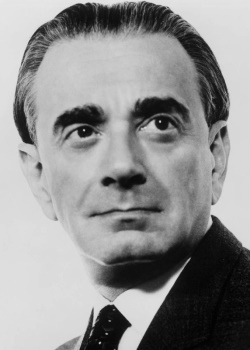 Director Feyder gave explicit instructions to Rózsa, insisting that the revolution demanded strong and violent music, not gentile politeness. He related; “This is a revolution. You can be sweepingly dramatic as you like, as symphonically passionate and tempestuous as possible, and when it comes to love scenes, you can be really poetic and warm”.
For his soundscape, Rózsa provided two primary themes. He understood that he needed to infuse the requisite Russian cultural sensibilities with ‘on-scene’ music, including; soldiers’ chorus, military marches, and fanfares. He decided to interpolate the Russian Revolutionary song ‘Yablochko’ (Little Apple) as his first primary theme. Although the song is vigorous, full of pride, and determination, Rózsa alters its expression to a significant spectrum of emotions. He also interpolated “God Save The Tsar!”, the national anthem of the Russian Empire under the Romanov Dynasty. For classical pieces, Rózsa used the waltz from “Swan Lake”, Op.20, No.2 by Pyotr Illyich Tchaikovsky to provide the elegance requisite of an imperial ball. For the other primary theme, he provided a classic Love Theme for Pyotr and Alexandra rendered as a sumptuous romance for strings romantico. The Siberian Motif speaks to the implacable cold and fierce winds of Siberia. It emotes as rising and falling discordant woodwind figures, which never resolve.
00:00 “Main Title” offers a bold score highlight in which Rózsa unleashes a dramatic musical narrative imbued with Russian flourishes. We open with Big Ben supported by its renowned bell chimes as London Film Productions Ltd displays. At 00:14 horns dramatico resound to support the flow of the opening credits, which are set against a silhouette of St. Petersburg skyline. At 00:55 stately quotes of “God Save The Tsar!”, join. At 01:22 we flow into a molto appassionato rendering of the Love Theme. At 01:40 we segue into the film proper with “Ascot 1913”, an unscored scene, as the cue title script displays. It reveals the British elite attending one of the world’s most prestigious horse racing venues. Later we see Alexandra, her father, and British agent A.J. Fothergil departing by train to the seaport to board a ship that will take them to Russia.
03:40 “The Encounter/The Ball” reveals Alexandra passing A.J. in the corridor. She catches his eye and Rózsa introduces their Love Theme tenderly with strings romantico. At 03:58 a royal invitation for Countess Alexandra Vladinov displays, supported by a regal quote of “God Save The Tsar!”. The anthem unfolds alla maestoso as we see the court herald announcing the arrival of many women dignitaries immaculately dressed in flowing white gowns, who curtsey to Tsar Nicholas II and Tsarina Alexandra. At 05:24 the waltz from Swan Lake enters to establish a pleasant ambiance. In an unscored scene A.J. is cleared by St. Peterburg port police to enter the country. Later however, in a meeting with a minister, his visa is revoked due to writings of his deemed subversive to the crown. He protests, but is ordered to leave the country within forty-eight hours. But instead of leaving, he accepts an offer by British Intelligence to engage in espionage by joining the revolutionary group lead by Axelstein. He is fluent in Russian, and is given new identity papers, assuming the identity of ‘Pyotyr Ouranov”
12:54 “Meeting” reveals revolutionaries meeting at a saloon to discuss their planned assassination of General Gregor Vladinov. Rózsa supports the saloon ambiance with a festive wordless choral rendering of the song “Yablochko” In an unscored scene, the next day as the General’s carriage crosses a bridge, a student named Alexi tosses a bomb, which explodes. The General and Alexandra are safe, but Alexi is shot, mortally wounded and staggers into Pyotyr’s apartment where he confesses and expires. 16:31 “Alexi Dies/Pyotyr Arrested” is marked by woodwinds lamentosi and strings doloroso. As we shift to the bomb-damaged carriage, the musical narrative becomes ominous, with Rózsa sowing a crescendo di tensione as Pyotr prepares to flee. It crests at 17:10 atop dire strings as he opens the apartment door and is arrested by two waiting policemen.
17:36 “Train To Siberia” reveals Pyotr and other revolutionaries boarding a train that will take them to imprisoned exile in Siberia. We see vistas of the snowbound Russian countryside as the train churns north east. Rózsa supports with a plodding rendering of the “Yablochko” song melody bore by woodwinds and horns tristi. In an unscored scene Colonel Adraxine and Alexandra are riding on a train. It stops unexpectedly and he receives a telegram, which makes him ecstatic – the Tsar has ordered a general mobilization. 19:07 “War” reveals Alexandra watching soldiers marching through the streets to war. Rózsa propels the scene with a rousing marcia militare. 19:28 “Siberia” reveals the desolate prison camp beset by the harsh and implacable Siberian winds. Rising and falling discordant woodwind figues evoke the cold. Inside a beleaguered “Yablochko” is borne by woodwinds with interplay of the Siberian Motif as the prisoners are ordered to rise and begin another day. 21:28 “New of War” reveals the guard advising the men that Russia, England and France are at war with Germany. Pyotr is stunned by the announcement and Rózsa supports with an intensifying accelerando of the Siberian Motif draped with harp glissandi. As they depart, the men are pleased at the news as they believe war will aide their revolution.
22:13 “Night” reveals the snowbound camp beset by the dreaded six-month night with Rózsa offering a bleak soundscape of desolation with a recurring three-note motif that speaks to the isolation and bitter cold. The men are stressed by the endless night and cooped up imprisonment and Rózsa speaks to this by ever shifting discordant woodwind figures, which never resolve. Hope however enters atop the “Yablochko” Theme as Axelstein informs Pyotyr that defeat of the imperial army is likely, which will precipitate their revolution. 24:10 “Vladinov Estate” reveals Alexandra at her country estate lounging outdoors and reading. Rózsa offers a pastorale borne by strings and woodwinds tranquilli. Inside the servants read a revolutionary pamphlet saying the revolution is at hand and that it is time to eliminate the bourgeoise and aristocrats. A danza felice by woodwinds animato support the servants responding to Alexandra’s ring for service by bringing her food and drink. As they join her outside, the pastorale resumes.
24:56 “Axelstein And Pyotyr Released” reveals the men liberated by the revolution and returning home by river boat. Woodwinds felice support the external shot of the ship with the Yablochko Theme. At 25:04 we segue into “Home Again!” atop a celebratory choral empowered rendering of the Yablochko Theme as the released prisoners disembark and are welcomed home by their fellow revolutionaries as heroes. Axelstein and Pyotr are hoisted up by the adoring crowd and carried away joyously, the music now buttressed by a marching band. Axelstein relates to Pyotr that he has been made Commissar, and that he in turn will make Pyotr his assistant, a turn of events Pyotr tries to process. As the parade marches through town the people sing the revolutionary Yablochko Anthem.
Alexandra wakes and rings several times for her servants, but no one responds. A rising panic grips her as she rings several more times and calls in succession for Olga, Paula, and Elizabeth. 20:02 “Alexandra Is Alone” reveals her running out onto the estate grounds calling for Elizabeth supported by a distressed musical narrative. A crescendo dramatico commences as she sees Martha washing clothes in the lake. She runs to her and calls her name, but Martha runs away. At 29:30 a dire marcia bellicoso supports the arrival of armed partisans, which elicits fear in Alexandra. Yet she summons courage and walks to meet them. After a tense pause, women reach out and grab her, dragging her away, empowered by the Yablochko Revolutionary Anthem. They enter the estate and vandalize it supported musically by choral empowered revolutionary fervor. Alexandra is locked in the library and paces nervously as she hears the destruction of her house with gunfire executions of staff that remained loyal to her. The locals want to execute Alexandra, but Axelstein forbids it citing orders from the Central Committee. He realizes his control is tenuous and orders Pyotr to take Alexandra by train to Petrograd.
33:32 “Second Encounter” reveals Pyotr entering the library where he finds a distraught Alexandra, whom he recalls from the train encounter. We see love in his eyes and Rózsa supports with a molto romantico string borne rendering of the Love Theme. She fears her execution, but he assures her she will not be shot, but must go with him to Petrograd. He tells her to calm herself while he retrieves clothes that will make her less conspicuous. They sneak out and escape by carriage. He is chivalrous and drapes her with his coat when he sees that she is cold. At the train station she begins to let down her guard as she sees he is descent man. 40:35 “No Train” reveals the station master announcing boarding for the train to Petrograd, yet Pyotr confronts him, as he sees no train. The station master says, of course there is no train to see as any train that is seen is blown up. Rózsa supports his strange affect with a surreal misterioso of madness. Pyotr realizes their dire circumstances as he follows the man inside and watches him tap out a telegram message even though the wires on the wall have clearly been cut. Pyotr returns to Alexandra and coaxes her to sleep as they will be in for an extended wait.
43:40 “Prospice” offers a wondrous score highlight, which offers a sublime confluence of poetic verse and music. Alexandra cannot sleep and their conversation moves to English poets, which Pyotr says he admires. He recites to her a poem from Browning relating to death, joined by a tender rendering of the Love Theme, which slowly blossoms as his verse becomes more fervent. She commends the poem’s optimism, and offers a Russian poem by Alexander Pushkin, which she says is hopeless and pessimistic like us Russians.
45:11 “Fight” reveals Pyotr seeing men moving outside. He hands Alexadra his extra pistol and prepares his pistol for the attack. The woodwind borne Yablochko Theme belies the mounting danger. A crescendo of tension swells at 45:34 as the men storm in. Rózsa unleashes a raging tempest of violence, which ends with finality as Alexandra shoots and kills one of the men. The other escapes as Pyotr comes to comfort her, as she is traumatized. 46:55 “Train 617” reveals the mad station master announcing the arrival of train 617 as throngs of people arrive at the station. As he enters the waiting lounge, trilling woodwinds empower a surreal dissonant and comic musical narrative, which speaks to his madness as he escorts Pyotr and Alexandra out. Outside Pyotr discovers that the people are fleeing the approaching White (Loyalist) army. 48:05 “Seeking The White Army” reveals Pyotr and Alaxandra walking against the crowds towards the advancing White Army, which would ensure both their safety. Rózsa propels their desperate walk with a restless and dramatic musical narrative, which slowly builds tension. At 48:47 they arrive at the Cossack camp, supported by a men’s chorus singing a patriotic song. As he coaches her to declare her identity, and her escape from the reds, an aching Love Theme full of sadness swells as we see both love, desire, and gratitude in her eyes as they part ways.
49:55 “Alexandra Finds Refuge” offers fanfare reale as we see the Romanov Imperial flag flying over the town’s government building. As two Cossacks escort her to the commander, men dance in the streets to festive Russian folk songs. Inside she defies the captain in charge, demands to see the commanding officer, and is rescued by a general who was a friend of her late husband. He secures her a bath and formal gowns so she may dine with the officers tonight. 54:22 “Dinner” reveals Alexandra in a resplendent gown descending from her room as a men’s chorus sing a festive Russian folk song with piano accompaniment. She enters the dining room, captures the attention of the men, who greet her and resume their singing. She is grateful, happy to hear music again, and thankful to be dining with friends. Outside, eleven convicted supporters of the Reds stand against a wall and are mowed down by a machine gun. Alexandra is unsettled by the violence and we segue at 56:49 into “Pyotr’s Escape” where we see him struggling at night through a fog shrouded forest. The Yablochko Theme carries him to some dead Red soldiers, and darkens as he switches clothes. At 57:20 an energetic trumpet propelled martial musical narrative propels the forest march of Red soldiers. Pyotr successfully infiltrates their army, which struggles to move its artillery along the dirt path.
58:12 “The Reds Attack” reveal Alexandra shocked as an artillery barrage commences against the White held town. Rózsa unleashes a surging tempest as the alarm is sounded and the White forces organize a defense. At 58:45 horns di vittoria resound and unleash the Yablochko Anthem as we see the Red flag hoisted above the government building, and the Imperial flag trampled on. Russian folk music supports White convicts standing against a wall, who are then mowed down by a machine gun. In town Pyotr wanders about as the Reds celebrate their victory with festive Russian folk songs. He then witnesses Alexandra being taken to the tribunal. Their eyes lock, but he is powerless to save her. 1:03:18 “The Trial” reveals the Commissar ordering the countess be brought before him. As the soldiers go to retrieve her, an accordion empowers a festive choral sung Russian folk song. Pyotr escorts Alexandra, dressed as a male Cossack unobtrusively through the celebrating men. They escape, but the Commissar is outraged that a false Commissar’s order released them. He angrily orders a pursuit by one hundred men.
1:04:59 “The Pursuit” reveals the Red brigade hunting down Pyotr and Alexandra. A marcia bellicoso propels the Reds, while a foreboding musical narrative carries Pyotr and Alexandra’s escape. At 1:05:30 as they rest, the Love Theme joins as Alexandra says that she knows this forest, as it is hers. They again flee as they hear repeated whistle blasts from the pursing Reds. He covers her in leaves and manages to fool a soldier, who bonds with him after he shares a flask of liquor he was carrying. Later, Pyotr manages to slip away and he returns to retrieve Alexandra. 1:10:04 “Pyotr Finds Alexandra” reveals Alexandra again being rescued, which Rózsa supports with their string borne Love Theme blossoming as she runs to his kissing embrace. 1:10:35 “A New Day” offers a beautiful score highlight. It reveals our lovers waking, with Alexandra asking Pyotr, when he fell in love with her. He answers, the first time he saw her on the train. Rózsa supports with an extended exposition of a beautiful, idyllic pastorale, which entwines with the Love Theme as they embrace and kiss. Artillery fire is heard in the distance, which relieves Pyotr. He tells her that renewed fighting will mean recalling the search party, which will allow them to escape the forest.
1:11:52 “A New Beginning” reveals Alexandra swimming in a small lake supported by the tranquil beauty of the pastorale. Much to her delight, Pyotr comes back with a cache of stolen clothes, which will allow them to assume new identities. The Love Theme joins as he tosses the new clothes to her happy arms, and they dress. After they are dressed, he reveals food and brandy, which they can live off for days. Afterwards, he says they must catch a train that will take them south to safety in the Kazan. They walk into a refugee camp and are advised by the men that they will ensure the train stops so they can al board. As women lay themselves atop the tracks, the crowd begins singing a Russian hymn of salvation. The train slows and is swarmed by the desperate crowd. The people in the already packed cars bar new passengers, but Pyotr manages to convince the people to take him and his sister. At 1:15:46 mixed choir begin to sing paean of joy as the loaded train departs with Alexandra asleep in Pyotr’s arms.
In an unscored scene, they arrive in Kazan and disembark, but Red troops deny entry into the city until they pass inspection. At a checkpoint the guards examine everyone’s hands. Pyotr is allowed to pass, however Alexandra fails to pass and Pyotr abandons freedom to join her. At the inspection desk Commissar Poushkoff recognizes Alexandra, but permits her passage in her brother’s (Pyotr) care, but after she is delivered to his brother in Samara, Pyotr must join the army as his electrician skills are needed. The other commissar however declares that she is the countess Vladinov, and produces a photo. Poushkoff resolves the dispute by fetching a gardener of the Vladinov estate to verify her identity. Tension mounts as they hear firing squads executing White sympathizers. The gardener, who was coached by Poushkoff, lies and asserts that he does not know this woman. Poushkoff, over the objections of the other commissar declares that he will personally escort the couple to Samara. They board the train and turn in. We see Alexandra extend her beckoning hand to Pyotr, who tenderly kisses it, which Poushkoff witnesses, now realizing that they are lovers, not siblings.
In another unscored scene the next day, Poushkoff brings her tea and we see the three open up and bond, as everyone drops their deceptions. Poushkoff admits that he did indeed save her because he is attracted to her. He offers to share his stale bread and cheese, and they reciprocate by sharing their tins of food, and bottle of brandy. Later we see the brandy bottle nearly empty and Poushkoff voices concern that the countess may be recognized. She moves Poushkoff saying that she is happy she met him and even if she should die tomorrow, she is thankful for his assistance. He breaks down kisses her hand and weeps saying he too will probably meet his end tomorrow. They arrive at nightfall in a small town and disembark to stretch. Poushkoff advises that after a short walk to the river, they could bribe a bargeman to take them to safety down river. Poushkoff departs to update their travel papers and they fret that if they take their chances and escape, Poushkoff will pay. A gunshot makes the matter moot as they discover Poushkoff has shot himself in the head and died so they might escape. Pyotr and Alexandra use the crowd confusion caused by the suicide to slip away unnoticed.
1:33:45 “The Escape” reveals the train departing, which Rózsa propels with a mechanized locomotive motif. We shift to Pyotr and Alexandra making their way to the river as Rózsa sow a swelling musical narrative of tension and unease. She collapses from exhaustion, and Pyotr carries her to a barge, joined at 1:34:28 by strings tenero emoting the Love Theme. The bargeman and his family agree to take them in and transport them down river as Alexandra, who is sick and delirious falls asleep. The next day they dock at a small town on the Russian border and Pyotr tells her that he will go ashore to retrieve a doctor. However, he is arrested by White soldiers for not having papers. An inspection team from the Red Cross boards the barge, and the physician orders Alexandra taken to hospital. Meanwhile, Pyotr is imprisoned, and awaits certain execution by the Whites.
1:38:48 “Executions” offers a patriotic Russian anthem by men’s chorus as the first round of Reds are lined up, and then mowed down by machine gun fire. Pyotr is called for the next batch and as they march to their doom, the patriotic anthem reprises. Yet Pyotr will not surrender to this fate, punches the captain of the guards and runs towards a Red Cross train as guards shoot, winging him in the arm. He takes refuge in a trackside hospital as we see Alexandra lying on a bed in a Red Cross train car. As a British doctor treats his arm wound, Pyotr pleads his story of being a British citizen on an espionage mission. 1:41:30 “Pyotr and Alexandra Reunited” reveals his discovery from a nurse that the Countess Alexandra Vladinov is departing on the Red Cross train. He bolts, empowered by a molto appassionato rendering of the Love Theme, boards the outside of the train, and calls out to Alexandra. She opens her window calls to him, and our lovers are at last reunited as the train takes them to safety. 1:42:16 “The End” closes the film with a grandiose horn empowered flourish.
Although this was Rózsa’s second film to be released, he considered it his first as the actual first, Thunder in the City, was small and obscure. In 1937 Rózsa was a classical music composer with no experience in scoring films. Yet he was determined to succeed and so assiduously studied and researched the art form learning as much from badly scored films as from well scored films. We see with this film his talent, insight, and romanticism, which would later define his scoring acumen and elevate him to tier one status for Hollywood composers. This film at its core was a love story set against the turbulent backdrop of the Russian revolution. His Love Theme beautifully spoke to the romance of Pyotr and Alexandra, bonding them too us, humanizing the film’s narrative, and offering a well-needed respite from the on-screen brutality and violence. The utilization of the Yablochko Song as a primary theme infused the film with the requisite Russian cultural identity, and was perfectly attuned to the fervor and grievance of the Red revolutionaries. Juxtaposed was the Tsarist anthem “God Save The Tsar!”, royal fanfares, military marches and patriotic songs of the tsarist White loyalists. The Siberian Motif, which spoke to the implacable cold and fierce winds of Siberia was well conceived, emoting as rising and falling discordant woodwind figures, which never resolve – like the six-month Siberian winter. Although this film for all intents and purposes launched Miklós Rózsa’s career, subsequent Korda films such as The Four Feathers and The Thief of Bagdad would be impactful and serve to firmly establish him in upper echelon of the Hollywood film industry. Regretfully there is no bona fide commercial release of this score – just thematic excerpts on a handful of compilations – so I recommend hearing it in film context as I do not consider it likely that a new recording will occur.
For those of you unfamiliar with the score, I have embedded a YouTube link to a magnificent nine-minute suite; https://www.youtube.com/watch?v=onOG1frSrNs
Track Listing:
- NOT AVAILABLE
Music composed and conducted by Miklós Rózsa. Orchestrations by Miklós Rózsa. Recorded and mixed by XXXX. Score produced by Miklós Rózsa and Muir Mathieson.

Shop at the Movie Music UK Store

Member of the

 MOVIE MUSIC UK