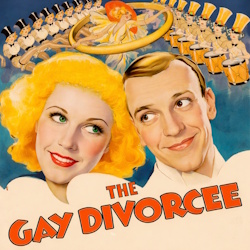
THE GAY DIVORCEE – Kenneth S. Webb, Samuel Hoffenstein
 GREATEST SCORES OF THE TWENTIETH CENTURY
Original Review by Craig Lysy
The 1933 film Flying Down To Rio starring Fred Astaire and Ginger Rogers was a huge commercial success for RKO Pictures, earning the studio a profit of $1.08 million. Pandro S. Berman, the Head of Production at RKO, decided to strike again while the iron was hot with another pairing of the duo. He chose to adapt the very successful 1932 Broadway stage musical The Gay Divorce by Dwight Taylor. He purchased the film rights but was forced to change the film title by the Hays Office censors who determined; “A divorcee might possibly be happy, but it was felt that the institution of divorce itself could never be”. Berman would manage production with a modest $520,000 budget, Mark Sandrich was tasked with directing, and George Marion Jr. and Dorothy Yost would write the screenplay. For the cast, Fred Astaire would reprise his Broadway stage role as Guy Holden, joined by Ginger Rogers as Mimi.
The story reveals that Mimi Glossop is seeking a divorce from her estranged husband, geologist Cyril Glossop. Her aunt Hortense suggests she hire her lawyer friend, Egbert Fitzgerald. Fitzgerald turns out to be a bumbling incompetent whose scheme to stage adultery is mismanaged. The one silver lining is Mimi meets Guy Holden, a dancer, and falls in love, escaping to the hotel together to dance the night away. Eventually all is sorted out when Cyril shows up and asks for a divorce, admitting to adultery. The film was another huge commercial success, earning a profit of $1.28 million. Critical reception was favorable, and the film received five Academy Award nominations, including Best Picture, Best Art Direction, Best Sound Recording, and Best Film score, and winning one for Best Original Song.
 Studio executive and producer Pandro S. Berman brought in director, screenwriter and composer Kenneth Webb and screenwriter and composer Samuel Hoffenstein to score the film. A creative decision was made to excise the Broadway songs of Cole Porter with the exception of “Night and Day”, and provide new songs. Four songs were eventually chosen that would support dancers Fred Astaire and Ginger Rogers: “Don’t Let It Bother You” by Mack Gordon and Harry Revel, “A Needle In a Haystack” by Con Conrad and Herb Magidson, “Let’s K-nock K-nees” by Gordon and Revel, and “The Continental” by Conrad and Magidson, the latter of which won the Oscar for Best Song.
Webb had directing experience and understood that the Astaire and Rogers song and dance numbers were the film’s main draw, which needed to be showcased, and that their task as composers was to provide a cogent musical narrative that would support film narrative pacing and unity. To that end, they utilized the song melodies from three of the songs; “A Needle In a Haystack” for efforts by Guy to woo Mimi, “Let’s K-nock K-nees” for festive scenes, and” The Continental” to showcase the film’s grand choreographed dance scenes.
After the RKO Pictures logo, music enters with “The Continental” song melody rendered grandisimo with bravado fanfare at 00:26 in “Main Title”. The composer team provides a parade of song melodies, which perfectly set the tone of the film. The film title displays in black font against a gray dance stage, which includes three silhouettes of Astaire and Rogers. At 00:39 we flow atop strings romantico offering the “Night and Day” song melody. At 00:56 a sprightly “Don’t Let it Bother You” song melody joins, and at 01:16 a passionate rendering of “The Continental” song melody takes the stage. At 01:52 an accelerando takes us into the film proper supported by French can-can music that supports a montage of French theaters and shows. 02:15 “Don’t Let It Bother You” reveals a dozen women standing in the inner circle of a rotating table with the fingers used to be the legs of little dancing dolls as the happy go lucky song is sung.
At 02:55 we shift to a playful danza comica rendering of the song melody as the women finger dance their puppets. At 3:19 we shift to a big band rendering of the song melody as the camera takes us into the nightclub where Guy adroitly does his own finger dance rendition with a doll at his table, while companion Egbert fumbles away with his version. When the waiter brings the bill, both men realize that they left their wallets in their other suits on the ship. To extricate themselves, Egbert seeks to convince the proprietor that his friend is the legendary dancer, Guy Holden. Guy resists, but when faced with washing dishes, agrees and takes the dance stage. 06:59 “Guy Dances” opens with a bugle militare, which launches an energetic big band rendering of the “Don’t Let It Bother You” song melody where we are dazzled by Astaire’s virtuoso dancing. At 7:42 the music ends and Guy shifts to virtuoso tap dancing. At 8:09 the big band rendition resumes as we see the proprietor smile and tear up the bill.
08:22 “Departure” reveals their ship departing supported by an enthusiastic and festive big band melody, joined by a quote of “Rule Britannia” for their arrival in England. In a mishap, Guy accidentally tears Mimi’s dress trying to extricate her from luggage that her aunt closed on her. He is smitten with her; she could care less and departs with his coat draped over her for modesty. 15:16 “Delivery” reveals a hotel porter delivering the coat Guy lent Mimi after he tore her skirt. The porter whistles the “Don’t Let It Bother You” song melody. Egbert answers the door and joins in a whistling duet as he signs the receipt. 17:28 “A Needle In a Haystack” offers a delightful score highlight. Egbert tweaks Guy who is frustrated that he does not know the woman’s name (Mimi) or address. A prelude by strings romantico with a harp glissando usher in Guy singing the aspirational song, which flows with strolling gentility.As he dresses, the song gains energy and determination as it shifts to a horn driven big band articulation.
 At 2:05 a sassy saxophone initiates Guy performing virtuoso, acrobatic tap dancing. Now dressed, he departs in search of his gal. 21:32 “Gut Searches For Mimi” reveals a multi-day montage of Guy walking the streets of London, searching fruitlessly for his gal carried by a confident rendering of the “A Needle In a Haystack” song melody. Comedic accents support his embarrassment when he finds the wrong woman. At 22:01 the music is taken up by a big band and intensifies as the montage begins to display the smiling faces of all the women he has mistaken for Mimi. While driving and scanning the sidewalk, the music sours at 22:26 as he rear-ends Mimi’s car. She is displeased, but he is ecstatic that he found her. The music shifts to her perspective, one of dissonant dread as she drives off and he pursues. As the car chase takes them from London streets to the countryside, the pursuit is propelled by a classic rapid chase motif. He drives alongside her, and asks her to stop so they may talk. She’ll have none of it and hits the accelerator at 23:29 and speeds off propelled by a dissonant and frantic accelerando. She loses him and at 23:53 a decelerando brings him to a stop at a cutout. She passes, is stopped by a ‘Road Closed’ sign and he pulls behind her to block her escape. Guy’s charm and charisma prove irresistible and she gradually warms to him as he pulls out a basket with a portable bar and offers her a drink first, and then marriage! He relates he is smitten and has been looking for her for two weeks. She refuses to give him her number, but grudgingly accepts his. She departs and finally gives him her name – Mimi, which makes him very happy.
In an unscored scene Mimi is seeking a divorce from her estranged husband, geologist Cyril Glossop. He aunt Hortense suggest she hire her lawyer friend, and former paramour Egbert Fitzgerald – Guy’s friend. Fitzgerald turns out to be a bumbling incompetent whose scheme to stage adultery is mismanaged. 35:13 “Let’s K-nock K-nees” offers a wonderful song highlight with joie de vivre. It reveals Egbert convincing Guy to join him at the seaside resort town of Brightbourne for gaiety and girls. As the camera pans the hotel interior big band energy offers a vibrant musical narrative. At 35:31 a woman (Betty Grable) begins to serenade Egbert with the happy go lucky and romantic ballad “Let’s K-nock K-nees”;
At 37:33 the singing stops and six-women line dance with the song’s melody shifting to a danza giocosa to support. Three men join on a different stage as well as two couples on a third stage. We shift to and fro among the three groups of dancers with the ebullient, playful, and at times silly song melody supporting. At 40:03 the song pauses as Guy arrives, but then resumes orchestrally returning to its original happy go lucky version. The melody is dialed down to play under Egbert and Guy’s dialogue as the stroll along the hotel’s seaside boardwalk. As Guy departs Egbert offers parting words; “Chance is the fool’s name for fate”. Later on in an unscored scene, Egbert waits on the patio for the arrival of Mimi, his client and her aunt Hortense. He contrives to stage Mimi being caught with another man so as to acquire a divorce due to adultery. Mimi however resists, but acquiesces to Hortense’s prodding. They depart and Egbert greets the hired paramour, Rodolfo Tonetti, preps him on the plan, and provides him the password so Mimi may recognize him – “Chance is the fool’s name for fate”.
49:06 “Night and Day” offers one of the score’s finest moments! It reveals the two dining at the hotel supported by an upbeat instrumental rendering of the “Don’t Let It Bother You” song melody. At 50:07 the music shifts to the “A Needle In a Haystack” song melody as Mimi sees Guy on the balcony. She runs away and he pursues supported by sliding strings. At 50:33 he finds her at the seaside cabana. The “Night and Day” song melody unfolds as a romance for strings as he again tries to woo her. At 51:53 he begs her not to go and begins singing Cole Porter’s classic romantic ballad, so full of longing.
The music gains passion and when she tries to leave at 53:28 the music transforms to a danza romantico as she surrenders to him at last and they begin to dance. The confluence of dance and music is just wondrous as we watch perhaps the greatest dancing duo in cinematic history. Afterwards they discover that they both know Egbert and the romantic moment is shattered when Guy relates “Chance is the fool’s name for fate”, which leads Mimi to believe his affections are merely a ruse, part of Egbert’s adultery plan. She leaves and instructs him to be at her room 216 at midnight, which leaves him incredulous. In an unscored scene, it is midnight Mimi and advises Hortense that she is very disappointed in him, and plans on letting him have it. A very dapper Guy arrives in a tux and top hat as Hortense is departing. Inside she keeps him at arm’s length. He is confused and unaware that she believes he was hired by Egbert to facilitate the adultery setup. In the lobby, Rodolfo springs his line on one woman after another, including Hortense to no avail. She visits Mimi, which causes Guy to exit to the balcony. She alerts Mimi who now frets that Guy may not be the setup man after all. She joins Guy on the balcony, turns on her feminine charm, and tries to discover if he is genuine or Egbert’s hired paramour. When he finally discloses that he is a dancer, she is relieved, overwhelmed, and very happy.
1:08:26 “Egbert Realizes His Error” reveals Egbert finding a flummoxed Rodolfo on the dance floor. He complains he cannot find the woman. Egbert tells him that she is in room 216, but then realizes he forgot to hire a private detective to uncover the ‘adultery’. He rushes back to London with Hortense to hire one as Rodolfo heads to her room. A dance rendering of the “Don’t Let It Bother You” song melody supports the scene. The music is sustained as Rodolfo enters the room unseen by Guy and Mimi on the balcony. Guy discovers him and Mimi is forced to come clean with the truth. Guy now understands Egbert’s adultery ruse and insists on staying with her and Rudolfo. In 1:15:32 “The Continental” we come to an immortal cinematic moment where we bear witness to 17 minutes of a sublime confluence of singing, music, choreography, and virtuoso dancing by the greatest dancing duo in Hollywood history. It reveals Mimi and Guy looking at couples dancing below on the dance floor supported by the romantic song’s melody, which flows with joie de vivre. He likes the music and she says it is called “The Continental”. He asks if she knows the words, and at 1:16:31 she begins singing for him.
At 1:18:12 “Guy and Mimi Dance #1” Guy takes her into his arms and the begin to dance to the song’s melody. They decide to join the dancers below. He fashions a cutout of a couple, places it on a phonograph turntable and starts it rotating with a lamp behind, which creates a silhouette of them dancing on the wall to fool Rodolpho who is playing solitaire in the bedroom. At 1:20:37 they take to the dancefloor with a more vibrant rendering of the song’s romantic melody. Their virtuoso dancing wows the crowd, which yields the dance floor to them to watch in amazement. They conclude the dance, and receive ebullient applause from the crowd. At 1:23:02 they flee as 30 couples flood onto the stage and form five lines, alternating three lines with black tuxes and dresses and two lines with white tuxes and dresses. They all begin dancing in unison to a vibrant rendering of “The Continental” song melody, achieving a wondrous confluence of choreography and music. At 1:24:59 Rodolfo goes to the balcony with his concertina and begins singing the song’s lyrics. Couples dance with choreography involving rotating and conventional doors as props. On the main dance floor, mixed black and white dressed couples twirl with joy, soon shifting to lines rotating like clock hands, and then back to line synchronized dancing involving lifts. At 1:27:35 Hortense joins by singing the song form the balcony. Below the dancing becomes acrobatic with a series of lifts and throws. At 1:29:24 she finishes singing and the song melody and stage dancing resume energetically with increasing excitement and dynamism.
1:31:07 “Guy and Mimi Dance #2” reveals Rodolfo returning to the room and discovering the ruse, while below Guy and Mimi resume virtuoso dancing on the stairs with a more sensual rendering of “The Continental” song melody as Rodolfo watches from the balcony. At 1:31:31 the music swells with passion and energy as Guy and Mimi dance rapidly. We then shift to a danza romantico as they flow in circles down the stairs to the dance floor. Now back on the dance floor, the music resumes its festive and ebullient energy, culminating with a running exit from Guy and Mimi! This scene had no rival as one of the longest song and choreographed dance scenes in cinematic history until Gene Kelly and Leslie Caron impressed with the “An American in Paris Ballet” from An American in Paris in 1951.
In an unscored scene, the next day Guy wakes up in his tux in a chair with a rope linking his leg and Rodolfo’s leg. He informs Rodolfo he bound them as he did not trust him. Breakfast arrives and they are joined by Mimi. Egbert and Hortense arrive with news they have brought Mimi’s husband. Guy is told to hide in the bedroom so they can implement their plan, and Egbert and Hortense leave. Cyril arrives and finds Mimi and Rodolpho in a staged amorous pose. Cyril scoffs, saying he does not believe their contrivance. She calls Guy in, they kiss and Cyril chooses to forgive her, opposing any talk of divorce. The waiter then enters, recognizes Cyril as Dr. Brown, commending him on his beautiful wife, Mrs. Brown. With his adultery exposed, Cyril departs in a huff, as Egbert and Hortense return and announce their engagement! They all agree to return to London and at 1:43:15 “Guy and Mimi Dance #3”, a festive prelude launches “The Continental” song melody as Guy tips the four porters taking their luggage, and then takes Mimi into his arms for a joyous danza romantico around her hotel room, including precision dancing on her furniture. We culminate playfully as he dons his top hat and they dance out of her room to a wonderful life together.
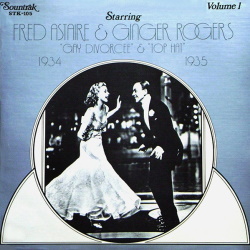 Composers Kenneth Webb and Samuel Hoffenstein understood that the studio made the film to showcase their two dancing stars Fred Astaire and Ginger Rogers. They needed songs to support the film’s romantic narrative, and to provide the energy to drive their dances. The choice to use the original Broadway song “Night and Day by Cole Porter as well as four new songs by the teams of Con Conrad and Herb Magidson, and Mack Gordon and Harry Revel was spot on. The songs perfectly supported the staged entertainment, dancing and aspirational romanticism of the film’s narrative. The choice to utilize the song melodies in the score to link the various song and dance numbers was also well-conceived and executed. The film’s premier and unsurpassed 17-minute scene, which offered magnificent staged choreography and virtuoso dancing by Astaire and Rogers achieved a wondrous and exciting confluence with the melody of the song, “The Continental”. Folks, this is a fun and entertaining film with song and dance numbers for the ages. Musicals just do not get any better than this. Regretfully, you will have to view the film to appreciate it as there is no digital commercial release of the film’s music; the only music available is on either of a pair of vinyl LPs released in the 1970s, coupled with excerpts from the 1935 film Top Hat or the 1936 film Swing Time.
For those of you unfamiliar with the score, I have embedded a YouTube link to “The Continental” dance scene: https://www.youtube.com/watch?v=yz7_e8ClwzA
Track Listing:
- Overture/Don’t Let It Bother You (written by Mack Gordon and Harry Revel)
- A Needle In a Haystack (written by Con Conrad and Herb Magidson, performed by Fred Astaire)
- Let’s K-Nock K-Nees (written by Mack Gordon and Harry Revel, performed by Betty Grable and Edward Everett Horton)
- Night and Day (written by Cole Porter, performed by Fred Astaire)
- The Continental (Finale) (written by Con Conrad and Herb Magidson, performed by Ginger Rogers, Erik Rhodes, Lillian Miles)
Running Time: XX minutes XX seconds
Soundtrak STK-105 (1934/1976)
EMI Records EMTC-101 (1934/1974)
Music composed by Kenneth S. Webb and Samuel Hoffenstein. Conducted by XXXX. Orchestrations by Maurice De Packh, Howard Jackson, Bernhard Kaun, Gene Rose, Eddie Sharpe and Clifford Vaughan. Recorded and mixed by Murray Spivack and P. J. Faulkner Jr.. Score produced by Max Steiner.

Shop at the Movie Music UK Store

Member of the

 MOVIE MUSIC UK