KNIGHTS OF THE ROUND TABLE – Miklós Rózsa
 GREATEST SCORES OF THE TWENTIETH CENTURY
Original Review by Craig Lysy
The enormous commercial success of Ivanhoe in 1952 served as a catalyst for invigorating the swashbuckling costume epic. MGM executive Don Schary decided to proceed with his studio’s first film in Cinemascope with an epic retelling of the story of King Arthur and the Knights of the Round Table. He assigned production to Pandro S. Berman with a $2.6 million budget. Talbot Jennings, Jan Lustig and Noel Langley were hired to write the screenplay, adapting the 1485 tale “Le Morte d’Arthur” by Sir Thomas Malory, and Alfred Lord Tennyson’s 1859 work “Idylls of the King,” and Richard Thorpe was tasked with directing. A stellar cast was assembled, which included Robert Taylor as Sir Lancelot, Ava Gardner as Guinevere, Mel Ferrer as King Arthur, Anne Crawford as Morgan Le Fay, Stanley Baker as Mordred, Felix Aylmer as Merlin, Maureen Swanson as Elaine, Gabriel Woolfe as Sir Percival, and Robert Urquhart as Sir Gawain.
The tale is set in Great Britain during the first half of the sixth century. It is told in four chapters, with Chapter I revealing a contest for kingship between Arthur and Mordred where Arthur succeeds in pulling the sword Excalibur from a rock, which earns him the mandate of Heaven. Yet Mordred accuses Merlin of witchcraft and the two contenders make their case to the Council of Kings. In Chapter II Lancelot joins Arthur and wage battle against Mordred, whom is decisively defeated. Arthur is crowned king, and magnanimously grants clemency to all, even Mordred. He establishes the knights of the round table, which includes Lancelot who rescues and falls in love with Guinevere, at first unaware that she is Arthur’s fiancé. In Chapter III Lancelot and Guinevere are tried for their illicit affair and found guilty. Arthur banishes Lancelot from England and Guinevere is placed in confinement. Chapter IV reveals Mordred again waging a civil war, which results in Arthur’s death and last command to Lancelot who came to his aid; toss Excalibur into the lake, destroy Mordred and pass on his forgiveness to Guinevere. Lancelot accomplishes all three tasks and takes solace in Sir Percival’s vision of the Holy Grail, and revelation that Lancelot’s son Galahad will ascend to become a great knight. The film was a commercial success for MGM, earning a profit of $1.641 million. Critics for the most part praised the film’s production values and storytelling. It went on to earn two Academy Award nominations for Best Art Direction and Best Sound Recording.
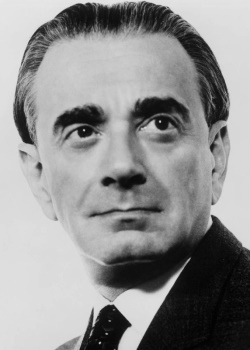 Miklós Rózsa initially declined the offer to score the film as he was fatigued having recently finished scoring three films and composing his Violin Concerto. Also, the six-week deadline for a film requiring some eighty minutes of score seemed daunting. However, when studio executive Eddie Mannix intervened and informed Rózsa that the film would not flourish without his music, he relented. Rózsa understood that there was little understanding of the music of the 6th century, and with little time for research, Rózsa tapped into his extensive notes for “Ivanhoe”, recalling the use of Gregorian modes for religious music.
Rózsa’s soundscape is supported by ten themes. Lancelot is the film’s hero and he is supported by two primary themes. His primary theme exudes pride, confidence and masculine power and is by horns eroica and strings forti. The theme is malleable becoming formidable during battle, and martial when rendered as a march. Rózsa also offers fanfare declarations, which speak of his stature as Arthur’s first knight. He second theme is utilized for his chivalrous deeds, when he acts in accordance to the virtues espoused by the Knights of the Round Table. It is also borne by horns and strings, but exudes nobility, dignity and emotes without martial aggression. King Arthur’s Theme speaks to his dignity, and nobility as an aspirant to the throne, and later as king. Unabashed strings nobile voice forthrightly his dignity and strength, yet woven subtly within the notes are strains of tragedy. Like Lancelot’s Theme, it transforms into a martial construct during battle. The Knights of the Round Table Theme speaks to the chivalrous knights of Camelot, which guarded the realm and ensured peace and justice. It offers a proud, confident march, which exudes strength and noble purpose. During battle, it transforms into a formidable marcia militare.
Each of the women Lancelot loves have themes, which serve not just for their identities, but also as love themes. Undercurrents of sadness flow through both as Guinevere’s love cannot be consummated, while Lancelot’s love for Elaine arises from duty, not passion, as his heart is held captive by Guinevere. Guinevere’s Theme is borne by sumptuous strings romantico and is overtly romantic and passionate, at times achieving a rapturous blossoming. Elaine’s Theme offers a pastorale, a pure and idealized love, which emotes from her perspective. Solo oboe delicato and kindred woodwinds with harp adornment voice a tender and loving musical narrative, which never achieve the depth or passion of Guinevere’s Theme. Percival’s Theme supports this young Knight Errant aspirant who is on a quest for the Holy Grail. There is purity, humility and nobility to be found in his theme, which is borne by clarinet tranquillo and warm strings gentile. The Holy Grail Theme supports the long-sought cup of the Last Supper. Only Percival who is innocent pure of heart is able to see it as a vision from Heaven. It offers an elusive, ethereal quality borne by shimmering refulgent strings and shifting mystical chords religioso. For our villain Mordred we have a truly malignant and menacing theme borne by muted horns sinistri and string melevoli. A secondary theme, which is lurking, and also filled with menace and sinister purpose is associated with his henchmen, and his fiancé Morgan and her servant spy. Lastly, Róza composed a number of source music dances and set pieces, as well as interpolating traditional folk music and songs to infuse his soundscape with the requisite Medieval sensibilities.
“Prelude” reveals the display of the MGM Studio and cinemascope logos empowered by powerful ascending declarations by horns maestoso. At 0:12 the film title displays followed by the flow of the opening credits, propelled by the marcia nobile of the Knights of the Round Table Theme which exudes confidence, strength and chivalrous purpose. At 1:07 we enter the film proper atop dire strings of desolation and we see the land ravaged by constant war as narration informs us of warlords fighting for supremacy, which followed the withdrawal of Roman legions a century earlier. At 1:17 a reserved, and dignified rendering King Arthur’s Theme supports narration that speaks of the rise of a new power that embraced courtesy, humanity and noble chivalry, as we see Arthur, Merlin and two knights riding past burnt ruins. At 1:58 they come upon the sight of Arthur’s half-sister Morgan Le Fay, and her consort, Lord Mordred as a herald declares her the rightful Queen of England and Lord Mordred her trusted knight. Rózsa supports darkly with Mordred’s Theme borne by agitated strings of menace buttressed by muted horns sinistri. Merlin counters by announcing Arthur Pendragon, Duke of Gwent. At 2:07 Arthur dismounts and joins Morgan and Mordred supported by his theme. They each assert their claim to the throne and Merlin asks that they follow him so a decision of who shall be king may be settled. At 2:25 we segue into “Excalibur” atop a foreboding Arthur’s Theme. At 2:38 regal horns maestoso resound with Arthur’s fanfare, an allusion to the outcome, as Merlin reveals the sword Excalibur firmly lodged in an anvil. Merlin reads the inscription; “I am the sword Excalibur. And who so pullet me from this anvil, is the rightwise-born king of all England”. As Mordred struggles to pull the sword, Arthur’s Theme supports on muted low register horns, again portending the true king. At 3:15 Arthur’s Theme voices anger as Mordred fails and angrily steps aside. At 3:27 the music swells and resounds with grand declarations of Arthur’s Theme as he pulls Excalibur from the anvil.
“King Of England” reveals Mordred enraged, declaring witchcraft is at work here, and refusing to accept the outcome. Merlin states that the dispute will be settled by a council of lords at the Ring of Stones. Dire horns support Mordred’s fury and departure. Arthur’s Theme rises up as he declares himself King of England, only to be rebuked by Merlin who says that he must first prove this by deeds, not words. His theme assumes a humbler iteration as he obeys Merlin’s commend to place Excalibur back in the anvil. We have an intervening cue, “Source Music Suite” (5:10 – 5:42), which offers “The Knight’s Song” sung a capella by Lancelot and his men as they travel the countryside. It emotes much like a drinking song sung at a strolling pace. At 0:31 we segue into “On the Road” where we see Arthur, Merlin and Bedivere riding to the Ring of Stones carried by a happy, confident, carefree, and Travel motif. “Mordred’s Plot” at the gateway to Mordred’s lands Arthur takes the forest path at 1:02 supported by his fanfare, while Merlin and Bedivere continue on the road. At 1:07 the Mordred’s Theme born by tremolo strings sinistri and muted trumpets minacciose support a traitor scouting for Mordred departing unobserved to report Arthur’s movement so as to secure his reward. A galloping version of the theme takes him to Mordred who rewards the traitor for disclosing Arthur’s location by ordering his execution. At 1:34 an aggressive and martial galloping rendering of Mordred’s Theme carries him and five knights to the forest path to slay Arthur. At 1:47 we return to Mordred’s camp atop an urgent ascent as the traitor is carried to a cliff ledge, and thrown off at 1:54, carried by a descent motif of dread as he lands in quicksand and is consumed. At 2:02 Mordred’s malevolent theme resumes as he departs, ordering his knights to bring him word when Arthur is dead. Mordred is joined by Morgan who insists she accompany him to the Ring of Stones and they depart carried by the malevolence of his theme.
“Source Music Suite” (4:56 – 5:09) reveals Lancelot whistling “The Knight’s Song” as he rides along the road. In “Lancelot And Elaine”, Elaine, who was sitting under a tree, runs to Lancelot carried by a spirited ascent by strings energico. As she says he is late, her theme unfolds, a beautiful pastorale led by oboe delicato, kindred woodwinds and strings tenero with harp adornment. She joins him on his horse and her theme carries their departure. At 0:58 harsh, dissonant horns sinistri support Mordred’s knights preparing their ambush. At 1:08 we return to Lancelot and Elaine with interplay of their themes as they continue their ride as he holds her in his arms affectionately. He says he is Lancelot of the Lake who has come in search of a great hero called Arthur Pendragon whom he wishes to join on many adventures to fight mythic beasts. At 1:38 their themes entwine as he tells her of the Happy Isles where no one ever grows old. She asks if he has a lady, he answers no, and she declares that she will be his lady, much to his amusement. At 1:51 strident dissonant horns sinistri support Mordred’s villainous assassins waiting in the foliage in ambush.
“Lancelot And Arthur” reveals Lancelot sensing an ambush, dismounting, and boldly declaring that the knaves declare themselves. When Lancelot affirms, he supports Arthur, the captain orders his men to kill him. We open with a lurking Villain’s Theme, which swells with aggressive as they attack at 0:31. Interplay with a heroic Lancelot’s Theme propels the battle. At 1:06 Arthur arrives and a martial rendering of his theme propels his joining the fight in aide of Lancelot. Arthur’s and Lancelot’s Heroic Themes unite in common cause and dominate the battle. At 1:37 tuba comici supports the last of the assassins being dispatched by Lancelot with a sword poke in the ass as he runs away. At 1:41 we segue into “Chivalry” atop the Travel Motif borne gently by warm horns. Lancelot is ungrateful of Arthur’s interference and challenges him to a broadsword duel for spoiling his victory. Arthur accepts and the two knights duel with the travel motif intensifies, assuming a more aggressive expression as the fight commences. As they duel, so too do their themes with dynamic interplay. At 3:55 dire declarations of Arthur’s fanfare support Lancelot losing his sword, and Arthur chivalrously returning it to him. In a time lapse, both men, and their themes weary from the exertion until they both collapse from exhaustion. A bond is formed when Lancelot introduces himself, and then kneels, pledging unswerving loyalty to Arthur, who warmly welcomes a new knight.
“Percival” reveals Percival’s arrival in search of his sister Elaine carried by his theme, which is borne by clarinet tranquillo and warm strings nobile. Lancelot and Arthur welcome him and take him to Elaine who is sleeping under a tree. At 0:43 muted villain fanfare supports Elaine’s story of their recent battle with villains. At 0:59 Introductions are made and when Percival at last meets Arthur Pendragon a noble Arthur’s Theme sounds as Percival requests that he be made a knight errant and join them. When Arthur asks ‘what errand would you seek’, he answers at 1:12 supported by a statement of the ethereal Holy Grail Motif borne by refulgent strings brillante and shifting religioso chords solenne. At 1:31 a formal rendering of Arthur’s Theme supports his order for Percival to join him at Camelot if his cause at the Ring of Stones goes well, or join him on the battlefield to prove his worth to him as a knight should his cause go poorly. At 1:42 a string borne Elaine’s Theme entwines with a romantic rendering of Lancelot’s Theme as she and Percival depart. At 2:05 A resolute Arthur’s Theme supports him informing Lancelot of his desire to bring peace to England. At 2:15 we see groups approaching the Ring of Stones carried by a grim and dour musical narrative.
“To The Battlefields” reveals Arthur making an impassioned plea for unity, asserting forcefully his claim to the throne. Mordred and the others respond by condemning him to death. As Arthur flees given, he is greatly outnumbered, Lancelot creates a diversion toppling a massive stone column, which blocks Mordred’s path allowing their escape. Surging strings energico propel Lancelot into action and usher in his theme borne by horns bravura and strings furioso. At 0:20 a galloping martial rendering of the March of the Knight’s Theme supports Arthur and Lancelot’s escape. Percival joins and is informed by Lancelot that he will be needed on the battlefield so they may crown Arthur by Christmas. An intervening cue, “Christmas Carol/Christmas Chimes” reveals Arthur’s war camp besieged by a harsh winter. A minstrel with a lute sings a reverential Christmas carol, soon joined by the men’s chorus. Lancelot and Sir Gareth kneel as bells toll the arrival of Christmas. At 0:49 we segue into “Prelude To War”, which reveals the arrival of Spring. Rózsa supports with an intricate and rich impressionist prelude of woodwinds bubbling with new life. At 0:56 an extended martial rendering of Arthur’s Theme buttressed by horns of war empowers Arthur’s preparations for war. The music is set against a montage of scenes showing Arthur, Lancelot, Gareth and Galahad riding through the countryside The montage also shows his armorers forging weapons and armor for his army, and the subsequent arming of peasants who will join with the knights to create a grand army. Later, Arthur’s calvary stretch in a great line, and at 2:07 he signals to attack, supported by three rounds of martial trumpet declarations.
“First Battle” offers an outstanding score action highlight. Arthur’s forces approach at a slow trot, and Mordred and his generals mock their numbers and composition of old men and boys. Martial trumpet resounds and Arthur’s calvary accelerate to a gallop. New trumpet militare declarations propel an accelerando bellicoso as Arthur’s forces now charge at full speed towards Mordred’s line. At 0:16 Mordred orders a counter charge empowered by his theme borne by grim horns of war. Rózsa whips his orchestra into frenzy with aggressive interplay of Arthur’s, Lancelot’s and Mordred’s fanfares. At 1:14 a diminuendo of tension supports as Mordred baits Arthur by declaring he is dead, and hoisting a severed head on a pike. Arthur declares himself alive with Lancelot shielding him from an archer’s arrow. At 1:24, Arthur propelled by trumpets militare and his theme, turns his calvary around and appears to flee. This elicits Mordred to order a pursuit to slay, propelled by his theme at 1:44, which is now ascendant. We see several hidden rows of archers poised to unleash Hell as Arthur draws Mordred into ambush. A crescendo bellicoso swells and climaxes at 2:19 as the archers mow down Mordred’s knights with Rózsa using woodwind trills to support the flight of arrows. At 2:42 Arthur senses victory and orders his calvary and foot soldiers to charge propelled by his theme rendered as an anthem of war. Mordred’s forces are enveloped and cut down as Rózsa unleashes a maelstrom of violence with Arthur’s Theme now ascendant. Mordred and remnants of his calvary flee and at 3:00 Lancelot orders a pursuit propelled by a triumphant rendering of his theme joined with Knights of the Round Table theme rendered as a marcia della vittoria. Fleeting references to Mordred’s Theme struggle for life, but are overwhelmed by loyalist themes, and at 3:56 Arthur’s Theme, which resounds powerfully. At 4:56 victory is achieved, and a grand statement of Arthur’s Theme resounds as he is declared king by his men. We shift to a solemn ceremony at the Ring of Stones where Arthur pulls Excalibur from the anvil, a symbol of Divine sanction.
“Defiance” reveals Merlin declaring Arthur King. For his first act as king, he embraces mercy so to heal the nation’s wounds by declaring a pardon of all who opposed him. Mordred pledges fealty but an enraged Lancelot objects. He and Mordred draw swords, forcing Arthur to separate them, and then to harshly rebuke Lancelot for his insolence. We close with an enraged Lancelot refusing to pay homage to Arthur as long as Mordred lives. He throws down his sword and storms out empowered by his theme filled with anger. On the road Lancelot discovers a knight has taken a lady hostage. He challenges the Green Knight to a joust and at 0:15 we segue into “Guinevere” atop horns nobile declaring Lancelot’s Chivalry Theme as he seeks Guinevere’s consent to be her champion. At 0:30 a gentle quote of his theme supports his request to the lady to be her champion. At 0:39 strings tenero voice Guinevere’s Theme as she consents and tosses him her veil. He rides back to the jousting field at 1:00 carried by his Chivalry Theme. He defeats the Green Knight and spares his life on condition that he take the Lady wherever she wishes to go. At 1:27 we segue into “Good Knight” atop Lancelot’s Chivalry Theme led by horns nobile as the Green Knight pledges on his honor to obey Lancelot’s wishes. The theme carries him back to the Lady and gently supports their conversation. He informs her that her safe transit is ensured by the defeated knight. She does not divulge her identity, nor does he, but they bestow compliments and goodwill to each other, and we see a nascent romantic attraction born. We close at 2:13 with “Farewell” with a romantic rendering of Guinevere’s Theme as Lancelot rides off.
“Source Music Suite” (0:00 – 0:20) offers a “Sanctus” as a prelude to Arthur and Guinevere’s wedding ceremony. “Cortege” offers extended heraldic fanfare reale as Princess Guinevere arrives. At 0:27 she dismounts and walks into the cathedral carried by the marcia della vittoria rendered as a processione dignitosa. An intervening source cue “Source Music Suite” (0:21 – 1:19) offers a choral rendering of the liturgical “Alleluia” as Arthur escorts Guinevere to the altar. Lancelot arrives, asks forgiveness, and pledges his fealty to Arthur. At 1:04 we segue into “Queen’s Champion” atop strings tenero with harp adornment, which offer a beautiful exposition of Guinevere’s Theme when Lancelot discovers her identity. When Guinevere informs Arthur that he was the brave knight who rescued her, Arthur declares him the Queen’s Champion, and at 1:35 a grand declaration of Lancelot’s Chivalry Theme by horns maestoso resounds as he pledges his life to her defense. We close at 1:53 with Guinevere asking Lancelot to be her champion supported by strings d’amore, which sours as we see Mordred and Morgan sense an opportunity to sow discord.
“Source Music Suite” (1:20 – 1:40) offers a shepherd playing a wood flute while he guards his flock as narration says England was blessed with peace. In “Source Music Suite” (1:41 – 1:57) offers an Irish harp as knights practice to refine their archery skills. “Happy Island” reveals Elaine’s reacquaintance with Lancelot supported tenderly by her theme by strings gentile. When Lancelot at last recognizes her, we segue at 0:19 into “Court Life” atop Elaine’s Theme borne by solo oboe romantico with ornate contrapuntal embellishment as they exchange pleasantries. At 0:58 a sinister Mordred’s Theme intrudes as he and Morgan plan to expose Guinevere’s illicit love of Lancelot. As Guinevere and Lancelot sit together and discuss Elaine, Rózsa supports with nuanced interplay of Guinevere’s, Elaine’s and Mordred’s Themes. At 2:01 we segue into “Court Dance #1”, which offers a delightful period piece danza gentile by flute, strings and drum, as we see Arthur and Guinevere, Mordred and Morgan, Lancelot and Elaine, and many other couples dancing formally. In an interlude between the dances, Morgan foments allusions of love for Lancelot’s gift of a coin necklace to Guinevere. At 2:33 we segue into “Court Dance #2”, which offers a light-hearted danza felice.
“Hawking” reveals Merlin advising Guinevere that Mordred and Morgan are fomenting rumors of illicit love between her and Lancelot. To foil their plot, he says Lancelot must be married at once. As he departs a distressed quote of her theme supports her conflicted feelings. At 0:06 Lancelot leads a hawking hunting party supported by his theme rendered as a horn declared hunting call. At 0:29 Elaine’s Theme led by solo oboe and Guinevere’s Theme borne by strings tenero entwine as Elaine queries Guinevere as to whether a woman has captured Lancelot’s heart. When Guinevere answers no, Elaine informs her of her love and desire for him. At 1:20 the horns of Lancelot’s Hunting Motif sound as he deploys the knights, as he readies to release his hawk. At 1:33 Guinevere supported tenderly by her theme, join’s Lancelot and asks if he has affection for Elaine. Her theme descends into sadness when he answers, save you, he would be her servant before all other. With this he releases at 1:56 his hawk to his horn declared Hunting Motif. As the hawk soars Rózsa supports with a refulgent soaring scherzo for woodwinds, harp and percussion with interludes of the Hunting Motif as Lancelot and Guinevere ride in pursuit. At 2:51 a descent motif carries the hawk on a dive that climaxes at 2:55 with a prey bird strike. We close with the Hunting Motif as they arrive to retrieve his hawk and kill. At 3:24 we segue into “Sacrifice” where Lancelot lifts Guinevere down from her horse. She grasps him lovingly and declares that she knows he loves her, but so too do their enemies. She says that they can be silenced if he marries Elaine. She says it is her wish that he marries her, and that Elaine wishes it also. He consents out of loyalty to his friend Arthur. Rózsa supports the conversation eloquently with Guinevere’s Theme rendered nobly, with undercurrents of sadness. We close with a coda of the Hunting Motif as Lancelot retrieves his hawk.
“Departure” offers a romantic score highlight. It reveals Lancelot obtaining Arthur’s support in taking control of the northern army to subdue the rebellious Picts. He then proposes marriage to Elaine, who joyously accepts. Rózsa supports with her theme borne by oboe delicato, which sours as Mordred and Morgan scowl. Her theme then entwines in love with Lancelot’s Theme. Later in Camelot his theme shifts to a more solemn articulation with strains of sadness as he bids farewell to Guinevere. Her theme joins at 0:40 on violin d’amore and kindred strings with harp adornment for a molto romantico statement as she and Arthur give their blessings. An intervening cue “Source Music Suite” (1:58 – 2:40) offers drums of war as Lancelot prepares to depart. At 1:02 a martial rendering of Lancelot’s Chivalrous Theme and martial rendering of his theme join as he and Elaine prepare to depart with a large garrison under his banner. At 1:26 he shouts forward march, and they depart supported by his theme rendered as a marcia orgoglioso. At 2:12 we shift to Lancelot’s castle on the Pict border atop a dispirited statement of his theme as we see Elaine on the parapets gazing at the horizon.
“Pict Battle” reveals guardian Sir Gawain joining Elaine to console her as she misses her husband who has been away for three months. Her theme borne by oboe triste supports her anxiety as she faints and is carried to bed by Gawain. At 0:06 a plodding rendering of Lancelot’s March carries him and his troops along a narrow winding road through hills in search for the Picts. At 0:30 a diminuendo of unease supports Lancelot ordering a stop as he scans the hills above. At 0:38 horns bellicoso resound and Rózsa unleashes a torrent of violence as the Picts ambush the column from two sides, raining down arrows and stones. A martial horn propelled Lancelot’s Theme contests with the Pict Theme empowered by drums irato and churning strings brutale. Lancelot’s deploys his archers who send flame arrows animated by trilling woodwinds, that ignite the foliage and engulf the Picts. At 1:48 an arrow strike mortally wounds the Green Knight and ushers in a passage of sadness with the battle themes receding as Lancelot comforts the fallen knight, who utters his last words. A crescendo of aggression builds and at 2:34 Lancelot orders a counterattack empowered by a heroic rendering of his theme. The Picts are routed and at 3:00 we end victoriously atop Lancelot’s Chivalrous Fanfare by horns trionfanti. At 3:12 a reserved Lancelot’s March carries his return to his castle. At 3:22 a joyous Elaine’s Theme supports her hearing horns announcing Lancelot’s return. She runs to greet him carried by impassioned strings romantico, which crests rapturously as he takes her into his loving embrace.
“Source Music Suite” (2:41 – 3:45) offers the minstrel song “A Lady in White” by Clifton Parker, sung by Gareth as he strums an Irish harp. It is a sad song of unrequited love and it clearly affects Lancelot as he and Elaine play chess. In “Source Music Suite” (3:46 – 4:01) Lancelot orders a gay tune and asks Elaine to dance as Gareth sings “Old English Estampie” with strummed harp written by Rózsa. The moment is lost when a cold and weary Percival arrives in “The Quest”, one of the most stirring religioso passages in Rózsa’s canon. As he speaks of his quest for the Holy Grail, shimmering violins eterei and refulgent chords religioso entwine with Percival’s Theme borne by tremolo strings with harp adornment to create a transcendent mystical musical narrative, which climaxes gloriously. Lancelot departs to make rounds, and at 1:38 we segue into “Distant Thoughts”, a romantic score highlight. He is troubled with thoughts of Guinevere, which have resurfaced and her theme enters on a solo cello doloroso full of yearning. It blossoms with full orchestra for a molto romantico exposition as we shift to Camelot where Guinevere cradles his gold coin gift. The theme becomes plaintive when Arthur joins her at 2:49 carried by a sad quote of his theme. He speaks of his loneliness, as she confesses her admiration of him, but also her feelings of inadequacy. At 3:18 the music sours when she drops Lancelot’s coin necklace. As Arthur picks it up, her theme returns to a yearning solo cello triste. He is aware of her feelings, returns the necklace, and says; “I love him also.” At 4:02 Percival joins Lancelot carried by his theme borne by strings nobile for a beautiful extended exposition. He thanks Lancelot for his sister’s happiness and confides that he aspires to be as good a knight as he is – the truest knight in Christendom. We segue at 4:49 into “Dreams”, yet another romantic score highlight where Elaine shares her dreams of their son. A tender musical narrative unfolds with interplay of her theme borne by oboe tenero and his with warm strings and woodwinds gentile.
In two unscored scenes Mordred foments a plot to topple Arthur. He parleys with King Marr of the Picts and proposes he sue for peace with Lancelot. He posits that the end of hostilities would return Lancelot to Camelot where his illicit love affair with Guinevere would resume and be exposed. In Camelot Arthur and Guinevere receive news from Lancelot of peace with the Picts, and the delivery of his son Galahad whom he entrusts to their care as Elaine died following childbirth. Morgan counsels to bring Lancelot back to Camelot, but Merlin counters that he best serves at the borderlands. In “Merlin’s Death”, Mordred and Morgan have had enough of Merlin’s interference and conspire to silence their nemesis once and for all. A dire low register surge crowns their decision to use her methods. An ominous Villain’s Theme supports a squire bringing Merlin his supper tray as Morgan’s maid lurks in the corridor. She goes to Morgan’s chamber where she confirms the delivery to the tray to her and Mordred as strings malevoli emote his theme. At 0:39 a reserved Arthur’s Theme carries him to Merlin’s chamber. Tension builds as he does not respond to Arthur’s words. He discovers that his mentor has died, marked at 1:06 by painful horn declarations of death. We segue at 1:12 into “Homecoming” where Lancelot returns to Camelot carried by a grandiose celebratory rendering of the marcia della vittoria.
“Proclamation Fanfare” reveals the court herald announcing a twelve-day celebration to honor the return of Lancelot to court. Grand heraldic trumpeting fanfare supports the proclamation. At 0:20 we segue into “Jousting Fanfare” where fanfare by horns fieramente declare the commencement of a jousting tournament. At 0:31 we segue into “Pillow Fight Fanfare” atop new fanfare by horns energico as the knights abandon their jousting lances for some merriment, as they engage in a free for all seeking to dislodge each other using pillows. “Egg Dance/Wager” reveals a court feast where the entertainment will be a dancer dancing on a table with twelve eggs. Wagers are made of how many eggs will be broken with Lancelot wagering a kiss should he win against Lady Vivien. A flute led ensemble with drum and tambourine offers source music to support the balletic prancing, acrobatics and jumps of the dancer. The dancer breaks no eggs and Guinevere is noticeably distressed as Lancelot bestows a romantic kiss to Lady Vivien. Morgan then taunts Guinevere hoping to stir her jealousy. At 1:36 we segue into “Nocturnal Visit” where Guinevere orders her lady in waiting to leave her alone. Guinevere’s Theme swells on strings appassionato as she decides out of jealousy, to make a fateful visit to Lancelot’s chamber. The Villain’s Theme joins as Morgan’s maid who is lurking in the corridor observes Guinevere leave her chambers and head across the courtyard to Lancelot’s, her theme swelling on a crescendo dramatico. At 2:20 Mordred’s Theme joins as the maid informs him. He orders Agravaine and guards to the east tower but at Morgan’s counsel, remains with her to ensure they are not implicated when Agravaine exposes them. We close with interplay of a tragic rendering of Guinevere’s Theme and a menacing Mordred’s Theme.
“Discovered” offers an astounding score action highlight. It reveals Guinevere joining Lancelot in his chambers. He opposes her visit and insists she leave, but she is jealous of his affection for Lady Vivien. He says he does not love her and she prepares to depart, yet stops after hearing a noise outside the door supported by a menacing Villain Theme. Agravaine demands he open the door and as Lancelot dons his fighting gear, her green scarf falls to the floor, which affirms his love for him. Her theme swells for a molto romantico statement at 0:24 as she comes to him and they kiss. Menacing string support Agravaine order to his guards to bash down the door. Lancelot grabs a torch, unbars the door and thrust the torch into Agravaine’s face. He then grabs his sword and fights with the guards with ferocious interplay of his and the Villain’s themes. At 2:56 a triumphant declaration of his theme resounds as he slays the last of the guards. A diminuendo on his theme leads to a timpani roll as he escorts Guinevere to safety. Surging strings furioso propel their desperate ride from Camelot. At 3:26 a grave rendering of Arthur’s Theme, which culminates with devastation supports him inspecting Lancelot’s chamber with Mordred and Morgan in attendance.
“Devastation” reveals the trial of Lancelot and Guinevere for high treason. Mordred argues before the Round Table that Lancelot and Guinevere are guilty and demands that he must be drawn and quartered, and the queen must be burnt at the stake as Arthur sits impassively. The knights vote, and the verdict is guilty. Percival and Lancelot arrive, and Lancelot pleads his case. Arthur is swayed and commutes their death sentences, instead ordering Guinevere to a convent for the rest of her life, and banishing Lancelot from England over the angry objections of Mordred. Mordred accuses Arthur of placing himself above the law and betraying the principles of the Round Table. Arthur declares his judgement final, and departs. Music enters at 3:44 atop a malevolent statement of Mordred’s Theme as he shatters the unity of the Round Table and declares war on Arthur.
“Morte d’Arthur” reveals a truce parley between Arthur and Mordred on the battlefield. Arthur agrees to Mordred’s terms to yield the western lands to him and disband the Round Table to avoid carnage. Tragically, one of Arthur’s knights draws his sword to strike a snake, but it is mistaken as breaking the truce. Mordred orders an attack supported by martial trumpets, which usher in a musical narrative of violence. At 0:12 we shift to Lancelot riding in the countryside carried by a confident rendering of his theme. He arrives at Arthur’s camp strewn with the wounded and dying, his theme joining with a grave and expiring Arthur’s Theme as he finds him mortally wounded. An extended tragic rendering of Arthur’s Theme full of regret supports his confession of tarnishing Excalibur. At 1:23 a brief quote of Mordred’s Theme supports Arthur’s regret of not killing him when he won the crown, followed by his command that Lancelot to slay him. He then commands Lancelot to cast Excalibur into the sea, and then tell Guinevere that he loves and forgives her. At 2:43 chords of death mark Arthur’s passing, with a last tragic reprise of his theme. At 3:11 a sad rendering of Arthur’s Theme carries Lancelot and Percival to a cliff overlooking the sea. At 3:34 a last grave statement of Arthur’s Theme supports Lancelot casting Excalibur into the sea. At 3:49 we segue into “Resignation” and see Lancelot meeting Guinevere, now in a nun’s habit supported by chords religioso and a solemn musical narrative. At 4:16 shimmering ethereal strings support him relaying Arthur’s last words of forgiveness and love. She thanks him, and departs carried by a wistful reprise of their Love Theme.
At 4:46 we segue into “To the Death!” atop a strident galloping motif as Lancelot, dressed in full battle gear, rides to wage personal combat with Mordred. He arrives empowered by his theme to find Mordred and Morgan. He shouts, “To the Death!”, which Mordred accepts. Rózsa unleashes a maelstrom of orchestral violence propelled by strings furioso and a contest of Lancelot’s and Mordred’s Themes. They joust and both are knocked off their mounts and a ferocious broadsword fight ensues. Lancelot gains the advantage, his theme now ascendant as he shatters Mordred’s sword. They end up in a hand-to-hand battle with a dagger. Lancelot mortally wounds Mordred with a thrust to his chest, but is knocked of the edge falling into quicksand with Mordred’s Theme rendered as a dying descent motif. A distressed Lancelot’s Theme supports his calls his horse Beric as Mordred watches from above. Rózsa wretches up the desperation as the horse comes to him, and he manages after three attempts to grab the reins, which allows Beric to pull him out to safety, crowned by a triumphant declaration of his theme. Lancelot returns to the ridge to find Morgan cradling Mordred. At 8:25 Mordred’s theme rises up with hate as he attempts to stand, yet he collapses in death at 8:39 with a last grotesque statement of his theme.
“Holy Grail” reveals Lancelot and Percival entering the now empty hall of the Round Table. Lancelot kneels and declares bitterly that it was he who brought this fellowship to ruin and death. Percival kneels and says he sees a light and a vision of the Holy Grail. God speaks and says this high vision of the Grail is granted as he is pure in heart. He foretells great things for Galahad and that Lancelot is forgiven. The Grail Theme, now rendered with ethereal wordless women’s choir joins in communion with Percival’s Theme. The music swells on a crescendo magnifico, which concludes with a glorious flourish as “The End” displays. We segue into “Finale” where a twenty-four-voice choir and full orchestra voice a grandiose proclamation of Percival’s Theme for the Cast Credits.
I commend Lukas Kendall for this magnificent restoration and reissue of Miklós Rózsa’s masterpiece, “Knights of the Round Table”. The score’s remix and mastering offer wonderful stereophonic sound and an enjoyable listening experience. Rózsa was weary from overwork, yet nevertheless took on the assignment as a courtesy to his studio boss. Today, Rózsa is recognized as the preeminent Golden Age composer for ancient and Medieval epic films, and this score offers an enduring testament to his genius. He composed ten themes, including heroic themes for Lancelot and Arthur, two love theme for Guinevere and Elaine, and a diabolical theme for the villainous Mordred. What is praiseworthy is how Rózsa rendered these themes in a multiplicity of emotional expressions, offering Lancelot’s Theme as rousing fanfare and a glorious marcia dell vittoria. Guinevere’s Love Theme offers one of the finest in Rózsa’ canon, at times achieving rapturous molto romantico expositions. The battle music is complex, astounding, and propelled by dynamic thematic interplay of Arthur’s, Lancelot’s, Mordred’s and the Pict Themes. Cues such as the ferocious “First Battle”, the brutal “Pict Battle”, the romantic “Distant Thoughts” and “Departure”, the tender “Dreams” and inspiring “Holy Grail” are all masterpiece compositions, which elevate the film. Folks, if you like epic scores with regal fanfares, rousing marches, heroic music, love themes, and ferocious battle music, this score is for you. I highly recommend you purchase this quality album for one of the finest Golden Age scores.
For those of you unfamiliar with the score, I have embedded a YouTube link to a wonderful ten-minute suite: https://www.youtube.com/watch?v=lkh32fT3OF0
Buy the Knights of the Round Table soundtrack from the Movie Music UK Store
Track Listing:
- Prelude/Excalibur (3:58)
- King of England/On the Road/Mordred’s Plot
- Lancelot and Elaine (2:05)
- Lancelot and Arthur/Chivalry (4:51)
- Percival (2:33)
- To the Battlefields/Prelude to War (2:25)
- First Battle (5:15)
- Defiance/Guinevere/Good Knight/Farewell (2:38)
- Cortege/Queen’s Champion (2:04)
- Happy Island/Court Life/Court Dance #1/Court Dance #2 (2:45)
- Hawking/Sacrifice (4:43)
- Departure (2:34)
- Pict Battle (4:01)
- The Quest/Distant Thoughts/Dreams (6:36)
- Merlin’s Death/Homecoming (2:03)
- Proclamation Fanfare/Jousting Fanfare/Pillow Fight Fanfare (0:57)
- Egg Dance/Wager/Nocturnal Visit (2:48)
- Discovered/Devastation (4:10)
- Morte d’Arthur/Resignation/To the Death! (9:00)
- Holy Grail/Finale (1:50)
- Prelude (Alternate Performance) (2:22) BONUS
- Excalibur (Original Version) (1:36) BONUS
- Mordred’s Plot (Original Version) (1:39) BONUS
- Prelude To War (Alternate Performance) (1:18) BONUS
- First Battle (Original Version) (5:48) BONUS
- Christmas Carol/Christmas Chimes (2:58) BONUS
- Source Music Suite (5:42) BONUS
Running Time: 86 minutes 26 seconds
Film Score Monthly FSMCD Vol. 6 No. 7 (1953/2003)
Music composed by Miklós Rózsa. Conducted by Miklós Rózsa and John Green. Orchestrations by Eugene Zador. Recorded and mixed by XXX. Score produced by Miklós Rózsa. Album produced by Lukas Kendall.

Shop at the Movie Music UK Store

Member of the

 MOVIE MUSIC UK