ALL THE BROTHERS WERE VALIANT – Miklós Rózsa
 GREATEST SCORES OF THE TWENTIETH CENTURY
Original Review by Craig Lysy
In response to the commercial success of Captains Courageous in 1936, MGM purchased the film rights to the 1919 seafaring adventure novel All the Brothers Were Valiant by Ben Ames Williams. Remarkably it would take the studio fifteen years to finally get the project off the ground. In November 1951 Pandro S. Berman was assigned production and provided a $1.816 million budget, Harry Brown was hired to write the screenplay, and Richard Thorpe was tasked with directing. A stellar cast was assembled including; Robert Taylor as Joel Shore, Stewart Granger as Mark Shore, Ann Blyth as Priscilla Holt (a replacement for the Elizabeth Taylor who was recovering from childbirth), Betta St. John as Native girl, Keenan Wynn as Silva and James Whitmore as Fetcher.
Joel and Mark Shore are brothers and seafaring captains of whalers. Joel is reserved and virtuous, the good brother, while Mark is charismatic and unscrupulous, the classic bad brother. When Joel goes missing in the Gilbert Islands, Mark assumes command of his schooner and on the voyager discovers his wayward brother. They come into open conflict in a love triangle with the beautiful Priscilla, complicated by Mark’s lust for a treasure of rare black pearls. Intent on winning at all costs, Mark foments a mutiny against Joel, only to redeem himself in death by joining him against the mutineers. The film was a commercial success, earning a profit of $958,000. Critical reception was unfavorable with even star Stewart Granger calling the silly melodramatic film “bad”. The film did however manage to earn one Academy Award nomination for Best Cinematography.
Miklós Rózsa was happy to join director Richard Thorpe for a third collaboration, following Ivanhoe in 1952 and Knights of the Round Table in 1953. Upon watching the film Rózsa realized that it offered a melodrama and a broad canvass on which to compose. The story pits two brothers, both sea-faring captains, against each other in competition as whalers, but also for the affection for the same woman, Priscilla. Rózsa understood that he would need a soaring nautical theme to propel the film’s narrative pacing, and would also need to provide the requisite cultural ambiance and sensibilities of the South Sea islands.
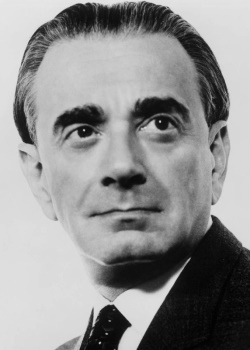 For his soundscape, Rózsa composed three primary themes, including the Nathan Ross Theme, the score’s pervasive Main Theme. It offers a molto grandioso, rousing nautical construct, which boldly empowers with unabashed confidence, the sea faring grandeur of the Shore schooner. It offers a classic ABA construct with the declarative A Phrase bold and confident, and the string borne B Phrase, more lyrical and expressive. The theme has a secondary expression linked to the heritage of the Shore family., late in the film becomes associated with Joel. Mark’s Theme offers a minor modal mirror image of the Main Theme. In its corrupted form it speaks to his lust for pearls and malignant presence in fomenting Joel’s crew to mutiny. It is voiced by a clarinet sinistri and strings malevoli. The Love Theme speaks to the Joel and Priscilla’s love. It offers quintessential unabashed, Rózsian romanticism borne by clarinet tenero draped with sumptuous strings d’Amore. It emotes from the perspective of Priscila, and so at times it also serves as a leitmotif for her.
There are five secondary themes, including the Native Girl Theme. I agree it is a clumsy title, but in the film, she never receives a name! She is the Polynesian girl who nurses Mark back to health, and eventually becomes his wife. Rózsa imbues her with south sea exoticism by use of pentatonic sensibilities using marimba and strings tenero. Her theme offers gentility, not ardor, flowing warmly like a south sea breeze. The South Seas Theme speaks to the Gilbert Islands, Tubai and the South Seas themselves. It offers a soothing melody borne by languorous strings, which flow like the warm breezes that caress the islands of this region. The Whale Theme offers a monstrous construct borne by abyssal horns and bass, which speak to the enormity and power of the creature. The Pirate Theme serves as a collective leitmotif for the three pirates. It exudes menace borne by strings sinistri and bursts by horns brutale when provoked to violence. Lastly, we have the Mutiny Theme, which supports the mutinous crewmen of the Nathan Ross. The theme is lurking, and insidious like the festering menace of the mutineers, emoting with dire strings malevoli. However, when they mutineers fight Joel and Mark for control of the ship its expression becomes more aggressive and forceful.
The finished film was deemed flawed and the studio ordered a rescue operation, which resulted in significant editing, which mutilated a significant volume of Rózsa’s score. He was off on his usual summer sojourn in Italy consumed with composing his Violin Concerto, Op. 24 and was not available to rewrite music for the edited scenes. As such Director of Music Johnny Green, aided by composer and orchestrator Conrad Salinger adapted cues (16–28) and rewrote music in Rózsa’s style, employing his themes for the edited scenes, and on a few occasions wrote additional original music.
“Prelude” provides a score highlight which offers the grandeur of one of Rózsa’s finest Main Titles in his canon. We open with a surging ascent by strings energico as the MGM studio logo displays. At 0:07 the film title displays and the flow of the red script opening credits, which unfold against the schooner Nathan Ross sailing on open seas. Rózsa’s supports with his Nathan Ross Theme, the score’s pervasive Main Theme, rendered in full ABA form. Horns fieramente join with strings brillante to offer a molto grandioso, rousing nautical construct, which boldly empowers with unabashed confidence, the sea faring grandeur of the Shore family schooner. At 1:13 we flow into the film proper with a diminuendo of the Main Theme as first officer Joel Shore sails into New Bedford harbor in 1857 to end a three-year voyage. We segue into “Easy Away, Jo’” atop an a capella rendered sea shanty as the men trim the sails and prepare to dock. “New Bedford Bridge” offers a cue by Conrad Salinger who adapts Rózsa’s Main Theme, offering gentility and warmth as Joel walks to the Nathan Ross to visit his brother.
“House of Shore” reveals Joel boarding the Nathan Ross to see his brother, only to be informed by first mate Finch that he vanished in the Gilbert Islands on this latest voyage and is presumed dead. Strings grave support Joel’s inspection of Mark’s cabin. At 0:31 as he opens and reviews the “Log of the House of Shore”, a solemn Main Theme strengthens as a montage of narrated scenes unfolds, displaying previous voyages of Shore family ancestors, and how they met their end, with each entry ending with the caption; “All the Brothers were Valiant”. At 2:11 the theme darkens as the ship’s first officer; Mr. Finch informs Joel that Asa Worthen, the owner of the Nathan Ross, wishes to see him. We close with a coda of the Main Theme expressed with a reserved confidence. In an unscored scene Asa tasks Joel with the captaincy of the Nathan Ross, which he humbly accepts. “Too Quick a Way” offers a cue adapted by John Green in which aggrieved woodwinds voice Rózsa’s Main Theme. The scene reveals Joel in a tavern, punching out a sailor who disparages the honor of his brother Mark.
Joel visits Captain Holt to call on his granddaughter Priscilla, who offers an effusive welcome. That night after dinner as they stroll in the garden in “Priscilla and Joel”, their Love Theme unfolds, borne by clarinet tenero draped with sumptuous strings d’amore. This cue was added by Salinger to begin musical support earlier in the scene. “Proposal” offers a romantic score highlight where Rózsa introduces his Love Theme for Joel and Pris. The Love Theme descends into sadness when we see merged hearts carved by Mark on a tree as she relates how much she will miss Mark. She quickly realizes she had promised her father not to bring up the subject, and at 0:09 the Love Theme’s romance regains its yearning and warmth offering sumptuous romanticism as she invites Joel to sit next to her to keep her warm. She tells him that she feels lonely, and he takes her into a kissing embrace. Yet at 1:15 the music loses its vitality and becomes plaintive when he informs her that this was a marrying kiss as she has been in his thoughts for three years. He informs her that he can now support her as he has been awarded the captaincy of the Nathan Ross. She hesitates as he will be away for two to three years. But he persists and she relents at 1:42 as the Love Theme regains its sumptuous ardency when she consents and hugs him. The music blossoms for a molto romantico statement as she is overjoyed when he insists that she accompany him on a three-year voyage so they will not be apart.
In a chapel, Joel and Priscilla are married and we flow seamlessly into “Departure”, the first of three successive tracks adapted by Salinger as a replacement for Rózsa’s unused “Boat” cue. As Captain Holt wishes Joel and Pris bon voyage, a gentle rendering of the Main Theme supports. Warm French horns empower the departure of the shuttle boat bearing Worthen and Captain Holt and at 0:25 we segue into “Away for Rio” where the crew hoists the anchor, unfurl the sails, and the Nathan Ross commences her voyage. The crew happily sing the sea shanty a Capella. At 1:05 we segue into “Bridge to Full Sail” with heraldic fanfare supporting the ship now sailing with full sail. At 1:15 we segue into Rózsa’s “Full Sail”, which reveals the Nathan Ross sailing on calm seas at sundown. Languorous horns and resplendent string carry the wind-swept ship. At 1:22 a warm statement of the Main Theme supports Joel’s entry in the ship’s log. Pris leans over his shoulder as she reads an entry by Mark and at 1:52 the Main Theme gains vitality with a statement exuding confidence but its articulation darkens as we see Joel concerned by her continued interest in Mark. Yet the Main Theme brightens with confidence as he takes the log from her and pulls her into his arms. The forthright sea-faring Main Theme draped with harp glissandi supports an exterior shot of the ship sailing on the open seas. At 2:22 playful woodwinds of delight support Pris’ arrival on deck where she offers an effusive good morning while she hugs Joel, insisting on a kiss.
At 2:31 we segue into “Full Sail Continuation”, another Salinger adapted track, a wistful passage where she speaks of home.[ We conclude at 3:06 with Rózsa’s “High Sea”, which offers an exterior shot of the Nathan Ross supported by a Main Theme empowered by horns fieramente, shimmering strings brillante and draped with harp glissandi. We see Pris climbing the ship’s up the mainmast shrouds with childhood friend Dick Morrell. Rózsa supports their exuberant ascent with a musical ascent by the Main Theme, crowned by a proud declaration of its fanfare when they reach the crow’s nest. The music darkens, full of foreboding when Pris cries out that she can almost see the Gilbert Islands, which elicits Joel to question first mate Finch as to his take on Mark’s disappearance. The Nathan Ross if buffeted by a fierce rain storm and rough seas as they round the treacherous Cape Horn. Later, the storm abates and the waters calm in “Love and Pride”. Rózsa supports with a beleaguered and weary Main Theme borne by English horn and tremolo strings. Joe is fatigued and takes Pris who refused to leave his side to their cabin. At 0:38 inside the cabin, a proud and grateful Pris offers a loving embrace to her man supported by a sumptuous statement of the Love Theme. The next day at 1:22 we soar on a Fanfare bravura, which resounds as we see the Nathan Ross proudly sailing on the open seas. “Whale” offers a wonderful score highlight with exciting writing by Rózsa. Trumpet declarations resounding with enthusiasm announce a sighting of a pod of four whales. They join with the Main Theme for a molto eccitante exposition as Joel and his crew take to the harpoon boats. At 0:52 a diminuendo of sadness supports Pris’ disappointment of Joel forbidding her to join. Shipmate Aaron manages to cheer her up by explaining that whales are bashful creatures and if they see a pretty girl, they dive to hide. This elicits a laugh from Pris, which Rózsa supports with a silly solo clarinet comico.
“Whaliant Brothers” offers one of the finest set pieces of the score, which was tragically butchered, editing out everything after 2:20. For me this is a colossal and unforgiveable creative error as I believe Rózsa’s music created an astounding cinematic confluence. As the boats slowly approach the pod, Rózsa’s sow suspense with a musical narrative empowered by muted horns. At 1:42 the trumpets intensify and usher in ominous low register horns as crewman Silva’s readies his harpoon. A swelling tension accelerando unfolds until an orchestral strike at 2:20 as Silva thrust his harpoon. The whale races off pulling the boat behind it as the crew struggles to hang on. Rózsa introduces his Whale Theme, a monstrous construct borne by abyssal horns and bass, which speak to the enormity and power of the creature. As the crew and whale contest, Rózsa whips his orchestra into frenzy, supporting musically with dynamic and rousing interplay of the Whale and Main Themes. At 4:01 a tension diminuendo of uncertainty supports the whale descending into the depths. Nervous horns sow anxiety as they almost run out of rope. At 4:50 an unsettling, portentous string motif amplifies the anxiety as the whale begins his trek back to the surface, dangerously close to the boat. At 5:19 we segue into “Prince of Whales” atop a ferocious Whale Theme as the beast rises and charges towards the boat, empowered by a crescendo dramatico. In the film, however music from 5:19 – 5:43 is dialed out. Music enters at 5:44 atop a monstrous declaration of the Whale Theme, which supports its triumph as its massive tail smashes the boat to pieces. As the beast moves off, strings disperati propel Joel’s rescue of third mate Dick. At 6:20 a dire low register declaration of the Main Theme supports the arrival of their sister boat. A final grim reprise of the Whale Theme joins for interplay as they are pulled from the water and return to the ship. We close at 6:44 with the Main Theme borne by woodwinds gentile with news that the whale died and we see the Nathan Ross sailing on at nightfall on the open sea.
The next two cues are not part of Rózsa’s score, but instead original music crafted by Green and Salinger. “Tubai” reveals the Nathan Ross sails into Port Tubai in the Gilbert Islands, the exotic, languorous strings of the South Seas Theme flow like a gentle fragrant island breeze. Inside at 0:34 woodwinds and strings gentile with harp adornment support a happy Pris showing off her beautiful summer dress to Joel in anticipation of going ashore. At 0:54 a Joel hears loud voices on the deck and departs to investigate carried by soft rendering of the Main Theme. He is surprised to find his brother Mark alive and chatting up the crew. Mark is initially not receptive to Joel’s greeting, but eventually diffuses tension by offering his hand to Joel. “Sister Priscilla” reveals the brothers entering the captain’s cabin, where Mark and Pris are reacquainted warmly with an affectionate hug. Mark is gracious and congratulates the two on their marriage, saying he is happy to at last have a sister. Music enters atop the languorous South Seas Theme as we see the Nathan Ross departing port for the open seas. On deck, Mark joins Pris and a diminuendo usher in a sad musical narrative with subtle undercurrents of regret borne by a forlorn oboe and kindred woodwinds, as we see Pris still harbors feelings for Mark. Yet at 1:12 the music warms and brightens on the exotic South Seas Theme as Pris says what’s between them is all in the past and let’s talk about what you have been doing.
The brothers at last have the long-awaited talk of why Mark did not return with the Nathan Ross, as Pris listens secretly behind the bedroom door. “Tahitian Dance” initiates a flashback where a drunk, feverish and delirious Mark cannot stand the beating of the native drums and jumps overboard to swim ashore so he can silence them. Rózsa’s supports with a nativist drum empowered nine-note ostinato. He staggers ashore and comes upon natives dancing around a bon fire. He shouts like a madman, which frightens the natives who flee, save one, a beautiful girl. “Intro to Girl” offers a rescored cue by Green and Salinger. Woodwinds tenero voice the Native Girl Theme, which dances softly on the evening breeze. At 0:31 we segue into “Girl” as her theme shifts to strings tenero as she holds her ground and calls for her people to return. At 0:44 we segue into “Island” as the drunk, feverish and exhausted Mark collapses. The woodwind variant of her theme resumes as she asks the men to carry him to a hut. At 1:03 the music darkens as Mark awakes and discovers the girl who has been tending to him. Her soothing theme, borne by strings tenero and marimba shift to oboe delicato when she offers him loving reassurance as she cools his face with a soaked sponge. Days later a cured, but weakened Mark emerges and is greeted by the girl who speaks only Polynesian. Rózsa entwines the languorous South Seas Theme and her theme borne by flute tenero and English horn as he gives her a loving hug.
In “Abduction” Mark resumes the flashback as we see him awakened in the hut by gunshots and the horrific screams of his wife who is being abducted by pirates. Rózsa sow a dire and violent musical narrative marked by the horns brutale bursts of the Pirate Theme, which transitions to an accelerando disperato as he runs to the shore and sees the three pirates who have kidnapped his wife. At 0:30 we segue into “Schooner” empowered by a new accelerando disperato as Mark dives into the bay and aggressively swims in pursuit of the kidnappers, who are rowing back to their ship. As he approaches the ship a menacing musical narrative empowers him until 1:25 when he sneaks up and knocks out the deck man with a club supported by an orchestral strike, which dissipates into nothingness. In “Fright” Mark’s wife struggles in the cabin to fight off a pirate intent on raping her. Mark bursts in and bludgeons the man to death. He then throws two rifles overboard before fainting from exhaustion. As she tends to Mark, music enters with a lurking Pirate’s Theme full of menace as she hears noise and the cabin door knob turning. She draws the pistol on the two pirates who enter, and they retreat with the dissipating growling menace of the Pirate’s Theme. She locks the door and at 0:39 flute gentile and kindred woodwinds voice her theme as she resumes her bedside vigil with Mark. We close with dreamy harp glissandi as an exterior shot reveals the pirate ship sailing on the open sea.
Later, Mark wakes and confronts pirates Quint and Fetcher on deck. They propose to let bygones be bygones and offer a portion of the treasure of pearls they are going to collect. Mark is wary, but consents, sealing the deal with a drink. “Murder Bridge #1” offers the languorous South Seas Theme, which was added by Green and Salinger to support an exterior shot of the pirate schooner sailing on the open sea.[ In three unscored scenes, Quint murders the deck hand in a rage after losing a card game. Later, Fetcher then murders Quint after losing a five-card poker draw betting his pearls against Quint’s. We return to the present as an unsees Pris continues to listen to Mark’s tale. At 0:34 we segue into “Murder Bridge #2”, a cue by Green and Salinger, which replaced the 0:00 – 1:53 of Rózsa’s cue 12; “Murder”. The South Seas Theme supports the sight of native divers diving for oysters as we see the three partners shucking on deck in search of pearls. At 1:09 woodwinds of discontent support Mark’s frustration and counsel to depart before the bad weather season starts. The South Seas Theme resumes as we see Mark, his wife, Fetcher and the two divers rowing to the beach. Fletcher departs with the divers to forage for food in the jungle, leaving Mark and his wife on the beach. At 1:42 the Native Girl Theme born by strings tenero joins as they stroll arm in arm.
At 1:54 the music darkens atop a menacing rendering of Mark’s Theme born by strings sinistri as Fetcher returns alone and we shift to Rózsa’s “Murder” cue (12) from 1:19 – 5:45. When Fetcher evades Mark’s inquiry regarding the divers, he sets off to find them. Fetcher pulls out and throws a knife at Mark when his back is turned, yet the native girl’s warning scream elicits Mark to duck and the knife to miss its target. A torrent of anger erupts propelled by Mark’s Theme as the two men fight. At 1:49 a crescendo di violenza surges to support the strangulation of Fetcher, cresting with rage at 2:03, and crowned by horns brutale declarations of Mark’s Theme in victory. Mark tells his wife to stay and heads into the jungle to search for the men carried by a grim rendering of his theme. At 2:40 he finds the corpses of the two divers as dire declarations of his theme resound. He departs and menacing nativist drums emerge as we see spear armed natives following. His theme supports as he takes Fetcher’s pearls but as they walk to the boat the natives attack at 3:22 in “Pearls”, a fierce score action highlight. He kills five with his pistol and one with his knife before escaping with his wife in the boat. Rózsa supports the fight with the nativist drum motif and ferocious horns bellicoso. Strings furioso propel their escape in the boat as nativist war drums brutale contest with a determined Mark’s Theme. Volleys of spears rain down on them until 4:22 when a spear impales his wife in the back, mortally wounding her. An agonal string descent usher in her grieving theme as Mark holds her in his arms. At 4:46 Mark is horrified as his bag of pearls falls from her hand into the lagoon with a descent motif carrying away his treasure. While distracted he failed to notice the natives swimming to the boat. At 4:58 the battle resumes empowered by the drums brutale of the Native Attack Motif, with Mark prevailing after bludgeoning the men with an oar. We close at 5:27 with repeated statements of his theme by strings affanato as he loses the love of his life.
Back in the present the next day, we have five unscored scenes. Joel rebuffs Mark’s offer to change course and retrieve the pearls. He believes the natives are too hostile and he is committed to safe guarding Asa Worthens’ ship. Later, Mark entices Pris with the allure of the pearls but relates that Joel is afraid to travel to the island and retrieve them. Mark departs when Joel arrives in the cabin, hoping Pris will convince him. Joel is stern, unreceptive, and rebuffs her, displeased that she is mending one of Mark’s shirts. On deck, Mark entices first mate Finch with the allure of the pearls. Joel arrives, is displeased and orders Finch to not disclose knowledge of the pearls to the crew. For a second time, Mark refuses Joel’s request to surrender his pistol. Below deck Finch shares knowledge of the pearls with the crew and Joel’s refusal to go. This agitates the crew and leads to Silva proposing a mutiny. That night while over dinner, Mark instigates a quarrel, which leads to Joel rebuking Pris who leaves. Mark then makes veiled threats, reminding Joel that he stole his toys while kids, and is quite capable of doing the same now.
“Disillusion Bridge” offers a cue composed by Salinger. It reveals Mark joining Pris on deck carried by an alluring but insidious, string borne quote of his theme. He undermines Joel’s courage and manhood. Mark’s Theme shifts to woodwinds, which sow unease and disillusionment with Pris, as it interplays with her Love Theme, now full of disappointment. In “Disillusionment” Mark succeeds, and Pris departs to return to the cabin, intending to discuss matters with Joel. Rózsa supports her departure with a sinister rendering of Mark’s Theme, informing us that he has succeeded in his mission to undermine Joel with both the crew and Pris. At 0:11 she enters the cabin carried by a beleaguered, and questioning rendering of the Love Theme, asking Joel if he is afraid to go after Mark’s Pearls. When she admits that the basis of her question arose in herself, not Mark, he tells her that she has then answered her own question. At 0:39 she departs weeping and ashamed of her husband as the Love Theme crescendos in anguish.
In an unscored scene Mark and the crew finalize the planned mutiny with a promise of shares for the entire crew. However, unknown to Mark, Silva plans on murdering him and Joel so he and his clique of mates get the pearls. That night Mark and several crewmen confront Joel in his cabin as Pris listens through the bedroom door. Joel firmly defers his decision until two bells. As Mark departs, he demands and obtains from Joel, the key to the weapons locker. As he departs, we flow into “Ashamed Bridge”, which offers a 13 second introduction to Rózsa’s “Ashamed” cue. It offers a grim woodwind borne quote of Mark’s Theme with descending strings affanato as Pris enters, and then leaves without saying a word, but her expression says volumes. We segue into “Ashamed” a heart-wrenching score highlight. We see Pris weeping on deck supported by a flute triste led Love Theme as she is ashamed by Joel’s lack of courage. Mark overhears her crying on deck and takes her into his arms to console her as she confesses that she is ashamed of Joel. Rózsa supports with the heartache of the Love Theme as Mark presses his advantage to take not only the ship from Joel, but Pris. At 1:18 a crescendo romantico swells on Mark’s Theme as he kisses Pris. We resume with an anguished Love Theme when she looks up to see Joel has been watching. He stoically returns to the cabin and she follows carried by the anguish of the Love Theme. He refuses to talk and turns his back to her. Heartbreak and tears carry her retreat to the bedroom. We close at 2:37 with a grim statement of the Main Theme, which has lost its vitality as Joel comes up to the main deck to announce his decision.
In “Hard to Lee”, Salinger rewrote, and extended the beginning of the cue.[ It reveals Joel finding no crewmen to support his decision to return to Tubai. Dire strings malevoli and drums brutale empower the mutiny as Mark seizes control of the ship, binds Joel and orders him imprisoned below. At 0:26 fateful, ominous horn declarations of his Mark’s Theme support a shot of the Nathan Ross changing course. Pris joins Mark on deck and insists on speaking to him. His theme softens, and supports their conversation where she expresses her bitterness and criticism. Yet he doubles down, brazenly asking her to give up on Joel and live a new life with him. A harp draped romance for strings swells to support, yet it never resolves, informing us that Pris will never abandon Joel, as she finally realizes Mark’s evil persona.
“Showdown” reveals Joel managing to break his rope binds and then discovering that they were partially cut by loyalist Aaron. At the same time Pris enters the cabin and demands to see Joel, only to be forcibly pushed away by a mutineer. At 0:48 a revitalized and determined rendering of the Main Theme, now adopted by Joel as his emblem, empowers his bashing down the door. The music swells ferociously as he rescues Pris and punches out the mutineer. At 1:32 an aggrieved Love Theme, full of regret, supports Pris’ pleads to Joel for forgiveness. He shouts for her to return to her cabin as he binds the mutineer. At 1:57, menacing low register strings carry Joel’s ascent to the deck with handcuffs. At 2:13 an ominous rendering of Joel’s Theme supports his arrival on the deck, which surprises Mark and the mutineers. Tension builds on Joel’s menacing theme as he orders Finch to place handcuffs on himself, which he does. Joel secures him to a post and at 2:34 we segue into “Mutiny” with tension increasing as the two brother’s themes interplay. Joel surprises Mark by knocking him down with a punch, and then throwing overboard the pistol and two rifles. Rózsa now masterfully sow tension with grim interplay of Joel’s Theme on muted trumpets, Mark’s Theme on dire strings, and a new menacing theme borne by string malevoli for the mutineers, as Joel, and Aaron are joined by Mark in confronting Silva and the mutineers. At 5:21 a crescendo dramatico commences as Joel elicits support from loyalist Third Mate Dick Morrell and several crewmen.
At 5:34 we segue into “Fight” as Silva and the mutineers attack. Rózsa whips his orchestra into frenzy as Joel’s, Mark’s and the mutineer’s themes all contesting. In a colossal creative misjudgment, Rózsa’s music from 5:34 – 7:10 is dialed out of the film, robbing the fight scene of its drama and energy. Strings energico surge to frenzy to support Mark’s climb, transforming into an aggressive anthem as he pummels several mutineers. At 7:51 dire string and horns intensify with quotes of Mark’s Theme to support him coming face to face with Silva. At 8:13 Silva charges with a harpoon and impales Mark in the heart, but dies from Mark’s skull shattering bludgeoning. Tremolo strings usher in molto tragico declarations of Mark’s Theme descending unto death as Pris screams and comes to him as he collapses. At 8:48 we segue into “Retribution”, which offers a redemptive affirmation of Mark’s Theme, which slowly ebbs and expires to support his final words and death in Pris’ arms. Regretfully the scene it supported was cut when test audiences laughed, not believing that Mark could speak after taking a harpoon strike to his heart. There was no money to reshoot the scene, so it was cut from the film. At 10:25 we segue into “Finale” atop a sad, and tragic statement of Mark’s Theme, as Joel makes an entry into the ship’s log, affirming Mark’s heroism in suppressing the mutiny. A Main Theme tribute by horns nobile at 11:36 support Joel concluding his entry with “All the brothers were valiant,” which is edited by Pris who takes his pen and underlines “All.” The theme swells magnificently to its former grandeur as Joel and Pris hear a crewman shout “She Blows!” As Joel heads out to harvest a pod of six whales we conclude with his theme achieving a glorious flourish as he kisses Pris and she wishes him good luck.
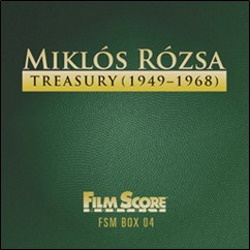 We are thankful that “All the Brothers Were Valiant” was one of a handful of 1953 scores for which MGM Studio thankfully transferred the original 35mm magnetic film to ½″ three-track tape, which preserved the stereo image. The technical team’s restoration and remastering succeeded and the audio quality is excellent. Miklós Rózsa knew he was assigned to a flawed film, yet he succeeded in composing a score, which mitigated many of its flaws, and in every way elevated and enhanced its narrative. His soaring nautical Main Theme, which empowered and captured the heart the film, stands as one of the finest themes in his canon, gloriously opening and closing the film. The creation of Mark’s Theme as a malignant, minor modal, mirror image of the Main (Joel’s) Theme was brilliantly conceived and executed. Tragically Rózsa’s handiwork was mutilated by studio ‘rescue edits’ with masterful cues such “Whaliant Brothers”, “Fight” and “Redemption” being edited out of the film to its detriment. The post editing bandaging of the score provided by Johnny Green and Conrad Salinger was effective, yet for me does not duplicate the maestro’s original quality. Nevertheless, the brilliance of Rózsa’s score as originally conceived and executed cannot be understated. The album’s first fifteen cues offer an extraordinary listening experience and for me constitute one of the finest scores in the nautical adventure genre. I highly recommend this score, however the Film Score Monthly Box Set 04 Miklós Rózsa Treasury (1949 – 1968) can only be found at secondary markets and is prohibitively expensive. Therefore, I advise you of the Prometheus release “The Spectacular Film Music of Miklós Rózsa Volume 4: All The Brothers Were Valiant” as an alternative. The reader is warned however, that the sound quality has hiss and distortion imperfections, which may dissuade audio purists.
For those of you unfamiliar with the score, I have embedded a YouTube link to a wonderful ten-minute suite; https://www.youtube.com/watch?v=67eDrUjMR1s
Buy the All the Brothers Were Valiant soundtrack from the Movie Music UK Store
Track Listing:
- 2010 FILM SCORE MONTHLY RELEASE
- Prelude (1:38)
- House of Shore (2:31)
- Proposal (2:31)
- Boat (2:33)
- Full Sail (1:19)
- High Sea (1:06)
- Love and Pride (1:32)
- Whale/Whaliant Brothers/Prince of Whales (6:57)
- Girl/Island (2:51)
- Abduction/Schooner (1:32)
- Fright (1:05)
- Murder/Pearls (5:45)
- Disillusionment (0:58)
- Ashamed (2:48)
- Hard to Lee/Showdown/Mutiny/Fight/Retribution/Finale (13:09)
- Easy Away, Jo’/New Bedford Bridge (1:03) – Revised Cue
- Too Quick A Way/Priscilla and Joel/Proposal (3:16) – Revised Cue
- Departure/Away for Rio/Bridge To Full Sail/Full Sail/Full Sail Continuation/High Sea (4:11) – Revised Cue
- Tubai (1:10) – Revised Cue
- Sister Priscilla (1:36) – Revised Cue
- Tahitian Dance (1:00) – Revised Cue
- Intro to Girl/Girl (Revised)/Island (Revised) (2:54) – Revised Cue
- Murder Bridge #1/Murder Bridge #2/Murder/Pearls (6:18) – Revised Cue
- Disillusion Bridge/Disillusionment (2:31) – Revised Cue
- Ashamed Bridge/Ashamed (3:00) – Revised Cue
- Hard to Lee (Revised) (1:58) – Revised Cue
- 1995 PROMETHEUS RELEASE
- Main Title (1:39)
- The House of Shore (2:32)
- Proposal (2:31)
- The Boat (2:33)
- Full Sail (1:19)
- High Sea (1:05)
- Love & Pride (1:32)
- Sighting/Pursuit/Capsized (6:58)
- The Girl (1:15)
- The Island (1:41)
- Abduction (1:32)
- Fright (1:04)
- Murder/The Pearls (5:48)
- Desillusion (0:58)
- Ashamed (2:48)
- Showdown/Mutiny/Fight (10:34)
- Finale (2:45)
Running Time: 78 minutes 13 seconds – Film Score Monthly
Running Time: 40 minutes 38 seconds – Prometheus
Film Score Monthly FSM BOX 04 (1953/2010)
Prometheus PCD 131 (1953/1995)
Music composed and conducted by Miklós Rózsa. Orchestrations by Eugene Zador and Robert Franklyn. Additional music by Johnny Green and Conrad Salinger. Recorded and mixed by XXX. Score produced by Miklós Rózsa. Prometheus album produced by Luc Van de Ven. Film Score Monthly album produced by Lukas Kendall, Nick Redman and Bruce Kimmel.

Shop at the Movie Music UK Store

Member of the

 MOVIE MUSIC UK