Carl Davis, 1936-2023
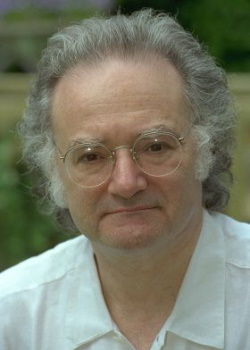 Composer Carl Davis died on August 3, 2023, at his home in Oxfordshire, England, following a brain haemorrhage. He was 86.
Davis was born in Brooklyn, New York, in October 1936, and studied composition there and in Copenhagen. He was working with the New York City Opera and the Robert Shaw Chorale, and writing music for off-Broadway productions, prior to traveling to the United Kingdom in 1961 to attend the Edinburgh Festival. It was while in Edinburgh that Davis was offered a job composing music for the satirical comedy series That Was The Week That Was; Davis subsequently spent the rest of his working career predominantly in the UK.
Over the next 30 years or so, Davis wrote hundreds of scores for British film and television. On the big screen, his works included The Bofors Gun (1968), I, Monster (1971), Up Pompeii (1971), Man Friday (1975), The Sailor’s Return (1978), The French Lieutenant’s Woman (1981), Champions (1983), King David (1985), Scandal (1989), The Rainbow (1989), Frankenstein Unbound (1990), The Trial (1993), Widows’ Peak (1994), and Topsy-Turvy (1999), the latter of which saw him adapting music by Gilbert and Sullivan.
On the small screen, his works included The Naked Civil Servant (1975), Oppenheimer (1980), Winston Churchill: The Wilderness Years (1981), The Hound of the Baskervilles (1982), The Far Pavilions (1984), The Pickwick Papers (1985), Hotel du Lac (1986), Silas Marner (1986), Pride and Prejudice (1995), Anne Frank Remembered (1995), and Cranford (2008), as well as the groundbreaking documentary series The World at War (1973). He won the BAFTA Award for Film Music for The French Lieutenant’s Woman, and was nominated on six other occasions between 1981 and 2008. He also received two Emmy nominations, in 1972 and 1993, and a Grammy nomination in 1983, again for The French Lieutenant’s Woman.
In the late 1970s, Davis was commissioned to create music for Thames Television’s Hollywood: A Celebration of the American Silent Film, and this initiated a separate career which saw Davis write new brand new scores for acclaimed silent films, which were then performed live-to-picture. His scores for silent films included music for D. W. Griffith’s Intolerance (1916), Fred Niblo’s original Ben-Hur (1925), Abel Gance’s Napoléon (1927), and classic comedies by Buster Keaton and Harold Lloyd, including Safety Last (1923) and The General (1926).
In addition to his film music work, Davis was prolific as a concert composer, and perhaps his most famous concert piece was his 1991 collaboration with Sir Paul McCartney on The Liverpool Oratorio, an eight-movement choral work recorded to commemorate the 150th anniversary of the Royal Liverpool Philharmonic Orchestra loosely based on McCartney’s own life.
Davis leaves behind his wife, actress Jean Boht who he married in 1970, and daughters Hannah and Jessie, and their families.

Shop at the Movie Music UK Store

Member of the

 MOVIE MUSIC UK