YOUNG BESS – Miklós Rózsa
 GREATEST SCORES OF THE TWENTIETH CENTURY
Original Review by Craig Lysy
In 1945 MGM Studios took notice of the best-selling 1944 novel Young Bess by Margaret Irwin and believed they could present a grand adaptation for the big screen. The film rights were purchased and Sidney Franklin was assigned production with a budget of $2.423 million. In 1946 Katherine Anne Porter, Jan Lustig and later Arthur Wimperis were hired to write the screenplay, and George Sidney was tasked with directing. Casting problems and production postponements delayed filming until October 1952. After considering Deborah Kerr, Janet Leigh and Elizabeth Taylor for the lead role, Jean Simmons was chosen to play Elizabeth. Joining her would be; Stewart Granger as Thomas Seymour, Deborah Kerr as Catherine Parr, and Charles Laughton as King Henry VIII.
The film is set in England during the reign of King Henry VIII, circa 1536 C.E. The king has ordered the execution of second wife Anne Boleyn and banished her daughter Elizabeth, who he considers illegitimate, to Hatfield House in Hertfordshire. Over the years Elizabeth’s fortunes rise and fall, dictated by the mercurial whims of her father King Henry. Eventually she is restored to his good favor and declared a legitimate heiress to the crown. After Henry dies, he is succeeded by his nine-year-old son King Edward VI, who is managed by the ambitious Lord Protector Ned Seymour. Court intrigue leads to Elizabeth once again being banished to Hatfield House, where she survives, outliving her brother King Edward VI and sister Queen Mary to finally gain the throne at age 25 in 1558 C.E. The film was a commercial success, earning a profit of $1.672 million. Critics praised the film for offering a well-directed, finely acted, lavish story. It earned two Academy Award nominations for Best Art Direction and Best Costume Design.
Miklós Rózsa had great respect for producer Sidney Franklin and under MGM’s generous contract, he had first rights to new film projects. The story of “Young Bess” attracted his interest and he happily took on the project. He related: “I was delighted to accept it and immersed myself in the music of the Tudor period. The picture was not a masterpiece but had lovely scenes and fine moments”. Rózsa understood that his music would have to speak to the pomp and circumstance of the royal court, with the requisite royal fanfares, processions and marches. Yet the storyline also contained significant court intrigue regarding factions competing for the succession, as well as a romantic undercurrent regarding Elizabeth’s affections for the married Grand Admiral Thomas Seymour.
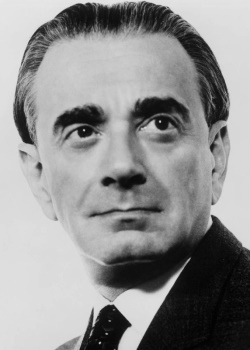 Rózsa’s soundscape is supported by seven primary themes, beginning with Bess’ Theme, which supports her as the future queen, and later as the queen. It offers regal grandeur and proceeds with solemnity and nobility as a processionale maestoso. I believe it to be perhaps the finest themes for a monarch in cinematic history. The Love Theme offers classic Rózsa elegance with a sweeping molto romantico statement by sumptuous strings appassionato enriched with contrapuntal horns. Additional iterations, which feature exquisite solos by cello and violin d’amore are rapturous. The Heartbreak Theme juxtaposes the Love Theme and arises in the aftermath of Elizabeth’s romantic aspirations being shattered by the discovery that Tom is in love with Queen Catherine. It is borne with bitterness by weeping violins and a solo cello affanato filled with heartache and sadness. Later it serves as a vehicle of her unassuageable grief when her lover Tom is executed. Catherine’s Theme offers perhaps the score’s most beautiful theme. It graces us with a beautiful ABA construct. For the A Phrase, a solo oboe delicato flows eloquently with tenderness over strings gentile. Regal strings nobile voice the B Phrase, which offers both dignity and beauty. We conclude as we began with a graceful return of the solo oboe delicato.
Edward’s Theme supports this precocious boy-king with a playful statement empowered by tiny toy trumpets sardonica emoting a faux marcia militare. The Hatfield House Theme is associated with the royal country residence where Bess spent her childhood, safely isolated from the volatile politics of her father’s royal court in London. It offers a stately, formal elegance one immediately associates with royalty. The Whitehall or Palace Theme is empowered by strings maestoso and horns reale, which abound with pomp and circumstance. Lastly, Rózsa performed his usual meticulous research drawing from the Fitzwilliam Virginal Book, which contained a collection of Elizabethan and Jacobean melodies circa 1609 C.E. intent on infusing his soundscape with authentic cultural sensibilities.
“Prelude” offers a score highlight where Rózsa masterfully sets the tone of this period piece film, embracing quintessential English cultural sensibilities. It opens with heraldic fanfare reale declarations as the MGM logo displays. They usher in a solemn Bess’ Theme rendered as a processionale maestoso as the film title displays and the flow of the opening credits unfold. At 0:26 new fanfare reale declarations offer a bridge from which at 0:32 the Love Theme is born. The theme offers classic Rózsa elegance with a sweeping molto romantico statement by sumptuous strings appassionato enriched with contrapuntal horns. At 1:21 we segue atop muted horns solenne, which support the display of the royal coat of arms. Overlaid is script informing us that King Henry VIII called his daughter ‘Young Bess’, and that her mother Ann Boleyn was doomed to the block. At 1:43 we enter the film proper with “Hatfield House” as we see the royal country residence where Elizabeth would spend her childhood, the date reveals November 16, 1558. The Hatfield House Theme, is associated with the royal country residence where Elizabeth spent her childhood, safely isolated from the volatile politics of her father’s royal court in London. It offers a stately, formal elegance one immediately associates with royalty. At 2:03 a scurrying string ascent carries Elizabeth’s governess Mrs. Ashley to the upstairs office of house steward Mr. Parry.
Mrs. Ashley advises Mr. Parry that Queen Mary is on her deathbed and that Elizabeth will be crowned queen of England at age 25 by morning. He brings out some ale and they toast to Queen Elizabeth. She begins to reminisce, relieved that her hard work now comes to fruition, and they join in singing Bess’ favorite nursery rhyme, which uses the melody of the Hatfield Theme (“Here we go up, up, up, up in the sky so high! Here we go down, down, down, bumpity-bump, good-bye!”) We segue into “Reminiscing” as we flashback to Bess’ childhood carried by a less formal and more happy rendering of the Hatfield Theme. Bess is a toddler lovingly held by her doting father Henry VIII who shares his happiness with Queen Ann and her ladies in waiting. Yet fortune changes at 1:14 when we segue darkly into “Anne Boleyn’s Execution” atop the Execution Motif, which is empowered by snare drums of doom, joined with solitary drum strikes as the executioner lays her head atop the block. At 1:29 we segue into “Exit Anne Boleyn” atop foreboding strings grave as Bess has fallen out of favor. Narration reveals Henry VIII had married Jane Seymour who bore him a son, the future King Edward VI. As such Elizabeth was deemed illegitimate and banished to Hatfield. Rózsa supports with a sad musical narrative borne by the Hatfield Theme as we see her carriage traversing the countryside.
“Changing Mothers” reveals Mrs. Ashley taking seven-year-old Bess to meet her third mother, Queen Anne of Cleves. As they walk through the palace corridors a spritely strolling passage carries their progress. As the door opens a diminuendo unfolds as Mrs. Ashley narrates that the grim face of King Henry VIII informed her that a fourth wife would soon be forthcoming. Seven months later at 0:53, the spritely strolling melody resumes as we see the two arriving to visit mother number four. At 1:28 we segue with trepidation atop woodwinds into “King Henry” as Bess is reunited with her larger-than-life father. She defies his command to speak to him, which earns her his grudging respect. In “New Stepmother” the music warms and becomes playful atop woodwinds as Bess is introduced to mother number four, Katherine Howard to whom she smiles and takes a liking. Yet at 0:15 we segue into “Katherine Howard’s Execution” with a reprise of the Execution Drum Motif as we see Katherine’s head laid atop the executioner’s block. At 0:27 we segue grimly atop low register strings grave into “Hatfield Again” as Bess suffers another banishment. Grim, foreboding strings support as the petulant Bess defies Mrs. Ashley saying she will not come again to endure yet another mother. As we see their carriage traversing the English countryside on the journey back to Hatfield, a dispirited rendering of the Hatfield Theme carries their progress.
“Tom Seymour’s Mission” offers a romantic score highlight. Seven years later, Admiral Tom Seymour formally calls on Princess Elizabeth at Hatfield and solicits her to journey with him to London at her father’s command to meet her new stepmother, Catherine Parr. She refuses to see him, yet his compliment of her mother causes her to relent and allow him to enter. She is defiant, yet ultimately succumbs to his charm, good looks, and charisma. A solo flute delicato flows with subtle hints of nascent romantic yearning as we see a stirring in her heart after he departs. At 0:28 refulgent violins appassionato offer a breath-taking ascent as Bess runs to the balcony and calls for him to stop. At 0:42 we see a procession of carriages crossing verdant country vistas empowered by the warmth and confidence of the Hatfield Theme. At 0:51 we segue into “Whitehall”, the palace that will now serve as Bess’ official residence. Strings maestoso and horns reale introduce a formal Whitehall Theme abounding with pomp as Bess’ royal carriage arrives. As Tom escorts her to her private chambers, the theme maintains its regal bearing, but softens, becoming comforting. The room has several ornate garments on the bed, gifts from Queen Catherine, and at 1:49 a fleeting reprise of the Hatfield Theme supports Bess’ recalling a previous Queen Catherine she liked before her father executed her. At 2:15 the arrival of a kind and welcoming Queen Catherine is supported by perhaps the score’s most beautiful theme. It graces us with a beautiful ABA construct. For the A Phrase, a solo oboe delicato flows eloquently with tenderness over strings gentile. At 2:39 regal strings nobile voice the B Phrase, which offers both dignity and beauty. We conclude at 3:10 as we began with a graceful return of the solo oboe delicato voicing the A Phrase. Bess is thankful at her graciousness, kindness and maternal warmth. Later a plucky Hatfield Theme briefly reprises at 3:13 as Bess searches for a resemblance to her mother in a hand mirror. At 3:24 we segue into “Prince Of Wales” as he arrives to visit his sister. The boy is empowered by tiny toy trumpets sardonica emoting a faux marcia militare.
“Eavesdropping” reveals Bess being taken aback by Edward’s matter of fact assertion that Catherine will not last as her religious views (Catholic) conflict with the King’s (Protestant).” Rózsa sow suspense and unease as Edward takes her to outside the King’s chamber door and they hear him raging against Catherine’s heresy. When he states that after Catherine is executed, you’ll be sent back to Hatfield, Bess has had enough and slaps him at 0:33 supported by woodwinds comici. At 0:37 we shift to a fleet of English warships under the command of Admiral Seymour empowered by a grand English nautical anthem. In an unscored scene Henry confronts Catherine with the charge of heresy for conspiring with the archbishop to translate the Latin bible into English without consulting him. Elizabeth comes to Catherine’s aid, and then publicly defies Henry. Yet his rage turns to familial pride, declaring you are indeed my daughter. But his tirade overtaxes his heart and Henry falls ill.
“Dies Irae” offers a masterpiece cue with one of the finest compositions in Rózsa’s canon. The king lies on his deathbed fully aware of his mortality as he scans the room full of family and court officials. He calls Catherine whom he consoles, Ned whom he reproaches, and Tom to whom he entrusts his son’s welfare. Rózsa masterfully supports the scene with a classic passacaglia, which uses a set of variations that flow over a somber, and ominous plainchant Dies Irae (Day of Wrath) melody. At 2:35 a musical ascent on violins supports Henry looking out and seeing his progeny, whom he calls sheep; Mary, the crazy sheep, Edward, the frightful sheep, and Elizabeth, who finishes his statement, calling herself, the black sheep. She refutes his calling her Boleyn’s brat, saying with pride that she is his daughter. He is proud, declares he wished she was a boy and predicts a great future lay in store for her. Yet at 3:17 the implacable Dies Irae melody resumes as his strength departs and he falls back in sad resignation. At 4:05 refulgent strings religioso support Henry’s passing, closing with a final grim statement of the Dies Irae melody.
In “Princess Elizabeth” grim woodwinds support Bess’ discovery of Mrs. Ashley urgently packing their clothes, saying they must return to Hatfield at once as the queen will not be able to protect them. At 0:04 desperate strings of flight carry Bess’ run through the palace as she seeks assistance from Tom. A diminuendo of unease at 0:15 supports her hiding in the shadows as a priest passes by. Strings of flight resume and carry her to Tom’s chamber. At 0:30 we segue into “Appointment With Love” atop a sad musical narrative as Tom promises that he will protect her, that she will be safe with the queen, and that she will not be forced to return to Hatfield. Bess discloses that she does not want to live a life alone and at 0:59 a solo clarinet ushers in the Love Theme as Tom comforts her. The theme blossoms at 1:27 as she kisses him impulsively and then runs back to her chambers. We close with unease as Bess runs into Ann Seymour the wife of Ned Seymour, who is clearly suspicious of her running around the palace in her nightgown.
In an unscored scene Bess returns to her room and discovers a distraught Edward who is frightened at the prospect of becoming king. Bess comforts him with a loving hug and promises that he is the king’s son and that he must fulfill his duty. In “Long Live The King” the moment is shattered when court officials enter, relieved to find Edward and declare “Long Live The King”. Ned Seymour declares that the Privy Council has declared him Lord Protector, to which Edward objects with Elizabeth’s support, saying that his father clearly commended that Tom, not you have that role. An imperious Ned is dismissive, saying that the council has ruled otherwise and departs. Celebratory fanfare reale declarations support cheers of “Long Live The King. The next day in “Anne Boleyn’s Daughter” a hostile Ann Seymour interrogates and disparages Bess and her mother. Bess is defiant and a much better orator, offering one rejoinder after another. Music enters at 0:10 as the Hatfield Theme erupts full of anger as Bess hurls an inkwell at Ann, which just misses her face and shatters on the wall. A more formal rendering supports Bess’ carriage ride back to the Hatfield estate. At 0:23 we segue into “Dinner Music” where discord flares as Tom argues with his brother Ned and his wife Ann during supper. Rózsa provides a gentile Renaissance sensibility, supporting with a danza di corte borne by harpsichord and small ensemble of woodwinds and strings. The music belies the naked conflict, disparaging accusations and veiled threats unfolding during dinner.
“Dreams” offers an exquisite score romantic highlight. It reveals Mrs. Ashley joining Elizabeth following a history lesson by her tutor Mr. Mums. Their conversation turns to a certain admiral to whom she has affection. Rózsa opens with the Love Theme borne by a duet of yearning clarinets, which blossom for a sublime statement by violins d’amore as she voices her romantic aspirations for him. Yet at 1:12 the music descends into sadness in “Reality” when Mrs. Ashley shatters Bess’ heartfelt longing with the declaration that he sees you as a child, and; “He’s in love with another woman.” We close with bitterness as Bess is outraged, refuses to believe it, and orders Mrs. Ashley to leave. “Disillusion” reveals Bess struggling to sleep when she hears someone ride in. The Love Theme borne on surging strings full of yearning carry her run to her open widow, where she sees Catherine run to Tom’s kissing embrace. Bess is shattered, and her Love Theme borne by violins affanato writhe in pain, and dissipate into devastation. At 0:50 Rózsa introduces the Heartbreak Theme borne with bitterness by weeping violins and a solo cello affanato filled with unassuageable sadness. It supports the aftermath when Mrs. Ashley comes to her room to console and comfort her.
“The King’s Diary” reveals Bess secretly visiting her brother at Whitehall. They hide to escape the wrath of Ann. Bess exhorts him to assert himself as king and not be dominated by Ned and Ann. She breaks down as Edward decides it would be best for his friend Tom to marry Catherine. Music enters later as Edward writes in his diary, which Rózsa supports a boyish regal pomposity. At 0:14 in “The King’s Finances” Edward seals a royal decree, supported by a chirping bassoon joined by pizzicato strings, tolling bells and muted trumpets. He sneaks out of his chambers past a sleeping guard and collects the gold coins hidden under the rug by Tom. The scene is supported playfully by his plucky, boyish faux marcia militare. At 1:54 the bouncy, delightful and playful musical narrative is sustained in “The King’s English” as Edward makes new entries in his diary. The melody assumes a more formal bearing at 2:18 as Edward reports on Admiral Seymour’s naval victories. At 2:56 we segue into “Returning Hero” atop heraldic fanfare reale declarations as Ned and Ann react with jealousy as Tom is cheered below as he returns triumphant from his recent military victories.
“Your Majesty” reveals Tom joining Ned and Ann who cannot contain their jealousy and animosity, which Tom mockingly brushes aside. Tom, receives a fulsome welcome back from Edward, who he lifts up and displays to the cheering crowds below, supported by fanfare reale declarations. At 0:07 we segue into “Royal Tact” where Tom returns home to Catherine, their reunion supported by her loving theme. Bess refuses to join the reception only to have Tom come to her. She is cool and remote and Rózsa supports the scene with a minor modal rendering of the Hatfield Theme, which struggles with its expression, a reflection of her inner conflict. Yet his irresistible charisma overcomes her defenses and at 1:21 their Love Theme blossoms as he gives her a kiss, and says “Welcome home Tom!”, which causes her to smile and lay her head on his shoulder.
“Old Harry” opens with a troubled musical statement as Mrs. Ashley expresses her concern to Catherine that Tom does not seem to realize that Bess is no longer a little girl. At 0:05 we shift to Bess and Tom sailing on the new flagship, the Great Harry, where she impresses him with her knowledge sailing. Rózsa supports beautifully with a breezy nautical motif as we see the two sailing on the open sea. At 0:40 their Love Theme joins as they revel in the moment. At 0:58 we segue atop woodwinds tenero into “Chelsea” as Tom and Bess return home. The musical narrative darkens and becomes troubled as he shares grim news of his brother Ned’s plan to marry her off to a royal prince of Denmark or Sweden, which rouses her ire as she adamantly refuses. He says Ned does this as he fears that she may become queen given that her brother is sickly and her sister Mary very unpopular. Tom asks her for her vision and she speaks confidently of a strong England protected by a grand fleet, which reigns supreme over the seas. At 2:17 Rózsa crowns the moment with a proud and solemn rendering of her theme. The Love Theme joins at 2:50 when she declares that she will entrust command of her fleet to Tom, adding that you will always, always be with me, which elicits a thankful hug. At. 3:24 oboe delicato voices Catherine’s Theme as she descends the stairs and is effusively greeted in a passionate kissing embrace by Tom. We close on an aching, unrequited Love Theme as Bess looks on in despair.
“Love Will Find Out The Way” reveals Ned setting into motion his plan to marry Bess off to the Danish prince as he hosts a party for Danish ambassador. Tom is taken aback when Ned produces a letter from Bess saying she shall defer to any marriage that the Privy Council arranges. Music enters later at the party as Rózsa supports by interpolating romantic folk song sung by a tenor voice with a small ensemble accompaniment. In “King’s Ballad” renaissance court music supports the party as Tom gains the King’s ear and fosters Edward’s opposition to the planned marriage. We flow into “Dansk Dans” as Bess requests the musicians play the melody for her dance with the Danish ambassador and several other couples. The dance his highly stylized and structured, yet flows effortlessly as a graceful danza gentile. Throughout Bess keeps taunting Tom who looks on with controlled agitation. At 1:38 we segue into “A Toye” as we observe Bess flirting shamelessly throughout the evening, offending the ambassador and willfully scuttling Ned’s marriage plan. Rózsa, supports with the traditional dance formalities and sensibilities of the renaissance for harpsichord and small ensemble.
“Desperate Love” reveals Tom escorting Bess home in a water craft taxi. He is furious that she kissed the page boy Barnaby in public and discloses his jealousy. She laughs and mocks him, which elicits a slap from him. Dire strings unleash a painful crescendo on an aggrieved Love Theme to support her shock. As they come ashore, she admonishes him saying he had two choices, to kiss her or slap her, and that she is glad he chose to slap her. Yet he will not suffer this and at 0:24 takes her into his loving embrace empowered by their Love Theme, which blossoms in a passionate testament as she declares her undying love for him. “Crossroads” reveals Catherine confronting Bess regarding their shared love for Tom. Catherine declares that she will not give him up and if Bess cannot, she will have to leave. Bess declares her undying love for Tom and says that she will leave. Music enters with the revelation, offering an aching exposition of the Heartbreak Theme as Bess sits alone in her chambers by the fireplace during a rainstorm. Mrs. Ashley enters and announces the arrival of Mr. Parry, and a distressed crescendo carries Bess downstairs to greet him. All music beginning with his arrival at 0:39 – 1:27 was dialed out of the film. At 1:28 we segue atop dire strings into “Catherine Parr’s End” as Mr. Parry discloses that the queen is on her deathbed. We shift to her bedchambers where Tom holds her in his arms as fresh linen is placed on her bed. Rózsa supports with the score’s most beautiful exposition of her theme, now borne by aching strings romantico with solos by violin d’amore and cello tenero. “King’s Birthday” reveals the formal court celebration of King Edward’s birthday. Rózsa supports by interpolating the renaissance sensibilities with John Bull’s “The King’s Hunt” (FVB No. 135) rendered by small ensemble as a danza di corte. As Princess Elizabeth pays her respects, she asks, and is granted a private audience with her brother.
“Bad News Day” offers a dire musical narrative filled with ominous tension as Edward discloses that Tom has fallen out of favor with the Privy Council due to his affections for her and is now in grave danger. But he adds that he read a letter from Tom in which he asks that Bess wait for him as soon she will not be lonely any longer. Back at Hatfield Bess finds to her dismay that Mrs. Ashley and Mr. Parry have been replaced by operatives of Ned. At 0:34 we segue into “Night Visitor”, a gloriously romantic score highlight. A forlorn nocturne borne by a low register flute of woe unfolds as Bess lays in bed hoping for Tom’s return. At 1:26 the Love Theme struggles amidst a rising tension to find voice as bells toll and creaking noises are heard. Tremolo strings sow a rising anxiety until 1:55 when she opens her door to discover Tom in the shadows. He says “My Lady Elizabeth” and she recognizes, and is relieved to hear his voice. A tentative solo flute tenero usher in a crescendo romantico by strings full of longing as he comes to her, and welcomes her into his arms in a loving embrace. Once again, their Love Theme blossoms on strings appassionato as she weeps and accepts his kissing embrace. At 3:12 we segue into “Farewell” as the dawn beckons, which means he must depart. His life is in danger and he does not know when he can return. She is heartbroken and weeps saying then this is goodbye then. Rózsa sustains the musical narrative with the Love Theme borne with exquisite solos by cello and violin d’amore with harp adornment. Yet sadness has seeped in as he must soon depart as the morning church bell tolls. After Tom departs, we close grimly at 6:00 supported by a dirge like Heartbreak Theme as Bess is escorted to a tribunal for judgement.
“Inquisition” reveals Ned’s ignominy as a defiant Bess turns his baseless charges of treason against himself. Music enters angrily with the Heartbreak Theme when she strikes his face with a riding crop after he slanders her and her mother. She appeals to her brother the king, and Ned and the council are left speechless, stunned by how much she commands the room like her father. As she departs the theme becomes dire, and concludes with ominous horns as she collapses on the stairs. We shift to Tom, who is imprisoned in the Tower of London, and visited by Barnaby at dawn on the day of his execution. A cut away reveals Bess dictating a letter that Edward writes ordering Tom be freed. Yet their efforts are for naught as we flow into “Tom Seymour’s Execution” atop the dire drums of death, which empower the Execution Motif. Tom maintains his dignity and nobility as we see him walk stoically to his doom. “Alone” reveals a dispirited Bess putting Edward to bed. She is devastated and departs, ignoring Ann’s call. An exquisitely painful rendering of the Love Theme supports her departure, climaxing at 1:11 atop weeping strings affanato as she bears the unbearable loss of her beloved Tom.
In “Long Live The Queen” we advance into the future as Mrs. Ashley relates to Mr. Parry that Bess to this day never mentions Tom’s name, which informs us that he remains alive in her heart. It is dawn and she tells him that she donned her best dress for Elizabeth’s coronation now that the young king has died and Ned has been executed. Music enters with celebratory fanfare reale as crowds cheer their new queen. We close with Mrs. Ashley singing a reprise of the old guardian’s song, “Here we go up, up, up, / Up in the sky so high!” (Not on the album) and then hum the next two verses. “Finale” offers a resplendent score highlight. The door opens and the two bow to their new queen, Elizabeth I. Rózsa supports with a masterpiece composition where a solemn rendering of the Hatfield Theme flows into a triumphant statement of Bess’ Theme as Elizabeth is cheered on the balcony by her subjects. Her theme soars in regal grandeur and culminates in a resplendent flourish as “The End” displays, followed by the Cast Credits and royal crown.
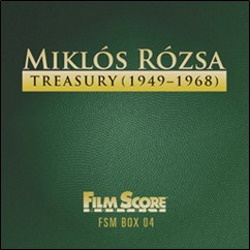 This score is part of the Film Score Monthly Miklós Rózsa Treasury Box Set produced by Bruce Kimmel and the late Nick Redman. Although digitally remastered, the reader is advised that the audio remains monaural. Rózsa throughout his career was a master in supporting period piece films, and “Young Bess” is no exception. The film at its core was Bess’ story and three of the seven primary themes are directly linked to her, each supporting an important facet of her life; Bess’ Theme supports her in regal grandeur as queen, the molto romantico Love Theme expresses her love for Tom, and lastly, the Heartbreak Theme supports the heartache and bitterness of her unrequited love for Tom, and later her unassuageable grief when she cannot save him from execution. Rózsa’s music also brought the royal grandeur, pomp and circumstance of the English royal court to life with rich fanfares, marches and court dances. Masterpiece cues such as “Dies Irae”, which offers a well-conceived passacaglia using the plainchant Catholic hymn, “Night Visitor” where the Love Theme blossoms with sublimity, and “Finale” where Bess achieves an apotheosis as Queen Elizabeth I empowered with resplendent grandeur by a, triumphant statement of her theme. Folks, I believe this to be one of the finest score’s in Rózsa’s canon and a masterpiece of the Golden Age. Regretfully the FSM Box set is found only at secondary markets and is extremely expensive. Let’s hope for a stereophonic re-recording with 21st century audio quality so we can experience the magnificence of Rózsa’ handiwork.
Editor’s Note: As mentioned above, this review is of the 2010 FSM Release of the Miklós Rózsa Treasury Box Set. A more easily affordable, and perhaps better presented, version of the scores was released in 2004 by Belgian label Prometheus, and is priced much cheaper as a standalone CD. Personally, I have always enjoyed and appreciated that release an excellent presentation of the score, and I recommend it as a alternative to thriftier collectors.
For those of you unfamiliar with the score, I have embedded a YouTube link to a wonderful ten-minute suite; https://www.youtube.com/watch?v=EqgdmnkYV_8
Buy the Young Bess soundtrack from the Movie Music UK Store
Track Listing:
- PROMETHEUS RELEASE
- Prelude/Hatfield/Reminiscing/Exit Anne Boleyn (4:33)
- Changing Mothers/King Henry/New Stepmother/Hatfield Again (2:35)
- Tom Seymour’s Mission/Whitehall/The Prince Of Wales (3:47)
- Eavesdropping (1:13)
- Dies Irae (5:07)
- Princess Elizabeth/Appointment With Love (2:00)
- Anne Boleyn’s Daughter/Dinner Music (2:40)
- Dreams/Reality/Disillusion (3:21)
- The King’s Diary/The King’s Finances/The King’s English (3:01)
- Returning Hero (0:19)
- Royal Tact/Old Harry/Chelsea (5:48)
- The King’s Ballad (3:08)
- Desperate Love/Crossroads/Catherine’s End (5:51)
- Bad News/Night Visitor/Farewell (6:43)
- Inquisition/Alone (3:08)
- Finale (2:01)
- FILM SCORE MONTHLY RELEASE
- Prelude/Hatfield House (2:18)
- Reminiscing/Anne Boleyn’s Execution/Exit Anne Boleyn (2:27)
- Changing Mothers/King Henry (1:42)
- New Stepmother/ Katherine Howard’s Execution/ Hatfield Again (1:00)
- Tom Seymour’s Mission/Whitehall/Prince Of Wales (3:46)
- Eavesdropping (1:14)
- Dies Irae (5:08)
- Princess Elizabeth/Appointment With Love (2:01)
- Long Live The King/Anne Boleyn’s Daughter/Dinner Music (2:52)
- Dreams/Reality (1:39)
- Disillusion (1:41)
- The King’s Diary/The King’s Finances/The King’s English/Returning Hero (3:26)
- Your Majesty/Royal Tact (1:37)
- Old Harry/Chelsea (4:14)
- Love Will Find Out The Way (0:36)
- King’s Ballad (1:27)
- Dansk Dans/A Toye (4:07)
- Desperate Love (1:19)
- Crossroads/Catherine Parr’s End (4:29)
- King’s Birthday (2:06)
- Bad News Day/Night Visitor/Farewell (6:43)
- Inquisition (1:26)
- Alone (1:43)
- Long Live The Queen (0:08)
- Finale (2:01)
- See-Saw Song (Source Vocal) (0:18)
- Reminiscing (Original Version) (0:32)
- Exit Anne Boleyn (Original Version) (1:02)
- Hatfield Again (Original Version) (0:36)
- Up Again (Deleted Cue) (0:13)
- King’s Barge (Source Fanfares, Drums) (1:08)
- Long Live The King (Alternate Fanfare) (0:11)
- Anne Boleyn’s Daughter (Original Version) (0:14)
- See-Saw Song (Pre-Recording) (2:00)
- Love Will Find Out The Way (Pre-Recording) (1:08)
- King’s Ballad (Original Version) (1:26)
- Dansk Dans (Pre-Recording) (1:50)
- Dansk Dans (Original Version) (1:41)
- Tom Seymour’s Execution (Source Drums) (1:25)
- Her Majesty (Alternate Fanfares) (0:30)
- See-Saw Song (Source Vocal) (0:22)
Running Time: 55 minutes 15 seconds – Prometheus
Running Time: 77 minutes 08 seconds – FSM
Film Score Monthly FSM BOX 04 (1953/2004)
Prometheus PCD 133 (1953/2010)
Music composed and conducted by Miklós Rózsa. Orchestrations by Eugene Zador. Recorded and mixed by XXX. Score produced by Miklós Rózsa. Prometheus album produced by Luc Van de Ven. FSM album produced by Bruce Kimmel and Nick Redman.

Shop at the Movie Music UK Store

Member of the

 MOVIE MUSIC UK