THE THING FROM ANOTHER WORLD – Dimitri Tiomkin
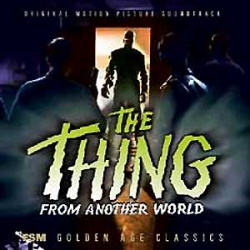 GREATEST SCORES OF THE TWENTIETH CENTURY
Original Review by Craig Lysy
Producers Edward Lasker and Howard Hawks believed that the science fiction-horror novella “Who Goes There?” (1938) by John W. Campbell could be successfully adapted to the big screen. They hoped to tap into the public’s angst with how scientists had unleashed the atomic age and fundamentally changed the world. They purchased the film rights, and Hawks’ Winchester Pictures Production company would fund the project with RKO Pictures agreeing to distribute. Charles Lederer, Hawks and Ben Hecht collaborated in writing the screenplay, and Christian Nyby was tasked with directing. The cast did not feature any box office stars, and was comprised of Margaret Sheridan as Nikki Nicholson, Kenneth Tobey as Captain Patrick Hendry, Robert Cornthwaite as Dr. Arthur Carrington, and James Arness as the alien.
The U.S. air force dispatches a military team to Polar Expedition Six after the outpost reports the discovery of an unusual aircraft crash site. They discover a large saucer-like craft, which they destroy inadvertently after using pyrotechnic thermit to melt the ice encasing it. They do however discover a frozen body buried in the ice, which they chop out and take back to the outpost. A guard accidentally tosses an electric blanket on the ice block to cover its occupant, which thaws and releases the alien. Its fight with sled dogs wounds it and its severed arm reveals it to be a plant based life form. They later discover that the alien has regrown its arm and that it feeds on blood. Dr. Carrington then proceeds to grow several aliens from seeds using med lab plasma. Meanwhile the alien attacks, is driven off, yet manages to destroy the outpost’s furnaces. In a final confrontation, they lure the alien onto an electrified metallic grid, which successfully electrocutes and incinerates it. The film was a commercial success, earning a profit of $1.95 million, and is now considered one of the finest films of 1951 and greatest science fiction films of the 1950s. Critics praised the film for its storytelling, thrills and chills. It did not earn any Academy Award nominations.
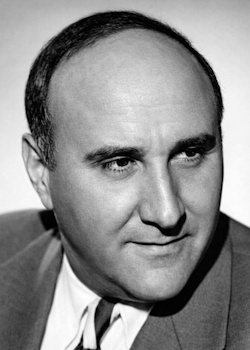 Producer Howard Hawks was very much impressed by Dimitri Tiomkin’s score for his film “Red River” (1948) and so solicited him for the project. Tiomkin readily accepted the assignment as he wanted to take a shot scoring a film in the burgeoning Science Fiction genre. After viewing the film, Tiomkin immediately realized that the alien creature is the lynch pin of the film’s narrative, its presence is pervasive, chilling, and evokes primal fear. This perception guided his approach to scoring the film. He chose to sparsely score the film, reserving music for only those scenes where the alien creature is physically present, or its malevolent lurking implied.
In fashioning his soundscape, Tiomkin embraced modernism, eschewing his traditional Golden Age romanticism. He sought to juxtapose the other-worldliness of alien creature from humanity by using atonality and texturalism to stoke fear, sow terror and create unsettling anxiety. The Theremin is well designed to support this approach, and Tiomkin joined it masterfully with harp glissandi, wordless women’s voices, trilling woodwinds and formless piano runs. The fact that his music throughout the film never resolves, instead remaining illusive and intangible effectively succeeded in keeping the audience tense. There are only two themes in his score; a traditional marcia americana provides the requisite military presence given that it is the American air force which battles the creature. Tiomkin restricts this theme to the Main and End Titles. The Monster Theme supports the alien creature and evokes menace, malevolence and other-worldly terror. Tiomkin often expressed it in a way to synchronize with the creature’s footfalls, intensifying its expression as the creature moved ever closer. Yet its expression when distant, and lurking was just as unnerving in keeping the audience on the edge of their seats. Lastly, three source songs were infused into his soundscape to provide the requisite contemporaneous ambiance; “Can’t Get Out of This Mood” by Jimmy McHugh, “A Lovely Way to Spend an Evening” by Jimmy McHugh, and the traditional song “The Dying Cowboy” aka Bury Me Not on the Lone Prairie.
“Main Title” offers a score highlight where Tiomkin masterfully establishes the terror of the film’s narrative. We open boldly with a proud marcia americana as the RKO Radio Pictures and Winchester Pictures studio logos display. At 0:19 Tiomkin sow terror as the luminous film title eerily displays against a pitch-black background. At 0:27 the menace and malevolence of the Monster Theme is unleashed. At 0:44 the flow of the opening credits unfolds against a backdrop of an Arctic blizzard supported by eerie woodwind trills, intangible piano runs and portentous dire horn declarations, which strike fear and speak of a lurking menace. We close with menace with a coda of the Monster Theme. (*) “Anchorage Alaska” reveals a sign “Officers Club Anchorage Alaska” where a man walks through the storm supported by the eerie Main Title Motif of woodwind trills, intangible piano runs and dire muted horns. We see journalist Ned Scott (Scotty) joins the officers inside. Tiomkin supports with source music, “Can’t Get Out of This Mood” by Jimmy McHugh. Captain Hendry is summoned to General Fogarty’s office and ordered to setup a team and fly to Polar Expedition Outpost Six. They have received word from lead scientist Dr. Carrington that an unusual and unidentified aircraft has crashed nearby.
In an unscored scene Hendry flies his team to Outpost Six. The harsh blowing Arctic winds in and of themselves create unease. The Outpost staff and Hendry’s team are well known to each other and reacquaint warmly. In (*) “Hendry Meets with Dr. Carrington” an eerie oscilloscope resonance supports Hendry’s arrival. He advises Hendry that since yesterday’s crash a magnetometer deviation of twelve degrees east has persisted, which could only be caused by the impact of an object equivalent to 20,000 tons of steel. Based on the object’s trajectory and flight path, they have ruled out that it was a meteor. Hendry orders the departure of the investigation expedition, which will fly forty-eight miles to the crash site. They come upon the crash site and see that something clearly has crashed and now lays hidden in the ice.
“Flying Saucer Sequence, Part 1” reveals Hendry landing half a mile from the crash site. As they deplane and set off, Tiomkin embraces modernism, unleashes a swirling, dissonant, atonal storm. At 0:12 dire horns resound and the Monster Theme surges, joined by ethereal wordless women’s voices, trilling woodwinds, and draped with other-worldly Theremin as they reach the crash site. The music dissociates into eerie formlessness as ominous drum strikes sound. At 0:55 as the move closer, the Monster Theme again surges with dire menace, joined by a reprise of the swirling dissonant, atonal storm. At 1:32 the Theremin joins as the men assess a metallic air foil. As the men branch out to determine the object’s shape, the atonal storm surges with horrific dissonance atop a crescendo di terrore as they discovery to their utter amazement, that the craft is circular – a flying saucer!
In “Flying Saucer Sequence, Part 2” the men try to absorb the magnitude of their discovery. The Theremin and Monster Theme join in unholy communion as Tiomkin sow a growing unease. The dissonant atonal storm motif resumes, buttressed by a two-note ostinato of terror as Hendry decides that he must use Thermite to release the craft from the ice. At 2:49 the men move off and prepare to detonate the Thermite supported by a horrific ear-piercing, shrill crescendo di terrore, which crests at 3:01. A monstrous, deafening ostinato of horror erupts as we see explosions consume the spacecraft, which explodes in a sea of flames as a Theremin wails. At 4:33 the two-note ostinato of terror resumes, draped with eerie atonal dissonance as the Geiger counter leads to the discovery of an eight-foot-tall humanoid. Hendry makes the decision to chop it out by hand and then transport the ice block of the creature back to the base. We close at 5:29 with a surging crescendo of horrific dissonance as the plane takes off to return to base.
In an unscored sequence the flight back is uneventful and the massive ice block is moved to the storage room. Hendry refuses Dr. Carrington’s request to thaw and examine the alien until he receives specific orders from command to do so. Mac is left to stand first watch as the scientists argue with Hendry regarding the disposition of the alien. In the radio room, communication has been lost, and so Hendry’s order to delay thawing the humanoid and examining it stands until such time that high command can be reached. Later in the cafeteria source music supports with “A Lovely Way to Spend an Evening” by Jimmy McHugh as Hendry tries to rekindle his romance with Nikki. In “Melting Sequence” Corporal Barnes relieves Mac to stand the second watch. He nervously whistles the traditional folk song “The Dying Cowboy” AKA “Bury Me Not on the Lone Prairie” as he looks upon the frozen alien. He recoils from its appearance and then stupidly lays the electric blanket over the ice block to hide the sight of the encased alien. Tiomkin sows a terrible unease with a Theremin led misterioso with a slowly swelling menace as we see the ice block melting, and Huskie dogs becoming agitated outdoors. We surge atop a crescendo di orrore and wailing Theremin at 1:16 as Barnes turns and sees the creature alive and upright. He fires his pistol and flees in terror.
“Dog Fight” reveals Hendry leading an armed squad into the storeroom. Tiomkin evokes terror with the Monster Theme and Theremin, joined by dissonant, atonal tempest as they discover the alien is alive. Through the window they see it fighting for its life against the pack of Huskie dogs. They don their winter gear and then head out supported by a harsh ostinato, which underpins the alien’s savage fight with the Huskies. It flees as the men approach and at 1:00 an eerie Theremin led misterioso of uncertainty supports the discovery of a severed hand. We close ominously on the two-note Monster ostinato as they take the severed hand back to the outpost. In “The Hand” they examine the hand and can see no blood, or animal tissue. When Dr. Stern examines a tissue sample under the microscope, he discovers that the tissue is plant based. Music enters with the Theremin emoting the two-note Monster ostinato draped with eerie woodwinds as the hand comes to life and begins moving.
“Greenhouse Sequence” reveals Hendry leading an armed party searching the outpost to ensure the creature has not reentered. They search the greenhouse and depart, but the scientists remain as Dr. Carrington has made a discovery. It appears that the alien entered and then left the room based on mold that was killed by a blast of cold Arctic air. Music enters harshly as they open a storage bin and the body of a dead dog falls to the floor. All its blood has been drained out and the Monster Theme joins with the Theremin and other-worldly wordless women’s voices as Tiomkin sow terror. Dr. Carrington however is unphased and convinces the other scientists of the urgency of communicating with a higher form of life. Later, in an unscored scene, Hendry and a squad of men return empty-handed from a search of the surrounding terrain. Dr. Stern stumbles in gravely wounded, saying the creature came to the greenhouse and killed Drs. Olson and Aurebach. Hendry assembles a squad armed with axes and guns and heads to the greenhouse. “The Thing at Door” reveals Hendry opening the greenhouse door with the creature standing in the entrance. Tiomkin evokes visceral terror, which empowers the creature savagely striking at Hendry. They slam the door on its arm, which it yanks back with a roar. A drum ostinato and tremolo strings sow fear and dissipate into uncertainty as the men barricade the door.
In “Plasma #1” Dr. Carrington reveals to his colleagues his experiment, cultivating seeds taken from the creature’s hand in soil saturated with blood plasma. They are fascinated at the pods, which are growing and pulsing with apparent respiration. Tiomkin creates an eerie, alien, other-worldly musical narrative using a formless ambient piano, Theremin wordless women’s voices, and staccato horns minacciose, which elicits fear and makes our skin crawl. “Plasma Plants #2” sustains the other-worldly soundscape as Dr. Carrington dismisses the concerns of his colleagues over his actions, which they consider dangerous, postulating that the creature may have come to earth to grow a monstrous army that feeds off the blood of humans. In an unscored scene Hendry obtains Dr. Carrington’s notes from Nikki and confronts him regarding his experiment. Over his objections, Hendry decides to destroy the pods in the laboratory, and then the alien locked in the greenhouse. However, a new radio dispatch from General Fogarty orders that the alien not be harmed, much to Dr. Carrington’s relief.
“Fire Sequence” offers a frightening score highlight abounding with terror. It reveals Nikki, Hendry, and his men in the crew quarters outside mess hall. The Geiger counter begins registering readings that are increasing in intensity, indicating that the alien is approaching. Hendry orders kerosine be readied to burn the creature should it attack as the Geiger counter readings steadily rise. Tiomkin sow a slowly mounting other-worldly terror until 0:17 when a menacing Monster Theme intrudes and strengthens monstrously, as it approaches, shatters a window in the adjoining room and throws open the door at 1:10. It attacks at 1:15 supported by a horrific dissonant maelstrom empowered by grotesque joining of the Monster Theme and Theremin as the men repeated dose the creature with kerosine, ignited by a flare gun shot. The alien lashes out, but is clearly wounded by the immolation. Horrific screeching horns resound as it in desperation leaps through the window, and flees with its clothes burning in the snow. The storm dissipates in a diminuendo as the men desperately try to extinguish the flames before they spread uncontrolled.
In an unscored scene, Hendry houses all his men and staff in the mess hall and formulates a plan to hunt down and kill the alien. Then a plan to use electricity is offered to Hendry by the scientists who say that if they use two poles, enough amps could be generated to incinerate the alien. Hendry orders preparation to be made in the central corridor to which the greenhouse connects. Soon afterwards the alarm is raised as the men discover that the furnace has failed, most likely due to sabotage by the alien. With only 30 minutes before they begin freezing, Hendry orders the men to expedite the setup of the electrocution hardware and defend the generator room as disabling electrical power would doom their efforts. We see the men laying the metallic grid on the floor and setting up the two poles as Dr. Carrington argues against harming the alien. Slowly the Geiger counter reading begin to climb leading Hendry to position his men and set the trap. They turn off half the lights so as to obscure their trap.
In “Electrocution Sequence” music from 0:00 – 0:37 was dialed out of the film. It offers a slowly mounting other-worldly tension draped with ethereal harp glissandi. At 0:38 the album and film gain synchrony as the malevolent menace of the Monster Theme emoted as dire footfalls heralds its approach. At 0:49 a swirling torrent of strings support it ripping open the door and shattering the wood barrier. The Monster Theme footfalls buttressed by wailing horns and horrific dissonance support its picking up of a 4×4 wood beam and aggressively walking towards the men. An interlude at 1:02 supports Dr. Carrington turning off the generator, but he his overcome and power is restored. At 1:09 the Monster Theme resumes, supporting its fear-evoking walk forward. Another interlude at 1:17 supports Dr. Carrington’s futile attempt to reason with the creature who savagely swats him away. The creature resumes his approach alongside the metallic grid, which elicits the throwing of a pike at 2:14 empowered by an orchestral strike dazzling harp glissandi that causes the creature to leap onto the metallic grid. At 2:33 it resumes its walk forward with a horrific monstrous swelling of its theme until 2:52 when Hendry throws the switch and unleashes three electrical currents converging on the creature. As it is slowly incinerated and shrinks the music descends in a slow diminuendo, swirling in pain, and writhing in a horrific death throe agony. At 3:41 it is over, and a wailing Theremin and echoes of the Monster Theme slowly fade to nothingness as Hendry shuts down the current.
“End Title” reveals journalist Ned Scott at last given permission to broadcast his exclusive report;
“All right, fellas, here’s your story: North Pole, November Third, Ned Scott reporting. One of the world’s greatest battles was fought and won today by the human race. Here at the top of the world a handful of American soldiers and civilians met the first invasion from another planet. A man by the name of Noah once saved our world with an ark of wood. Here at the North Pole, a few men performed a similar service with an arc of electricity. The flying saucer which landed here and its pilot have been destroyed, but not without causalities among our own meager forces… And now before giving you the details of the battle, I bring you a warning: Everyone, of you listening to my voice, tell the world, tell this to everybody wherever they are. Watch the skies. Everywhere. Keep looking. Keep watching the skies”.
As “The End” displays on the screen, we conclude with a final statement of the Monster Theme, which yields at 0:14 with a reprise of the opening marcia Americana.
I would like to thank Lukas Kendall and Film Score Monthly for restoring this Tiomkin masterwork of horror. The original master tapes had been lost, but the complete score survived on monaural acetate transfer disks in Tiomkin’s personal collection. The technical team used this source to produce this premiere CD. Despite mastering, some surface noise nevertheless remains. This was a project that Dimitri Tiomkin savored as it presented an opportunity to take on a film from the emerging science fiction genre. After viewing the film, he understood that the alien was nexus of the film’s narrative and that the score’s mission was clear – to sow fear, and other-worldly terror. To that end he abandoned his usual scoring sensibilities and instead embraced modernism for what I believe to be the most audacious and atypical score of his canon. If you had no prior knowledge, you would probably guess that Alex North or Laurence Rosenman composed the score, not the Golden Age romanticist Dimitri Tiomkin. Folks, I believe that it was Tiomkin’s decision to juxtapose the other worldliness of alien from humanity by using the Monster Theme and Theremin to stoke fear, and sow terror, joined with atonality and texturalism to create unsettling anxiety, that allowed director Christian Nyby to achieve his vision. In my judgement Tiomkin wrote one of the finest horror scores in cinematic history and it is a shame that he would never again revisit the genre. Despite the audio imperfections, I recommend this unique score as essential for collectors.
For those of you unfamiliar with the score, I have embedded a YouTube link to an eleven-minute suite; https://www.youtube.com/watch?v=MktLCvYf_QQ
Buy the Thing from Another World soundtrack from the Movie Music UK Store
Track Listing:
- Main Title (1:48)
- Flying Saucer Sequence, Part 1 (2:14)
- Flying Saucer Sequence, Part 2 (5:47)
- Melting Sequence (1:40)
- Dog Fight (1:49)
- The Hand (0:50)
- Greenhouse Sequence (1:10)
- The Thing at Door (0:40)
- Plasma #1 (2:26)
- Plasma Plants #2 (1:06)
- Fire Sequence (2:04)
- Electrocution Sequence (4:11)
- End Title (0:35)
Running Time: 26 minutes 50 seconds
Film Score Monthly FSM Vol.8 No.1 (1951/2005)
Music composed and conducted by Dimitri Tiomkin. Orchestrations by George Parrish and Herbert Taylor. Recorded and mixed by XXX. Score produced by Dimitri Tiomkin. Album produced by Lukas Kendall.

Shop at the Movie Music UK Store

Member of the

 MOVIE MUSIC UK