MADAME BOVARY – Miklós Rózsa
 GREATEST SCORES OF THE TWENTIETH CENTURY
Original Review by Craig Lysy
MGM Studios had a history of successfully adapting popular works of literature for the big screen. In that tradition, the 1857 French novel “Madame Bovary” by Gustave Flaubert was universally recognized as a classic of literature, which MGM believed merited a film presentation. The film rights were purchased, Pandro S. Berman was assigned production with a $2.076 million budget, Robert Ardey was hired to write the screenplay with instructions to maintain fidelity to the novel, and Vincente Minnelli was tasked with directing. A stellar cast was hired, including Jennifer Jones as Emma Bovary, Van Heflin as Charles Bovary, Louis Jourdan as Rodolphe Boulanger, and James Mason as Gustave Flaubert.
The story is set in Normandy France circa 1850 C.E. and opens in a court room where author Gustave Flaubert challenges the court decision to ban his novel, which is deemed vile and immoral. Flaubert counters by offering the story from his perspective. The story follows the life events of Emma, a young twenty-year-old woman who always believes the grass is greener on the other side. She impulsively marries Dr. Charles Bovary and runs up ruinous bills decorating her new home. She then decides she must give birth to a boy as they have more opportunities for upward mobility, however she bears a girl, who she tires of quickly. Now bored with her life she embarks on a number of shameless adulterous affairs with several men, who she hopes can provide her the life she feels she deserves. She fails in each case, returns home to Charles only to find a notice of sale to pay off all the outstanding money she spent decorating the cottage. She attempts suicide by taking arsenic, only to have the ever-dutiful Charles try to save her. In the end, she dies and the Court rules that Flaubert’s novel may be published. The film was a commercial failure, losing $60,000. Critical reception was mixed with some commending its fidelity to Flaubert’s tale, while other criticized the performance of Jennifer Jones. The film earned one Academy Award nomination for Best Art Direction.
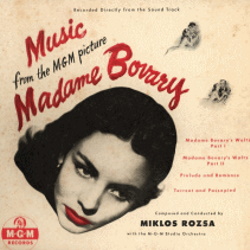
After Miklós Rózsa’s second Oscar win with A Double Life in 1947 MGM executive Louis K. Sidney decided in 1948 to make the studio’s third attempt to recruit him, and make him their premier composer. Very favorable terms were offered and Rózsa signed a long-term contract, which would last fourteen years, with him writing some of the finest scores in his canon. For his third project at the studio he was assigned the studio’s opulent production of Madame Bovary. Director Vincente Minnelli brought Rózsa in very early in production so he could grasp his vision. For Minnelli the core narrative involved Emma, a pathetic and tragic character who never succeeds in realizing her quest for romantic love. He tasked Rózsa with composing a “neurotic” waltz, which would support the film’s most important scene where Emma is swept away in one of the greatest waltz scenes in cinematic history.
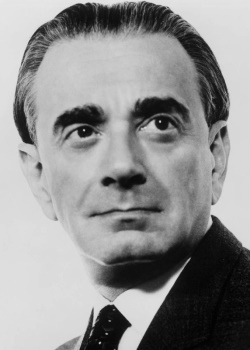 For his soundscape, Rózsa composed a multiplicity of interwoven themes related to Emma, and the three lovers in her life. Emma’s has four personal themes associated with her; Theme 1, the score’s Main Theme, offers a dark passion, full of longing, which speaks to her lifelong search for true love and respected social status. This romantic yearning is a search for the ideal lover as portrayed in the novels she read, and the collection of paintings on her wall, as such, it will never be realized. Emma’s Theme 2, or her Disillusionment Theme offers a musical narrative of pain revealed as a tortured string descent, which never resolves, and speaks of her frustration in achieving romantic and social status fulfilment. The Waltz Theme speaks to Emma’s lust for the idealized lover of her novels and paintings. It is the most powerful of her four themes with Rózsa offering an intoxicating valzer seducente as Emma is swept away in a whirlwind of passion and lust by the irresistible seductive masculine allure of the dashing Rodolphe Boulanger. The dirge-like anguish of the Death-Agony” Theme speaks to Emma’s unbearable agony and regret as she on her deathbed, succumbs to her self-inflicted arsenic poisoning. The theme is voiced by a mournful English horn funebre joined by writhing violins affanato, which descend in misery as she cries out in pain, fully aware that she has not only brought ruin to herself, but also to Charles and Berthe.
There are three Love Themes, one for each of her lovers; Emma and Charles’ Love Theme always emotes from his perspective as Emma has no such reciprocal feeling for Charles, as he does not measure up to her idealized expectations of her lover. The theme offers a classic romance for strings, but the music’s articulation while tender, forthright, and sincere, lacks ardor and passion, qualities that Charles does not possess. For Emma and Rodolphe’s Love Theme, Rózsa offers a long-lined molto romantico romance for strings as the dashing Rodolphe Boulanger is truly ardent in his love for Emma. Of the three love themes, Rodolphe’s is the most unabashed and fervent, however in the end it burns itself out, as Rodolphe devastates her with the admission that he abandoned her as he feared that loving her would ultimately consume and destroy him. Lastly, we have Emma and Léon’s Love Theme, which offers a harp tenero joined by ardent strings romantico, which in turn pass on the melody to a solo violin d’amore. The younger Léon doesn’t care that Emma is married. All that matters is that she surrenders her heart to him so he can make love to her. Their love is ultimately doomed, when he reveals that he is no a wealthy lawyer, but a poor lowly law clerk who is unable to measure up to her idealized expectations of a lover.
Rózsa offers a secondary theme for Emma’s daughter Berthe, providing a tender, child-like theme. Interestingly enough, her theme emanates from Charles’ perspective, not Emma’s, as she wanted a man-child and her disappointment leads to a lifetime estrangement and disappointment with Berthe. Rózsa initially chose to interpolate a number of classic dances for the ball including the “Bitte Schön! Polka Française” and “Banditen Galop” by Johann Strauss Jr. However, in the end he composed beautiful original dances, which fully embrace 19th century sensibilities including a Passepied, a Quadrille, a Polka and a Galop. Lastly, Rózsa also appreciated that he would need to speak to culture and setting and so interpolated a number of French folk songs.
“Main Title” offers a score highlight where Rózsa masterfully sets the tone of the film. We open with the MGM studio logo, but Rózsa replaces the logo music with a powerful molto dramatico statement of Emma’s Theme 1, which offers a dark thirsting passion, full of longing. The music rises and falls like a restless sea and speaks to her lifelong desire to achieve romantic fulfilment as the stylized script of the opening credits flow. At 0:57 we begin a tortured descent atop strings tristi emoting Emma’s Theme 2, which speaks to her frustration in realizing true love and her social status. We conclude the opening credits with a reprise of Emma’s Theme 1. Script reveals an 1857 trial of author Gustave Flaubert who stands accused of publishing obscenity in his latest novel, Madame Bovary. As he defends his storytelling, we flashback to the night Charles Bovary met Emma Roualt. He is a doctor who during the night sets Mr. Roualt’s broken leg, In the morning he meets and is smitten by Emma’s charm and beauty as she cooks him breakfast in “Charles in Love” Rózsa’s supports the moment at 0:33 with his customary string borne romanticism, in which he interpolates a traditional French folk song, offering beautiful solos by a resplendent clarinet and flute delicato. The music introduces the nascent Love Theme for Charles and Emma.
“Retrospection” reveals Charles’ departure and promise to return tomorrow as Emma’s heart stirs full of yearning while she watches him ride off from an upstairs window. Rózsa supports the scene with the Love Theme, which also stirs to life, now borne full of longing by flute pastorale with harp adornment. At 1:05 we segue into “Ave Maria” carried by solemn strings religioso adorned with church bells, which support a flashback to Emma’s girlhood at a convent. At 1:14 repetitive mind-numbing pianos runs support her tedious forced practice by the nuns. At 1:26 we shift to the chapel where Emma and nine of her classmates sing con riverenza the Gregorian “Ave Maria” in chapel. At 1:47 we segue into “I Knew a Love” carried by a Swiss seamstress who sings some love songs of the past. We see that these stories elicit romantic yearning in Emma’s expression as she listens intently, and later reads love romance novels smuggled into the convent. Rózsa supports the intimate romantic moment by interpolating another traditional French folk song.
In “Dreams” Flaubert’s narration informs us of Emma’s life at the convent, and later her departure to return to her farm. Rózsa supports with gentility atop the “I Knew a Love” melody borne at 0:17 by solo viola romantico and kindred strings. At 1:08 we see Emma harvesting potatoes at her farm supported by an oboe pastorale. At 1:13 shimmering refulgent strings offer a yearning rendering of her Theme 1 as she gazes aloft upon a billowy cloud swept sky and dreams to experience the love found in the pages of the romance novels she has read. At 2:20 the Love Theme with interplay of a horn rich traditional French folk song animated by bubbling woodwinds support Charles riding to the town of Yonville where he will begin his new life. “Charles Proposes” offers a romantic score highlight. It reveals Charles proposing marriage to a receptive and joyous Emma. Yet the proposal also plants seeds of discontent, as Charles is an ordinary and unexciting man, not the dashing romantic heroes of her novels that swept women off their feet. Rózsa’s supports with the Love Theme emoted as a tender romance for strings, which blossoms beautifully with sweet anticipation.
In “Chanson Populaire” Rózsa interpolates a festive French folk song that is sung by the drunken towns folk celebrating Charles’s and Emma’s wedding. Charles and Emma are appalled and flee as the wedding reception descends into drunkenness and debauchery. “Arrival in Yonville” reveals our lovers arriving at their new home in the town of Yonville, where Charles will serve as the town doctor. Rózsa supports their arrival by interpolating the gentile 17th century folk song “Auprès de ma blonde” (“Beside My Sweetheart”). At 0:24 strings d’amore as Charles takes the key from the care taker who departs. In “Honeymoon” Charles carries Emma over the threshold and up the stairs to their bedroom. Rózsa supports with a rapturous blossoming of the Love Theme as she kisses him passionately as her romantic yearnings born from the pages of her many romance novels, will soon be realized. At 0:55 church bells sound to herald the dawn as we see the city merchants slowly stirring to life. Charles is asleep, and Emma seems discontent with the interior of her home, her theme 1 voicing her feelings. At 1:28 a crescendo dramatico swells as she throws open the bedroom window shutters. She awakens Charles supported by the Love Theme and promises to make their home the most beautiful one in town. Later, we see Emma spending money extravagantly on very expensive furniture to beautify her house. Weeks later in “Chopin’s Waltz in A minor, Op. 34, No. 2” we see Emma in her lavishly decorated home, play the Chopin piece at a party that Charles and she are hosting.
In “New Dreams” Emma feels humiliated by the condescension offered by the visiting aristocrat the Marquis d’Andervilliers. She abandons the party and we see the seeds of her discontent with provincial life and standing in society sprout. Rózsa supports with Emma’s Disillusionment Theme, which speaks to her frustration in realizing true love and sense of unfulfillment with her life. A forlorn solo English horn is joined by strings tristi, which offer a dark musical narrative. Charles finds her in the attic, tries to console her, yet at 0:28 we swell on a tortured crescendo as she weeps and rages against the Marquis. Yet he calms her, the musical rage subsides and we flow into Emma’s Theme 1, which abounds with sadness and discontent as she tells Charles she wants to bear a son, who will not be constrained by social constraints (like she is being a woman), and be able to achieve his ambitions. We advance in time and we see Charles delivering their daughter, supported by the playful and child-like Berthe Theme borne tenderly by flute led woodwinds delicato. The transfer of the melody to solo violin tenero at 2:05 is delightful. At 2:20 we advance in time to Berthe as a toddler in “Disillusion” and an oboe tenero with harp adornment graces us with the Berthe’s Theme as Charles enjoys playing with her. As an aloof Emma stares out the window, the bitter discontent of her Disillusionment Theme descends like a dark pall of death for a deeply disturbing extended exposition. She ridicules the towns people below with a harp agitato and tolling church bell joining the unsettling musical narrative. At 3:22 Charles comes to console her carried warmly by his Love Theme, yet she is unmoved and as he departs at 3:58 to commence his morning calls, she mocks his departure, her now eerie and twisted Disillusionment Theme again ascendent. Yet Charles returns with an invitation to attend a ball at the Marquis, and we close with Emma’s return to a good mood as she is ecstatic while she races off to buy a new gown.
The next quaternary cue supports the grand ball at the estate of the Marquis. Rózsa embraces traditional 19th century European sensibilities, supporting the ball with a number of beautifully crafted original dances. In “Passepied” the French court dance is rendered as a formal danza gentile as the Marquis insists that Emma grant him the first dance. As the dance flows with elegance, Charles struggles unsuccessfully to fit in with the aristocrats. At 1:23 we segue into “The Marquis’s Quadrille”, which offers a more energetic danza spiritoso as the guests dance the European version of the American Square dance. Emma is having a delightful time as Charles watches from the sidelines. At 2:00 we flow into “The Gay Sixties – Polka” a bouncy and energetic danza animato, with Charles imbibing champagne as Emma continues her dancing soirée. At 2:53 we launch into “L’Hirondelle – Galop”, the most energetic dance of the ball, as the guests all join in a series of circles, each racing feverishly as it rotates.
“Madame Bovary Waltz” offers the score’s finest moment, a testament of Rózsa’s mastery of his craft, and an astounding cinematic confluence. The dashing young aristocrat Rodolphe Boulanger takes notice of Emma and moves in, and takes her by the hand to the dance floor. We commence with a classic valzer eleganza one of the finest in Rózsa’s canon. Slowly, an inexorable increase in the tempo and passion of the waltz unfolds as we see Emma captivated by Rodolphe. In time the external world disappears as Emma and Rodolphe become consumed in the rapturous intimate moment, oblivious to all else around them. At 2:40 an accelerando ecstatico gains force as our couple dances faster and more intensely in circular fashion with Rózsa unleashing a string borne twirling dizziness effect as we see the room spinning. Windows are shattered to let in fresh breeze and a drunken Charles stumbles onto the dance floor calling for Emma, yet nothing can break Emma and Roldophe’s rapture. Charles finally forcibly intrudes, and demands to dance with his wife, which causes Rodolphe to depart as a distraught Emma bolts from the dance floor, leaving Charles dazed and incredulous.
“Temptation (Torment)” reveals Emma driving the carriage home supported by an echo of the waltz melody as Charles lays next to her passed out. The next day the waltz melody again returns as an echo in her mind borne by a spectral flute as she packs away her gown. When her maid announces that the young legal clerk Léon Dupuis has called, Emma asks that he join her in the attic. Her Theme 1 enters at 0:34 and swells on a crescendo appassionato as she peruses her treasured wall gallery. Léon arrives and Emma makes a wordless sexual overture and he responds amorously at 1:14 as a harp prelude usher in Emma and Léon’s Love Theme borne by solo cello romantico and ardent strings appassionato, which in turn pass on the melody to violins d’amore. He doesn’t care that she is married, all that matters is that she allows him to make love to her. Yet he is frustrated and vexed as she runs from his arms downstairs. At 2:13 the music sours and the Love Theme dissipates as the maid advises that Léon’s mother has made a house call. She perceives an illicit attraction and informs both that she has made arrangements to relocate Léon to Paris. Emma acquiesces and coldly advises Léon to do as his mother wishes.
“Le Joli Tambour” reveals the mayor, Charles and the town people celebrating an agricultural festival. Rodolphe shamelessly takes Emma’s arm and strolls in public, and then takes her inside to a secluded room, where she at last succumbs to his amorous seduction, permitting his kiss. And yet she cannot bring herself to surrender to passion and bolts the room, returning to Charles, much to Rodolphe’s frustration. Rózsa supports the scene unobtrusively with the French folk song “Le Joli Tambour” (“The Pretty Drummer Boy”) as source music. In “Crossroads” Emma continues her quest to elevate her social status and so beseeches Charles to operate on the clubfoot of the town simpleton, Hyppolite. She hopes that such a surgical success would elevate Charles’s standing in the medical community and at last satisfy her romantic yearning. Charles rightfully refuses saying that he is not a surgeon, but is devastated when Emma shatters him by saying; “Do you want me to love you or don’t you?” The music enters atop a dire surging Emma Theme 1 and then descends into despair as Charles makes the fateful decision to accommodate Emma’s desire and operate. She relates that she wants to be proud of him, but he counters that this is storybook dreams and that he cannot change the nature of the man he is.
In “The Operation” a grim musical narrative joins a dark string ostinato with fragments of Emma’s Theme 1 as Charles preps Hyppolite for surgery. Yet at the moment he is to begin, Charles’ conscience compels him to cancel the surgery as he recalls his Hippocratic oath; “First do no harm”. A dire musical narrative unfolds when Charles departs as the mayor declares him a disgrace to our village. The music ends in despair as Charles informs Emma, he could not perform the operation. At 1:49 we shift scenes and see that Emma has joined Rodolphe for a horseback ride in the country. Rózsa supports with an ardent romantic rendering of the Waltz Theme by strings appassianto as the camera reveals an implicit disclosure of their love-making with strewn clothes on the ground. Later that night Charles is feeding Berthe as the maid informs him that Emma bought a horse and went out riding. In “Remorse” Rózsa sow tension with dark strings and foreboding woodwinds as Emma sneaks into the house and is confronted by Charles, who interrogates her. At 0:34 Charles’ Love Theme joins with warm affection as he voices his desire that Emma find happiness, adding; “I love you so much.” Yet it is for naught as she is unreceptive and dismissive. She retires to her bedroom where we close at 1:00 full of yearning with the Waltz Theme voiced by violin d’amore as we see her consumed with love for Rodolphe.
“Rodolphe’s Love” offers a romantic score highlight as we see Emma enjoying another tryst at Rodolphe’s country home. Rózsa weaves and exquisite romantic tapestry, opening with an elegant new Love Theme for Rodolphe, a long-lined romance for strings tenero. At 0:51 the transfer of the melody to violin d’amore ushers in a blossoming of the theme as Rodolphe moves in, kisses Emma and confesses his all-consuming love. Masterful is how Rózsa subtly speaks to Emma’s lust by entwining the Waltz Theme within the musical narrative. He reveals a drawer full of love letters to women of his past and she becomes jealous, saying, do not torment me. At 2:34 a crescendo dramatico slowly swells on the Waltz Theme as he responds, do not destroy me, and demonstrates his sincerity by tossing the letters into the fireplace. At 3:11 the Waltz Theme blossoms as she embraces and kisses him. She departs at 3:31 carried by a woodwind pastorale, and we conclude passionately with interplay of the Love and Waltz Themes as our two lovers again rendezvous for horse riding in the country. In “Emma’s Love” our lovers voice plans to elope, which Rózsa supports with interplay of their stirring Love Theme and the Waltz Theme. Yet sadness enters as Rodolphe reminds Emma that they would be forced to abandon her daughter, saying; “This is where dreams leave off, Emma.” She relates that she has lost her daughter to Charles and the maid, and can no longer even look at Charles.
The next two cues offer a testament to Rózsa’s mastery of melodrama. In “Coach” Emma has purchased travel trunks, and a week later prepares to elope with Rodolphe, whose coach will arrive at midnight to whisk them away to their new life in Italy. Monsieur Lheureux places Emma’s trunks out in front of his shop for pickup. At home, Emma kisses Berthe goodbye supported by strings doloroso, and then sneaks out of the house, arriving at Lheureux’s store front where Rodolphe’s carriage will pick her up. Rózsa sow a slowly escalating tension full of foreboding embedded with references to the Waltz Theme to support her escape as she waits for the carriage to arrive. At 1:28 an intensifying trotting ostinato joins with a fugue to support the approach of the carriage. She moves to the curb and at 1:44 a crescendo dramatico slowly swells, and crests with dire horns of devastation as the carriage roars past her as she screams; “Wait! Wait!” In the aftermath, bass grave voice her anguished theme as Emma returns home. At 2:40 the music darkens atop pizzicato bass as she turns to discover Charles who is pained by Emma’s betrayal and infidelity. He slowly walks towards her and at 2:57 we flow dramatically into “The Letter” as Charles advises that there is a basket of fruit from La Huchette. She is exposed, guilt-ridden and grabs the letter, running upstairs to her bedroom to read it carried by tortured strings and fateful drum strikes of doom that portend betrayal. As she reads the letter at 3:24 an aching ascent by strings writhing in pain unleash a crescendo di devastazione, which support Rodolphe’s callous admission of betrayal. At 3:46 Rózsa unleashes a horrific swelling orchestral torrent as Charles breaks down the door and grabs Emma at the last moment as she ties to leap out the window to her doom. Her anguished theme supports Charles carrying her to her bed, and then retrieving the letter. The music subsides, and slowly dissipates as Charles burns the letter, assuring her that he did not read it, but it is for naught as Emma has suffered a psychic break and is divorced from her painful reality.
“Recovered” offers more courtroom narration by Flaubert, who speaks of Emma’s slow recovery in the intervening months. Rózsa supports with interplay of her theme that has lost its vitality, with Charles’ Theme, which informs us that his love remains steadfast. This is affirmed in “Lucia di Lammermoor” by his loving decision to gift her with a trip to Rouen to see the famous drama tragico opera. The opera offers vocals by tenor Gene Curtisinger and soprano Mary Jane Smith, who perform the “Duet Finale” from the end of Act I and the opening of Act II of Gaetano Donizetti’s Lucia di Lammermoor. During intermission, Charles and Emma reconnect with Léon Dupuis, who is now claims to be a successful lawyer. In “Emma’s Dream Waltz” Emma, without shame, deceives Charles so as to set up a tryst with Léon. She will stay an extra day so as to see Act III, which Charles skipped while he returns to Yonville to see his patients. With her romantic yearnings for Léon rekindled, Emma in her hotel room dons the resplendent gown she wore to the Marquis ball. As she dreams of Léon arrival, she begins dancing alone to a ghostly rendering of the Waltz Theme with flashback visions of that night. But the waltz is severed with dissonance as she twirls and sees her reflection in a mirror.
“Léon’s Love” opens darkly on Emma’s Theme 1 as a boy delivers a note to Léon in which Emma informs him of her decision to not reopen their affair. But he will have none of it and goes to her room. Her theme wavers and although she resists, she eventually succumbs at 1:24 to his admission of love, the fervor of his passionate embrace, and passionate kiss. Rózsa supports with a stirring blossoming of Léon Love Theme atop violin d’Amore with harp adornment. Back home in an unscored scene, Emma meets with Lheureux whose patience for her outstanding debt has reached its limits. He demands 1,000 Francs, which she says she cannot pay. Yet when she discloses that Charles has inherited his father’s estate, Lheureux counsels her to obtain a lawyer to sell the estate and use the money to pay him off. She returns to Rouen to recruit the services of Léon. In “Last Day with Léon” we open darkly as Léon’s boss advises him that the Bovary estate is worthless, and that he must end his affair with Mrs. Bovary as it is distracting him from his work. He goes to her hotel room, they embrace and kiss, supported by his Love Theme. But it dissipates, replaced by a grim rendering of her Disillusionment Theme when he discloses that the Bovary estate is worthless. The music warms as he promises that one day, he will take her to Paris and tells her to join him for a celebratory dinner as it is their last night together. Strings felice and bubbling woodwinds of delight support their night on the town.
In “Lheureux’s Walk” a grim, foreboding chord supports Lheureux’s arrival outside their hotel. A dire bass ostinato that mirrors Lheureux’s footfalls carries his menace as we see flashbacks of all of Emma’s promissory notes. The ostinato swells monstrously with malevolence as he approaches the Bovary residence to demand payment from Charles. He barges in over Emma’s objections, and demands to speak to Charles as portentous bells of doom toll. She is shocked when he discloses that he needed money and so sold her promissory notes to Monsieur Guillaumin who will proceed with collection through legal action. She calls him a scoundrel, but he replies with a devastating rejoinder that exposes her infidelity, immorality, sordid passions and insatiable greed. She begs him to go, and he accedes to her wishes.
In “New Blows” a desperate Emma meets with Monsieur Guillaumin and pleads for more time and leniency. He is receptive, but when he makes a crude demand for sexual favors, Emma recoils in disgust. Music explodes atop a string furioso as she slaps him, and departs offended and enraged. At 0:24 a dark pall of despair descends as we segue into “Despair” as a now desperate Emma comes to Léon begging for money. It is futile as he with shame confesses to her that he is a fraud, in reality just a lowly law clerk, and not a rich successful lawyer. Instead of becoming angry, she instead consoles and caresses her broken lover. At 1:03 a dire chord resounds and launches a crescendo brutale as we see a poster declaring Public Auction of all furniture and personal property of Dr. Charles Bovary. At 1:11 a grim Emma’s Theme 1 supports her arrival home where she takes down the auction poster and enters her house devoid of all hope. In her bedroom a molto tragico rendering of her theme unfolds as she looks in the mirror at a reflection of youthful beauty lost. She seeks to mitigate her age lines with heavy make-up to restore her youthful beauty, which she will need to gain assistance from Rodolphe. We close at 1:59 as we see her riding with desperation to Rodolphe’s country home.
“Humiliation” offers perhaps the score’s most painful and devastating composition. It reveals Emma, making a desperate effort to rekindle their romance with a shameless seduction. Rodolphe discloses that he fears her love and that she would ultimately consume and destroy him. Music enters violently as he slaps away her hand offering a brandy. The music darkens, flowing downwards in a writhing descent as she drops all pretenses and beseeches him for 15,000 francs, which only serves to elicit his disdain as he declares that she is destroyed and has to leave. As she departs, she sees his luxurious possessions and his assertion that he has no money rings hollow. She departs carried by a molto tragico rendering of her theme filled with bitterness and futility, declaring to him that had their circumstances been reversed, she would have done all and everything to come to his aid. “Charles Arrive Home” reveals his return carried by an ascending crescendo dramatico as he reads the auction sign posted on his house wall.
In “Suicide” Emma sneaks into an apothecary shop intent on suicide, and ingests arsenic, a deadly poison. Rózsa sow suspense and unease with tremolo strings, dark low register clarinets and kindred woodwinds as the store clerk exits the backroom to investigate who triggered the front door entry bell. At 0:20 we segue into “Arsenic” atop an ascending surge of strings and a repeating woodwind descent motif reveals the clerk’s horror as he sees Emma gulping down arsenic powder. At 0:50 dire strings of despair emote a dirge, which support Emma’s arrival home where Charles confronts her with the auction poster. She walks past him silent, and he grabs and slaps her declaring he knows she was in Rouen. She begs him not to hate her and at 1:24 violins full of heartache support the entry of Félicité and Berthe. The music warms as Emma takes Berthe into her arms, yet the precious mother daughter moment is fleeting as she returns the child to Félicité. The dirge resumes as Emma ascends the stairs in obvious pain. At 2:05 Charles realizes something is wrong and a crescendo of alarm swells and achieves a horrific climax as Monsieur Homais bursts in grabs Charles and yells “Arsenic!” Charles now realizes the gravity of the moment, grabs his doctor bag, and races upstairs.
At 2:25 we flow into “Agony” as we see Charles lovingly ministering to Emma. Rózsa supports the death-bed scene with the Death-Agony” Theme, which is voiced by a mournful English horn funebre joined by writhing violins affanato, which descend in misery as she cries out in pain. She asks repeatedly why is he always trying to save her, and at 3:11 a solo violin d’Amore voicing his theme supports his declaration of love. The tender moment is shattered at 3:25 as surging strings of pain support her shrieking physical agony. A string descent ushers in a molto tragico rendering of Emma’s Theme 1. At 4:39 we segue into “Holy Unction” ethereal strings solenne replete with a tolling church bell support the town priest administering the last rites. We close with a poignant musical passage, which offers a testament to Rózsa’s mastery of his craft. As Flaubert’s narration speaks of all the lives that were touched by Emma, a reprise of the three loves of Emma’s life unfolds; the Waltz Theme at 6:07 as we see the dashing Rodolphe, at 6:13 the yearning Léon’s Love Theme as we see the young man in his law office, and lastly, Charles’ enduring Love Theme, as we see him and Berthe riding out of Yonville penniless in search of a new life. “Finale” reveals Flaubert’s impassioned closing remarks at trial, which ushers in scrolling script that reveals his triumphant acquittal, that allowed his novel “Madame Bovary” to go on and become a French literary masterpiece. We then with the display of “The End”, flow into the cast credits. Rózsa supports with a powerful restatement of the Emma Theme 1 rendered first dramatically, then tragically, before resounding with a grand confluence of horns and percussion, which culminate in a grand flourish.
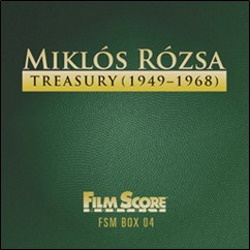 The Miklós Rózsa Treasury (1949 – 1968) box set is a most impressive and welcomed collection. Producer Lukas Kendall combined all surviving cues from the ¼″ masters of what were originally 35mm optical film rolls, to present the full original soundtrack of this classic score for the first time. The acetate transfer, score mixing and digital mastering by the technical team was well done, but the reader is advised that the audio remains archival and background noise and effects are present. While I commend this effort and view the box set as a treasured collector’s item, it suffices to say that a re-recording with 21st century technology is needed. Rózsa understood that the film at its core was Emma’s story, which offered a heart-wrenching romantic tragedy. All eight themes he created are either directly related to her, her lovers, or her daughter. Her theme 1, the score’s primary theme, in a masterstroke captured Emma’s very essence – her longing for the perfect lover and romantic fulfilment. Throughout the story love remains elusive, her lovers all ‘flawed’ – unable to match her idealized storybook expectations. Rózsa created for her themes for yearning, disillusionment, lust and finally, agony. Each of her three lovers have themes, perfectly attuned to their natures, all bearing a unique beauty, yet each, for different reasons, unable to satisfy her idealized expectations. Folks, the psychology of Rózsa’s music offers a testament to his genius in understanding a film’s complex emotional drivers. In scene after scene his music enhances the film’s narrative, and in my judgement, ultimately transcends it. The Miklós Rózsa’s Treasury (1949 – 1968) box set is now only available for a very expensive purchase at secondary markets. Let us hope that soon a new, modern re-recording will be made to bring this masterpiece to lovers of the art form.
Buy the Madame Bovary soundtrack from the Movie Music UK Store
Track Listing:
- Main Title (1:45)
- Charles In Love (1:15)
- Retrospection / Ave Maria / I Knew A Love (2:16)
- Dreams (2:52)
- Charles Proposes (1:27)
- Arrival In Yonville (0:44)
- Honeymoon (2:20)
- New Dreams / Disillusion (4:41)
- Passepied / The Marquis’s Quadrille / The Gay Sixties – Polka / L’Hirondelle – Galop (3:19)
- Madame Bovary Waltz (4:44)
- Temptation (Torment) (2:32)
- Crossroads (1:15)
- The Operation (2:31)
- Remorse (1:18)
- Rodolphe’s Love (4:13)
- Emma’s Love (1:16)
- Coach / The Letter (5:43)
- Recovered (0:37)
- Emma’s Dream Waltz (0:29)
- Léon’s Love (3:48)
- Last Day With Léo (2:42)
- Lheureux’s Walk (1:18)
- New Blows / Despair (2:08)
- Humiliation (1:59)
- Suicide / Arsenic / Agony / Holy Unction (6:48)
- Finale (1:10)
- Anniversary Fanfare #2 / Main Title (1:54) BONUS
- Charles In Love (Alternate) (1:27) BONUS
- Chanson Populaire (Source) (1:21) BONUS
- Le Joli Tambour (Source) (0:52) BONUS
- Recovered / Lucia Di Lamermoor (Excerpts) (1:47) BONUS
- Agony / Holy Unction (Music Only) (4:22) BONUS
Running Time: 77 minutes 13 seconds
Film Score Monthly Box Set 04 [Miklós Rózsa Treasury 1949-1968] (1949/2009)
Music composed and conducted by Miklós Rózsa . Orchestrations by Eugene Zador. Recorded and mixed by XXX. Score produced by Miklós Rózsa. Album produced by Lukas Kendall

Shop at the Movie Music UK Store

Member of the

 MOVIE MUSIC UK