ONE NIGHT OF LOVE – Victor Schertzinger, Gus Kahn, Louis Silvers
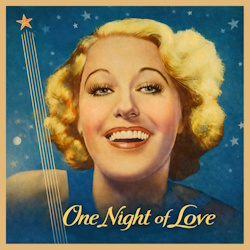 GREATEST SCORES OF THE TWENTIETH CENTURY
Original Review by Craig Lysy
Columbia Pictures was seeking a romantic musical set in the world of opera. Director Victor Schertzinger brought them a story “One Night of Love” by Charles Beahan and Dorothy Speare that seemed to fit the bill. Columbia executives were impressed and Schertzinger was given the green light to proceed with the project as director, Harry Cohn tasked with overseeing production with a budget of $500,000, and James Gow, S.K. Lauren, and Edmund H. North were hired to write the screenplay. A fine cast was assembled, which included Grace Moore as Mary Barrett, Tullio Carminati as Giulio Monteverdi, Lyle Talbot as Bill Houston, and Mona Barie as Lally.
The film is set in the 1930s and centers on opera singer Mary Barrett who makes the audacious decision that she must make a bold gamble to realize her career ambitions. She moves to Milan Italy against the wishes of her parents and seeks out renown vocal coach Giulio Monteverdi. He is impressed with her voice, and agrees to mentor her, but with the caveat that he must control every aspect of her life, and that there can be no romance between the two of them. She agrees, and begins a successful, yet torturous career under his management. Eventually Mary breaks free of Giulio’s suffocating control by singing the role of Carmen in Bizet’s opera, which secures her an invitation to sing at the prestigious New York Metropolitan Opera. The film was a massive commercial success achieving a profit of $2 million. It was also a critical success, earning seven Academy Award nominations, including; Best Picture, Best Director, Best Actress, and Best Film Editing, winning three for Best Sound, Best Film Score and a Technical Achievement Award.
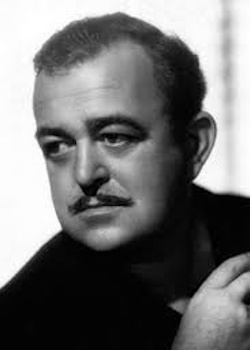 Although Victor Schertzinger was a Paramount Pictures director, his background revealed that he was a child prodigy violinist who went on to study music at the University of Brussels where he obtained a degree in music composition. Afterwards he acquainted himself well as concert violinist and orchestra conductor. He eventually migrated to Hollywood in 1916 and after a successful career at Ray Pictures, joined Paramount in the early 1930s as a composer. Blessed with enormous talent, Schertzinger would eventually branch out into directing, producing and screenwriting. For this film, he decided that he would both direct and compose the score, and songs with fellow composer Gus Kahn.
Schertzinger understood that the film needed a titular song, and he collaborated with lyricist Gus Kahn to create the now timeless romantic ballad, “One Night of Love”. He would use the song’s melody as his Main Theme, which permeates the film, and provides a unifying thread that holds together its musical narrative. Since this would be an opera tale, Schertzinger interpolated several famous arias to showcase Moore’s vocals, including; Chi Mi Frena from “Lucia di Lammermoor” by Gaetano Donizetti, Sempre Libera from “La Traviata” by Giuseppe Verdi, Ah! Fors’ è Lui from La Traviata by Verdi, Habanera from Carmen by Georges Bizet, and Un Bel Di from “Madame Butterfly by Giacomo Puccini. He also infused his soundscape with a number of traditional songs, including; Santa Lucia, O Sole Mio by Eduardo Di Capua and Alfredo Mazzucch, Ciri-Biri-Bin by Rudolf Thaler and Alberto Pestalozza, Funiculi Funicula by Luigi Denza, and The Last Rose of Summer, a traditional Irish melody with lyrics by Thomas Moore. Lastly, 1934 was the first year that an Academy Award for the category Best Film Score was introduced, and “One Night of Love” won the inaugural award, with Louis Silvers accepting the award as the head of the studio music department.
00:00 “Studio Logo” We open with the Columbia Pictures studio logo’s horn declared anthem by Mischa Bakaleinkoff. At 00:13 “Main Title” we commence the flow of the opening credits. At 00:42 we flow into the title song atop Grace Moore’s soprano vocals as the cast photos and credits unfold. At 01:13 “Mary At the Studio” we enter the film proper mid song with Mary singing in front of a microphone. She is participating in the Finals of the American Radio Audition as technicians and guests observe. The announcer says that the winner will earn the privilege of studying under the premier opera mentor in the world, Giulio Monteverdi. 03:11 “Giulio and Lally” reveals him on his yacht in the Mediterranean Sea as he and Lally reminisce. The traditional Italian folksong “Santa Lucia” plays softy in the background providing a tender and intimate ambiance. The next day we hear that Mary has lost the competition, an defies her parents, declaring that she intends to go to Italy on her own to study and advance her career. 04:36 “Voyage to Italy” Reveals an ocean liner traversing the Atlantic Ocean supported by the One Night of Love” melody. Churning locomotive horns propel a train ride, and resplendent church bells join as we take in the Italian countryside. 04:46 “Italy Montage” reveals a montage of scenic Italy, beginning in Venice and ending in Milan, which is supported by “Santa Lucia” rendered as a danza gentile. 05:08 “Musician’s Practicing” reveals an apartment built around a central courtyard, with many open terraces, where we observe a montage of musicians practicing “Verdi’s Sempre libera” from “La Traviata”, including; a solo violinist, a trio of child violinists, a contrabass player, a flautist, a pianist, a cellist, a harpist and clarinetist. Mary comes out on her balcony with smiles of joy and at 6:26 “Sempre Libre” she decides to join, and begins singing the romantic and aspirational aria;
All the musicians gather in the courtyard and support for a glorious performance, which ends with cries of Bravo as they toss up, much to her delight, fresh fruit and vegetables! Inside her coach Galuppi advises that he has been able to book her at the famous La Scala opera house – but for next season. Mary’s joy turns to desperation as she relates that she is out of money. A very handsome Bill Houston joins ahead of the landlord who will soon arrive demanding back rent. He offers to pay, but Mary is stubborn. Then Galuppi remembers the landlord, Madame Frappazini as a horrible soprano and schemes a plan to save the day. 11:40 “Chi mi Frena” he, Muriel and Mary, with Bill at the piano will begin singing Donizeti’s “Chi mi frena” (The Sextet) from “Lucia di Lammermoor”, hoping to lure her to join in, which she does as they sing the first two stanzas. They then celebrate and Guluppi escorts her out bathing her in effusive praise. In “Giovanni and Giulio” Giovanni again points out that Giulio’s pupil, who is again late, is manipulating him. She arrives, he admonishes her for repeated poor performances, but she deflects working a personal angle, which he rebuffs as he throws her out.
 17:47 “Come and Eat With Me” reveals Giulio commanding Giovanni to eat with him. A festive rendering of Denza’s “Finiculi, Finicula” song supports them dining at an Italian restaurant. Mary is serving at the restaurant, sees Giulio, and seizes the opportunity to make an impromptu audition, singing Pestalozza’s aspirational love song, “Ciri-Biri-Bin”. Well, she immediately captures Giulio’s attention, as he cannot take his eyes off her. Soon the crowd joins in a chorus and the song, led by her vocals. blossoms. She exits after the applause, and Giulio leaves the table to pursue. In the dressing room he begins giving imperious singing commands, which causes her to demand he leave, until he presents his business card. When she reads “Giulio Monteverdi” at 24:01 she is awestruck and an extending romantic rendering of the “One Night of Love” joins. He insists she move in with him, she rejects this as a brazen sexual advance, which he strongly denies, saying he will only coach her if she foreswears any romantic feelings. She must remain professional, and at the first sign of love, he will throw her out. Mary is ecstatic and can hardly wait to begin! An unscored montage reveals Giulio relentless, and oppressive teaching exercises and months later when Bill arrives, she expresses how much she hates Giulio.
30:30 “Bill Proposes” reveals him asking her to not think of Giulio, but instead to dream of him. She is touched, and overwhelmed when he proposes, just as Giulio enters the room. Giulio spoils the moment, demands that Bill leave, and orders Mary rest, much to the displeasure of her and Bill. The scene is supported softly my the “One Night of Love Theme”, whose articulation, like Bill and Mary’s romantic longing, is repressed. Later Giulio says he is pleased with her progress, and that if she continues to develop, he will schedule her next year at a provincial opera house. Mary is ecstatic, and at 32:21 “Tour of Europe” reveals a montage of train travel across Europe to some of its finest opera houses, where concert programs displaying the greatest operas of all time display supported by a grand exposition of the “One Night of Love” Theme. Mary is not performing, but taking in the ambiance as Giulio prepares her for her debut. It is the night of Mary’s debut and she is terrified. Giulio will have none of it, and reassures her talent and confidence. He orders her to sing in her dressing room, and she begins singing the sad and wistful traditional Irish ballad “The Last Rose of Summer”.
36:30 “Mary’s Tour” offers a churning locomotive motif, which propels a train on a montage of the great cities of Europe. A grand rendering of the No Time to Love Theme supports a parade of concert programs, which display great operas that feature Mary Barrett, soprano. At 37:11 a diminuendo draped with harp glissandi takes us into the city of Vienna where a newspaper reveals that Mary will sing Bizet’s Carmen tomorrow. 37:23 “Kunstlerleben (Artist’s Life)” by Johann Strauss offers his eponymous waltz as Giulio escorts Mary to dine at a prestigious restaurant. He orders a feast for himself, and restricts her to melba toast and spinach, much to her displeasure. Yet he promises her to a feast tomorrow to celebrate her singing of Carmen, which raises her spirits. Lally arrives and probes to uncover the relationship between Guilio and Mary, but is rebuffed by Giulio. He never the less invites her to join them, but after a few minutes Mary has had enough and departs, with Giulio excusing himself to follow.
In an unscored scene, we are back at the hotel where Mary is furious, and complains to Angelina as Giulio sings “One Night of Love” outside. Angelina counsels that if she wants Giulio, she must fight for him. This leads to her feigning laryngitis, which causes panic in the room and the visit by a doctor. She succeeds as Giulio cancels his date with Lally. When the doctors say they cannot explain the loss of voice and Giulio discerns her ‘problem’, sticks her with a pin, which elicits a scream that exposes her deception. He locks her in her room and goes out with Lally. But Angelina escapes and spends the night at Bill’s apartment over his butler’s objection as the master is away visiting his father. 48:14 “Morning” reveals Mary calling Angelina and informing her of her escape. Angelina is flummoxed and a spritely, happy-go-lucky musical narrative supports the scene, until Angelina’s discovery, which shifts the music to a more frantic iteration. As Mary apologizes, and promises to return, the music softens and we flow into “One Night of Love”. Yet when she learns Giulio did not return home, a crescendo irato surges as she shouts that she will not sing Carmen tonight and will instead marry Bill Houston! She hangs up only to notice an ecstatic Bill behind her. She cries saying she did not mean it, does not want to marry or sing, and begs him to take her out for a day of fun.
 52:29 “Mary’s Reengages Life” reveals Giulio searching for her as she and Bill cavort across town in an open-air car. A montage unfolds atop a spritely musical narrative full of mischievous merriment, which supports scene after scene of Mary vandalizing billboard posters that display “Maria Barrett” dressed as Carmen. The music becomes celebratory as she and Bill lunch over champagne and she enjoys her new found freedom to enjoy life again. The music flows with joie de vie as a new montage unfolds as she and Bill enjoy an amusement park. The music sours with discordance at 53:57 as they enter Bill’s apartment and find a fuming Giulio waiting inside. She devastates Giulio when she says she has given up opera, will never sing again, and plans to marry Bill, who takes her into a kissing embrace. Giulio is gracious, wishes both of them well, and departs saying that the show must go on, and Lally will replace her as Carmen. Well, Mary is furious, will have none of it and storms out saying that she will sing Carmen, not that old fog horn!
56:31 “Carmen Overture” reveals the orchestra launching into Bizet’s festive Overture to ‘Carmen’ to begin the performance. We shift to Mary’s dressing room where she finds Giulio waiting. Her fury returns when he advises that Lally will not be singing, and that he knew she would return. Mary refuses to sing, which elicits a confession of love by Giulio as the overture shifts to a more passionate expression. She is overwhelmed, they join in a kissing embrace and she answers a curtain call in five minutes. 59:51 “Carmen” reveals Carmen’s entry on stage and supported by men’s chorus. She sings “Habanera”, a song of seduction, which ensnares Don José, which leads to his ruin.
In two unscored scenes, after a magnificent performance, which brings effusive adulation from the audience, Giulio introduces Mary to Mr. Howard of the Metropolitan Opera House of New York City back in her dressing room. Giulio refuses Howard’s offer to have Mary sing at the Metropolitan, saying she is not yet ready. After Giulio departs to prepare her feast at home, Bill joins her and admits he does not fit it her world, wishes her well, and expresses hope that one day that he can catch a performance by her in New York City. Back at the hotel, Giulio answers a door knock and is displeased to find Lally. She enters, unwelcome and attempts to seduce him. When Mary enters, Lally throws herself at Giulio and expresses love. For Mary this is the last straw, she packs as Giulio angrily escorts Lally out. She rejects Giulio’s explanation, breaks off their engagement, and then departs declaring she will sing at the Metropolitan.
In 1:10:49 “Rehearsal Drama” headlines display “Mary Barrett to Make Debut at Metropolitan in Madame Butterfly”. We shift to the opera house where Mary participates in a rehearsal. The concert master reproaches her to adhere to the conductor’s tempo, and she argues, that is not how she was taught to sing. An argument ensues and she bolts the stage in tears. 1:14:06 “Madame Butterfly Overture” offers a score highlight. Later that night, the orchestra launches the dramatic overture to the opera as Mary finishes her makeup and frets about the performance. She breaks down, and tells Angelina and the stage hand that she cannot go on, which causes panic back stage. When Howard arrives, Angelina declares Mary will sing, and we see Mary force herself to the stage. As women’s chorus join to support Mary’s entry, Angelina sees Giulio, points him out to Mary, who relaxes and gains confidence before our eyes. We hear her opening aria where she arrives full of joy and sings of her impending wedding voicing the opera’s beautiful Love Theme. We shift to Act II at 1:18:52 and we flow gloriously into Puccini’s molto romantico “Un Bel di Vedremo”, one of the greatest soprano arias ever written. An adoring Giulio watches lovingly as Mary sings the opera’s greatest aria. Regretfully Moore’s vocals in the film were underpowered and not quite up to the demands of Puccini’s masterpiece. We end the film as Mary bows to an effusively applauding audience as Guilio fights backs tears.
Well, we are forced to accept the sad reality that there is no commercial release of the first film score that won an Academy Award. Composer Victor Schertzinger understood that the film was at its core, Mary’s story and that he needed to compose a theme, which would support and carry her journey. In a masterstroke he and lyricist Gus Kahn composed a song for the ages, which takes a place of honor in the hallowed halls of the Pantheon of great cinematic songs. “One Night of Love” offers an aspirational and aching romantic ballad, so full of yearning. The confluence of melody and lyrics is timeless. Since this was the story of an aspiring soprano seeking to find her day in the sun, Shertzinger understood it was necessary to infuse his soundscape with the requisite great arias of opera. Works by Donizetti, Verdi, Bizet and Puccini were used to showcase Moore’s vocals, as well as traditional ballads such as “Ciri-Biri-Bin” and “The Last Rose of Summer”. These musical performances were all vignettes, to which Schertzinger wove into a cogent musical narrative using the titular song “One Night of Love” as a bridge and unifying theme. Folks, although much of the score is not original music, it never the less beautifully fulfills its mission to support the film’s narrative. Lastly, from a historical perspective, this score takes its honored and rightful place in history as the inaugural winner of the Best Film Score award. Bravo!
Track Listing:
- NOT AVAILABLE
Music composed and conducted by Victor Schertzinger and Gus Kahn. Orchestrations by Howard Jackson. Operatic numbers conducted by Pietro Cimini. Recorded and mixed by XXX. Score produced by Louis Silvers.

Shop at the Movie Music UK Store

Member of the

 MOVIE MUSIC UK