PLYMOUTH ADVENTURE – Miklós Rózsa
 MOVIE MUSIC UK CLASSICS
Original Review by Tom Kiefner
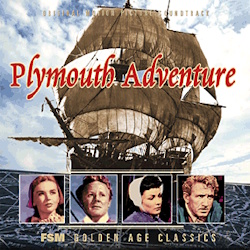
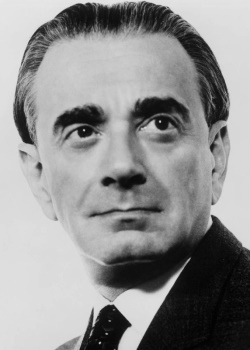
When Miklós Rózsa was given the assignment to score Plymouth Adventure in 1952 he was entering the historical drama part of his illustrious film composing career. Having completed Quo Vadis in 1951, he would go on to score such films as Ivanhoe, Knights of the Roundtable, Lust For Life, Ben Hur, and let us not forget King of Kings. When Miklós was given an assignment he would research the time period carefully looking for in this case a particular melody that the Pilgrims might have known for the trip to America. After a trip to the New York Public Library he settled on the use of the 136th Psalm, intrigued by the most irregular rhythm (5/2) it had to offer as well as the religious attributes the song had to offer. In addition, he also used the 100th Psalm for the finale of the picture.
The MGM film starring Spencer Tracy, Gene Tierney, Van Johnson, and Leo Genn attempted to relate American history as to the events of the Mayflower. Producer Dore Schary spared no expense in spending $350,000 to construct a real size Mayflower ship 90′ long and 24′ wide. The film achieved the coveted Oscar for special effects, primarily for the storm sequence which was quite well done even by standards today. However, there was little else that the film had to offer. In fact, as of this writing in early 2006, there has yet to be a DVD release. It would turn out to be director Clarence Brown’s last picture. Clarence was best known for “National Velvet” and “The Yearling” both of which were nominations for him. Van Johnson would have the distinction of appearing in two well done storm sequences, “The Caine Mutiny” as well as this picture.
 The primary theme used to denote the ship and passengers is Henry Ainsworth Psalter’s 136th Psalm, presented on several tracks with and without a 40 piece chorus. Led by staff writer Jeff Alexander, the chorus was done in a separate recording sessions and synchronized to the final music track. The Psalm theme is performed in a renaissance style with harpsichord, as a shanty motive, and in andante or allegro style depending on the situation of the movie. There is a love theme for John and Priscilla, a nostalgic 6/8 andantino for Winslow, a brooding theme for the captain, a sad theme for William Button, and Dorothy’s theme. It was most assuredly written in the Wagner motif style of giving each of the characters there own special theme. The most captivating of the tracks is the one which is played as the ship is getting ready to leave Southampton for the open sea. Titled “Mayflower” it has become a standard style of music played for ships leaving port, as Jeff Bond put it a virtual template. In addition, if you listen carefully to the third track “John and Priscilla”, you can hear his trademark danger motif he has used so many times in the film noir scores he became so famous for! You can also hear a similar sound in the “Hunger” portion of track ten.
One of the nicer things Film Score Monthly has always had to offer are excellent liner notes about the film, photography stills from the movie, and excellent track by track analysis. This score is broken down into two sections. The first nineteen tracks are taken from the original 1/4″ tape made from the magnetic film track. Tracks 20-27 or bonus tracks are variations of the tracks used such as a fading out of the “Mayflower” track instead of the extended coda that was ultimately used. Even though it is a little harder to compare the small differences in the tracks the separation of the material is best. This score is mastered from a monaural source so don’t expect much in the way of sonic reproduction. While the overall quality of the master tape was clean sounding it has pretty average frequency response.
Any score from Dr. Rózsa is a good score. He has produced finer compositions such as Spellbound, Ben Hur, King of Kings, Lust For Life, and others. Even so it is still a good solid score and recommended.
Track Listing:
- Prelude (Psalm 136) Southampton (2:26)
- Embarkation (1:42)
- John Sees Priscilla (1:57)
- The Mayflower (3:14)
- The First Night/Mr. Brewster (2:24)
- Somber Thoughts (1:40)
- Prelude to Love/John and Priscilla (2:32)
- The Musket (0:29)
- Nocturne (0:59)
- After the Storm/Hunger (4:54)
- Misery (1:02)
- Despair/Hope/The Landbird (5:53)
- Land Ho/Old Hundred (2:11)
- The Mayflower Compact (2:15)
- Farewell/Landing/Decision (5:38)
- Tragedy (1:44)
- The Settlers (2:19)
- Plymouth Rock (3:02)
- Prelude (Psalm 136)* (2:05)
- Tavern Music (Greensleeves) (1:15)
- The Mayflower* (3:14)
- After the Storm/Hunger* (5:05)
- Despair/Hope/The Landbird (6:45)
- Old Hundred (alternate) (0:50)
- The Mayflower Compact* (2:09)
- Farewell/Landing/Decision (5:53)
- Captain Jones’s Pilgrimage/Finale (Psalm 100)/Confess Jehovah (original ending) (5:56)
* indicates “original version” bonus cues.
Running Time: 79 minutes 35 seconds
Film Score Monthly FSM Vol.6 No.1 (1952/2003)
Music composed and conducted by Miklós Rózsa. Orchestrated by Eugene Zador and Robert Franklyn. Digital re-mastering by Doug Schwartz. Album produced by Lukas Kendall.

Shop at the Movie Music UK Store

Member of the


