Archive
S.W.A.T. – Elliot Goldenthal
 Original Review by Jonathan Broxton
When Elliot Goldenthal won the Best Original Score Academy Award last May, and joined the hallowed ranks of the Oscar winning composers, much interest was given to the film he would choose to score next. Goldenthal is a notoriously selective composer, rarely scoring more than two films per year, and who more often than not lends his talents to meaty dramas and weighty subjects. When S.W.A.T., an action packed cop thriller, was announced as being his next project, eyebrows were raised. But, after several quite “deep and meaningful” entries over the last couple of years, S.W.A.T. was exactly what the New Yorker needed: a chance to have fun. Read more…
Remembering Roy Budd, 1947-1993
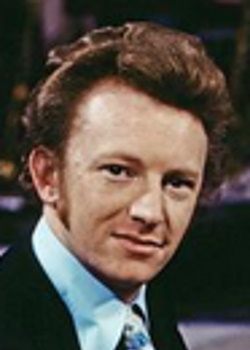 Composer Roy Budd died ten years ago today, on August 7, 1993, of a brain hemorrhage in hospital in London, UK. He was 46.
Roy Frederick Budd was born in London, England, in March 1947. A musical prodigy from a young age, Budd made his public debut on the piano at age six and was performing professionally by his teens. Deeply influenced by jazz legends such as Erroll Garner and Oscar Peterson, Budd quickly carved out a name for himself as a dynamic live performer, often appearing on British television and radio in the 1960s.
His entry into film scoring came in the late 1960s, but it was the 1971 crime thriller Get Carter that cemented his legacy, which he wrote when he was just 24 years old. The minimalist, percussive theme, composed and recorded in just a few days, went on become one of the most instantly recognizable pieces in British cinema history. Budd’s deft combination of jazz, funk, and moody atmospherics would become his signature, earning him further acclaim for scores to films such as Soldier Blue (1970), Fear Is the Key (1972), The Stone Killer (1973), The Marseille Contract (1974), Diamonds (1975), Paper Tiger (1975), Sinbad and the Eye of the Tiger (1977),The Wild Geese (1978), and The Sea Wolves (1980).
Over the course of his career, Budd scored more than 40 films, often working on films starring major British actors of the 1960s and 70s including Michael Caine, Richard Burton, and Roger Moore. In addition to his film work, he remained a passionate jazz performer, frequently recording albums and touring. Read more…

Shop at the Movie Music UK Store

Member of the

 MOVIE MUSIC UK