Movie Music UK Awards 2025
 2025 was an excellent year for film music, if you were prepared to go and look for it. While very few of the year’s most acclaimed films had scores to match (I actively disliked a lot of the music from ONE BATTLE AFTER ANOTHER and MARTY SUPREME and SIRÂT, especially as I heard it in context. I was not especially enamored of HAMNET or TRAIN DREAMS or WEAPONS, and the scores for THE SECRET AGENT and SENTIMENTAL VALUE barely even registered), exploring genre cinema, and especially cinema outside the American mainstream, revealed to me a significant amount of very high quality music that would never otherwise be acknowledged by the more well-known awards bodies.
I heard more than 750 scores in 2025 – either as a soundtrack album, in movie context, or both – and I ended up rating 75 of them **** or better, which is slightly down from 2024, but still a decent rate of return by anyone’s standards. Scores from France, the UK, Japan, and China all made my Top 20, and it was an especially outstanding year for Scandinavian film music, with five scores and one original song among my genre-specific winners and nominees.
Television music and video game music also continues to exceed expectations and, as I said last year, at this point scores written for those media can easily stand shoulder-to-shoulder with traditional film scores – and in my opinion they now often exceed them in terms of quality. Almost half of my nominees for score of the year come from those two worlds. Many of them feature the big, bold, thematic orchestral writing that drew me to the film music in the first place, and many of them show a significant amount of originality and creativity, which suggests to me that TV showrunners and game producers especially are fostering an environment where composers can push boundaries, be fearlessly creative, and combine genres and styles in a variety of exciting ways. Long may it continue.
One thing I want to mention is that, for the first time, I have decided to split my TV award between live-action projects and animated projects. There is so much astonishing TV music being written across the world these days, especially for anime in east Asia, that I felt it necessary to separate them out so I could properly highlight all the excellence that exists, and this seemed to me to be the most logical way to do it.
So, without further ado, here are my choices for the best scores of 2025!
SCORE OF THE YEAR
- AVATAR: FIRE AND ASH, music by Simon Franglen (review)
Nominees:
- ASTÉRIX & OBÉLIX: LE COMBAT DES CHEFS [TV, S1], music by Mathieu Alvado (review)
- CALL THE MIDWIFE [TV, S14], music by Maurizio Malagnini (review)
- CREATION OF THE GODS II: DEMON FORCE, music by Gordy Haab (review)
- THE FANTASTIC FOUR: FIRST STEPS, music by Michael Giacchino (review)
- FRANKENSTEIN, music by Alexandre Desplat (review)
- JURASSIC WORLD: REBIRTH, music by Alexandre Desplat (review)
- SOUTH OF MIDNIGHT [VG], music by Olivier Derivière
- WASHINGTON BLACK [TV, S1], music by Cameron Moody (review)
- WICKED: FOR GOOD, music by Stephen Schwartz and John Powell (review)
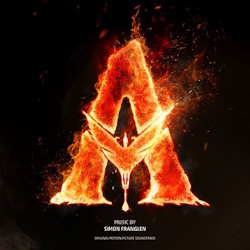 The battle for the best score eventually came down to two scores: AVATAR: FIRE AND ASH, and THE FANTASTIC FOUR: FIRST STEPS, and eventually AVATAR: FIRE AND ASH just won out, likely because of my personal taste and my enduring nostalgic love of James Horner. I found everything about Avatar: Fire and Ash to be simply outstanding, and although I was probably predestined to love it, it’s important not to minimize what Simon Franglen achieved here, because it would be very easy (albeit incredibly lazy and reductive) to dismiss the score as a ‘Horner clone’ as if that is something that just anyone could do. I connected deeply with the intelligent design of the score overall, I felt the emotional impact of the new themes for the Windtraders and the Mangkwan clan, and I loved the way Franglen blended these new themes with themes from previous Avatars in an intricate narrative tapestry. There was power and intensity in the action, richness kin the orchestrations, and the whole thing was a beautiful reflection of James Cameron’s ideas of spiritual inter-connectedness on Pandora itself.
For the longest time I was primed to give the award to Michael Giacchino for THE FANTASTIC FOUR: FIRST STEPS. There had been a recent trend in comic book films for their scores to be dark, serious affairs, and for certain filmmakers and their composers to suck all the life, all the energy, all the color, all the fun out of what are, essentially, escapist stories for children, but then Giacchino restored things entirely with this score, which has so much fun and energy, so much zip and pizazz, that it can barely contain itself. For me, it’s the best Marvel score in many years, a fantastic return to a time when superhero scores were consistently heroic and optimistic, full of themes and variations, memorable and hummable, but also clever and detailed enough to satisfy the intellectual needs of those who enjoy delving into those aspects of scores. It’s retro-kitsch sound musically matches the visual palette of the film, and then Giacchino injects this into a massive, soaring, action-packed orchestral super-hero extravaganza of the highest order to send the whole thing out into the stratosphere.
Two scores by Alexandre Desplat made my top ten. JURASSIC WORLD: REBIRTH was absolutely outstanding, a monster movie extravaganza which saw Desplat engaging in some of the most powerful and engaging action horror music of his career. Although in film context the score is occasionally dialed down too much in the sound mix, the album reveals the true excellence and intelligence of Desplat’s music – all that delicious instrumental intricacy, that thematic interplay, and that creative orchestration comes rushing into focus. Then in his score for FRANKENSTEIN Desplat was asked to write music that was lyrical and emotional, and which ‘looked for the fragility, delicacy, and suffering’ in the story, and in that I thought he excelled. Desplat and director Guillermo Del Toro clearly understood and brought out the emotional heart of the story with the music; they acknowledged the omnipresent horror in the story, but it is the hearts and souls of the characters involved that Desplat’s music left its most lasting mark.
Three scores from television make my top ten. The first, Mathieu Alvado’s score for the animated French production ASTÉRIX & OBÉLIX: LE COMBAT DES CHEFS, is outstanding, a terrific throwback to classic 1980s and 90s symphonic action-adventure scoring. It overflows with themes and recurring leitmotifs, features moments of Roman pageantry, has sequences of Gallic-inflected peasant folk music, and features at least half a dozen outstanding full-throttle action cues which impressed me greatly. It remains a true delight for lovers of classic orchestral action and adventure scores, and marks Alvado as a composer to watch.
The second TV score is Maurizio Malagnini’s score for Season 14 of the British drama series CALL THE MIDWIFE. The music is astonishing – fully orchestral, often led by piano, and often incorporating a choir, it is dramatic, nostalgic, romantic, sometimes heartbreaking, and always staggeringly beautiful – and the fact that he has maintained this level of quality and passion while writing for this show for more than a decade is something that needs to be better recognized. It is my hope that this – coupled with Malagnini’s recent relocation from London to Los Angeles – results in him finally being discovered by the ‘mainstream’ and that his talents are brought to bear on a greater and varied number of projects going forward.
The third TV score on my Top 10 is Cameron Moody’s score for the period adventure-drama WASHINGTON BLACK. It’s big and lush and symphonic, filled with themes, and has a wonderful sense of drama and adventure. It’s gorgeously orchestrated, full of delicate and whimsical touches, and has a rich sound that makes outstanding use of the full ensemble. And, best of all, it shows a real understanding of narrative and storytelling structure, which allows the score to unfold naturally, bringing out all the right emotions, and taking the listener on a grand and sweeping journey. I really cannot recommend Washington Black enough, especially to those who are drawn to that rich and expressive John Williams sound, and want to hear an exceptionally accomplished homage to that. The fact that Cameron Moody is just 22 years old, and the fact that he has this dramatic sensitivity and musical ability in his arsenal at that age, is astonishing; he is another composer to watch with great anticipation.
CREATION OF THE GODS II: DEMON FORCE by Gordy Haab is the second film in a series of epic Chinese action-fantasy films and, as was the case with the first score (Kingdom of Storms from 2023), is a spectacular achievement of symphonic power and depth. The score is awash in sweeping epic themes and massive action sequences, tempered with more lyrical moments of romance and beauty. It blends a huge symphony orchestra with an array of east Asian specialty instruments in a style that I adore, and there are literally dozens of recurring themes that run through the work, creating a lavish melodic tapestry. It’s just magnificent, and needs to be discovered by the mainstream.
Having enjoyed the music for the first Wicked film enormously, I expected that I would enjoy the music for WICKED: FOR GOOD just as much, but honestly it exceeded all my expectations. Stephen Schwartz’s songs, while perhaps a tiny bit behind the ones in the first half of the story, are still outstanding, and the two new ones – especially “The Girl in the Bubble” – build on that sound tremendously well. However, John Powell’s score stands out here as something really genuinely special. The density of the thematic interplay, the creation of the new themes for Glinda and the ‘Struggle of the Animals’ concept, the intelligent structuring of those themes to illustrate the story’s dramatic narrative, and the rich and bold orchestral arrangements easily make it one of the outstanding scores of 2025.
Last, but certainly not least, the best video game score of 2025 for me is SOUTH OF MIDNIGHT by French composer Olivier Derivière. The score is a fantastic and intoxicating blend of blues, gospel, folk, and swampy Americana textures, backed by a large and impressive orchestra, creating a heady atmosphere. He makes use of acoustic guitars, banjos, and hand-played percussion items, which then mingle with subtle electronic shading and mournful vocals singing original songs, creating a brilliant and unique soundscape that I have never heard in game music before, at least not the way that Derivière does it here. Some listeners will have to work to appreciate the geographical specificity of the music, but I personally fell for it immediately.
Rounding my Top 20 scores of 2025 (in alphabetical order) are: THE AMERICAN SOUTHWEST by Noah Sorota, ANNE SHIRLEY [S1] by Michiru Oshima, FACKHAM HALL by Oli Julian, LE SECRET DE MARTHA/MARTHA’S SECRET by Romain Paillot, MONSEN OG NASJONALPARKENE by Raymond Enoksen, NUREMBERG by Brian Tyler, PLAY DIRTY by Alan Silvestri, SINNERS by Ludwig Göransson, THREE KINGDOMS: STARLIT HEROES by Neal Acree, and WONDLA by Joy Ngiaw.
COMPOSER OF THE YEAR
- ALEXANDRE DESPLAT
Nominees:
- EVAN CALL
- SIMON FRANGLEN
- MICHAEL GIACCHINO
- JOHN POWELL
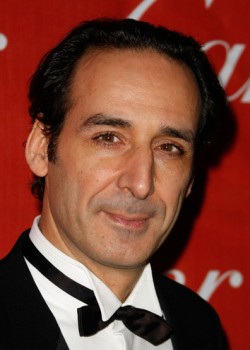 As the only composer with two scores in my top 10 – the aforementioned FRANKENSTEIN and JURASSIC WORLD: REBIRTH – Alexandre Desplat takes the top step for 2025. This is first time I have given him Composer of the Year since 2017, the year of Valerian and the City of a Thousand Planets, and he really deserves it for the depth and scope of his work this year. In addition to those scores I already mentioned, Desplat also impressed with several other works, including the political thriller LES AIGLES DE LA RÉPUBLIQUE/EAGLES OF THE REPUBLIC, the French sci-fi action film L’HOMME QUI RÉTRÉCIT/THE INCREDIBLE SHRINKING MAN, and Wes Anderson’s quirky comedy THE PHOENICIAN SCHEME. All these scores illustrate the incredible range and versatility of his music, as he easily shifts from Gothic horror and melodrama to pulse-pounding action, tense suspense, and whimsical waltzes with ease.
Simon Franglen and Michael Giacchino wrote the two best scores of 2025 overall – AVATAR: FIRE AND ASH and THE FANTASTIC FOUR: FIRST STEPS – and so make the list on the strength of that work alone, but it’s worth mentioning that Giacchino also found time to write a fun and jazzy action score for the Disney animated sequel ZOOTOPIA 2, while also mentoring his composer son Mick Giacchino, and producing his score for the Disney+ Star Wars series SKELETON CREW.
The out-of-left-field nominee for Composer of the Year is the American in Japan, Evan Call. Call had an amazing year in 2025, writing a series of wonderful, old-fashioned, thematic orchestral scores for a series of animated projects, notably the Pokémon-adjacent short film DRAGONITE AND THE SPECIAL DELIVERY, and the second season of the period action-drama anime series MY HAPPY MARRIAGE. But these are just the scores that made my nominations: he also worked on a show called NECRONOMICO AND THE COSMIC HORROR SHOW, and wrote a fantastic piece called GUNDAM: NEXT UNIVERSAL CENTURY for an immersive interactive show inside the Bandai Namco pavilion at the 2025 Expo in Osaka – and that’s just limiting it to the scores I heard! He’s a brilliant composer across the board, and I would love for Hollywood to discover him.
Last but not least is John Powell, whose work on WICKED: FOR GOOD I have already mentioned, and whose work on the live-action remake of HOW TO TRAIN YOUR DRAGON I will talk about shortly. Powell spent most of 2025 either adapting his own work, or adapting the work of others, which sounds like it would easier than writing new music, but when you have a Broadway show as beloved as Wicked, and a score as beloved as the original animated How To Train Your Dragon, trying to get lightning to strike twice while also acknowledging and working around the needs of an entirely film is no mean feat – but Powell achieved this to an exceptional degree.
Five other composers who had excellent years in 2025 are: DAVID FLEMING, LAURA KARPMAN, ALAN SILVESTRI, BRIAN TYLER, and AUSTIN WINTORY.
BREAKTHROUGH COMPOSER OF THE YEAR
- CAMERON MOODY
Nominees
- MATHIEU ALVADO
- OLI JULIAN
- JOY NGIAW
- LAETITIA PANSANEL-GARRIC
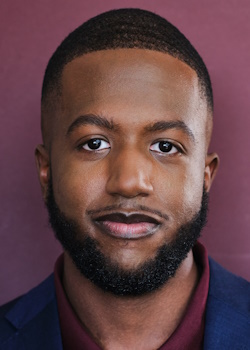 Every year, without fail, a composer emerges as a great new talent in film music circles and, for me, in 2025 that composer is Cameron Moody, whose score for WASHINGTON BLACK is one of the best of the year. Born in Georgia, he went to high school in Massachusetts, college in New York, and is now based in Los Angeles, where he has already established quite some pedigree: in 2021 he made history by becoming the youngest ever winner of ASCAP’s Henry Mancini Music Fellowship Award, and then in 2024 he became the youngest composer ever to be selected as a fellow in the highly coveted NBC/Universal Composers Initiative. Beginning in 2021 he began working with composer Michael Abels, who had been one of Moody’s ‘zoom tutors’ at NYU, and he wrote additional music for him on projects like Nightbooks, Nope, The American Society of Magical Negroes, and the Star Wars TV series The Acolyte. Other than a few short films and a 2023 History Channel documentary about John F. Kennedy, WASHINGTON BLACK was Moody’s first project as solo lead composer, and based on the quality I talk about above , it won’t be his last. He’s brilliant.
Mathieu Alvado’s score for score for ASTÉRIX & OBÉLIX: LE COMBAT DES CHEFS is also one of the best of the year, and earmarks him as a major talent to watch too. I’m not going to repeat everything I have already said about him or this score – just listen to it, appreciate it, and jump every time a new score from him appears going forward.
Oli Julian has been working extensively on British TV projects since the early 2010s – his most prominent scores include popular sitcoms like Episodes, Catastrophe, Crashing, Sex Education, and the TV version of The Full Monty, as well as period pieces like Renegade Nell and The Completely Made-Up Adventures of Dick Turpin – but his work in 2025 has pushed him fully into the limelight. His score for Fackham Hall is a brilliant parody of the classic ‘Downton Abbey period drama’ sound, but it also musically excellent in its own right, and this has been backed by his scores for the animated feature film of Roald Dahl’s The Twits, as well as his continued exploits in British TV comedy on shows like Amandaland.
Malaysia-born composer Joy Ngiaw moved to Los Angeles in 2016 and first came to my attention following the release of her first major score, the Apple TV animated series WONDLA, which premiered in 2024. Seasons 2 and 3 of the show both aired in 2025 and they blew me away, hence her inclusion in this list this year. Both seasons’ scores are absolutely wonderful – big, bold, thematic, adventurous sci-fi scores in the grandest orchestral tradition – and both seasons are mentioned in my genre nominations below. I remarked earlier this year that someone ‘needs to give her a Star War to score’ and I fully stand by that – she’s that good. Now that WondLa is over Ngiaw can start exploring other aspects of her musical personality, and I can’t wait to see where she goes from here.
Although she has been lurking around under the radar for a few years now (I nominated her score for the French fantasy film L’Home Dels Nassos last year), French composer Laetitia Pansanel-Garric really broke through for me this year. She wrote two outstanding scores which made my 2025 genre nominees – the animated film HOLA FRIDA about the childhood of artist Frida Kahlo, and the documentary AUX ARMES, CITOYENNES! LES FEMMES DANS LA RÉVOLUTION FRANÇAISE about the lives of several under-appreciated women who made significant contributions to the French Revolution – and impressed me enormously with her creativity, thematic strength, and orchestral depth. Based on the quality of these two or three scores, I think she will quickly become one of the most in-demand and respected new musical voices in French cinema for years to some.
Five other composers who impressed with breakthrough scores in 2025 are: AARON GILHUIS, CHANG-YEOP JEON, ZACK RYAN, NOAH SOROTA, and HU XIAO.
BEST ORIGINAL SONG
- “The Girl in the Bubble” from WICKED: FOR GOOD, written by Stephen Schwartz, performed by Ariana Grande
Nominees:
- “Dear Me” from DIANE WARREN: RELENTLESS, written by Diane Warren, performed by Kesha
- “Let Us Be Devoured” from THE FANTASTIC FOUR: FIRST STEPS, written and performed by Andrea Datzman
- “Lose My Mind” from F1, written by Caleb Toliver, Amala Dlamini, Hans Zimmer, Ryan Tedder, and Grant Boutin, performed by Don Toliver feat. Doja Cat
- “Spermageddon” from SPERMAGEDDON, written by Christian Wibe and Jesper Sundnes, performed by Christian Rubeck
 My favorite song from 2025 is Stephen Schwartz’s “The Girl in the Bubble” from Wicked: For Good, performed by Ariana Grande in character as Glinda. The song is a lament which helps initiate the character’s growing realization that everything she has been doing to help the Wizard, Morrible, and by extension Oz itself, has actually been tainted by corruption, and that her life has been lived in a bubble of privilege – sometimes metaphorical, sometimes literal – that she needs to emerge from if she really wants to be the ‘good’ witch she claims to be. Grande belts out her epiphany with emotional clarity as she stalks around her pink apartment – the aforementioned brilliant scene in which she moves in and around and through a series of mirrors – and hits a row of sensational whistle notes that could shatter glass.
Running Wicked a close second is Diane Warren’s “Dear Me,” which she wrote for her own documentary Diane Warren: Relentless, and which is performed by singer Kesha, who Warren has known since she was a child growing up in Los Angeles’s San Fernando Valley. Warren wrote the song as an imaginary inspirational letter to her own teenage self, encouraging her to overcome her self-consciousness, insecurities, and the bullying she endured. As such the song has a positive, encouraging quality, and this – when coupled with Warren’s lyrical melodies and soaring choruses – makes it a winner all the way.
I was absolutely astonished by how good “Let Us Be Devoured” from The Fantastic Four: First Steps is. It’s an original song written and performed by Inside Out 2 composer Andrea Datzman, ostensibly in the style of Joan Baez folk ballad, which in movie context is intended to be a sort of counter-culture ‘welcome’ for Galactus from a hippy cult that worships him as a savior. The lyrics are ironic, but are delivered with complete sincerity, and Datzman’s songwriting prowess is incredibly authentic in its intentional mimicking of that style. Her voice is lovely too. I don’t remember hearing it in context – it perhaps features in a deleted scene – but it plays over the final part of the end credits crawl, and although it’s placement there rendered it ineligible for the Oscars, for me it was a winner all the way.
I was equally astonished to find myself absolutely loving “Lose My Mind” from the soundtrack to the F1 movie. It was performed by Texas hip-hop singer and songwriter Don Toliver with the queen of pop-rap Doja Cat, and was co-written by them with Ryan Tedder and Grant Boutin, who based the main hook on Hans Zimmer’s main theme from the score. With just a very few exceptions I don’t like rap, and I don’t like hip-hop, but for some reason this is one of those exceptions: the way they use Zimmer’s theme is excellent, the lyrics are fun and aspirational, the verses have a chilled out groove, and Doja Cat’s vocals in the chorus sometimes reach for the euphoric. It even has a cool motor racing-themed music video!
However, the final pièce de résistance, the crème de la crème (the cum de la cum?), is “Spermageddon” from the Norwegian animated sex comedy of the same name. It was written by Christian Wibe and Jesper Sundnes and is performed by Christian Rubeck in character as Jizzmo, a sperm attempting to be the first one to fertilize an egg. Just go with it. It’s a hard-rock headbanging masterpiece that takes everything that is good about Scandinavian rock and metal and applies it to comedy. Rubeck’s gravelly voice reminds me of Finnish death metal singer Mr Lordi, possibly crossed with Till Lindemann from Rammstein, in all the best ways, and the fact that the lyrics treat the impending coitus between the two main characters like a coming apocalypse sells the whole thing. The drums pound. The guitars roar. The backing vocalists soar. Jens’s cheese sausage is marinated!
Rounding my Top 10 songs of 2025 are: “Beautiful Memories” from ANNE SHIRLEY [S1], “Highest 2 Lowest” from HIGHEST 2 LOWEST, “Salt Then Sour Then Sweet” from COME SEE ME IN THE GOOD LIGHT, “Watch Out! “ from TOUTES POUR UNE/ALL FOR ONE, and “What It Sounds Like” from K-POP DEMON HUNTERS.
SPECIAL AWARD
- HOW TO TRAIN YOUR DRAGON, music by John Powell (review)
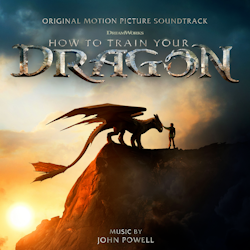 I toyed with whether or not I should include John Powell’s score for the live-action remake of How to Train Your Dragon in my awards, because it was (and remains) one of my favorite film music experiences of 2025, but after weighting up the pros and cons, I decided that the most appropriate thing to do was give it a special award that recognizes its excellence while acknowledging its somewhat unique circumstances.
The word that I keep returning to when I think about the music from this film is ‘joyous’. It made me feel like that the first time I heard it in 2010, and it still makes me feel like that now. This is magnificent music, from start to finish. But your appreciation for this new version of the score will likely depend entirely on your feelings about the existence of the project as a whole, and whether you consider it to be a worthwhile venture aimed at bringing the story to a new generation or a cynical marketing ploy. It will also depend on whether you appreciate what Powell has done in terms of tweaking his pre-existing music to fit its new circumstances, whether you can appreciate the nuance of the slightly new arrangements, and the inclusion of a new theme, or whether it all feels off, a redundancy not worth investing in. I have heard both arguments, and can understand both points of view. Personally, I think I lean slightly towards the more positive side of things; it’s not radically different in any meaningful way from the original, but I found it to be fascinating nonetheless, especially in terms of the ways Powell found to manipulate the square pegs of the old score to fit the round hole of the new film.
To answer a question I asked myself in the review about “how do you improve, or even equal, what is essentially film music perfection?” – the answer is, you don’t. You do what you think is right for the film, regardless of your feelings about what the producer’s intentions are, and hope for the best, and that is what John Powell has done here. And, as a lover of this score’s particular style and approach, at the end of the day, it’s another excuse to listen to this wonderful music, and what film score fan would pass up that opportunity?
SPECIAL AWARD
- CALM, music by Mark McKenzie
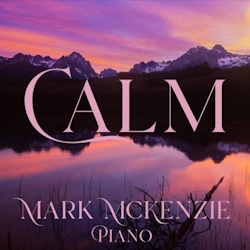 I don’t want to get political here – I do that in plenty of other places already – but the world is in such a state right now that sometimes it’s helpful to lean on art, beauty, and music for comfort, and that’s what Mark McKenzie’s concept album Calm was for me in 2025. I have lost count of the number of times I have listened to it as a reassuring antidote to whatever atrocity is happening in the world that day. McKenzie describes the album as ‘new age’ (it was submitted to the Grammys in the Best New Age category, but unfortunately did not receive a nominaton), and you could certainly categorize it as that, but for me it was a journey into tranquility.
The album is a series of utterly gorgeous original solo piano pieces, written and arranged and performed by McKenzie himself, and anyone who has fallen in love with any of McKenzie’s film scores – especially recent things like The Greatest Miracle, and Max and Me – will be in for a treat with this intimate exploration of that style. Reviews of the album by others have called it spiritual, a gorgeous sonic voyage, a prayer in sound form, a serene journey, and something designed to bring us hope and peace. I’m not an especially religious man, but even with that in mind, I couldn’t agree more.
==========================================================
Hereafter, presented without additional comment, are my choices for the best scores in each of the genre categories:
BEST ORIGINAL SCORE FOR A DRAMA FILM
- NUREMBERG, music by Brian Tyler (review)
Nominees:
- 35TH YEAR LOVE LETTER, music by Taro Iwashiro (review)
- AMERICANA, music by David Fleming (review)
- DOWNTON ABBEY: THE GRAND FINALE, music by John Lunn (review)
- LA FARFALLA IMPAZZITA, music by Giuliano Taviani and Carmelo Travia (review)
Special mentions should also go to: LA FILLE D’UN GRANDE AMOUR by Grégoire Hetzel, FOUR LETTERS OF LOVE by Anne Nikitin, JAY KELLY by Nicholas Britell, MOI QUI T’AIMAIS by Philippe Sarde, and QUEEN OF THE RING by Aaron Gilhuis.
BEST ORIGINAL SCORE FOR A COMEDY FILM
- FACKHAM HALL, music by Oli Julian (review)
Nominees:
- ANACONDA, music by David Fleming (review)
- ELLA MCCAY, music by Hans Zimmer (review)
- HVIS INGEN GÅR I FELLA/A MOUSE HUNT FOR CHRISTMAS, music by Stein Johan Grieg Halvorsen and Eyvind Andreas Skeie (review)
- NATACHA (PRESQUE) HÔTESSE DE L’AIR, music by Erwann Chandon (review)
Special mentions should also go to: AMICHE MAI by Carlo Siliotto, LA CACHE/THE SAFE HOUSE by Diego Baldenweg, Lionel Baldenweg, and Nora Baldenweg, LE GRAND DÉPLACEMENT/BLACK TO THE FUTURE by Guillaume Roussel, THE NAKED GUN by Lorne Balfe, and LE ROUTARD by Ludovic Bource.
BEST ORIGINAL SCORE FOR AN ACTION/ADVENTURE FILM
- PLAY DIRTY, music by Alan Silvestri (review)
Nominees:
- F1, music by Hans Zimmer (review)
- PRIMITIVE WAR, music by Freddie Wiedmann (review)
- SUPERMARSU JA SUURI HUIJAUS/SUPER FURBALL AND THE LYING SQUIRREL, music by Panu Aaltio (review)
- TOUTES PER UNE/ALL FOR ONE, music by Amine Bouhafa, Emilie Gassin, and Ben Violet (review)
Special mentions should also go to: BACK IN ACTION by Christopher Lennertz, EIN MÄDCHEN NAMENS WILLOW by Fabien Römer, MARIUS ET LES GARDIENS DE LA CITÉ PHOCÉENNE by Antoine Duchêne, MISSION: IMPOSSIBLE – THE FINAL RECKONING by Max Aruj and Alfie Godfrey, and WILLIAM TELL by Steven Price.
BEST ORIGINAL SCORE FOR A FANTASY/SCI-FI FILM
- AVATAR: FIRE AND ASH, music by Simon Franglen (review)
Nominees:
- CREATION OF THE GODS II: DEMON FORCE, music by Gordy Haab (review)
- THE FANTASTIC FOUR: FIRST STEPS, music by Michael Giacchino (review)
- JURASSIC WORLD: REBIRTH, music by Alexandre Desplat (review)
- WICKED: FOR GOOD, music by Stephen Schwartz and John Powell (review)
Special mentions should also go to: BUGONIA by Jerskin Fendrix, CAPTAIN AMERICA: BRAVE NEW WORLD by Laura Karpman, LONG DISTANCE by Steven Price, MOMO by Fil Eisler, and RED SONJA by Sonya Belousova and Giona Ostinelli.
BEST ORIGINAL SCORE FOR A HORROR/THRILLER FILM
- FRANKENSTEIN, music by Alexandre Desplat (review)
Nominees:
- APPLEWOOD, music by Penka Kouneva and Deniz Aktaş (review)
- THE OVAL PORTRAIT, music by Andrew Morgan Smith (review)
- SINNERS, music by Ludwig Göransson (review)
- TROLL 2, music by Johannes Ringen (review)
Special mentions should also go to: DINNER TO DIE FOR by John G. Kay and W. F. Smith Leithart, DRACULA by Danny Elfman, FINAL DESTINATION: BLOODLINES by Tim Wynn, SPURLOS IN VENEDIG by Susan di Bona and Salvatore Sangiovanni, and THÁM TỬ KIÊN: KỲ ÁN KHÔNG ĐẦU/DETECTIVE KIÊN: THE HEADLESS HORROR by Christopher Wong, Garrett Crosby, and Ian Rees.
BEST ORIGINAL SCORE FOR AN ANIMATED FILM
- THREE KINGDOMS: STARLIT HEROES, music by Neal Acree (review)
Nominees:
- HOLA FRIDA, music by Laetitia Pansanel-Garric (review)
- THE KING OF KINGS, music by Tae-Seong Kim (review)
- OUT OF THE NEST, music by Fabrizio Mancinelli (review)
- SPERMAGEDDON, music by Christian Wibe (review)
Special mentions should also go to: THE BAD GUYS 2 by Daniel Pemberton, DAVID by Joseph Trapanese, IN YOUR DREAMS by John Debney, THE ROSE OF VERSAILLES by Hiroyuki Sawano and Kohta Yamamoto, and THE SPONGEBOB MOVIE: SEARCH FOR SQUAREPANTS by John Debney.
BEST ORIGINAL SCORE FOR A DOCUMENTARY
- MONSEN OG NASJONALPARKENE, music by Raymond Enoksen (review)
Nominees:
- THE AMERICAN SOUTHWEST, music by Noah Sorota (review)
- AUX ARMES, CITOYENNES! LES FEMMES DANS LA RÉVOLUTION FRANÇAISE, music by Laetitia Pansanel-Garric (review)
- DESCALZOS, music by Oscar Martin Leanizbarrutia (review)
- PARENTHOOD, music by Tom Howe
Special mentions should also go to: AIMING HIGH: A RACE AGAINST THE LIMITS by Diego Baldenweg, Lionel Baldenweg, and Nora Baldenweg, KANTAURI by Joseba Beristain, KERRY: TIDES OF TIME by Bradley Ayres, MURDER IN MONACO by Nainita Desai, and VIVA VERDI! by Nicholas Pike.
BEST ORIGINAL SCORE FOR TELEVISION (LIVE ACTION)
- CALL THE MIDWIFE [S14], music by Maurizio Malagnini (review)
Nominees:
- DOS TUMBAS/TWO GRAVES [S1], music by Marc Timón Barceló (review)
- THE PRISONER OF BEAUTY [S1], music by Hu Xiao (review)
- STAR TREK: STRANGE NEW WORLDS [S3], music by Nami Melumad
- WASHINGTON BLACK [S1], music by Cameron Moody (review)
Special mentions should also go to: BON APPÉTIT, YOUR MAJESTY [S1] by Chang-Yeop Jeon, THE GILDED AGE [S3] by Harry Gregson-Williams and Rupert Gregson-Williams, HOUSE OF DAVID [S1] by Kevin Kiner, Sean Kiner, and Deanna Kiner, THE SANDMAN [S2] by David Buckley, and STAR WARS: SKELETON CREW [S1] by Mick Giacchino.
BEST ORIGINAL SCORE FOR TELEVISION (ANIMATED)
- ASTÉRIX & OBÉLIX: LE COMBAT DES CHEFS [S1], music by Mathieu Alvado (review)
Nominees:
- ANNE SHIRLEY [S1], music by Michiru Oshima (review)
- MY HAPPY MARRIAGE [S2], music by Evan Call (review)
- SAUSAGE PARTY: FOODTOPIA [S2], music by Christopher Lennertz
- WONDLA [S2], music by Joy Ngiaw (review)
Special mentions should also go to: EYES OF WAKANDA [S1] by Hesham Nazih, LEVIATHAN [S1] by Nobuko Toda, Kazuma Jinnouchi, and Joe Hisaishi, MARVEL ZOMBIES [S1] by Laura Kaprman and Nora Kroll-Rosenbaum, THE MIGHTY NEIN [S1] by Neal Acree, and WONDLA [S3] by Joy Ngiaw.
BEST ORIGINAL SCORE FOR A VIDEO GAME
- SOUTH OF MIDNIGHT, music by Olivier Derivière
Nominees:
- GHOST OF YŌTEI, music by Wataru Hokoyama [Tomo Otawa]
- HOLLOW KNIGHT: SILKSONG, music by Christopher Larkin
- SWORD OF THE SEA, music by Austin Wintory
- TOWERBORNE, music by Austin Wintory
Special mentions should also go to: ABSOLUM by Gareth Coker, AVATAR: FRONTIERS OF PANDORA – FROM THE ASHES by John Paesano, CIVILIZATION VII by Geoff Knorr, Roland Rizzo, and Christopher Tin, KINGDOM COME: DELIVERANCE II by Jan Valta and Adam Sporka, and OCTOPATH TRAVELER 0 by Yasunori Nishiki.
BEST ORIGINAL SCORE FOR A SHORT FILM
- LE SECRET DE MARTHA/MARTHA’S SECRET, music by Romain Paillot (review)
Nominees:
- ACHTER DE DEUR/BEHIND THE DOOR, music by Roy Bemelmans (review)
- BUTTERFLY ON A WHEEL, music by Trevor Morris (review)
- DRAGONITE AND THE SPECIAL DELIVERY, music by Evan Call (review)
- EL LAZO DE PETRA, music by Carl Thiel (review)
Special mentions should also go to: A FRIEND OF DOROTHY by Stuart Hancock, KIDNEY TRIAL by Noga Kedem, MIMESIS by Raphaël Dargent, RIPPLE by Greg Nicolett, and THE SCARECROWS’ WEDDING by Terry Davies.
Leave a comment

Shop at the Movie Music UK Store

Member of the

 MOVIE MUSIC UK
Another great year-in-review post as always! And not to be presumptuous, but I’m just curious, did you hear Mari Fukuhara’s score for Little Amélie or the Character of Rain? It’s one of my favorites of the year (wonderfully playful and charming), and I think it’d be right up your alley, but it’s gone very overlooked.
I did hear it, yes, and I liked it fine. I just thought the other ones were more aligned to my personal taste. I certainly agree that is it playful and charming and people should check it out.
always worst album wins best new age music , Yanni never won for example and he is the best