Movie Music UK Awards 2024
 2024 has been a difficult, challenging year for multiple reasons, but one aspect that continues to impress was the overall quality of its film music. I heard more than 800 scores in 2024 – either as a soundtrack album, in movie context, or both – and I ended up rating 98 of them **** or better, a decent rate of return by anyone’s standards.
Television music and video game music continues to exceed expectations, and at this point scores written for those media can easily stand shoulder-to-shoulder with traditional film scores – and often exceed them in terms of quality. I always say that there is great film music being written all over the world if you are prepared to put in a little effort to seek it out, but this year I’m very happy to also report that five of my ten nominees for Score of the Year were for major, mainstream Hollywood productions, and all of them feature the big, bold, thematic orchestral writing that drew me to the genre in the first place.
These are joined by a trio of excellent scores from the UK, from France, and from Poland, as well as the TV and game scores I previously mentioned, while my winners and nominees in the various genres are taken from an enormous cross-section of world cinema, and include films and TV shows from locales as disparate as Finland, South Korea, Hungary, Japan, Spain, China, Sweden, and more. After going through what it has gone through over the past few years film music’s resurgence continues, and I hope that this article allows you to discover some gems that catch your ear and touch your heart.
So, without further ado, here are my choices for the best scores of 2024!
SCORE OF THE YEAR
- THE LORD OF THE RINGS: THE RINGS OF POWER [S2], Bear McCreary (review)
Nominees
- AVATAR: THE LAST AIRBENDER [S1], Takeshi Furukawa (review)
- BAMBI: L’HISTOIRE D’UNE VIE DANS LES BOIS, Laurent Perez del Mar (review)
- GLADIATOR II, Harry Gregson-Williams (review)
- HERE, Alan Silvestri (review)
- HORIZON: AN AMERICAN SAGA, CHAPTER ONE, John Debney (review)
- KENSUKE’S KINGDOM, Stuart Hancock (review)
- SAMI SWOI: POCZĄTEK/OUR FOLKS: THE BEGINNING, Pawel Łucewicz (review)
- WICKED: PART ONE, John Powell and Stephen Schwartz (review)
- THE WILD ROBOT, Kris Bowers (review)
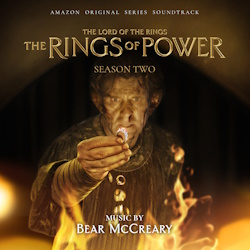 While it might be seen by some as a predictable and safe choice, my choice for the best score of 2024 is nevertheless Season 2 of THE LORD OF THE RINGS: THE RINGS OF POWER by Bear McCreary. I don’t want to keep harping on about it and re-writing the same stuff, because I’ve been saying this for more than two years now, but I truly believe that McCreary’s work on this show is up there with the best music ever written for television – and that’s not hyperbole. I do genuinely mean ever, in the entire history of the medium. As I wrote in 2022, the score is astonishing in terms of its ambition and scope, and McCreary has built on the seventeen individual character/concept themes from season one with new themes for new characters and locales in season two, including songs based on Tolkien poetry, which are then often arranged into spectacular action sequences. Again: it’s beautiful, it’s epic, it’s powerful, it makes the show better, and as a listening experience it ticks every box from what I want out of music. For the second time in three years, nothing else comes close.
Another television score left a major positive impression too. AVATAR: THE LAST AIRBENDER, by Japanese-born LA-raised composer Takeshi Furukawa. He wrote an enormous, thematic, dense, staggeringly beautiful and exciting score for this live-action Netflix series based on the popular animated TV show from 2005. Scores like this – big orchestral adventures with numerous memorable recurring themes, exciting action, and moments of great drama and beauty – are my bread and butter, and when the orchestra is combined with various elements from pan-Asian musical culture, it’s just the icing on the cake. There is real technical excellence, and deep emotional sophistication, in this music, and for me it heralds Furukawa’s emergence as a truly exciting new talent in the film music world
Mainstream Hollywood gave us several outstanding scores in 2024. GLADIATOR II is of course the sequel to the Oscar-winning classic from 2000, and saw Harry Gregson-Williams step into Hans Zimmer’s not inconsiderable shoes. Although Gladiator II is a much quieter score than its predecessor, I personally think that this is a great example of what Gregson-Williams brings to a score in terms of his own personality. The whole score is awash in so many of the little compositional stylistic touches he likes, fans of his style will be delighted. Not only that, the unusual instrumental textures, and the different vocal styles and tones that Gregson-Williams used all allow Gladiator II to develop its own distinct personality, separate from what Zimmer did on Gladiator; as much as I adore that first score, one could easily argue that Gladiator II is actually a more authentic experience, and I appreciate that enormously.
Director Robert Zemeckis re-teamed with composer Alan Silvestri for the 20th collaboration overall for his ambitious but intimate family drama HERE. The score is a classic Silvestri score in every sense of the word; stylistically, it is a throwback to his mid-1990s Golden period, and offers a combination of the intimate themes from scores like Forrest Gump, alongside some of the bold and exciting action sequences from scores like Judge Dredd. It is at times staggeringly beautiful – I don’t mind admitting that I burst into tears during its finale. I really cannot recommend Here strongly enough, especially to anyone who has ever been drawn to Alan Silvestri’s most overtly warm and emotional writing. It’s so refreshing, and so pleasing, to hear film music in a current movie which isn’t afraid to accentuate and enhance a film’s drama and emotion with music that is equally dramatic and emotional – so much so that I wanted to stand up and cheer at the end of the film.
John Debney gave Kevin Costner’s sprawling epic HORIZON: AN AMERICAN SAGA, CHAPTER ONE one of the best western scores in recent years, a welcome throwback to the golden era of the genre. What Debney has done here is nothing short of remarkable – he has written a classic western score, full of themes and melodies, with moments of both high energy action and gentle romance, and somehow not had it toned down by studio executives who think this sort of music is ‘old fashioned’ or ‘overly-manipulative,’ or some other such nonsense. If this is the standard of music that we can expect when subsequent chapters hit cinemas in the future, this could be the beginning of one of the best western scores of the century. That final cue, “Horizon Montage Begins/Closing Survey,” is an absolute knockout, and contains one of the most compelling and memorable new themes of the year.
WICKED: PART ONE is of course the big-screen adaptation of Stephen Schwartz’s iconic stage musical based on The Wizard of Oz, and sees Schwartz teaming up with composer John Powell to adapt his existing songs into brand new score. Having never seen the original show I had not expected to enjoy Wicked as much as I did, nor did I expect the score to be as dense and rich and thematically complex as it turned out to be, but what Powell and Schwartz have accomplished here is actually quite remarkable. Schwartz’s songs have been loved by millions for more than twenty years, and considering the level of intensity that Wicked’s fans love them, the pressure on him and Powell to make their movie version equally special must have been intense. But, somehow, they seem to have pulled it off. The way the two aspects of the music work together is exceptional – the interweaving of the song melodies, the apparent foreshadowings and allusions to things that won’t happen until Part Two, the way Powell has adapted and developed Schwartz’s tunes to suit the musical needs of the drama: it’s all outstanding, and the fact that Powell was able to craft several brand new themes, and even reference Harold Arlen’s songs and Herbert Stothart’s score from the 1939 film, takes it all to yet another level.
Finally, in terms of Hollywood standouts, the animated family adventure THE WILD ROBOT will likely prove to be the breakout score for composer Kris Bowers, who has been threatening to break onto the A-List for several years, and seems now poised to be one of the film music stars of the future. This score is tremendous; a traditional thematic orchestral score written for a large symphony orchestra augmented with a small amount of synths, and containing some outstanding moments of soaring beauty – the cue “I Could Use a Boost” is one of the year’s greats. Bowers’s work here is sophisticated, dramatic, and emotionally intelligent, respectful of classic film music but also contemporary enough to connect with modern audiences.
As far as the rest of the world is concerned, I personally found myself connecting deeply with three specific scores, one from the UK, one from France, and one from Poland. The British one is the animated adventure film KENSUKE’S KINGDOM, with music by Stuart Hancock. I was hoping this one might sneak into the Oscar conversation, but no luck. It’s a shame – Kensuke’s Kingdom is a superb score, one of the most unexpected delights of 2024 to date. Hancock is an old-fashioned large-scale orchestral composer, and this score is very much written in that vein. Fans of the broad, emotional, thematic, intricate orchestral writing that typified the work of John Williams and Bruce Broughton in the 1980s will immediately be drawn to what Hancock achieved here; as I am one of those people, I loved it from start to finish.
The French one is BAMBI: L’HISTOIRE D’UNE VIE DANS LES BOIS, by Laurent Perez del Mar, a live-action retelling of the original Bambi that is so well known to Disney fans. However, anyone used to the friendly, child-like, perhaps overly-cutesy music that Frank Churchill and Edward Plumb wrote for the 1942 Bambi will find this score to be a very different animal (pun intended). It’s a serious, emotional, pastoral orchestral work that leans into two ideas: the first, a gorgeous evocation of the landscape and setting, and the second, a more dramatically potent depiction of Bambi’s life. It’s just outstanding, a tone poem that expresses its story with bold orchestral colors, lovely themes, and a rich variety of emotional textures. Del Mar is a wonderful composer with a real talent for eliciting deep emotional responses from his audience through evocative writing for orchestra and choir. It’s also impressive that he was able to tackle this story from a completely original perspective, making it entirely distinct from the famous Disney cartoon version. I cannot recommend it highly enough.
And finally, the Polish one is SAMI SWOI: POCZĄTEK, or OUR FOLKS: THE BEGINNING, by Pawel Łucewicz. He first came to my attention last year with his score for the drama Znachor, and this score is cut from the same cloth. It is pastoral and calming, romantic and beautiful, and often clearly inspired by elements of Polish folk music, all combining to create an evocative portrait of a time and a place, a people and a culture. Numerous pieces are awash in tender strings, gentle and pretty woodwinds, intimate pianos, and endless harp waves, all of which cast a beautifully nostalgic glow; then, the continued use of a clarinet and flutes as a leading instrument in many of these cues delves deep back into the musical traditions of the region, and makes the whole thing wonderfully authentic. This is an outstanding score, moving, amusing, filled with both rich emotion and a love of its country’s musical heritage.
Rounding my Top 20 scores of 2024 (in alphabetical order) are: ARGYLLE by Lorne Balfe, BATMAN: CAPED CRUSADER [S1] by Frederik Wiedmann, DIAMANTI by Giuliano Taviani and Carmelo Travia, INDIANA JONES AND THE GREAT CIRCLE [VG] by Gordy Haab, THE MINISTRY OF UNGENTLEMANLY WARFARE by Chris Benstead, A NORMAL FAMILY by Sung-Woo Cho, QUIDDITCH CHAMPIONS [VG] by Cris Velasco, RISE OF THE RONIN [VG] by Inon Zur, SE POTESSI DIRTI ADDIO by Paolo Vivaldi, and STORMSKERRY MAJA by Lauri Porra.
COMPOSER OF THE YEAR
- BEAR McCREARY
Nominees
- LORNE BALFE
- KRIS BOWERS
- ALEXANDRE DESPLAT
- JOHN POWELL
 My choice for Composer of the Year is, again, perhaps predictable, but for me no working composer showed as much range, depth, and excellence, across such a broad range of projects, this year as BEAR McCREARY. The Lord of the Rings: The Rings of Power Season 2 is the score of the year, and in and of itself that achievement would have been enough for me, but he also delivered tremendous work on other projects, most notably director Kevin Smith’s The 4:30 Movie, a terrific throwback to the 1980s synth sound. Not only that, he wrote a creative and entertaining score for the horror flick Imaginary, and he wrote music for the latest seasons of multiple TV shows such as Outlander, Halo, and Masters of the Universe, along with his staff composers at Sparks & Shadows.
KRIS BOWERS and JOHN POWELL make the list due to the combined strength of their respective Score of the Year nominees, and their excellent work on numerous other scores. In addition to The Wild Robot Bowers had Season 3 of the Regency-era romantic costume drama Bridgerton, and his reggae-inspired score for the Bob Marley biopic One Love, three vastly different scores which perfectly illustrate his range and versatility. Similarly, in addition to Wicked, Powell scored two animated films: Thelma the Unicorn, and the festive adventure That Christmas, both of which continue to showcase his outstanding talent for rich, thematic, emotional orchestral writing.
LORNE BALFE and ALEXANDRE DESPLAT make my composers list not because they had an abundance of top-tier scores – in fact none of their works made my Top 10 of the year – but for their reliability and consistency across multiple genres and styles. Balfe wrote, co-wrote, or supervised the scores for 12 different films in 2024 – these include a trio of action comedies (Argylle, Bad Boys: Ride Or Die, and Beverly Hills Cop: Axel F), the action thriller Carry-On, the political documentary Carville: Winning Is Everything Stupid, the Chinese drama Decoded with Kevin Riepl, the historical TV series Alexander: The Making of a God with Taran Mitchell, the animated sequel Wallace & Gromit: Vengeance Most Fowl with Julian Nott, and the video game Dragon Age: The Veilguard with Hans Zimmer. An astonishing body of work, topped off by the fact that he also had a hand in two of my favorite movie songs of the year, both of which also came from Argylle.
Meanwhile, Desplat scored five very different films in 2024, including the gorgeous French animated film La Plus Précieuse Des Marchandises, the WWII drama Lee starring Kate Winslet, the racial drama The Piano Lesson based on the Pulitzer Prize-winning play by August Wilson, the real life sports drama Unstoppable, and the satirical TV series The Regime, which he co-scored with Alex Heffes. Again, this array of scores shows that Desplat continues to excel across multiple genres and within multiple musical approaches without a drop in quality.
Five other composers who also had excellent years in 2024 are: GORDY HAAB, WILBERT ROGET II, FERNANDO VELÁZQUEZ, BENJAMIN WALLFISCH, and FREDERIK WIEDMANN.
BREAKTHROUGH COMPOSER OF THE YEAR
- STUART HANCOCK
Nominees
- GENE BACK
- MICK GIACCHINO
- LAURI PORRA
- WILBERT ROGET II
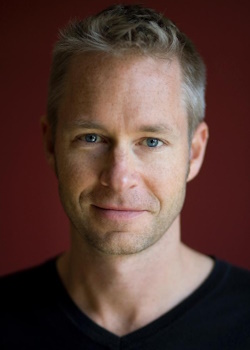 It might be a bit odd to name a composer who has been active since at least 2007 as the ‘breakthrough composer of the year,’ but I genuinely feel that Englishman STUART HANCOCK might be on the verge of finally achieving the status he deserves after his work on Kensuke’s Kingdom this year. Hancock has been writing for short films, under-the-radar indie movies, and domestic TV shows for more than 15 years, but his magnificent orchestral score for the children’s adventure film based on Michael Morpurgo’s beloved book should finally allow him to be hired more frequently on projects of similar stature. I sincerely hope it does.
The same can be said for video game specialist WILBERT ROGET II; he has been around the game industry since at least 2014, but with his three spectacular scores in 2024 – Star Wars: Outlaws, Helldivers 2, and Pacific Drive – plus his work on the anime TV series Gundam: Requiem for Vengeance, it feels like Roget has announced himself as one of the leading orchestral game composers in the world today.
Korean-American composer GENE BACK, on the other hand, is a relative newcomer, but his serious score for the religion-themed biopic Cabrini marks him as a real talent; the score overflows with beautiful reverent string writing and deep emotion. This is impressive stuff from Back, and based on the strength of this score his career looks likely to continue its upward trajectory for the foreseeable future.
Can you call the great-grandson of Jean Sibelius a nepo baby? That’s up for debate, but Finnish composer LAURI PORRA’s score for the drama Stormskerry Maja is one of 2024’s unexpected breakthrough works. While some may find its occasionally somewhat depressing tone a tough slog to get through, I personally found that experiencing the darker and more oppressive parts of the score was necessary in order to appreciate the genuine thematic and emotional highs, especially in the standout cue “Driftwood II”. It’s rich, classical, at times very beautiful, and for me adds Porra to the list of film composers from that country whose scores are insta-listens.
Finally MICK GIACCHINO, the son of Michael, has indeed been called a nepo baby, but to me that negates what a talented composer he is in his own right, irrespective of who his father is or what his last name is. His two major works in 2024 were on two prominent TV series – The Penguin for HBO Max, and Star Wars: Skeleton Crew for Disney – and they are both excellent; The Penguin is dark and brooding and builds on the sonic world his father created for his Batman movie, while Skeleton Crew brings a bright, positive orchestral sound to the latest Star Wars spin-off show, recapturing the fun and energy of so many classic 1980s kids’ adventure movies.
*Quick note about Skeleton Crew: the show is split across two calendar years, so while Giacchino gets his nomination this year, the score itself will not be eligible for nomination until 2025. I follow IFMCA rules for this, so that’s the reason why.
Five other composers who also had breakout years in 2024 are: DANIEL BLUMBERG, MASSIMO MARTELLOTTA, RUBEN MELIA, UMBERTO SMERILLI, and ISABELLA SUMMERS.
BEST ORIGINAL SONG
- “Get Up and Start Again” from ARGYLLE, written by Lorne Balfe, Matthew Vaughn, Gary Barlow, and Giles Martin, performed by Ariana de Bose (review)
Nominees:
- “24 Karat Case of Love” from THE 4:30 MOVIE, written by Bear McCreary and Brendan McCreary, performed by Brendan McCreary (review)
- “Electric Energy” from ARGYLLE, written by Lorne Balfe, Matthew Vaughn, Gary Barlow, and Stuart Price, performed by Boy George and Ariana de Bose (review)
- “Compress, Repress” from CHALLENGERS, written by Trent Reznor and Atticus Ross, performed by Trent Reznor feat. Mariqueen Maandig (review)
- “The Journey” from THE SIX TRIPLE EIGHT, written by Diane Warren, performed by H.E.R.
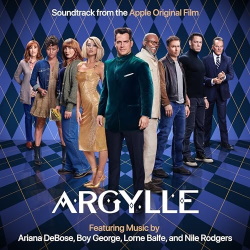 Anyone who knows me knows that my taste in pop music is forever stuck in the 1980s and 1990s, and as such my choices for the best songs of 2024 reflect that stubborn nostalgia. The winner, “Get Up and Start Again,” is from the action comedy Argylle, was written by composer Lorne Balfe and writer/director Matthew Vaughan with pop superstar Gary Barlow from Take That and super-producer Giles Martin, and is performed by lead actress Ariana DeBose. For me, it is a genuine contender to be one of the best Bond songs not to appear in a Bond movie. It initially has a smooth, silky, intimate sound, but slowly grows into a sensational soaring power ballad, with a knockout vocal performance by DeBose and outstanding orchestral arrangements – that brass countermelody!
I also love the other song from Argylle, “Electric Energy,” which was written by Balfe, Vaughan, and Barlow alongside another producer, Stuart Price, and is again performed by Ariana DeBose with guest vocals by 1980s pop star Boy George. The song is a terrific throwback disco track with a killer guitar bass line by the iconic Nile Rodgers, a catchy central melody, and a toe-tapping beat that has wormed its way into my ears and not let go; it’s just fantastic.
The original songs from The 4:30 Movie were written by Bear McCreary with his singer-songwriter brother Brendan, and to say these songs are brilliant would be a massive understatement. They are so good that, had they actually been written and released in 1986, they would legitimately have been chart smash hits in their own right. “24 Karat Case of Love” is a legit banger, steeped in the stylistics and instrumental arrangements of every great 1980s synthpop song, from the use of the iconic drum machines to the perfect saxophone solo; I can hear bits and pieces from so many great artists from that era that it would be pointless to try to list them, suffice to say that the McCreary brothers clearly understand this music deeply, and love it even more. I love it too.
Challengers is another film that, musically speaking, is massively steeped in the 1980s euro-pop sound. Director Luca Guadagnino’s instruction to his composers Trent Reznor and Atticus Ross was for them to write a score that takes inspiration from ‘Berlin techno’ and 1990s rave music, and they have done just that, while also bringing in some of their own personal stylistics and flavors. This also transposes to their original song, “Compress/Repress,” which is performed by Reznor with whispered background vocals by his wife, singer/songwriter Mariqueen Maandig. The song is excellent; it has a sultry overall atmosphere, a killer piano riff, and a memorable vocal performance by Reznor, who here seems to be channeling his inner Dave Gahan from Spandau Ballet for all he’s worth.
Finally, we have “The Journey” from the inspirational true life WWII drama The Six Triple Eight, written by the irrepressible Diane Warren, and performed by H.E.R. It’s easy to see why Warren is a 16-time Oscar nominee and one of the most successful pop and rock songwriters of all time; “The Journey” is yet another classic, a soaring power ballad written in her inimitable style, with a bold and powerful chorus, memorable thematic hooks, and a powerhouse soulful vocal performance at its core.
Other outstanding songs in 2023 include: “Forbidden Road” from BETTER MAN, “The Last Ballad of Damrod” from THE LORD OF THE RINGS: THE RINGS OF POWER S2, “The Rider” from THE LORD OF THE RINGS: THE WAR OF THE ROHIRRIM, “This Is Who I Am” from THE DAY OF THE JACKAL, and “Under the Tree” from THAT CHRISTMAS.
==========================================================
Hereafter, presented without additional comment, are my choices for the best scores in each of the genre categories:
BEST ORIGINAL SCORE FOR A DRAMA FILM
- HERE, Alan Silvestri (review)
Nominees:
- BAMBI: L’HISTOIRE D’UNE VIE DANS LES BOIS, Laurent Perez del Mar (review)
- DIAMANTI, Giuliano Taviani and Carmelo Travia (review)
- HORIZON: AN AMERICAN SAGA, CHAPTER ONE, John Debney (review)
- STORMSKERRY MAJA, Lauri Porra (review)
Special mentions should also go to: CABRINI, Gene Back; CHALLENGERS, Trent Reznor and Atticus Ross; FINALMENTE L’ALBA/FINALLY DAWN, Massimo Martellotta; A NORMAL FAMILY, Sung-Woo Cho; and YOUNG WOMAN AND THE SEA, Amelia Warner.
BEST ORIGINAL SCORE FOR A COMEDY FILM
- SAMI SWOI: POCZĄTEK/OUR FOLKS: THE BEGINNING, Pawel Łucewicz (review)
Nominees:
- THE 4:30 MOVIE, Bear McCreary (review)
- BEETLEJUICE BEETLEJUICE, Danny Elfman (review)
- LES CHÈVRES!/THIS IS THE GOAT!, Christophe Julien (review)
- SEIZE THEM!, Rael Jones (review)
Special mentions should also go to: THE BOOK OF CLARENCE, Jeymes Samuel; FLY ME TO THE MOON, Daniel Pemberton; HAROLD AND THE PURPLE CRAYON, Batu Sener; LISA FRANKENSTEIN, Isabella Summers; and YOUR MONSTER, Timothy Williams.
BEST ORIGINAL SCORE FOR AN ACTION/ADVENTURE FILM
- GLADIATOR II, Harry Gregson-Williams (review)
Nominees:
- ARGYLLE, Lorne Balfe (review)
- ACMA GAME: THE FINAL KEY, Yugo Kanno (review)
- THE MINISTRY OF UNGENTLEMANLY WARFARE, Chris Benstead (review)
- MOST VAGY SOHA!/NOW OR NEVER!, Robert Gulya (review)
Special mentions should also go to: LE COMTE DE MONTE CRISTO/THE COUNT OF MONTE CRISTO, Jérôme Rebotier; THE KILLER, Marco Beltrami; TREASURE TRACKERS, Robin Hoffmann; TWISTERS, Benjamin Wallfisch; and WOODWALKERS, Anne-Kathrin Dern.
BEST ORIGINAL SCORE FOR A FANTASY/SCI-FI FILM
- WICKED: PART ONE, John Powell and Stephen Schwartz (review)
Nominees:
- GHOSTBUSTERS: FROZEN EMPIRE, Dario Marianelli (review)
- MEGALOPOLIS, Osvaldo Golijov (review)
- THE PRIMEVALS, Richard Band (review)
- RED ONE, Henry Jackman (review)
Special mentions should also go to: DAMSEL, David Fleming; DUNE: PART TWO, Hans Zimmer; EMPIRE QUEEN: THE GOLDEN AGE OF MAGIC, Nicolas Repetto; KINGDOM OF THE PLANET OF THE APES, John Paesano; and L’HOME DELS NASSOS, Laetitia Pansanel-Garric and Irina Prieto Botella.
BEST ORIGINAL SCORE FOR A HORROR/THRILLER FILM
- NOSFERATU, Robin Carolan (review)
Nominees:
- ALIEN: ROMULUS, Benjamin Wallfisch (review)
- LOUPS-GAROUS/FAMILY PACK, Guillaume Roussel (review)
- LOVE YOU AS THE WORLD ENDS: THE MOVIE, Yoshihei Ueda, Shigekazu Aida, and Ryo Noguchi (review)
- MONSTER SUMMER, Frederik Wiedmann (review)
Special mentions should also go to: ABIGAIL, Brian Tyler; ANATEMA, Vanessa Garde; FOREVER MINE, Anne-Kathrin Dern; THE PAINTED, Frederik Wiedmann; and THE WATCHERS, Abel Korzeniowski.
BEST ORIGINAL SCORE FOR AN ANIMATED FILM
- KENSUKE’S KINGDOM, Stuart Hancock (review)
Nominees:
- DRAGONKEEPER, Arturo Cardelús (review)
- INTO THE MORTAL WORLD, Roc Chen (review)
- LA PLUS PRÉCIEUSE DES MARCHANDISES/THE MOST PRECIOUS OF CARGOES, Alexandre Desplat (review)
- THE WILD ROBOT, Kris Bowers (review)
Special mentions should also go to: BUFFALO KIDS, Fernando Velázquez; THE LORD OF THE RINGS: THE WAR OF THE ROHIRRIM, Stephen Gallagher; SUPERKLAUS, Diego Navarro; THAT CHRISTMAS, John Powell; and WALLACE & GROMIT: VENGEANCE MOST FOWL, Lorne Balfe and Julian Nott.
BEST ORIGINAL SCORE FOR A DOCUMENTARY
- CHURCHILL AT WAR, Jeff Danna (review)
Nominees:
- MARTHA, Colin Stetson
- OUR LIVING WORLD, Pinar Toprak
- THE REMARKABLE LIFE OF IBELIN, Uno Helmersson (review)
- WHY DINOSAURS?, Raphaël Dargent (review)
Special mentions should also go to: ASIA, Jacob Shea and Laurentia Editha; OUR OCEANS, Ho-Ling Tang; SKAL HILSE FRA NATUREN/A CALL FROM THE WILD, Oliver Heuss; SPACE: THE NEW FRONTIER, Alan Williams; and UOMINI E DEI: LE MERAVIGLIE DEL MUSEO EGIZIO/THE IMMORTALS: WONDERS OF THE MUSEO EGIZIO, Remo Anzovino.
BEST ORIGINAL SCORE FOR TELEVISION
- THE LORD OF THE RINGS: THE RINGS OF POWER [S2], Bear McCreary (review)
Nominees:
- AVATAR: THE LAST AIRBENDER [S1], Takeshi Furukawa (review)
- BATMAN: CAPED CRUSADER [S1], Frederik Wiedmann (review)
- SE POTESSI DIRTI ADDIO [S1], Paolo Vivaldi (review)
- THE SWALLOWS DON’T COME BACK [S1], Evan Call (review)
Special mentions should also go to: FORTUNE DE FRANCE [S1], Arthur Simonini; MASTERS OF THE AIR [S1], Blake Neely; NO LONGER ALLOWED IN ANOTHER WORLD [S1], Kenichiro Suehiro; LA ÚLTIMA NOCHE EN TREMOR [S1], Fernando Velázquez; and UMI NI NEMURU DIAMOND [S1], Naoki Sato.
BEST ORIGINAL SCORE FOR A SHORT FILM
- GO FOR GRANDMA, Fabrizio Mancinelli (review)
Nominees:
- BATTEMENT D’ELLE/THE DOVE SECRET, Romain Paillot (review)
- CARMEN Y LA CUCHARA DE PALO/CARMEN AND THE WOODEN SPOON, Iván Palomares (review)
- EDGE OF SPACE, Mark Baechle (review)
- THE ICE CREAM MAN, Nami Melumad (review)
Special mentions should also go to: LES BÊTES, Lito Velasco; HOPE AND GLORY, Dimitris Dodoras; JUMPMAN, Fabrizio Mancinelli; LIGHTFALL, Raphaël Dargent; and WOMAN OF STONE, Blair Mowat.
BEST ORIGINAL SCORE FOR A VIDEO GAME
- QUIDDITCH CHAMPIONS, Cris Velasco
Nominees:
- HELLDIVERS 2, Wilbert Roget II and Ross Tregenza
- INDIANA JONES AND THE GREAT CIRCLE, Gordy Haab
- NORDIC ASHES: SURVIVORS OF RAGNAROK, Ruben Melia
- RISE OF THE RONIN, Inon Zur
Special mentions should also go to: METRO AWAKENING, Anne-Kathrin Dern; NI SHUI HAN: THE NINE LIGHTS OF COLD FOREST, Yu-Ping Chen; NOBODY WANTS TO DIE, Mikolai Stroinski; SMITE 2, Stephen Barton; and STAR WARS: OUTLAWS, Wilbert Roget II, Jon Everist, and Kazuma Jinnouchi.

Shop at the Movie Music UK Store

Member of the

 MOVIE MUSIC UK