AVATAR: THE LAST AIRBENDER – Takeshi Furukawa
 Original Review by Jonathan Broxton
I want to start this review by saying that, for the most part, I am coming to it from a place of complete ignorance. I am aware that there is a very well-loved and popular animated TV show called Avatar: The Last Airbender, which aired on Nickelodeon for three seasons between 2005 and 2008. This show was very loosely adapted into a live-action movie, The Last Airbender, by M. Night Shyamalan in 2010, which was a critical and commercial flop. There was also a sequel TV series, The Legend of Korra, which also aired on Nickelodeon for four seasons from 2012 to 2014. While I did see the Last Airbender movie, I have never seen any episodes of the original animated show, and while I very much liked James Newton Howard’s score for the movie, I have absolutely no experience with the scores for the animated shows, which are by Jeremy Zuckerman and Benjamin Wynn.
Here’s the synopsis of the show, taken straight from Wikipedia. It is set in an Asian and Arctic-inspired world in which some people can telekinetically manipulate one of the four elements – water, earth, fire, or air – through practices known as “bending,” which are inspired by Chinese martial arts. The only individual who can bend all four elements, the “Avatar,” is responsible for maintaining harmony among the world’s four nations, and serves as the link between the physical world and the spirit world. The series is centered around the journey of twelve-year-old Aang, the current Avatar and last survivor of his nation, the Air Nomads, along with his friends Katara, Sokka, and Toph, as they strive to end the Fire Nation’s war against the other nations and defeat Fire Lord Ozai before he conquers the world. It also follows the story of Zuko, the exiled prince of the Fire Nation, who is seeking to restore his lost honor by capturing Aang. The show was developed by Albert Kim and stars Gordon Cormier as Aang, Kiawentiio Tarbell as Katara, Ian Ousley as Sokka, Dallas Liu as Zuko, and Daniel Dae Kim as Ozai.
 The reason I went into all that preamble is because I think your reaction to the soundtrack for this new live-action TV adaptation of the animated series will very much depend on how much you know and love the original show and its score. As someone with no experience of either, I’m essentially coming in clean, with no expectations, no preconceptions, and no knowledge about what the show gets ‘right’ and ‘wrong’ as it relates to the original canon. I also have no basis for comparison between the music that Zuckerman and Wynn wrote for the original show, and the new score by Japanese-American composer Takeshi Furukawa. However, anyone who grew up with Zuckerman and Wynn’s scores, especially anyone who is deeply aware of its themes and its nuances, may find Furukawa’s music hard to accept – childhood nostalgia is a real thing, and it can deeply affect the way you react to things like this.
In many ways, I feel the same way about Avatar: The Last Airbender as I felt about the TV show The Lord of the Rings: The Rings of Power, and how that project related to J.R.R. Tolkein’s Silmarillion and the other Lord of the Rings lore – in essence, my lack of knowledge about its origin allowed me to enjoy the show more. There’s also a direct comparison in terms of the music because, like Bear McCreary’s Middle-Earth score, Furukawa’s Avatar: The Last Airbender is close to being a masterpiece.
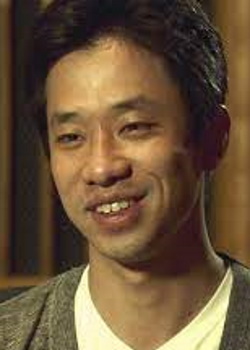
Takeshi Furukawa is a comparative newcomer to major film score projects. He was born in Tokyo but grew up in the Los Angeles suburbs, and first started scoring projects in the mid-2000s: short films, little indie movies, orchestrating and writing additional music for Kevin Kiner on the Clone Wars TV series, and so on. I first became aware of him as a composer in his own right when he wrote a brilliant score for the video game The Last Guardian in 2016, and then last year he wrote another fantastic video game score, Planet of Lana, which was my favorite game score of that year. With that in mind, I will say that Avatar: The Last Airbender is his career pinnacle to date.
It’s an enormous, thematic, dense, staggeringly beautiful and exciting score for the full orchestra and chorus, recorded mostly with the Synchron Stage Orchestra & Choir in Vienna, but also featuring specialist ensembles in London, Budapest, and Tokyo. In traditional style, Furukawa crafted numerous new themes for characters and places; one for Aang, one for Katara, one for Zuko, one for the city of Omashu, and so on and so on. Throughout the score he weaves all these thematic textures together into a leitmotif tapestry, and then hangs that tapestry onto a bed of enormous symphonic forces, which are then themselves supported by a whole array of pan-Asian instruments and colors, drawing inspiration from numerous different music cultures. Anyone who knows me knows that the blend of western orchestras with eastern solo instruments is one of my favorite sounds in film music, and this score continues the trend.
Fans of the original Avatar show will be pleased to note that the “Prologue & Main Title” and the “End Credits” both contain prominent statements of Jeremy Zuckerman’s music. The “Prologue & Main Title” is epic and emotional, with a sweeping thematic core, angelic choral accents, and a driving percussion undercurrent that is very compelling. Meanwhile, the “End Credits” uses the show’s iconic chattering vocal textures, fast tribal percussion patterns, and haunting ethnic flutes, creative and instantly-recognizable, but then expands to include more of that symphonic element. One other cue also references Zuckerman’s work, “Lu Ten’s Funeral,” which underscores an especially emotional sequence involving the General Iroh character, and which uses a gorgeous piano version of the song from the original show, “Little Soldier Boy,” which then swells for the full orchestra. Showrunner Kim says that, upon hearing it, he started to cry, and that he considers it an emotional high point of the entire first season.
Everything else is Furukawa’s and, as I have repeatedly stated, I think it’s just magnificent. In a score overflowing with highlights, numerous cues stand out. The opening cue, “Earthbender,” starts with a bang, a bombastic action sequence that is built around the first statement of the dark, imposing, warlike theme for the Fire Nation, which blends a massive orchestral march with tumultuous metallic percussion patterns. This contrasts with the elegant, nimble, light, writing for the “Southern Air Temple,” which has a much more romantic core and makes gorgeous use of delicate woodwinds alongside noble strings; this then segues into the warm theme for Aang in “You Are the Avatar,” which is introduced in the scene where young Aang is told by his mentors that he is the new Avatar, and must accept the responsibility of trying to unite the warring kingdoms.
“No Survivors” is a 7-minute action set piece underscoring the Fire Nation’s devastating attack on the Southern Air Temple, and the slaughtering of all its airbenders – or, almost all. Furukawa’s action writing is sensational, a wonderfully-orchestrated onslaught of intricate rhythmic patterns, rich symphonic phrases, choral outbursts, and statements of both the Fire Nation theme and the Southern Air Temple theme in an action arrangement. In fact, all through the score, Furukawa really excels in the moments where he allows his orchestra to rise to its biggest heights, and puts it through the action music wringer. So much action music these days is dull, especially on television; if you get anything more than simple percussion loops and chugga-chugga cello ostinatos, you’re lucky. Furukawa’s couldn’t be further from that – it sparkles with life and energy, emotion, and intelligence, a genuine joy.
“Katara” introduces the wonderful theme for that character, a water bender from the Southern Water Tribe who, along with her brother Sokka, becomes Aang’s companion. Katara’s theme is just magnificent – soaring strings, glorious vocals, a hint of romance, a slight undercurrent of tragedy – and the orchestra is enhanced by ethnic woodwinds, metallic chimes, and what sounds like may be Tibetan gamelan bowls, all to excellent effect. After the intense drama of “The Boy in the Iceberg,” “Sky Bison” introduces the magical and playful theme for Appa, Aang’s ‘spirit guide,’ a flying bovine who is akin to Falkor the Luck Dragon from The NeverEnding Story, and whose theme has a similar sense of expansiveness and freedom.
“Kyoshi Island” is a wonderful homage to the musical traditions of wuxia Chinese martial arts films, and explodes with energy, a cavalcade of ethnic vocals and intense percussion rhythms. There is a real sense of longing and heartache in the string and woodwind writing in “I Just Haven’t Seen the World,” and then “Commander Zhao” introduces the music for that character, a Fire Nation rival of Zuko who is perhaps even more ruthless than he is; Furukawa’s music for Zhao is an interesting variation on the Fire Nation theme which uses what sounds like some kind of zither – perhaps a shamisen? – to enhance the sense that Zhao is an old-school warrior, more steeped in the Fire Nation’s heritage and history.
“Omashu” is the music from the Earth Nation city of the same name, where the protagonists travel in the aftermath of a series of deadly Fire Nation bombings. The Omashu music is lively and spirited, almost like symphonic folk music, with a hint of Maurice Jarre and Lawrence of Arabia in some of the chord progressions, as well as in the Middle Eastern orchestrations. “Aang Fights Zuko” returns to the intense wuxia-inspired clattering action music as the two adversaries face off, and Furukawa arranges both character themes in action variations; there is an especially outstanding sequence featuring an evocative woodwind performance from what sounds like a shawm or duduk, which in context is a sound often associated with Zuko’s uncle Iroh.
“Tale of Two Lovers” features one of my favorite pan-Asian instruments – the erhu – performing a longing, romantic melody backed by the strings, although this is interrupted by a more heroic statement of the Omashu theme, underpinned by dramatically undulating strings. The surging, swelling, glorious theme in “An Old Friend” underscores the scene where Aang meets his old friend King Bumi; here, Furukawa acknowledges Bumi’s heritage by blending the orchestra with evocative instrumental textures from the Indian subcontinent. Following that, “Memorable Journey” ends with a wonderful, deeply emotional new version of Zuckerman’s ‘Little Soldier Boy’ melody that is enormously satisfying.
“Lowlife Bounty Hunter” and “Pohuai Escape” are both quick bursts of dramatic suspenseful anticipation and energetic action. The former uses horns and low, keening strings in a way that seems to be emulating Ennio Morricone’s spaghetti western vibe, albeit filtered through an east Asian musical sensibility, and ends with an unexpected blast of dissonance. The latter is initially dark and brooding but grows to be filled with a restless kineticism, vivid brass figures, chanted voices, swirling strings, and several powerful thematic statements. Some of the writing here reminds me of Avatar-era James Horner (the other Avatar), which is very good indeed.
“Zuko’s Return” is the culmination of Zuko’s theme and is an emotional rollercoaster of regret, longing, and anguish, all built around a series of excellent variations on Zuko’s theme, which illustrate the character’s development through the series, while also highlighting Furukawa’s skill at conveying complex and sometimes conflicting emotions in sensitive ways. The writing for strings and choir is especially outstanding here, and it often rises to spine-tingling crescendos.
“Agna Qel’A” is a proud and regal anthem for the capital city of the Northern Water Tribe, while the music for its princess, “Princess Yue,” has a sparkling sheen to the orchestra, but also a layer of exotic mystery through a lilting woodwind melody and the inclusion of layers of rattling wooden percussion textures. The enormous “Moon Slayer” action cue is intense and powerful, and again sees the antagonistic Fire Nation textures encroaching and eventually overtaking the Northern Water Tribe’s stylistics, with impressively apocalyptic results. In the conclusive “Aang Becomes the Ocean Spirit” – which is this score’s version of James Newton Howard’s ‘Flow Like Water’ from his Last Airbender score – Furukawa leaves absolutely everything on the table with the largest and most epic statement of Aang’s theme in the entire score, the full orchestra and the full choir rising in spectacular unison.
I really can’t praise Takeshi Furukawa and Avatar: The Last Airbender enough. Scores like this – big orchestral adventures with numerous memorable recurring themes, exciting action, and moments of great drama and beauty – are my bread and butter, and when the orchestra is combined with various elements from pan-Asian musical culture, it’s just the icing on the cake. As I said at the outset, it probably helps that I have no frame of reference when it comes to Jeremy Zuckerman and Benjamin Wynn’s score for the original TV series, but surely anyone who did grow up listening to those scores and watching those shows, or indeed anyone who also loved James Newton Howard’s 2010 companion piece, can’t fail to be impressed with what Furukawa is doing here. There is real technical excellence, and deep emotional sophistication, in this music, and for me it heralds Furukawa’s emergence as a truly exciting new talent in the film music world – as if his scores for The Last Guardian and Planet of Lana hadn’t done that already.
Buy the Avatar: The Last Airbender soundtrack from the Movie Music UK Store
Track Listing:
- Earthbender (2:50)
- Prologue & Main Title (1:30)
- Southern Air Temple (1:04)
- You Are the Avatar (4:01)
- No Survivors (7:14)
- Katara (2:30)
- The Boy in the Iceberg (2:18)
- Sky Bison (1:09)
- Kyoshi Island (1:21)
- I Just Haven’t Seen the World (3:32)
- Commander Zhao (1:46)
- Suki’s Training (2:02)
- Omashu (2:11)
- Aang Fights Zuko (1:44)
- Lu Ten’s Funeral (1:37)
- Tale of Two Lovers (1:52)
- An Old Friend (2:32)
- Memorable Journey (3:01)
- Scorched Forest (1:54)
- Lowlife Bounty Hunter (2:03)
- Pohuai Escape (5:25)
- Zuko’s Return (6:52)
- Agna Qel’A (1:44)
- Princess Yue (1:51)
- Moon Slayer (3:44)
- Aang Becomes the Ocean Spirit (4:15)
- Just the Beginning (1:14)
- End Credits (3:04)
Running Time: 76 minutes 33 seconds
Netflix Music (2024)
Music composed by Takeshi Furukawa. Conducted by Bernhard Melbye Voss. Performed by The Synchron Stage Orchestra & Choir. Orchestrations by Saki Furuya, Mamiko Hata, Nozomi Tarui, Daiko Fujikawa, Nolan Markey, Jordan Cox and Dave Volpe. Recorded and mixed by Martin Wiesmayr, Peter Fuchs, Jeff Gartenbaum and Mary Shinohara. Edited by Micha Liberman and Stephanie Gangel. Album produced by Takeshi Furukawa.
Leave a comment

Shop at the Movie Music UK Store

Member of the

 MOVIE MUSIC UK
This is well timed as I had just read a positive view of Planet of Lana from James Southall and promptly checked out both that and The Last Guardian. As a long-standing fan of Thomas Newman, I greatly enjoyed both of them, partly because, to my ears, both – particularly Planet of Lana – frequently use and build upon some of my favourite Newman-isms. Especially as Newman himself has regrettably used these increasingly rarely since around 2017, I welcome seeing other composers experiment with these ideas and techniques, and Takeshi Furukawa seems to have a good grasp of what makes them work.
In Avatar: The Last Airbender I still detect some of that influence in its quieter passages but with the weightier emphasis on action music and the Eastern influences, we see other sides of the composer which show that he is pretty versatile. I’ve always been a fan of Phrygian and harmonic major based harmonies and these feature frequently in all three.
I had never even heard of Takeshi Furukawa until a couple of weeks ago but I think judging by his outputs so far he certainly has potential to become one of my favourite composers.