Remembering Jule Styne, 1905-1994
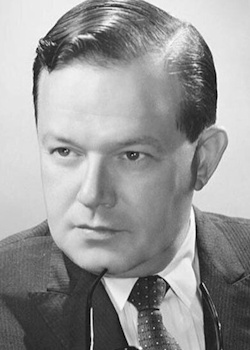 Composer and songwriter Jule Styne died at Mount Sinai Medical Center in New York City ten years ago today, on September 20, 1994, at the age of 88, following a heart attack after several weeks of ill health.
One of the towering figures of the American musical theatre, Styne composed the music for Gentlemen Prefer Blondes, Bells Are Ringing, Gypsy and Funny Girl, while his extensive Hollywood career produced songs including “It’s Magic,” “I Fall in Love Too Easily” and the Academy Award-winning “Three Coins in the Fountain.”
Julius Kerwin Stein was born in London’s East End on December 31, 1905, into a Jewish family of Ukrainian ancestry. His family emigrated to Chicago in 1912, where his exceptional talent at the piano quickly became apparent. A child prodigy, he performed with major symphony orchestras while still young, but eventually abandoned ambitions for a classical concert career and immersed himself instead in Chicago’s jazz and popular-music scene.
By the 1930s Styne was working as a pianist, bandleader and vocal coach. He eventually moved to Hollywood, where he coached performers including Shirley Temple and Alice Faye before establishing himself as a songwriter. His most important early partnership was with lyricist Sammy Cahn. Together they wrote dozens of songs for films and popular singers, including “I’ll Walk Alone,” “It’s Been a Long, Long Time,” “The Things We Did Last Summer,” “Time After Time,” “Guess I’ll Hang My Tears Out to Dry” and the seasonal standard “Let It Snow! Let It Snow! Let It Snow!”
Their film work included Anchors Aweigh (1945), for which “I Fall in Love Too Easily” received an Academy Award nomination, and Doris Day’s screen debut Romance on the High Seas (1948), which introduced “It’s Magic.” Styne and Cahn ultimately collaborated on songs for numerous Hollywood productions, culminating in “Three Coins in the Fountain” (1954), which won both men the Academy Award for Best Original Song.
By then Broadway had become increasingly important to Styne. His first major theatrical success was High Button Shoes (1947), written with Cahn, followed by Gentlemen Prefer Blondes (1949), with lyricist Leo Robin. That show’s “Diamonds Are a Girl’s Best Friend” became an enduring standard, particularly after Marilyn Monroe’s celebrated performance in the 1953 film adaptation.
Styne subsequently collaborated with Betty Comden and Adolph Green on Bells Are Ringing (1956), which produced “Just in Time,” “The Party’s Over” and “Make Someone Happy.” His greatest theatrical achievement followed with Gypsy (1959), written with lyricist Stephen Sondheim and playwright Arthur Laurents. Built around the formidable character of stage mother Rose, its score included “Everything’s Coming Up Roses,” “Small World,” “Together Wherever We Go” and “Rose’s Turn,” and the musical subsequently became regarded as one of Broadway’s masterpieces.
Another enormous success came with Funny Girl (1964), written with lyricist Bob Merrill and starring the young Barbra Streisand as Fanny Brice. Styne strongly supported Streisand’s casting, and songs including “People,” “Don’t Rain on My Parade” and “I’m the Greatest Star” helped transform her into a major star. The 1968 film adaptation brought the score to an even wider international audience.
Other Broadway works included Peter Pan, Do Re Mi, Subways Are for Sleeping, Fade Out – Fade In and Hallelujah, Baby!, the latter winning the 1968 Tony Award for Best Musical and earning Styne the Tony for Best Composer. His final Broadway musical, The Red Shoes, opened in 1993 but closed after only five performances.
Styne received the Kennedy Center Honors in 1990 and the Songwriters Hall of Fame’s Johnny Mercer Award in 1993. He married twice and is survived by his second wife Margaret, his children, grandchildren and great-grandchildren.

Shop at the Movie Music UK Store

Member of the


