Remembering Angelo Francesco Lavagnino, 1909-1987
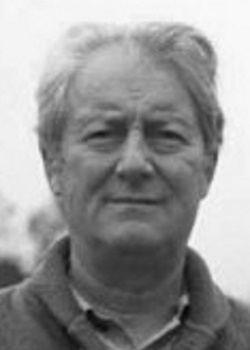 Composer Angelo Francesco Lavagnino died ten years ago today in Gavi, Italy, on August 21, 1987, at the age of 78.
One of the most prolific and versatile figures in post-war Italian film music, Lavagnino wrote scores for more than 200 films across almost every conceivable genre, from documentaries and comedies to historical epics, westerns and science fiction. Internationally he was best known for his work on Orson Welles’s Othello and Chimes at Midnight, as well as Legend of the Lost, The Naked Maja, Gorgo and Conspiracy of Hearts.
Lavagnino was born in Genoa on February 22, 1909. He studied violin at the Giuseppe Verdi Conservatory in Milan, where he subsequently pursued composition under teachers including Renzo Bossi and Vito Frazzi. Before entering cinema he wrote extensively for the concert hall, including chamber and symphonic music, sacred works and the opera Malafonte. From 1948 until 1963 he also taught film music at the prestigious Accademia Musicale Chigiana in Siena.
His first important film assignment came through Orson Welles, composing music with Alberto Barberis for Othello, filmed over several years and released internationally in the early 1950s. Lavagnino’s dark, archaic-sounding music immediately demonstrated his ability to evoke historical atmosphere without relying simply on conventional orchestral romanticism. More than a decade later Welles invited him back for Chimes at Midnight (1965), for which Lavagnino adapted and recreated early musical forms to accompany Welles’s celebrated portrait of Falstaff.
Lavagnino became especially admired for his work on travel and documentary films. Rather than merely quoting local folk melodies, he frequently travelled to filming locations, recording indigenous instruments, voices and environmental sounds and incorporating them into his own music. For Lost Continent (Continente perduto, 1954), filmed in Southeast Asia, he experimented with four-track stereophonic recording, unusually advanced technology for the period. The score won him the Nastro d’Argento for Best Music, an award he won again the following year for the Winter Olympics documentary White Vertigo (Vertigine bianca).
During the late 1950s and 1960s Lavagnino became extraordinarily prolific. His international productions included Henry Hathaway’s desert adventure Legend of the Lost (1957), starring John Wayne and Sophia Loren; The Naked Maja (1958), with Ava Gardner; the wartime drama Conspiracy of Hearts (1960); and Eugène Lourié’s British monster film Gorgo (1961), for which his unexpectedly lyrical themes brought genuine tenderness to the story of two prehistoric creatures.
Within Italian cinema he worked across virtually every popular genre. He scored comedies including An American in Rome and Everybody Go Home!, numerous films starring Totò, and historical spectacles such as Sergio Leone’s The Colossus of Rhodes. His peplum scores combined large orchestras, forceful percussion and heroic themes, while his spaghetti westerns included Johnny West and Four Dollars of Revenge. He also embraced the science-fiction boom through Antonio Margheriti’s Gamma One films, including Wild, Wild Planet, War of the Planets and The Snow Devils.

Shop at the Movie Music UK Store

Member of the


