Alan Bergman, 1925-2025
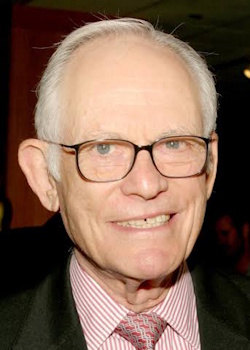 Lyricist and songwriter Alan Bergman died at his home in Los Angeles on July 17, 2025, at the age of 99, after suffering from respiratory problems.
For more than six decades he worked almost inseparably with his wife Marilyn Bergman, creating some of the most enduring songs written for American cinema. Together the Bergmans received 16 Academy Award nominations and won three Oscars, for “The Windmills of Your Mind,” “The Way We Were,” and the song score of Yentl.
Bergman was born in Brooklyn, New York, on September 11, 1925. He graduated from the University of North Carolina in 1948 and later studied music at UCLA before establishing himself as a songwriter in Los Angeles. He met Marilyn Keith through their mutual collaborator Lew Spence in 1957; they married the following year and developed one of the longest and most successful songwriting partnerships in American popular music.
Their early successes included “Yellow Bird” and “Nice ‘n’ Easy,” the latter recorded by Frank Sinatra, but cinema soon became central to their careers. One of their first major film assignments was Norman Jewison’s In the Heat of the Night (1967), for which they supplied lyrics to Quincy Jones’s title song, memorably performed by Ray Charles. Their gift for expressing complicated emotions with apparently simple language proved ideally suited to film.
The Bergmans’ first Academy Award came with “The Windmills of Your Mind,” written with Michel Legrand for The Thomas Crown Affair (1968). Their collaboration with Legrand became particularly fruitful and also produced “What Are You Doing the Rest of Your Life?” from The Happy Ending, “The Summer Knows” from Summer of ’42, and later the songs for Barbra Streisand’s Yentl (1983). The latter included “Papa, Can You Hear Me?” and “The Way He Makes Me Feel,” while the Bergmans and Legrand won the Oscar for Best Original Song Score.
Their most famous film song arrived with The Way We Were (1973). Marvin Hamlisch supplied the melody and the Bergmans wrote lyrics whose mixture of romance, nostalgia and regret perfectly complemented the relationship between Streisand and Robert Redford’s characters. The song won both the Academy Award and Golden Globe and subsequently the Grammy for Song of the Year, becoming one of Streisand’s signature recordings.
Streisand became their most important interpreter, recording dozens of Bergman songs over the course of their friendship. Their film work extended far beyond her, however. At the 1983 Academy Awards they achieved the remarkable feat of having three songs nominated simultaneously: “It Might Be You” from Tootsie, written with Dave Grusin; “How Do You Keep the Music Playing?” from Best Friends, with Legrand; and “If We Were in Love” from Yes, Giorgio, with John Williams.
Later screen songs included “Moonlight,” written with Williams for Sabrina (1995), and “Love Is Where You Are,” with Mark Isham for At First Sight (1999). The Bergmans also wrote extensively for television, winning several Emmy Awards, and collaborated with composers including Henry Mancini, Johnny Mandel and Quincy Jones.
Beyond cinema, Alan and Marilyn were inducted into the Songwriters Hall of Fame in 1980 and later received its prestigious Johnny Mercer Award. Marilyn died in 2022, ending a marriage and creative partnership of more than 60 years; Alan nevertheless continued writing almost until his own death. He is survived by their daughter Julie and granddaughter.
Alan Bergman was not a film composer in the conventional sense, but few lyricists contributed more memorably to the language of cinema. From the hypnotic imagery of “The Windmills of Your Mind” to the aching nostalgia of “The Way We Were” and the emotional directness of Yentl, his words repeatedly transformed beautiful melodies into songs that seemed inseparable from the films that inspired them. Together, Alan and Marilyn Bergman formed one of Hollywood’s greatest songwriting partnerships.

Shop at the Movie Music UK Store

Member of the


