Stephen Sondheim, 1930-2021
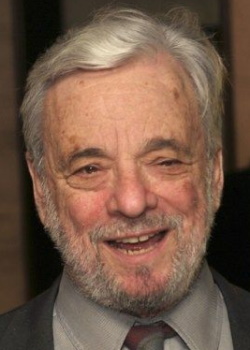 Composer and lyricist Stephen Sondheim died at his home in Roxbury, Connecticut, on November 26, 2021, at the age of 91, of of cardiovascular disease.
Widely regarded as one of the most important figures in the history of American musical theatre, Sondheim transformed Broadway with works of extraordinary psychological and musical sophistication. His direct involvement with cinema was comparatively limited, but included the scores for Stavisky and Reds, songs for Dick Tracy, and numerous celebrated film adaptations of his stage musicals.
Sondheim was born in New York City on March 22, 1930. After his parents divorced he became close to family friend Oscar Hammerstein II, who served as his mentor and taught him the fundamentals of writing for the theatre. Following studies at Williams College, Sondheim achieved his first major Broadway success as lyricist for Leonard Bernstein’s West Side Story in 1957, followed by Jule Styne’s Gypsy in 1959. He soon established himself as both composer and lyricist with A Funny Thing Happened on the Way to the Forum, and subsequently created Company, Follies, A Little Night Music, Sweeney Todd, Sunday in the Park with George, Into the Woods and Passion.
His first substantial original film score came with Alain Resnais’s Stavisky (1974), starring Jean-Paul Belmondo as the notorious French financier and confidence trickster Serge Alexandre Stavisky. Sondheim’s elegant orchestral music deliberately evokes the sophistication of 1930s Paris, combining graceful waltzes and lyrical themes with darker undertones that anticipate the protagonist’s downfall. Unusually lush compared with much of Sondheim’s theatre writing, Stavisky demonstrated that his melodic and dramatic instincts translated naturally to the screen, and remains his most substantial work as a conventional film composer.
Sondheim returned to cinema for Herbert Ross’s The Seven-Per-Cent Solution (1976), writing the song “I Never Do Anything Twice,” performed by a courtesan played by Sondheim’s longtime friend and collaborator Millicent Martin. He also had an important non-musical connection to film: with Anthony Perkins he wrote the screenplay for the ingenious murder mystery The Last of Sheila (1973), directed by Herbert Ross.
His next major film assignment came through Warren Beatty’s epic Reds (1981). Sondheim contributed music to the film alongside composer Dave Grusin, including the wistful “Goodbye for Now,” which became one of his best-known pieces written specifically for cinema. The film’s combination of intimate romance and vast historical events suited Sondheim’s ability to express complex emotions with remarkable economy.
Sondheim reunited with Beatty for Dick Tracy (1990), writing five original songs designed to evoke the popular music of the 1930s while commenting directly on the film’s characters and relationships. They included “More,” “Live Alone and Like It,” “What Can You Lose?” and “Sooner or Later (I Always Get My Man),” performed by Madonna as nightclub singer Breathless Mahoney. “Sooner or Later” won Sondheim the Academy Award for Best Original Song, his only competitive Oscar.
Cinema also played an enormous role in extending the reach of Sondheim’s theatre music. West Side Story became an Academy Award-winning film in 1961 and was adapted again by Steven Spielberg in 2021, while screen versions were also made of A Funny Thing Happened on the Way to the Forum, A Little Night Music, Sweeney Todd: The Demon Barber of Fleet Street and Into the Woods. Even where Sondheim had little direct involvement with the filmmaking, these adaptations brought songs including “Send in the Clowns,” “Being Alive,” “Johanna,” “No One Is Alone” and “Somewhere” to audiences far beyond Broadway.
Sondheim’s greatest achievements came on Broadway, where during the 1970s and 1980s he repeatedly challenged conventional ideas about what a musical could be. Working frequently with director Harold Prince, he created Company (1970), an episodic examination of marriage and modern urban relationships; Follies (1971), a haunting meditation on memory and regret set during a reunion of former showgirls; and A Little Night Music (1973), an elegant romantic comedy inspired by Ingmar Bergman’s Smiles of a Summer Night. The latter produced “Send in the Clowns,” perhaps Sondheim’s most widely recorded individual song. Their collaboration reached its darkest point with Sweeney Todd: The Demon Barber of Fleet Street (1979), an operatic tale of murder and revenge whose dense, often overwhelmingly dramatic score became one of his greatest achievements.
Following the end of his partnership with Prince, Sondheim began an equally significant collaboration with director and playwright James Lapine. Sunday in the Park with George (1984), inspired by Georges Seurat’s painting A Sunday Afternoon on the Island of La Grande Jatte, explored the sacrifices and obsessions of artistic creation and won the Pulitzer Prize for Drama. Into the Woods (1987) brilliantly combined familiar fairy tales before examining the complicated consequences of supposedly happy endings, while Passion (1994) offered an intense and unconventional study of obsessive love. Across these works Sondheim became renowned for lyrics of extraordinary precision and wit, complex musical structures and an insistence that songs should reveal character rather than merely interrupt the story. His influence on subsequent generations of theatre composers was enormous, fundamentally expanding the dramatic and intellectual possibilities of the American musical.
Away from cinema, Sondheim fundamentally reshaped the American musical, bringing unprecedented psychological complexity, structural experimentation and lyrical precision to the form. His honors included multiple Tony and Grammy Awards, the Pulitzer Prize for Sunday in the Park with George, a Kennedy Center Honor and the Presidential Medal of Freedom.

Shop at the Movie Music UK Store

Member of the


