Remembering Stanley Myers, 1930-1993
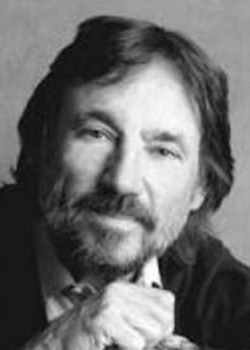 Composer Stanley Myers died ten years ago today in London on November 9, 1993, at the age of 63, following a battle with cancer.
One of Britain’s most prolific film composers, Myers wrote music for more than 100 film and television productions during a career spanning three decades, working with directors including Nicolas Roeg, Stephen Frears, Jerzy Skolimowski, Volker Schlöndorff and Michael Cimino.
Myers was born in Birmingham on October 6, 1930. By the 1960s he had established himself in cinema, with early successes including Jack Smight’s Kaleidoscope (1966) and Joseph Strick’s controversial adaptation of Ulysses (1967). Other notable scores from this period and the early 1970s included The Night of the Following Day, Michael Powell’s Age of Consent, The Walking Stick, Bryan Forbes’s The Raging Moon and the Oliver Reed thriller Sitting Target.
It was The Walking Stick (1970) that produced Myers’s most enduring composition. Its gentle guitar theme, “Cavatina,” was later expanded and recorded by classical guitarist John Williams. Eight years later Michael Cimino used Williams’s performance as the principal theme for The Deer Hunter (1978), where its delicate melancholy provided an unforgettable contrast to the film’s harrowing depiction of war and its aftermath. “Cavatina” became internationally famous and earned Myers an Ivor Novello Award.
Myers was never restricted to a single genre. During the 1970s he became closely associated with director Pete Walker’s distinctly British brand of exploitation horror, scoring House of Whipcord (1974), Frightmare (1974), House of Mortal Sin (1976) and Schizo (1976). Elsewhere he wrote for dramas, thrillers and international productions, including Ted Kotcheff’s The Apprenticeship of Duddy Kravitz and Volker Schlöndorff’s Coup de Grâce. His strongest music invariably reflected a considerable melodic gift, even when working within darker or more experimental material.
The 1980s brought some of Myers’s most interesting collaborations. He developed a particularly close relationship with Nicolas Roeg, beginning with Bad Timing (1980) and continuing through Eureka (1983), Insignificance (1985), Track 29 (1988), The Witches (1990), Cold Heaven (1991) and the television film Heart of Darkness. Roeg later recalled that Myers approached film scoring entirely in service of the picture, regarding himself as part of the filmmaking process rather than simply providing detachable concert music.
Myers also worked regularly in the revitalized British independent cinema of the 1980s. With Stephen Frears he scored My Beautiful Laundrette (1985), Prick Up Your Ears (1987) and Sammy and Rosie Get Laid (1987). His score for Prick Up Your Ears earned him the Best Artistic Contribution award at the Cannes Film Festival, while his lyrical music for David Leland’s Wish You Were Here received a BAFTA nomination.
This period also saw Myers become an important mentor and collaborator to the young Hans Zimmer. The two worked together on several films, including My Beautiful Laundrette, and co-founded London’s Lillie Yard recording studio, experimenting with combinations of traditional orchestral writing and emerging electronic technology. Zimmer later described himself simply as Myers’s assistant during these formative years.
Myers continued working almost until his death. The Witches earned him another Ivor Novello Award, while later projects included Paperhouse, Rosencrantz & Guildenstern Are Dead and Roeg’s Heart of Darkness, which he completed only a month before he died.

Shop at the Movie Music UK Store

Member of the


