Remembering David Rose, 1910-1990
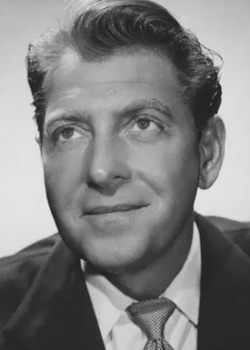 Composer, arranger, conductor and orchestra leader David Rose died ten years ago today in Burbank, California, on August 23, 1990, at the age of 80, from heart failure.
One of Hollywood’s busiest musical craftsmen, Rose scored 36 films and wrote themes and background music for 24 television series, while also enjoying major success as a recording artist. His best-known compositions included “Holiday for Strings” and the chart-topping instrumental “The Stripper.”
David Daniel Rose was born in London on June 15, 1910, and grew up in Chicago. He began playing piano professionally as a teenager and by the early 1930s was leading the house orchestra at radio station WGN. Moving to California in 1940, he became increasingly active in radio and subsequently joined MGM as a musical director. During World War II he served in the U.S. Army and worked on the musical Winged Victory, where he met comedian Red Skelton.
Rose’s first major popular composition was “Holiday for Strings,” recorded in the early 1940s and soon established as one of the most familiar pieces of American light orchestral music. His Hollywood career developed alongside his recording work, and in 1944 he received an Academy Award nomination for the Bob Hope comedy The Princess and the Pirate. The following year, “So in Love,” written with lyricist Leo Robin for Wonder Man, brought him a second Oscar nomination.
Rose subsequently scored films including The Underworld Story (1950), Bright Road (1953), Public Pigeon No. 1 (1957), Blake Edwards’s submarine comedy Operation Petticoat (1959), Please Don’t Eat the Daisies (1960), Quick, Before It Melts (1964) and Never Too Late (1965). His film music tended toward direct melody, polished orchestration and the same light touch that characterized his popular recordings, although Martin Ritt’s Hombre (1967) demonstrated his ability to provide tougher, more dramatic material for a serious western.
His greatest record success arrived unexpectedly in 1962 with “The Stripper.” Recorded several years earlier and originally issued as a B-side, its swaggering brass and exaggerated trombone slides made it instantly recognizable. The instrumental reached number one on the Billboard Hot 100 and became one of the most enduring pieces of musical shorthand for comic striptease scenes in popular culture.
Television eventually became the center of Rose’s career. His long association with Red Skelton continued from radio into television, with Rose serving as musical director throughout the comedian’s lengthy variety-show run. He also composed for Highway Patrol, Sea Hunt and Bonanza, scoring more than 300 episodes of the latter.
Beginning in 1974, Rose wrote extensively for Michael Landon’s Little House on the Prairie, eventually scoring more than 200 episodes and creating some of his warmest and most lyrical television music. He later reunited with Landon on Highway to Heaven, composing for more than 100 episodes. His television work brought him four Emmy Awards, including recognition for Bonanza and Little House on the Prairie.
David Rose’s career covered an unusually broad stretch of American entertainment, from radio orchestras and MGM films to hit records and decades of television. “The Stripper” and “Holiday for Strings” remain his most famous pieces, but his lasting achievement lies equally in the enormous body of warm, melodic music he supplied to Bonanza, Little House on the Prairie and countless other productions, making him one of the most dependable and familiar musical voices of American television.

Shop at the Movie Music UK Store

Member of the


